FSU College of Medicine (MD) Medical School - 2027 Entry Requirements & Interview Format
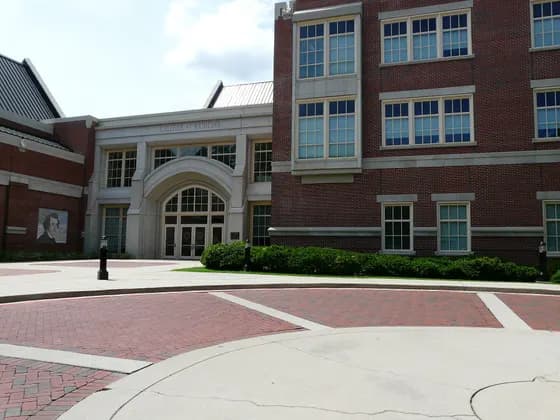
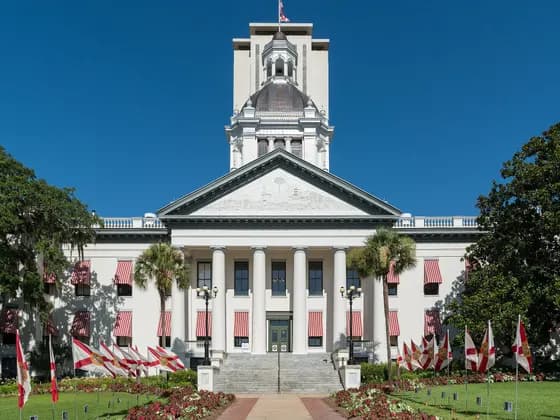
Florida State University College of Medicine, founded in 2000, is a public medical school notable for its highly distinctive distributed clinical campus model — students train at one of six regional campuses across Florida rather than at a single central academic medical centre. FSU Med has an explicit mission centred on primary care and serving underserved populations across Florida's rural and coastal communities. The school was specifically designed to address Florida's statewide physician shortage and has a strong track record of producing primary care physicians who practise in the communities where they trained.
Entry Requirements
What you need to apply to FSU College of Medicine (MD).
Admission overview
Bachelor's degree and MCAT required. Florida residents receive strong preference. Commitment to primary care and underserved communities essential. Willingness to train at a regional campus outside Tallahassee expected. Applications via AMCAS; secondary required.
MCAT median
509 (range 504–514)
GPA median
3.86 overall / 3.54 science (BCPM)
Acceptance rate
5.2%
Class size
120
In-state preference
Strong — primarily in-state
In-state matriculants
97%
CASPer
Not required
Holistic review emphasis
Primary care mission, Florida community health commitment, distributed campus readiness, diversity, and underserved population service.
Notes
Estimates from public AAMC FACTS / AACOMAS / ADEA AADSAS / class-profile; verify current cycle.
Specialities offered
Primary Care, Community Medicine, Family Medicine, Geriatrics, Rural Medicine
Interview Format
How FSU College of Medicine (MD) interviews applicants.
Format
Traditional interview (faculty and/or student interviewers)
Interview window
October–March
Decision date
Rolling (AAMC standard latest March 30)
What to expect at a FSU College of Medicine (MD) interview
FSU College of Medicine uses a traditional interview format, typically one or two one-on-one sessions of approximately 30–45 minutes each. Interviews are non-blind and focus on motivation for medicine, commitment to primary care and underserved populations across Florida's diverse communities, and fit with FSU's distributed clinical campus model. FSU's six regional campuses across Florida (Tallahassee, Daytona Beach, Fort Pierce, Orlando, Pensacola, Sarasota) mean interviewers assess whether applicants are comfortable with geographic flexibility and community-based rather than academic-centre training.
What makes FSU College of Medicine (MD) different
FSU Med's six-campus distributed model is essentially unique among US allopathic medical schools. Students are assigned to a regional campus based on preference and institutional need — this means your third and fourth year will be spent in Daytona Beach, Fort Pierce, Orlando, Pensacola, Sarasota, or Tallahassee. This model produces physicians who are genuinely embedded in Florida communities, with strong match rates into primary care and community practice. FSU has one of the highest percentages of underrepresented minority students among Florida medical schools.
Tutor insight
FSU Med is the right choice if you are genuinely committed to primary care, community medicine, and practising in Florida — and are comfortable with the reality that Years 2–4 will be at a regional campus, likely away from a major urban centre. Do not apply if you are seeking a flagship academic medical centre experience — you will not find it at FSU. Florida residency is very strongly preferred. In your interview, be specific about which regional campus interests you and why the community health mission resonates with your background.
PrometheusQuestion Bank
595 medicine questions inside
Interview questions matched to FSU College of Medicine (MD)
Two questions our tutors flagged as a strong fit for FSU College of Medicine (MD)’s interview style. Try answering them out loud, then open Prometheus for the model answers and follow-up tips.
Medium·PanelQ1
AAMC Core Competency: Resilience and Adaptive Expertise
During your gap year you were deeply involved in a longitudinal research project that was abruptly terminated when the principal investigator lost funding. Months of your work were never published and the project was archived. How did you respond to that setback, and what did it teach you about resilience, uncertainty, and the nature of scientific progress?
Likely follow-up · How do you anticipate managing the uncertainty and setbacks inherent in clinical medicine, where not all patients recover and not all diagnoses are clear?
3 expert tips in Prometheus
Hard·Panel · MMIQ2
AAMC Core Competency: Scientific Inquiry and Critical Thinking
A researcher publishes a widely publicised study claiming that a common over-the-counter supplement significantly reduces the risk of heart disease. The study is observational, has a small sample size, and was funded by the supplement manufacturer. Many of your patients begin asking whether they should start taking it. How do you evaluate this evidence, and what do you say to patients who are eager to begin using the supplement based on media coverage?
Likely follow-up · What specific features of study design would you look for to assess whether the findings are reliable enough to inform clinical recommendations?
FSU College of Medicine (MD) - Frequently asked questions
Bachelor's degree and MCAT required. Florida residents receive strong preference. Commitment to primary care and underserved communities essential. Willingness to train at a regional campus outside Tallahassee expected. Applications via AMCAS; secondary required.
Traditional interview (faculty and/or student interviewers). FSU College of Medicine uses a traditional interview format, typically one or two one-on-one sessions of approximately 30–45 minutes each. Interviews are non-blind and focus on motivation for medicine, commitment to primary care and underserved populations across Florida's diverse communities, and fit with FSU's distributed clinical campus model. FSU's six regional campuses across Florida (Tallahassee, Daytona Beach, Fort Pierce, Orlando, Pensacola, Sarasota) mean interviewers assess whether applicants are comfortable with geographic flexibility and community-based rather than academic-centre training.
FSU College of Medicine (MD) typically interviews in October–March.
Decisions are released Rolling (AAMC standard latest March 30).
FSU Med's six-campus distributed model is essentially unique among US allopathic medical schools. Students are assigned to a regional campus based on preference and institutional need — this means your third and fourth year will be spent in Daytona Beach, Fort Pierce, Orlando, Pensacola, Sarasota, or Tallahassee. This model produces physicians who are genuinely embedded in Florida communities, with strong match rates into primary care and community practice. FSU has one of the highest percentages of underrepresented minority students among Florida medical schools.