
University of Cincinnati College of Medicine Interview
Format, Questions & Prep Tips
University of Cincinnati College of Medicine medicine interviews for 2027 entry are a traditional interview. Published figures: Annual MD class size ~175; Applications received ~7,000–9,000 per cycle; Interview format Traditional one-on-one — 2 sessions, 30–45 min each.
- Institution
- University of Cincinnati College of Medicine
- Interview (2027 entry)
- October through February; rolling invitations following secondary review
- Decisions (2027 entry)
- Primary decisions by late March; waitlist movement through May–August

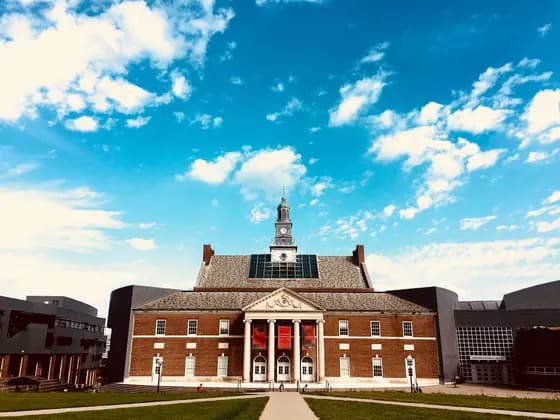


Photo: Adam Sofen · CC BY 2.0 · cropped
Photo: Abhijith Athreya Mysore Gopinath · CC BY-SA 4.0 · Photo: redlegsfan21 · CC BY-SA 2.0 · Photo: Greg Hume · CC BY-SA 3.0
How to get into University of Cincinnati College of Medicine (MD) medicine
Step-by-step: entry requirements, admission tests, personal statement, interview format and the key deadlines.
Open the guide →University of Cincinnati College of Medicine (MD) entry requirements
Admission profile, interview format, decision dates and what makes University of Cincinnati College of Medicine (MD) different.
See the profile →The University of Cincinnati College of Medicine (MD) medicine interview
The University of Cincinnati College of Medicine uses a traditional interview format — applicants participate in two one-on-one conversational sessions of 30–45 minutes each, typically with a faculty physician and a current medical student or resident. The interview day is held on the UC medical campus near Cincinnati Children’s Hospital.
UC Cincinnati is the oldest medical school west of the Allegheny Mountains (est. 1819), and interviewers expect applicants to have researched the school’s history and its unique integration with Cincinnati Children’s Hospital Medical Center — one of the country’s most NIH-funded pediatric research institutions.
Expect questions that probe the AAMC Premed Competencies, with particular weight given to clinical experience quality, research depth, and commitment to the Cincinnati region.
University of Cincinnati College of Medicine (MD) interview at a glance (2027 entry)
| Annual MD class size | ~175 |
|---|---|
| Applications received | ~7,000–9,000 per cycle |
| Interview format | Traditional one-on-one — 2 sessions, 30–45 min each |
| Curriculum | Integrated foundations MD |
| Tuition (2025–26) | ~USD 35,000 in-state / ~USD 55,000 out-of-state |
| Application system | AMCAS + UC secondary |
| Interview window | October–February |
Interview format
- Two separate one-on-one sessions — faculty physician and current student/resident, each 30–45 minutes.
- Interviewers review the full application; expect questions tethered to specific experiences in your file.
- Student-led campus tour including simulation facilities and Cincinnati Children's Hospital walkthrough.
- Informal lunch with current students; admissions information session.
- No MMI; no timed stations.
Working towards the MCAT score University of Cincinnati College of Medicine (MD) expects? Build a week-by-week plan from your test date — free for the first two weeks.
Sample interview questions
UC Cincinnati is the oldest medical school west of the Allegheny Mountains. What does that history mean to you, and what does this institution's legacy tell you about the type of physician it produces?
Reference co-operative education legacy, AAMC founding membership, Cincinnati Children's partnership. Show genuine historical awareness — not just flattery.
Cincinnati Children's Hospital is one of the top-ranked children's hospitals in the country. How does its presence on your doorstep shape your clinical interests or research goals?
If you have pediatric interest, be specific about what division or research program appeals. If you don't, explain how proximity to world-class pediatric care enriches training regardless of specialty.
A patient's family requests that you withhold a terminal diagnosis because "it will destroy her." The patient has full decision-making capacity. How do you respond?
What they are listening for:
- Patient autonomy vs. family wishes; truth-telling duty
- cultural sensitivity
- the ethics of therapeutic privilege
There is a clear ethical correct direction — autonomy — but navigate compassionately.
Ohio's rural Appalachian communities have among the worst health outcomes in the state. What are the structural drivers, and what responsibility do Cincinnati physicians have for those communities?
What they are listening for:
- Social determinants of health
- geographic access
- FQHC networks
- telehealth expansion
- the academic medical center's outreach role in Ohio Appalachia
You are a third-year student doing a clerkship. You observe the attending physician use dismissive language with a patient from a different cultural background. What do you do?
AAMC Understanding Others competency and professionalism. Immediate patient-safety considerations are low, but the cultural harm is real. Discuss speaking to the attending after the encounter vs. in-the-moment intervention.
Describe a research experience where your hypothesis was wrong. What did you do, and what did you learn?
Scientific reasoning and resilience competency. The intellectual honesty in owning a failed hypothesis is more compelling than describing a success. Show how you processed and iterated.
What aspect of the Cincinnati healthcare landscape — specific communities, diseases, or health systems — most motivates you to train here?
Cincinnati-specific:
- Ohio River Valley communities
- West End urban health disparities
- the opioid crisis in Southwest Ohio
- the UC Health system's safety-net role
Should physicians be required to refer patients for procedures they personally object to on moral grounds? Defend your position.
Conscientious objection vs. patient access; AMA guidelines on non-abandonment and duty to refer; practical implications for access in low-resource settings.
Tell me about a time you worked with a team where there was genuine conflict. What was your role, and what did the experience teach you about leadership?
AAMC Teamwork and Collaboration competency. Focus on what you learned about your own default conflict style — avoidance, mediation, escalation — and how you would change it.
Role-play: You are a clinic volunteer and must explain to a patient from rural Appalachian Ohio (played by the interviewer) why you are recommending a follow-up at the Cincinnati academic center, which means a long drive and time off work they are reluctant to take. Begin.
Acknowledge the genuine travel and financial burden, problem-solve transport and telehealth options, and ensure the patient grasps the stakes without feeling pressured or judged. This reflects UC's Ohio River Valley and Appalachian access context — empathy plus practical navigation.
You are shown county-level health-outcome data for Appalachian Ohio that lags the rest of the state across multiple chronic conditions despite comparable clinical guidelines being in use. What structural factors would you investigate to explain the gap?
What they are listening for:
- Move beyond guideline adherence to access
- transportation
- broadband for telehealth
- provider supply
- poverty
- historical disinvestment
Propose specific next questions rather than assuming a single cause. Shows population-level reasoning grounded in UC's regional reality.
You are part of a care team and a colleague repeatedly interrupts and talks over the social worker during rounds, dismissing the discharge concerns she raises. How do you respond in the moment and afterward?
Model respect by inviting the social worker to finish and treating her input as essential, then address the colleague's behavior privately and constructively. Connect to team functioning and patient-safety stakes at discharge. Shows interpersonal leadership without grandstanding.
Cincinnati Children's is one of the most NIH-funded pediatric research institutions in the country, sitting on your doorstep. Even if you do not intend to enter pediatrics, how would you take genuine advantage of that environment?
Discuss research methodology, translational science, and mentorship that transcend a single specialty, plus exposure to high-acuity, complex care. Show you see the institution as shaping training broadly, not as relevant only to future pediatricians.
A wealthy donor offers UC a major gift to establish a program, but with conditions that would subtly steer clinical or research priorities toward the donor's interests. Should the school accept, and with what safeguards?
Discuss the tension between needed philanthropy and institutional independence, transparency, and the risk of mission drift. Argue for a conditional position with firewalls rather than a flat answer. Tests reasoning about how money interacts with academic and clinical integrity.
UC Cincinnati is the oldest medical school west of the Allegheny Mountains and a founding AAMC member. Beyond flattery, how should an institution's long history actually shape the physicians it trains today?
Argue that genuine legacy shows up as established mentorship networks, clinical depth, and an embedded culture, while cautioning against tradition becoming complacency. Show you can engage history critically rather than reciting it as a compliment.
Practise the University of Cincinnati College of Medicine (MD) interview
Rehearse the real format before the day — on demand with our AI interviewers, or live with a tutor.
Sit a mock with photoreal AI interviewers — any time
A timed MMI or panel interview on video — American & international voices — with interviewers who listen, react and press with follow-ups. Rubric-scored feedback and a replay the moment you finish.





Live mocks with a tutor who’s been in the room
A full University of Cincinnati College of Medicine (MD)-style mock with a medic or dentist tutor — honest scoring against real marking criteria, a station-by-station debrief and a written action plan.
Book a mock interviewHow to prepare for the University of Cincinnati College of Medicine (MD) interview
Common pitfalls to avoid
University of Cincinnati College of Medicine (MD) interview — frequently asked questions
Sources & official admissions information
Ready to nail your University of Cincinnati College of Medicine (MD) interview?
Book a mock interview with a tutor who knows the US interview formats, orpractice unlimited stations from our interview question bank.