
Wright State Boonshoft School of Medicine Interview
Format, Questions & Prep Tips
Wright State Boonshoft School of Medicine medicine interviews for 2027 entry are a traditional interview. Published figures: Annual MD class size ~128 (2025–26); Applications received ~4,500–5,500 per cycle; Interview format Traditional one-on-one — 2 sessions, 30–45 min each.
- Institution
- Boonshoft School of Medicine Wright State University
- Interview (2027 entry)
- October through February; rolling invitations following secondary review
- Decisions (2027 entry)
- Decisions by late March; waitlist movement continues through May–August

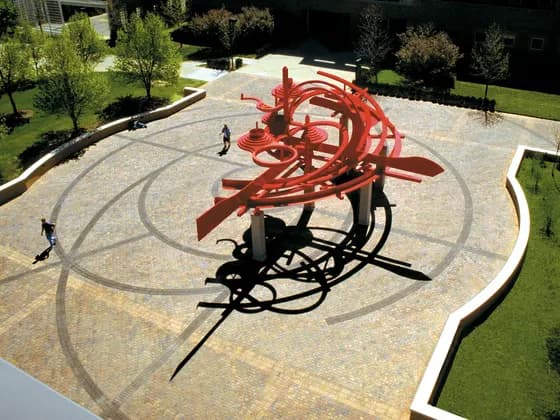

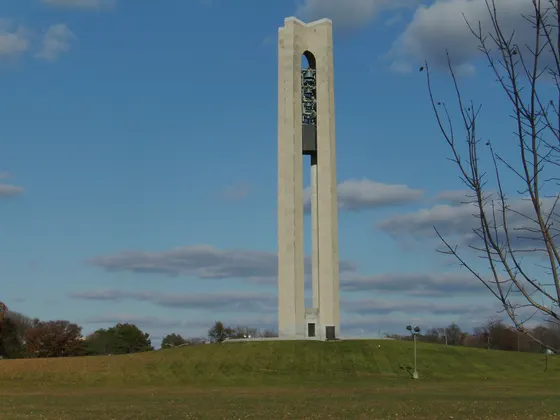
Photo: Texas141 · CC BY-SA 3.0 · cropped
Photo: DBSculpture · CC BY-SA 4.0 · Photo: Warren LeMay · CC BY-SA 2.0 · Photo: Texas141 · CC BY-SA 3.0
How to get into Wright State Boonshoft School of Medicine (MD) medicine
Step-by-step: entry requirements, admission tests, personal statement, interview format and the key deadlines.
Open the guide →Wright State Boonshoft School of Medicine (MD) entry requirements
Admission profile, interview format, decision dates and what makes Wright State Boonshoft School of Medicine (MD) different.
See the profile →The Wright State Boonshoft School of Medicine (MD) medicine interview
Wright State Boonshoft School of Medicine uses a traditional interview format — applicants participate in two separate one-on-one sessions of 30–45 minutes each with faculty physicians, community clinicians, or senior medical students. The day is held on the Dayton campus and is structured around the school’s mission of training physicians for Southwest Ohio’s underserved and veteran communities.
Interviewers review the full application before the day and probe mission alignment explicitly — specifically, prior service to underserved Dayton-area communities, veteran health engagement, or articulated plans to practice in Ohio after training. Generic motivation answers are unlikely to move candidates off the waitlist at a school with a highly specific public mission.
Expect questions that probe the AAMC Premed Competencies, with particular emphasis on service orientation and resilience.
Wright State Boonshoft School of Medicine (MD) interview at a glance (2027 entry)
| Annual MD class size | ~128 (2025–26) |
|---|---|
| Applications received | ~4,500–5,500 per cycle |
| Interview format | Traditional one-on-one — 2 sessions, 30–45 min each |
| Curriculum | Integrated system-based MD |
| Application system | AMCAS + Boonshoft secondary |
| Interview window | October–February |
Interview format
- Two separate one-on-one sessions with faculty, community physicians, or senior medical students — each 30–45 minutes.
- Interviewers read the full application beforehand; expect specific questions about experiences cited in your personal statement and secondary.
- Student-led campus and hospital tour with time for informal conversation with current students.
- Admissions information session and Q&A included in the day.
- Both faculty and student evaluations are submitted and weighted in the decision.
Working towards the MCAT score Wright State Boonshoft School of Medicine (MD) expects? Build a week-by-week plan from your test date — free for the first two weeks.
Sample interview questions
Why Wright State Boonshoft specifically — what draws you to the Dayton community and the school's veteran health mission?
Name the Dayton VA Medical Center affiliation. Cite specific Southwest Ohio communities or health challenges. Avoid prestige-neutral language.
Describe a clinical or community experience that challenged your assumptions about a patient population you serve.
AAMC Understanding Others competency. Be specific about the population, the assumption, and the insight. Boonshoft prizes genuine reflective learning over polished narratives.
A patient who is a veteran presents with chronic pain and is seeking opioid renewal. His primary care physician is uncomfortable but the patient insists the medications are the only thing keeping him functional. How do you approach this?
Autonomy vs. beneficence in veteran care. Reference the opioid crisis, VA prescribing guidelines, non-pharmacological pain management, and the importance of the therapeutic relationship.
Ohio has expanded Medicaid under the ACA, but rural Southwest Ohio still has significant uninsured populations. As a future physician, what is your responsibility to patients who cannot pay?
What they are listening for:
- EMTALA
- charity care obligations
- FQHC networks
- the physician's ethical duty vs. practice financial sustainability
- systemic advocacy
Tell me about a time you had to deliver disappointing news — to a patient, a family member, or a colleague. What did you do, and what would you change?
AAMC Interpersonal Skills competency. Use SPIKES framework if applicable. The reflective component ("what would you change") is as important as the narrative.
Where do you see yourself practicing 10 years after residency, and why Ohio?
Boonshoft wants Ohio-committed physicians. Be specific: community type, specialty direction, and the Ohio connection — residency ties, family, stated mission alignment.
A colleague you trust tells you they have been using a stimulant medication unprescribed to get through exam season. What do you do?
What they are listening for:
- Professionalism
- physician health
- duty to report
- confidentiality vs. patient safety — apply the AAMC professional competencies
Tell me about an academic or research experience that required you to sit with genuine uncertainty. How did you handle not knowing the answer?
AAMC thinking and reasoning competencies. Tolerance for ambiguity is a core physician skill — show intellectual humility and systematic reasoning.
Medicine in the Dayton region faces workforce shortages in primary care and mental health. How has your background prepared you to contribute to those gaps?
Ohio workforce context. Specificity about Dayton health challenges (opioid crisis, veteran mental health, poverty-related chronic disease) reads strongly.
Role-play: You are a student volunteer and must tell a veteran patient (played by the interviewer) at the Dayton VA that their long-awaited specialty appointment has been rescheduled again. They are angry and say the system has 'never cared' about veterans. Begin.
Acknowledge the legitimate frustration and the history behind it, avoid defensiveness, and take ownership of finding out what you can. This reflects Boonshoft's veteran-health mission — show patience, empathy, and accountability rather than reciting excuses.
You are shown opioid-overdose death-rate data for Montgomery County over the past decade, with a sharp rise and a partial recent decline. How do you interpret the trend, and what would you want to know before drawing conclusions about local interventions?
Distinguish trend from causation — a decline may reflect naloxone access, fentanyl-supply shifts, or treatment expansion rather than any single program. Ask about denominators and confounders. Dayton has been an epicentre of the crisis, so this fits Boonshoft's regional context.
You are explaining a new PTSD diagnosis to a combat veteran who bristles at the label, saying mental-health diagnoses are seen as weakness in his unit. How do you frame the conversation?
Use the patient's own language, emphasize function and operational readiness over the label, and frame treatment as a strength-based tool. Demonstrate cultural competence with military stigma. Avoid forcing the diagnostic term onto a resistant patient.
Tell me about a time you changed your mind about something important after encountering new evidence. What made you willing to revise your view?
AAMC Thinking & Reasoning. Show genuine intellectual humility, not a story where you were quietly right all along. Describe how you weighed the new evidence and what the revision cost you. Reflective capacity is a core Boonshoft theme.
A rural Southwest Ohio patient cannot afford a recommended medication and asks you to falsify a prior-authorization form to get it covered. How do you respond?
Acknowledge the real affordability barrier and your sympathy, but explain why falsification undermines trust and is unacceptable. Pivot to legitimate routes — patient-assistance programs, alternative agents, appeals. Shows integrity paired with genuine advocacy for an under-resourced patient.
Boonshoft's mission centers on Southwest Ohio's underserved and veteran communities. What in your own background gives you a durable, rather than passing, commitment to this kind of work?
Draw on specific lived or sustained experience rather than a single episode, and connect it concretely to Dayton-area needs. Boonshoft wants evidence of staying power and Ohio commitment, not a one-time volunteer story or generic altruism.
Practise the Wright State Boonshoft School of Medicine (MD) interview
Rehearse the real format before the day — on demand with our AI interviewers, or live with a tutor.
Sit a mock with photoreal AI interviewers — any time
A timed MMI or panel interview on video — American & international voices — with interviewers who listen, react and press with follow-ups. Rubric-scored feedback and a replay the moment you finish.






Live mocks with a tutor who’s been in the room
A full Wright State Boonshoft School of Medicine (MD)-style mock with a medic or dentist tutor — honest scoring against real marking criteria, a station-by-station debrief and a written action plan.
Book a mock interviewHow to prepare for the Wright State Boonshoft School of Medicine (MD) interview
Common pitfalls to avoid
Wright State Boonshoft School of Medicine (MD) interview — frequently asked questions
Sources & official admissions information
Ready to nail your Wright State Boonshoft School of Medicine (MD) interview?
Book a mock interview with a tutor who knows the US interview formats, orpractice unlimited stations from our interview question bank.