
The Ohio State University College of Medicine Interview
Format, Questions & Prep Tips
The Ohio State University College of Medicine medicine interviews for 2027 entry are a traditional interview. Published figures: Annual MD class size ~210; Applications received ~8,000–10,000 per cycle; Tuition (2025–26) ~USD 34,000 in-state / ~USD 54,000 out-of-state.
- Institution
- The Ohio State University College of Medicine
- Interview (2027 entry)
- October through February; rolling invitations
- Decisions (2027 entry)
- Primary decisions by late March; waitlist movement through May–August

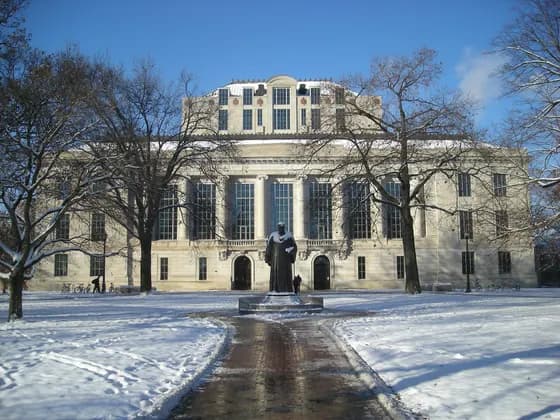
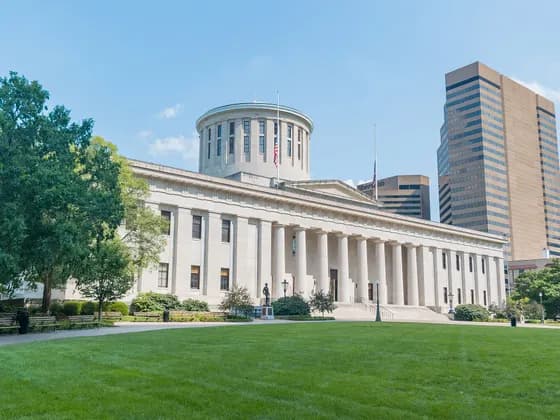

Photo: John Dewees · CC0 · cropped
Photo: Michael Barera · CC BY-SA 4.0 · Photo: Ɱ · CC BY-SA 4.0 · Photo: Paul Wasneski · Public domain
How to get into The Ohio State University College of Medicine (MD) medicine
Step-by-step: entry requirements, admission tests, personal statement, interview format and the key deadlines.
Open the guide →The Ohio State University College of Medicine (MD) entry requirements
Admission profile, interview format, decision dates and what makes The Ohio State University College of Medicine (MD) different.
See the profile →The The Ohio State University College of Medicine (MD) medicine interview
The Ohio State University College of Medicine interviews through two one-on-one conversations in a single virtual day — one with a faculty member and one with a current medical student or resident. The college does not use MMI stations.
A critical feature of Ohio State’s MMI is that most stations are blinded — assessors score your performance in the station without access to your application file. This means communication structure, ethical reasoning clarity, and role-play composure matter far more than biographical narrative on the interview day itself.
Ohio State is one of the Midwest’s most research-intensive medical schools, and the Wexner Medical Center setting means many assessors are actively practicing physicians or faculty researchers. Preparedness for the Ohio healthcare context and awareness of OSU’s NIH-funded research programs signals genuine fit.
The Ohio State University College of Medicine (MD) interview at a glance (2027 entry)
| Annual MD class size | ~210 |
|---|---|
| Applications received | ~8,000–10,000 per cycle |
| Interview format | Two virtual one-on-ones — faculty + current student/resident |
| Curriculum | Bridges integrated curriculum |
| Tuition (2025–26) | ~USD 34,000 in-state / ~USD 54,000 out-of-state |
| Application system | AMCAS + OSU secondary |
| Interview window | October–February |
Interview format
- Two one-on-one interviews in a single virtual day: one faculty, one current medical student or resident.
- Conversational and application-aware — no MMI stations.
- Prepare distinct material for the faculty and student conversations; the student interview probes fit honestly.
Working towards the MCAT score The Ohio State University College of Medicine (MD) expects? Build a week-by-week plan from your test date — free for the first two weeks.
Sample interview questions
A patient in the ICU is deteriorating. The family insists on full resuscitation, but the medical team believes continued intervention is futile. How do you navigate this conflict?
Autonomy vs. beneficence/non-maleficence. Reference palliative care consultation, ethics committee, cultural competence in end-of-life discussions, and POLST/MOLST frameworks.
[Role-play] The person across from you is a first-year medical student who just failed their anatomy practical. They are visibly distressed. You have 8 minutes.
Active listening first — do not problem-solve immediately. Validate feelings, ask open questions, explore what support they need. Offer resources (counseling, academic support) without imposing them.
Ohio has among the highest rates of opioid overdose deaths nationally. Should physicians who overprescribed opioids be held criminally liable?
Distinguish civil negligence from criminal intent; discuss DEA enforcement, systemic prescribing culture, pharmaceutical company culpability, and the chilling effect on pain management.
Why Ohio State specifically — what in the Wexner Medical Center environment or Bridges curriculum aligns with your goals?
Name specific research centers (James Comprehensive Cancer Center, Davis Heart and Lung Research Institute), the Buckeye Health Initiative, or MSTP if applicable. Avoid prestige-only answers.
A pharmaceutical company offers to fund a free clinic in an underserved Columbus neighborhood in exchange for branding and the right to distribute promotional materials. Should the clinic accept?
What they are listening for:
- Community benefit vs. commercial influence on patient care; conflict of interest
- FTC guidelines on health claims in promotional materials
- patient trust
You are on a hospital quality committee. A senior surgeon resists a new evidence-based protocol for post-operative infection control. How do you approach the situation?
What they are listening for:
- Interprofessional teamwork
- hierarchy navigation
- evidence-based medicine advocacy
- change management
Avoid antagonizing the senior colleague in your framing.
AI diagnostic tools are now FDA-cleared for reading chest X-rays with sensitivity exceeding many radiologists. How should medical schools respond in curriculum design?
What they are listening for:
- AI augmentation vs. replacement debate; clinical decision-making with AI
- accountability for AI errors
- the human physician's role in edge cases and communication
Tell me about a time you witnessed a systemic healthcare problem — not a clinical one, but a structural or policy problem. What did you do?
AAMC Interpersonal Skills competency. Be specific: show you identified a pattern, not just a single incident, and that you took or advocated for a concrete action.
A colleague confides that they submitted a falsified lab value in a patient chart to avoid paperwork delay, arguing it did not affect care. What do you do?
What they are listening for:
- Medical record integrity
- duty to report
- patient safety even for "harmless" errors
- whistleblowing protections
- the culture of safety
An assessor shows you a graph of Ohio opioid-overdose deaths over the last decade with a sharp inflection when fentanyl entered the supply. What does the figure tell you, and what would you want to know before interpreting the trend?
Read the inflection carefully; distinguish prescription-era trends from the illicit-fentanyl era. Discuss confounders (reporting changes, polysubstance deaths) and avoid over-reading a single chart. At least one OSU station often involves Ohio health context.
Tell me about a time you joined a team or organization and left it measurably better than you found it. What did you actually change?
OSU's blinded MMI means you cannot rely on your file — make the example vivid and concrete. Show initiative, follow-through, and measurable impact rather than mere participation, and reflect on what the experience taught you.
A patient with low health literacy has just been prescribed a complex post-discharge medication regimen and seems overwhelmed. You have a few minutes before you are pulled to the next patient. How do you make sure they leave able to manage it?
What they are listening for:
- Teach-back
- prioritizing the few must-know points
- plain language
- written or visual aids
Surface barriers (cost, literacy, support at home) and arrange follow-up. Assessors score whether real understanding occurred, not how much you said.
Describe a scientific or clinical idea you find genuinely fascinating, and explain the part that is still unknown or contested. Why does the unanswered question interest you?
Shows intellectual curiosity and comfort with uncertainty — qualities OSU's research-intensive environment values. Be specific and avoid reciting facts; the point is how you reason about the edge of knowledge, not what you can recall.
A patient who is uninsured in Ohio needs a medication that is far cheaper as a brand they cannot afford than as the generic that is out of stock. They ask you to just 'pick whatever is free.' How do you approach the decision and the conversation?
What they are listening for:
- Cost
- access
- honest shared decision-making; patient-assistance programs
- formulary alternatives
- avoiding paternalism
Show you take the financial reality seriously as a clinical factor rather than treating it as separate from the medicine.
[Role-play] A standardized patient is a worried family member who has just learned their relative's diagnosis is more serious than expected. They are angry that 'no one told them sooner.' You have 8 minutes.
Validate the anger before explaining; do not get defensive about the team. Listen, acknowledge the communication gap, give clear information at the family's pace, and outline next steps. OSU scores composure and empathy in interpersonal stations.
Practise the The Ohio State University College of Medicine (MD) interview
Rehearse the real format before the day — on demand with our AI interviewers, or live with a tutor.
Sit a mock with photoreal AI interviewers — any time
A timed MMI or panel interview on video — American & international voices — with interviewers who listen, react and press with follow-ups. Rubric-scored feedback and a replay the moment you finish.






Live mocks with a tutor who’s been in the room
A full The Ohio State University College of Medicine (MD)-style mock with a medic or dentist tutor — honest scoring against real marking criteria, a station-by-station debrief and a written action plan.
Book a mock interviewHow to prepare for the The Ohio State University College of Medicine (MD) interview
Common pitfalls to avoid
The Ohio State University College of Medicine (MD) interview — frequently asked questions
Sources & official admissions information
Ready to nail your The Ohio State University College of Medicine (MD) interview?
Book a mock interview with a tutor who knows the US interview formats, orpractice unlimited stations from our interview question bank.