
LMU-DCOM Knoxville Interview
Format, Questions & Prep Tips
LMU-DCOM Knoxville medicine interviews for 2027 entry are a traditional interview, held September 2026 through March 2027. Published figures: Annual DO class size ~120 (Knoxville campus); Tuition (2025–26) ~USD 55,000/year.
- Institution
- Lincoln Memorial University DeBusk College of Osteopathic Medicine Knoxville
- Interview (2027 entry)
- September through March
- Decisions (2027 entry)
- Rolling decisions after interview



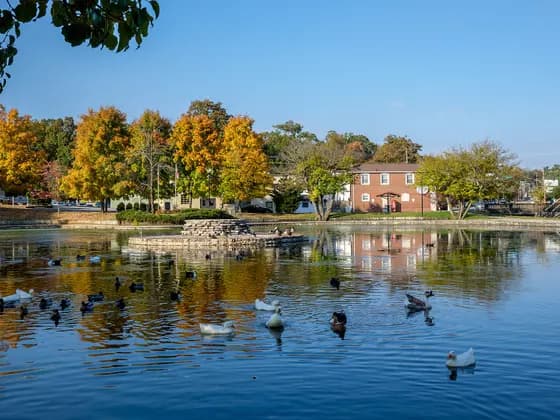
Photo: Mhuy222 · CC BY-SA 4.0 · cropped
Photo: AppalachianCentrist · CC BY-SA 4.0 · Photo: Brian Stansberry · CC BY 3.0 · Photo: Lee Ann Ratledge · CC BY 4.0
How to get into LMU-DCOM Knoxville (DO) medicine
Step-by-step: entry requirements, admission tests, personal statement, interview format and the key deadlines.
Open the guide →LMU-DCOM Knoxville (DO) entry requirements
Admission profile, interview format, decision dates and what makes LMU-DCOM Knoxville (DO) different.
See the profile →The LMU-DCOM Knoxville (DO) medicine interview
LMU-DCOM Knoxville is a satellite campus of Lincoln Memorial University DeBusk College of Osteopathic Medicine. It uses a traditional interview format in Knoxville, Tennessee, extending LMU-DCOM’s Appalachian rural health mission into East Tennessee’s urban/suburban setting.
Interviewers assess the same core values as at the Harrogate campus — osteopathic philosophy, rural/underserved health commitment, and personal character — while probing awareness of how Knoxville’s clinical environment supports the broader LMU-DCOM mission.
LMU-DCOM Knoxville does not require CASPer. Rolling admissions strongly rewards early AACOMAS submission.
LMU-DCOM Knoxville (DO) interview at a glance (2027 entry)
| Annual DO class size | ~120 (Knoxville campus) |
|---|---|
| Interview format | Traditional — faculty interview |
| CASPer required | No |
| Application system | AACOMAS primary + LMU-DCOM secondary |
| Tuition (2025–26) | ~USD 55,000/year |
| Interview window | September–March |
Interview format
- One-on-one or small panel faculty interview; approximately 30–45 minutes.
- Interview day includes campus and OMM lab overview.
- No MMI format.
Working towards the MCAT score LMU-DCOM Knoxville (DO) expects? Build a week-by-week plan from your test date — free for the first two weeks.
Sample interview questions
Why LMU-DCOM Knoxville rather than the main Harrogate campus, and how does the Knoxville setting fit your training goals?
Show you understand the difference: Knoxville’s larger healthcare ecosystem vs. Harrogate’s rural immersion. Both serve the same LMU-DCOM mission — East Tennessee community health.
Why osteopathic medicine, and what role does OMT play in the kinds of communities LMU-DCOM trains physicians to serve?
What they are listening for:
- Rural and Appalachian primary care
- musculoskeletal pain management
- OMT as non-pharmacological alternative
Connect to opioid epidemic context.
A patient in an East Tennessee community cannot afford their medications and refuses to apply for assistance programs. How do you proceed?
What they are listening for:
- Patient autonomy
- social determinants
- bridge prescriptions
- follow-up plans
- community health worker resources
Show persistence and creativity.
East Tennessee has significant health disparities. Where would you want to practice after LMU-DCOM Knoxville, and why?
Show commitment to East Tennessee or similar underserved communities. Specific geography and health challenge awareness strengthens your answer.
Describe a time you bridged a communication gap with someone from a very different background.
What they are listening for:
- Cultural humility
- plain language
- listening before speaking
Relevant to Appalachian and rural patient populations.
How do you maintain professional boundaries while providing compassionate, personal care in a small community where patients may know you outside the clinic?
Rural medicine professional boundary challenges — unique to small-community practice. Show awareness and practical strategies.
What are the biggest barriers to healthcare access in East Tennessee, and how can a DO physician make a difference?
What they are listening for:
- Transportation
- insurance gaps
- physician shortage
- rural hospital closures
- trust issues
OMT and primary care as accessible, cost-effective tools.
LMU-DCOM Knoxville is a newer campus. How does being part of a growing program rather than a decades-old institution shape your expectations?
What they are listening for:
- Smaller cohort
- newer facilities
- growing clinical network
Show you see the growth phase as an opportunity to be part of something being built.
You're a student-doctor at an East Tennessee clinic. A patient who recognizes you from church seems uncomfortable discussing a sensitive sexual-health concern. How do you put him at ease and get the history you need?
Acknowledge the small-community dynamic, reaffirm confidentiality, normalize the topic, and create privacy and safety. Show awareness of the boundary challenges unique to practicing where patients know you socially.
Knox County has more healthcare resources than the rural counties around it, yet East Tennessee still shows significant disparities. What might explain why proximity to Knoxville's hospitals doesn't erase rural health gaps?
What they are listening for:
- Distance
- transport
- insurance
- the urban-rural specialist divide
- trust
Show that geographic proximity to a city does not equal access for surrounding rural populations.
Knoxville is a newer LMU-DCOM campus with a growing clinical network. Describe a time you helped improve a process or system that wasn't yet well established. What did you contribute?
A concrete example of initiative and constructive improvement in an evolving environment, framed as fitting the growth phase of a newer campus rather than a deficiency to tolerate.
A patient on a fixed income refuses to apply for assistance programs you've recommended because he 'doesn't take handouts.' His untreated condition is worsening. Talk with him.
Respect his pride and autonomy, reframe assistance as something he's entitled to and has earned, find a face-saving path, and offer bridge solutions. Persistence with dignity, not pressure.
You suspect a colleague at your Knoxville rotation is cutting corners on documentation to keep up with a heavy patient load. You like and respect them. What do you do?
Patient safety and record integrity, addressing it with the colleague first where appropriate, escalation if needed, and recognizing that workload pressure explains but does not excuse the conduct.
How does OMT fit into the everyday primary care you'd practice in East Tennessee, and where would you be honest that it isn't the right tool?
OMT for musculoskeletal and somatic dysfunction and pain management as an opioid-sparing option, balanced with honest limits — show clinical judgment, not OMT-for-everything enthusiasm.
Suppose East Tennessee emergency departments show high rates of visits that could have been handled in primary care. Before concluding patients are 'misusing the ER,' what would you want to know?
Primary care availability, after-hours access, insurance, transport, and where patients can actually be seen. Reframe ED overuse as a signal of access gaps rather than patient misbehavior.
Practise the LMU-DCOM Knoxville (DO) interview
Rehearse the real format before the day — on demand with our AI interviewers, or live with a tutor.
Sit a mock with photoreal AI interviewers — any time
A timed MMI or panel interview on video — American & international voices — with interviewers who listen, react and press with follow-ups. Rubric-scored feedback and a replay the moment you finish.






Live mocks with a tutor who’s been in the room
A full LMU-DCOM Knoxville (DO)-style mock with a medic or dentist tutor — honest scoring against real marking criteria, a station-by-station debrief and a written action plan.
Book a mock interviewHow to prepare for the LMU-DCOM Knoxville (DO) interview
Common pitfalls to avoid
LMU-DCOM Knoxville (DO) interview — frequently asked questions
Sources & official admissions information
Ready to nail your LMU-DCOM Knoxville (DO) interview?
Book a mock interview with a tutor who knows the US interview formats, orpractice unlimited stations from our interview question bank.