
University of Virginia School of Medicine Interview
Format, Questions & Prep Tips
University of Virginia School of Medicine medicine interviews for 2027 entry are a traditional interview. University of Virginia School of Medicine describes the format as: Two 30-minute virtual interviews with Admissions Committee members. Published figures: Annual MD class size ~156; Applications received ~5,500–7,500 per cycle; Interview format Two 30-min virtual interviews with Admissions Committee members.
- Institution
- University of Virginia School of Medicine
- Interview (2027 entry)
- October through February; rolling invitations issued after secondary review
- Decisions (2027 entry)
- Primary decisions by late February; final decisions by March 30. Waitlist movement through May–August

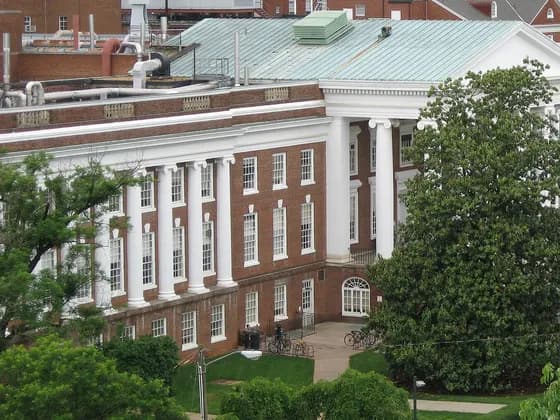
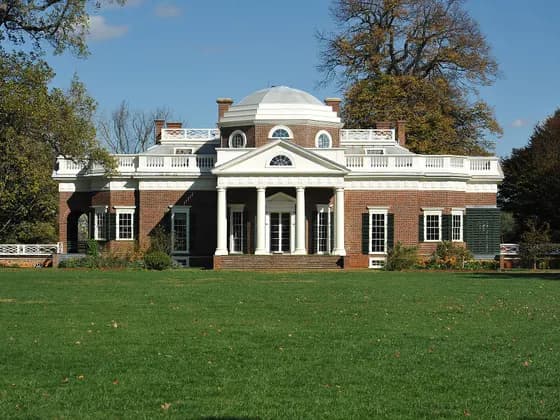

Photo: Bestbudbrian · CC BY-SA 3.0 · cropped
Photo: Bill McChesney · CC BY 2.0 · Photo: YF12s · CC BY-SA 3.0 · Photo: Bobak Ha'Eri · CC BY 3.0
How to get into University of Virginia School of Medicine (MD) medicine
Step-by-step: entry requirements, admission tests, personal statement, interview format and the key deadlines.
Open the guide →University of Virginia School of Medicine (MD) entry requirements
Admission profile, interview format, decision dates and what makes University of Virginia School of Medicine (MD) different.
See the profile →The University of Virginia School of Medicine (MD) medicine interview
UVA School of Medicine applicants complete two 30-minute virtual interviews with Admissions Committee members — typically two faculty, or one faculty member plus a fourth-year medical student — scheduled in small groups. Not an MMI.
MMI stations probe not just clinical reasoning but personal integrity, ethical decision-making under ambiguity, and communication with diverse patient populations. The iClinical curriculum — which integrates patient contact from week one — means UVA interviewers expect authentic clinical engagement, not theoretical aspiration.
Applications are submitted via AMCAS; Virginia residents receive moderate preference (~55–65% of seats), but strong out-of-state candidates are regularly admitted to the remaining seats.
University of Virginia School of Medicine (MD) interview at a glance (2027 entry)
| Annual MD class size | ~156 |
|---|---|
| Applications received | ~5,500–7,500 per cycle |
| Interview format | Two 30-min virtual interviews with Admissions Committee members |
| Curriculum | iClinical integrated — patient contact from day one |
| Application system | AMCAS (Virginia residents preferred) |
| Interview window | October–February |
| Established | 1827 |
Interview format
- Two 30-minute virtual interviews with Admissions Committee members.
- Interviewers are typically two faculty, or one faculty member plus a fourth-year student.
- Applicants are scheduled in groups of six to eight; the format is conversational, not station-based.
Working towards the MCAT score University of Virginia School of Medicine (MD) expects? Build a week-by-week plan from your test date — free for the first two weeks.
Sample interview questions
Why UVA School of Medicine? What specifically about training here aligns with the kind of physician you want to become?
Reference the iClinical curriculum, specific research programs (cancer, cardiovascular, neuroscience), UVA Health's role as a regional academic medical center, and the honor culture. Avoid generic "top-ranked school" responses.
You discover that a classmate has been sharing notes that contain patient information from a clinical rotation without de-identifying them. What do you do?
HIPAA violation and academic honor question simultaneously. Address the immediate patient privacy duty, the academic honor obligation to report, and how you would approach the classmate. UVA's honor code makes this especially resonant.
A patient admitted to your team is also a member of the hospital board. Your attending instructs you not to document certain findings in the chart to avoid embarrassing the patient. How do you respond?
Documentation accuracy is a legal and ethical obligation. Address the conflict between institutional pressure and professional duty to accurate medical records. Discuss escalation paths (senior resident, department chair, ethics consultation) and the patient safety implications.
You are on your first clinical rotation. A patient in the clinic is clearly distressed but the attending is running late. How do you handle the next ten minutes?
Show appropriate scope-of-practice awareness for a student — you can offer presence, active listening, and emotional support without attempting clinical assessment beyond your competency. Demonstrate patient-centered communication in an ambiguous situation.
Describe a research or scholarly experience where you had to revise your thinking significantly based on new evidence. What was intellectually challenging about that?
UVA values intellectual flexibility and scientific rigor. Show you can engage with disconfirming evidence productively rather than rationalizing it away. The reflection on intellectual challenge reveals depth of engagement.
Virginia expanded Medicaid in 2018 after years of rejecting expansion. What do you think explains the delay, and what lessons does it hold for healthcare policy nationally?
Show engagement with Virginia-specific health policy. Reference the political economy of Medicaid expansion in red states, the coverage gap population, the provider rate issues, and the eventual ballot-driven expansion. Demonstrate policy literacy without partisan framing.
You are working in a rural central Virginia clinic. A patient from a farming family refuses a colonoscopy screening because he "cannot afford to be out for a day." How do you approach this?
Rural Virginia context. Explore the specific barrier (transportation, farm operations, income loss during recovery), discuss alternatives (FIT test), address cost concerns through FQHCs or sliding-scale options, and engage him in the shared decision. Do not lecture.
The iClinical curriculum places you in patient-facing settings during your first week of medical school. How do you feel about that level of early clinical exposure? What are the risks and benefits?
Show you have researched the curriculum genuinely. The "risks and benefits" framing tests critical thinking: benefits (early context for basic science, habit formation) and risks (competence limitations, emotional impact of patient contact before coping frameworks are developed).
Should physician compensation be tied to patient outcomes? What unintended consequences might result?
Engage with value-based payment models (CMS's MIPS, bundled payments) and the risk of cherry-picking healthy patients, underserving complex cases, and introducing bias in who gets care. Take a nuanced position rather than a binary yes/no.
A colleague tells you privately that they have been struggling with depression and have not been seeking treatment because of concerns about medical licensure repercussions. How do you respond?
Acknowledge the real and legitimate fear about physician health reporting and state licensing boards. Reference ACGME policies, confidential physician health programs (PHPs), and the evidence that untreated depression is more dangerous than treated depression for patient safety.
Role-play: I am your classmate. I am about to ask you to share your answers from a take-home assessment because I was overwhelmed this week and did not finish. The assessor will play the classmate — respond to me.
UVA's honor culture makes this resonant. Acknowledge your classmate's stress with genuine compassion, but be clear and kind about why you cannot share answers. Offer legitimate help — studying together afterward, pointing them to the instructor or wellness resources. Assessors watch whether you can hold a boundary without being self-righteous.
You are shown data comparing 30-day readmission rates between UVA Health and a set of rural Virginia hospitals, with the rural sites notably higher. Before concluding anything about quality, what factors and data would you consider?
Avoid equating higher readmissions with worse care. Discuss case-mix and socioeconomic differences, post-discharge access to follow-up and transport in rural areas, and the need for risk-adjusted comparisons. Note what additional data (severity, follow-up attendance, distance) you would request. UVA values rigorous interpretation over snap judgments.
Describe a body of scientific evidence you find genuinely contested, and explain how you weigh competing studies when the literature does not agree.
Pick a real area of legitimate scientific debate and show how you evaluate study design, sample size, replication, and conflicts of interest rather than simply citing the conclusion you prefer. UVA prizes intellectual flexibility and the ability to sit with uncertainty — qualities the iClinical and scholarly culture demand.
A wealthy donor offers UVA Health a major gift contingent on naming a research institute and having input on which diseases it studies. Should the institution accept, and what conditions would you place on it?
Weigh the benefit of philanthropic funding against research independence and mission alignment. Discuss governance safeguards, conflict-of-interest policies, and the risk of donor influence skewing scientific priorities. Take a position rather than sitting on the fence; UVA's research stature makes this a live institutional question.
A patient has searched their symptoms online and arrives convinced they have a rare, serious cancer that the evidence does not support. How do you address their fear without dismissing them?
Validate the fear before correcting the conclusion, explain your reasoning transparently, and use shared decision-making about what testing is and is not warranted. Avoid condescension about 'Dr Google.' Strong answers preserve the relationship while gently recalibrating expectations.
Practise the University of Virginia School of Medicine (MD) interview
Rehearse the real format before the day — on demand with our AI interviewers, or live with a tutor.
Sit a mock with photoreal AI interviewers — any time
A timed MMI or panel interview on video — American & international voices — with interviewers who listen, react and press with follow-ups. Rubric-scored feedback and a replay the moment you finish.






Live mocks with a tutor who’s been in the room
A full University of Virginia School of Medicine (MD)-style mock with a medic or dentist tutor — honest scoring against real marking criteria, a station-by-station debrief and a written action plan.
Book a mock interviewHow to prepare for the University of Virginia School of Medicine (MD) interview
Common pitfalls to avoid
University of Virginia School of Medicine (MD) interview — frequently asked questions
Sources & official admissions information
Ready to nail your University of Virginia School of Medicine (MD) interview?
Book a mock interview with a tutor who knows the US interview formats, orpractice unlimited stations from our interview question bank.