Charlottesville, VA, USEst. 1827

University of Virginia School of Medicine (MD) Medical School - 2027 Entry Requirements & Interview Format

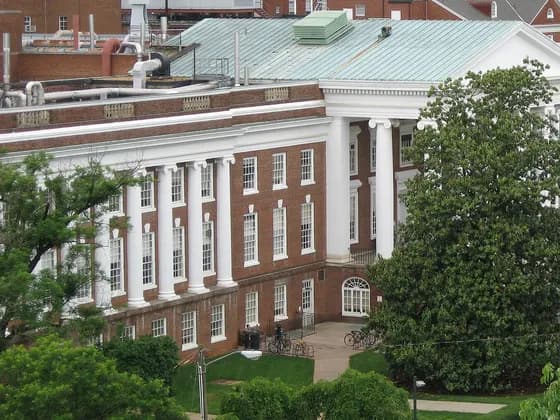
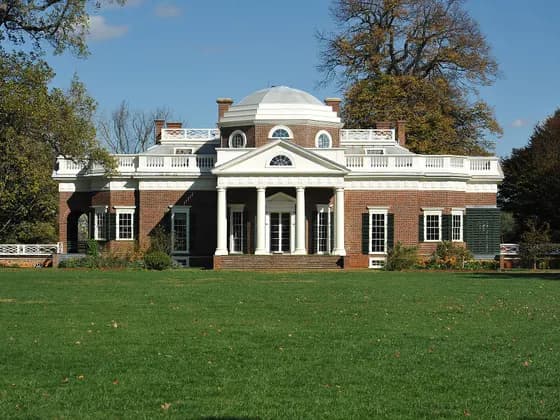
The University of Virginia School of Medicine, founded in 1827 by Thomas Jefferson, is one of the nation's oldest and most prestigious public medical schools. Located in Charlottesville on Jefferson's Academic Village, UVA SOM offers a research-intensive 4-year MD curriculum with early clinical exposure and strong pathways in biomedical research, global health, and clinical investigation. UVA Health serves as the primary tertiary care and teaching hospital network, with additional training at the Salem VA Medical Center and community health sites across rural central Virginia.

Entry Requirements

What you need to apply to University of Virginia School of Medicine (MD).

Admission overview
Bachelor's degree and MCAT required. Applied via AMCAS. Virginia residents receive preference for the majority of seats. No specific prerequisite major; strong science preparation expected. Secondary application required. Competitive applicants demonstrate research or scholarly activity, clinical exposure, and community service.
MCAT median
518 (range 513–522)
GPA median
3.84 overall / 3.81 science (BCPM)
Acceptance rate
3.0%
Class size
156
In-state preference
Moderate — some OOS consideration
In-state matriculants
52%
CASPer
Not required
Holistic review emphasis
Academic excellence, research experience, clinical exposure, and personal integrity.
Notes
Estimates from public AAMC FACTS / class-profile data; verify current cycle. AMCAS application; Virginia residents receive moderate preference.
Specialities offered
Cancer Biology, Cardiovascular Medicine, Neuroscience, Infectious Disease, Global Health

Interview Format

How University of Virginia School of Medicine (MD) interviews applicants.

Format
MMI (multiple stations, in-person)
Interview window
October–February
Decision date
March 30 (AAMC standard)
Post-interview chances
Post-interview acceptance estimated at 20–30%; Virginia residency is a meaningful advantage but strong out-of-state candidates are regularly admitted.

What to expect at a University of Virginia School of Medicine (MD) interview

UVA SOM uses an MMI format with six to eight stations assessing communication, ethical reasoning, critical thinking, and interpersonal skills. Stations run approximately eight minutes each with two minutes of prep time. The full interview day includes an orientation session, tour of the UVA Health medical campus, and lunch with current medical students. Assessors evaluate each station independently; scores are aggregated and reviewed by the admissions committee.

What makes University of Virginia School of Medicine (MD) different

UVA SOM operates within one of the leading academic health systems in the Southeast, with a strong research enterprise spanning cancer, cardiovascular disease, neuroscience, and infectious disease. The school has a historic honour tradition consistent with the broader University of Virginia culture. Training occurs in Charlottesville's integrated health system, providing exposure from rural outreach clinics to high-acuity academic medicine.

Tutor insight

UVA's MMI stations often draw on the honour culture of the University — questions about academic integrity, professional responsibility, and transparency under pressure recur. Prepare concrete examples of ethical decision-making in academic or clinical settings. The iClinical curriculum integrates patient contact very early, so demonstrating genuine patient-facing experience and communication skills is important. Research is valued but not to the exclusion of all other qualities; UVA produces both strong clinicians and physician-scientists.
Prometheus
595 medicine questions inside

Interview questions matched to University of Virginia School of Medicine (MD)

Two questions our tutors flagged as a strong fit for University of Virginia School of Medicine (MD)’s interview style. Try answering them out loud, then open Prometheus for the model answers and follow-up tips.

HardMMIQ1

US Healthcare Ethics: Coverage Gap and the Uninsured

A 38-year-old uninsured patient presents to your clinic with uncontrolled hypertension and early-stage chronic kidney disease. She earns slightly above her state's Medicaid eligibility threshold but cannot afford private insurance premiums, placing her in the coverage gap — a policy artifact created when Florida and nine other states chose not to expand Medicaid under the ACA. She asks you directly: 'Is this a medical problem or a political problem?' How do you respond, and what does her situation reveal about the obligations of physicians in a system with structural access barriers?

Likely follow-up · What specific resources or safety-net programs might you connect this patient with in a non-expansion state?

3 expert tips in Prometheus
MediumMMIQ2

AAMC Core Competency: Social Skills and Conflict Resolution

Two members of your research team — a graduate student and an undergraduate assistant — have come to you as the lab manager with a complaint about each other. The graduate student says the undergraduate misrepresented her role in a poster abstract submission. The undergraduate says the graduate student has been taking sole credit for shared work for months. Neither is willing to speak directly to the other. How do you resolve this?

Likely follow-up · What is the difference between mediation, arbitration, and adjudication in a workplace conflict, and which is appropriate here?

3 expert tips in Prometheus

Ready to practise University of Virginia School of Medicine (MD)?

Book a school-specific mock interview with University of Virginia School of Medicine (MD) preselected.

Book a University of Virginia School of Medicine (MD) mock

University of Virginia School of Medicine (MD) - Frequently asked questions

Bachelor's degree and MCAT required. Applied via AMCAS. Virginia residents receive preference for the majority of seats. No specific prerequisite major; strong science preparation expected. Secondary application required. Competitive applicants demonstrate research or scholarly activity, clinical exposure, and community service.

MMI (multiple stations, in-person). UVA SOM uses an MMI format with six to eight stations assessing communication, ethical reasoning, critical thinking, and interpersonal skills. Stations run approximately eight minutes each with two minutes of prep time. The full interview day includes an orientation session, tour of the UVA Health medical campus, and lunch with current medical students. Assessors evaluate each station independently; scores are aggregated and reviewed by the admissions committee.

University of Virginia School of Medicine (MD) typically interviews in October–February.

Decisions are released March 30 (AAMC standard).

UVA SOM operates within one of the leading academic health systems in the Southeast, with a strong research enterprise spanning cancer, cardiovascular disease, neuroscience, and infectious disease. The school has a historic honour tradition consistent with the broader University of Virginia culture. Training occurs in Charlottesville's integrated health system, providing exposure from rural outreach clinics to high-acuity academic medicine.
Reviewed by Isaac Butler-King, medical student at the University of Glasgow. Last reviewed: 6 June 2026 · NextGen MedPrep editorial team
University of Virginia School of Medicine (MD) | MCAT median 518, GPA & Interview Format | NGMP