US Medicine · 2027 Entry

MUSC College of Medicine (MD) Medical School2027 Entry Requirements & Interview Format

Location Charleston, SC, United StatesEstablished 1824Interviews September–FebruaryDecisions March 30 (AAMC standard)

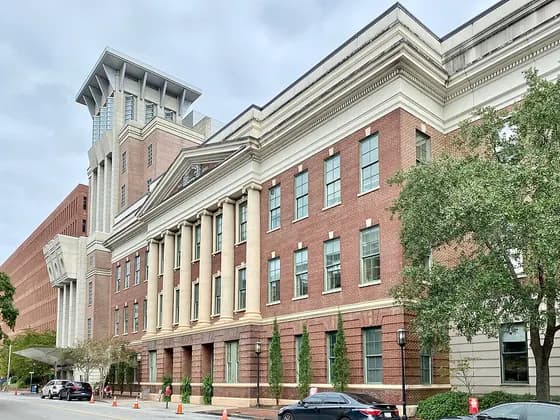
Photo: ProfReader · CC BY-SA 3.0

Start here
Overview

About MUSC College of Medicine (MD)

Medical University of South Carolina College of Medicine, established in 1824 in Charleston, is one of the oldest medical schools in the United States and the primary training ground for South Carolina's physician workforce. It is part of the comprehensive MUSC academic health system — the state's only health sciences university — which gives students access to an extraordinarily broad range of clinical environments including the MUSC Health University Medical Center, Children's Hospital, and rural health network sites across the state. The school serves an important public health mission in a state with significant rural physician shortages and health disparities.

What makes it different

MUSC, founded in 1824, is the oldest medical school in the American South and operates as the state's only academic medical center combining medicine, pharmacy, dentistry, nursing, health professions, and graduate studies under one roof. The college benefits from MUSC's Level I Trauma Center and Children's Hospital, and operates rural training sites across South Carolina. Its MD/PhD program is well-regarded in the Southeast.

Course & teaching

Integrated curriculum. 4-year MD. Years 1–2: integrated basic science and early clinical curriculum in Charleston. Year 2: transition to clerkships. Years 3–4: clinical rotations at MUSC Health hospitals, affiliated teaching sites, and rural network practices across South Carolina. Students can pursue Area of Concentration tracks in research, global health, or rural/underserved medicine.

Research strengths

MUSC College of Medicine (MD) has notable research strength in Cancer biology (Hollings Cancer Center), Cardiovascular disease, Neuroscience, Rural health disparities, Biomedical research.

Interview

MUSC College of Medicine (MD) interviews via Traditional one-on-one interviews with faculty and admissions committee members. MUSC interview day is held in Charleston and typically includes two individual faculty or committee member interviews of 20–30 minutes each. Interviewers review the full application beforehand and probe academic preparedness, motivation for medicine in South Carolina, community service background, and personal narrative. The day includes a tour of MUSC's main hospital and campus facilities, a group admissions information session, and informal student Q&A over lunch. MUSC places significant emphasis on South Carolina ties and a commitment to serving the state's underserved rural and urban communities.

Intake

Approximately 176 students per year.

At a glance

Founded in 1824, based in Charleston, SC. Programmes offered: Internal Medicine, Surgery, Rural Medicine, Oncology, Neuroscience.

Entry requirements

What you need to apply to MUSC College of Medicine (MD)

Admission overview
Bachelor's degree and MCAT required. Applications via AMCAS. South Carolina residents are strongly preferred; out-of-state applicants face a significantly higher bar. Strong academic preparation, community service, and clinical experience are expected. Secondary application required.
MCAT median
512 (range 507–518)
GPA median
3.85 overall / 3.70 science (BCPM)
Acceptance rate
4.5%
Class size
176
In-state preference
Strong — primarily in-state
In-state matriculants
94%
CASPer
Not required
AAMC PREview
Not required
Holistic review emphasis
South Carolina residency; commitment to state's healthcare workforce; community service; rural/underserved orientation; academic excellence.
Notes
Estimates from public AAMC FACTS / class-profile data; verify current cycle.
Specialities offered
Internal Medicine, Surgery, Rural Medicine, Oncology, Neuroscience
Interview

How MUSC College of Medicine (MD) interviews applicants

Format
Traditional one-on-one interviews with faculty and admissions committee members
Interview window
September–February
Decision date
March 30 (AAMC standard)
Post-interview chances
Estimated post-interview acceptance rate approximately 25–35%; SC residency is the primary differentiator in a competitive in-state pool.
Tutor insight
MUSC is an outstanding value for South Carolina residents — strong clinical training at a Level I trauma center with rural rotation options, at state tuition rates. SC ties are the single most important factor; if you are out of state, have a very compelling narrative for why South Carolina. The school's focus on rural and underserved communities means community service and clinical exposure in non-urban settings is valued. The Charleston campus is small and collegiate — emphasize teamwork, collegiality, and commitment to the SC health workforce in your interview. MUSC's Hollings Cancer Center and neuroscience programs attract applicants interested in research; if so, name specific faculty or programs.
Practice

Practise for your MUSC College of Medicine (MD) interview

PrometheusQuestion Bank621 medicine questions inside

Interview questions matched to MUSC College of Medicine (MD)

Two questions our tutors flagged as a strong fit for MUSC College of Medicine (MD)’s interview style. Try answering them out loud, then open Prometheus for the model answers and follow-up tips.

EasyPanelQ1

AAMC Core Competency: Professionalism and Social Media Identity

Before entering medical school, you had an active social media presence with posts that were sometimes edgy, politically charged, or contained language that you would not use in a professional context today. A medical school admissions committee member who googled your name found some of these posts. How do you address this, and what principles should guide a medical professional's approach to their digital footprint going forward?

Likely follow-up · At what point in the application process should you audit and curate your digital presence?

3 expert tips in Prometheus
MediumMMI · PanelQ2

AAMC Core Competency: Cultural Humility in Clinical Practice

An attending physician you are shadowing tells a patient, a recent Haitian immigrant, that she needs to stop drinking herbal teas prepared by a community healer and switch entirely to her prescribed blood pressure medications. The patient agrees in the office but the attending later tells you she probably will not be adherent. What do you think went wrong in this interaction, and how would you approach the conversation differently?

Likely follow-up · What is the difference between cultural competence and cultural humility, and why does the distinction matter clinically?

3 expert tips in Prometheus
Get support

Apply to MUSC College of Medicine (MD) with confidence

We've helped students into MUSC College of Medicine (MD) and other US medicine schools — get tailored support for each stage of the application.

FAQ

MUSC College of Medicine (MD) — frequently asked questions

Apply to MUSC College of Medicine (MD) with confidence

We've helped students turn their MCAT, personal statement and interview prep into offers from MUSC College of Medicine (MD) and other US medicine schools.