
Cooper Medical School of Rowan University Interview
Format, Questions & Prep Tips
Cooper Medical School of Rowan University medicine interviews for 2027 entry are a traditional interview. Published figures: Annual MD class size ~112; Interview format Traditional panel — 1–2 interviewers, ~30–45 min; MCAT median ~512.
- Institution
- Cooper Medical School of Rowan University
- Interview (2027 entry)
- September through February; rolling invitations
- Decisions (2027 entry)
- Rolling decisions; most offers by March 30; waitlist movement through summer

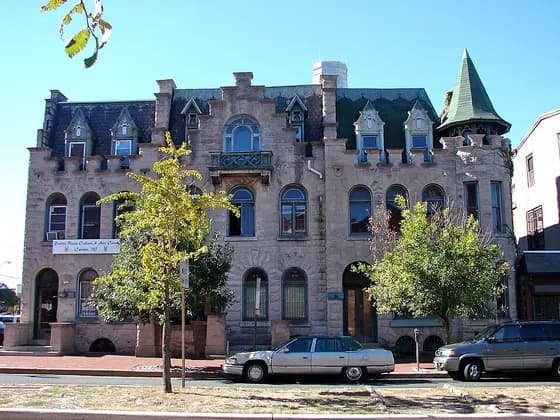
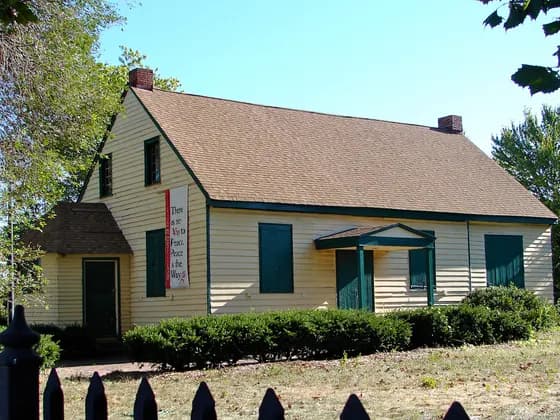

Photo: Pocketmedicine · CC BY-SA 4.0 · cropped
Photo: Smallbones · Public domain · Photo: Smallbones · Public domain · Photo: Bronzeage10 · CC BY 4.0
How to get into Cooper Medical School of Rowan University (MD) medicine
Step-by-step: entry requirements, admission tests, personal statement, interview format and the key deadlines.
Open the guide →Cooper Medical School of Rowan University (MD) entry requirements
Admission profile, interview format, decision dates and what makes Cooper Medical School of Rowan University (MD) different.
See the profile →The Cooper Medical School of Rowan University (MD) medicine interview
Cooper Medical School of Rowan University (CMSRU) uses a traditional panel interview format. Applicants typically meet with one or two faculty members, clinicians, or medical students in sessions of approximately 30–45 minutes. Interviewers read the full application in advance.
CMSRU was deliberately located in Camden, NJ — one of America’s most economically distressed cities — and every aspect of the interview probes whether you understand and embrace that mission. Candidates who cannot speak specifically to urban health challenges, social determinants of health, and the realities of practicing in a safety-net setting will not perform well.
The small class (~50 students) makes cultural fit critical. CMSRU interviewers look for collaborative, humble, service-oriented candidates who will engage authentically with the Camden community throughout four years of training.
Cooper Medical School of Rowan University (MD) interview at a glance (2027 entry)
| Annual MD class size | ~112 |
|---|---|
| Interview format | Traditional panel — 1–2 interviewers, ~30–45 min |
| MCAT median | ~512 |
| GPA median | ~3.77 |
| Application system | AMCAS |
| Interview window | September–February |
| In-state preference | Strong (NJ residents strongly preferred) |
Interview format
- One or two traditional one-on-one sessions with faculty or medical students.
- Sessions run ~30–45 minutes; full interview day spans ~4–6 hours.
- Non-blind — interviewers have read your application and will reference specific experiences.
- Community medicine and health disparity questions are consistent interview themes.
- Student-led tour and informal lunch or panel with current students are part of the day.
Working towards the MCAT score Cooper Medical School of Rowan University (MD) expects? Build a week-by-week plan from your test date — free for the first two weeks.
Sample interview questions
CMSRU is located in Camden, consistently ranked among the most economically distressed US cities. Why does that specific location appeal to you for your medical training?
Be specific about Camden's health landscape: high poverty, high uninsured rate, environmental health challenges, and Cooper as the safety-net hospital. Avoid sanitized or romantic portrayals.
Describe your most meaningful experience serving an underserved or marginalized community. What did you learn that changed how you think about healthcare?
CMSRU interviewers probe depth of service experience. Show the specific community, the specific challenge, and a genuine insight — not a feel-good narrative.
A patient in the ED presents with complications from rationing their insulin because they cannot afford it. As the treating physician, what do you do beyond the immediate clinical management?
Address the immediate clinical need AND systemic advocacy: social work referral, pharmaceutical assistance programs, patient navigation, and insulin affordability advocacy. Show you think beyond the acute encounter.
You are working in a safety-net hospital with very limited resources. Two patients need the same scarce resource. How do you decide who receives it?
Discuss triage principles, clinical need vs. social utility debates, ethics committee involvement, and the emotional weight of resource allocation. Show principled reasoning, not avoidance.
Role play: a patient with limited English needs to understand their discharge instructions. You do not have an interpreter immediately available. How do you proceed?
Language access is a legal right — avoid family member interpreter shortcuts. Discuss using a qualified phone/video interpreter, simple language, teach-back, written translated materials, and flagging for follow-up.
What is one social determinant of health that you believe is most underaddressed in Camden specifically, and what could a physician do about it?
Research Camden: high rates of lead exposure, food insecurity, violence, environmental contamination, and housing instability. Choose one, argue it, and describe a concrete physician role — clinical screening, advocacy, community partnership.
How has your background shaped your understanding of health disparities in the US?
Be honest and specific. Post-SCOTUS holistic framing — lived experience of poverty, marginalization, or community service all count. Avoid performing empathy without genuine grounding.
A nurse colleague tells you that a physician has been making derogatory comments about low-income patients in a private setting. What do you do?
This is about professional accountability and patient dignity. Address duty to patients, reporting processes, and how to handle situations where seniority creates power imbalances.
How does structural racism manifest in healthcare delivery, and what can an individual physician do about it at the practice level?
Move beyond awareness to action: implicit bias training, standardized care protocols that reduce provider discretion on high-disparity decisions, patient advocacy, and structural advocacy through professional organizations.
Describe a time you had to build trust with someone who was initially very resistant or distrustful. What worked and what did not?
STAR. The scenario should ideally involve a marginalized or underserved context. Focus on listening, meeting the person where they are, and patience over time — not a one-time charm offensive.
Camden has carried childhood lead-poisoning rates well above the national average, alongside concentrated poverty and environmental burden. Lead exposure is essentially preventable, so why does it persist, and what can a physician do beyond testing blood levels?
Connect the figures to old housing stock, disinvestment, and weak enforcement. The physician's role extends to screening, reporting, family education, and advocacy for remediation and housing policy — show systems-level, not purely clinical, thinking.
Role play: a patient at Cooper has been coming to the ED repeatedly for asthma exacerbations. You suspect mold and pests in their rental housing are the trigger. They are wary and say 'doctors never actually help with that stuff.' Talk to them.
Validate the skepticism, connect the medical problem to the housing cause without blaming the patient, and offer concrete support (social work, housing-code referral, asthma action plan, environmental remediation resources). Build trust over a single visit's limits.
Tell me about a time you collaborated with people outside medicine — community organizers, social workers, teachers, faith leaders — to address someone's needs. What was your role?
STAR. Camden-style safety-net practice is inherently interprofessional and community-embedded. Show genuine respect for non-clinical partners and an ability to work across sectors, not lead from above.
You are part of a community health project in Camden. Residents express frustration that medical students 'come, study us, and leave.' How do you think about the ethics of training in a community you are not from?
Engage extractive vs. reciprocal engagement, humility, accountability to the community, and sustained relationship over parachute service. CMSRU faculty are protective of Camden — show you understand that tension honestly.
What assets and strengths — not just deficits — do you see in a community like Camden, and how would recognizing them change the way you practice there?
This deliberately tests asset-based framing. Speak to resilience, social cohesion, community organizations, and patient expertise. Avoid a purely deficit-laden portrait; CMSRU values physicians who respect the community they serve.
Practise the Cooper Medical School of Rowan University (MD) interview
Rehearse the real format before the day — on demand with our AI interviewers, or live with a tutor.
Sit a mock with photoreal AI interviewers — any time
A timed MMI or panel interview on video — American & international voices — with interviewers who listen, react and press with follow-ups. Rubric-scored feedback and a replay the moment you finish.






Live mocks with a tutor who’s been in the room
A full Cooper Medical School of Rowan University (MD)-style mock with a medic or dentist tutor — honest scoring against real marking criteria, a station-by-station debrief and a written action plan.
Book a mock interviewHow to prepare for the Cooper Medical School of Rowan University (MD) interview
Common pitfalls to avoid
Cooper Medical School of Rowan University (MD) interview — frequently asked questions
Sources & official admissions information
Ready to nail your Cooper Medical School of Rowan University (MD) interview?
Book a mock interview with a tutor who knows the US interview formats, orpractice unlimited stations from our interview question bank.