
Sidney Kimmel Medical College at Thomas Jefferson University Interview
Format, Questions & Prep Tips
Sidney Kimmel Medical College at Thomas Jefferson University medicine interviews for 2027 entry are a traditional interview. Published figures: Annual MD class size ~268; Applications received ~12,000–15,000 per cycle; Interview format Traditional one-on-one — 2 sessions, 30–45 min each.
- Institution
- Sidney Kimmel Medical College at Thomas Jefferson University
- Interview (2027 entry)
- October through February; rolling invitations with early October dates available
- Decisions (2027 entry)
- Rolling decisions; Jefferson issues early offers beginning October 15 on a rolling basis; final decisions by March 30

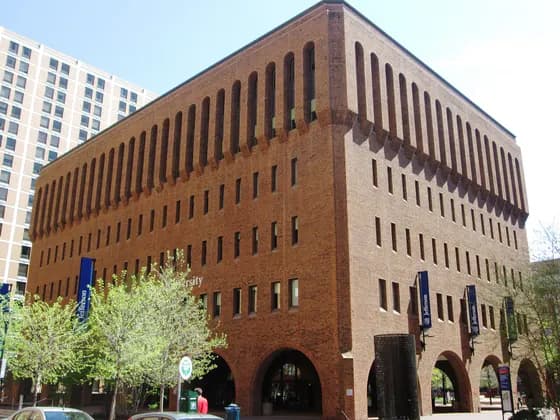
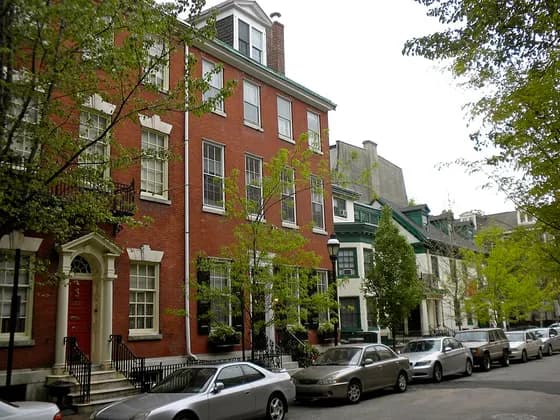
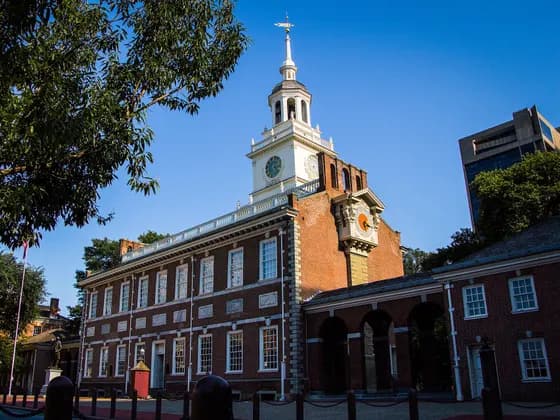
Photo: Ajay Suresh · CC BY 2.0 · cropped
Photo: Beyond My Ken · CC BY-SA 4.0 · Photo: Smallbones · Public domain · Photo: Andrew Rehbein · CC BY-SA 4.0
How to get into Sidney Kimmel Medical College at Thomas Jefferson University (MD) medicine
Step-by-step: entry requirements, admission tests, personal statement, interview format and the key deadlines.
Open the guide →Sidney Kimmel Medical College at Thomas Jefferson University (MD) entry requirements
Admission profile, interview format, decision dates and what makes Sidney Kimmel Medical College at Thomas Jefferson University (MD) different.
See the profile →The Sidney Kimmel Medical College at Thomas Jefferson University (MD) medicine interview
Sidney Kimmel Medical College (SKMC) at Thomas Jefferson University uses a traditional interview format — two one-on-one sessions of 30–45 minutes each with a faculty physician and a current medical student. The interview day is held at the Jefferson University Hospital campus in Center City Philadelphia.
Founded in 1824, SKMC is one of the oldest continuously operating medical colleges in the United States — a heritage that interviewers expect candidates to have engaged with. The school operates within Jefferson Health, one of Philadelphia’s largest health systems with 18+ hospitals, giving students unparalleled breadth of clinical exposure.
The JeffMD competency-based curriculum is a key differentiator — it allows individualized pathways and earlier clinical immersion than conventional curricula. Interviewers probe whether applicants have researched JeffMD specifically. Expect questions that probe the AAMC Premed Competencies.
Sidney Kimmel Medical College at Thomas Jefferson University (MD) interview at a glance (2027 entry)
| Annual MD class size | ~268 |
|---|---|
| Applications received | ~12,000–15,000 per cycle |
| Interview format | Traditional one-on-one — 2 sessions, 30–45 min each |
| Curriculum | JeffMD competency-based MD |
| Tuition (2025–26) | ~USD 64,000/year |
| Application system | AMCAS + Jefferson secondary |
| Interview window | October–February |
Interview format
- Two one-on-one sessions with a faculty physician and a current medical student — each 30–45 minutes.
- Interviewers review the full application beforehand; expect questions about clinical experience depth, academic narrative, and specialty interests.
- Tour of Jefferson University Hospital and Hamilton Center for Clinical Education.
- Informal lunch with current students; admissions information session covering the JeffMD curriculum.
- No MMI; no timed stations.
Working towards the MCAT score Sidney Kimmel Medical College at Thomas Jefferson University (MD) expects? Build a week-by-week plan from your test date — free for the first two weeks.
Sample interview questions
Sidney Kimmel Medical College was founded in 1824 and is one of the oldest medical schools in the US. What does that 200-year legacy mean for how the school approaches medical education today?
Jefferson's history: Thomas Jefferson the founder, the historic rivalry with Pennsylvania Hospital, William W. Keen (first surgical oncologist), and how a 200-year-old institution adapts — the JeffMD curriculum as evidence of continuous evolution.
The JeffMD curriculum is competency-based and allows individualized pathways. Which pathway interests you most, and how does it connect to where you want to be 10 years after graduating?
What they are listening for:
- Research
- population health
- global health
- clinical leadership — know the JeffMD pathway options
Be specific: what competencies does your target career require and how does the pathway accelerate them?
Jefferson Health has 18+ hospitals across the Philadelphia region — urban, suburban, and rural. As a health system, how do you balance investment in technology-rich urban tertiary care versus access in under-resourced community hospitals?
Resource allocation across a multi-site health system; certificate of need law in Pennsylvania; community benefit obligations; the cross-subsidy model in integrated health systems.
A wealthy patient requests a non-evidence-based treatment they saw online. They are willing to pay out of pocket. Do you prescribe it?
Beneficence and non-maleficence vs. patient autonomy; physician liability for harm from non-evidence-based treatment; the physician's integrity even when the patient can pay.
A first-generation college student who is also a medical student confides that they feel isolated in their cohort and are considering leaving medicine. What do you do?
What they are listening for:
- First-gen physician identity
- belonging and imposter syndrome
- active listening before problem-solving
- pointing to institutional resources (mentorship programs, affinity groups)
- knowing when to involve support services
Philadelphia has the highest large-city poverty rate in the US. A patient lacks health insurance and needs a follow-up MRI you believe is clinically necessary. What options do you explore?
What they are listening for:
- Charity care programs
- FQHC referral
- prior auth for Medicaid
- Jefferson's financial assistance office
- the physician's documentation role in supporting coverage determinations
Tell me about a time you encountered conflicting evidence on a clinical question. How did you decide how to proceed?
Critical appraisal:
- study design hierarchy
- applicability to the specific patient
- clinical expertise weighting
- shared decision-making under uncertainty
Jefferson's network spans urban Center City Philadelphia hospitals and suburban and community sites. What does that geographic range mean for your training experience?
What they are listening for:
- Diversity of patient populations
- disease burden patterns
- resource contexts
Be specific: urban trauma and complex social determinants vs. suburban primary care and preventive medicine.
A student colleague is being romantically pursued by a faculty member in a position of evaluative authority over them. You are the only one who knows. What do you do?
What they are listening for:
- Power imbalance
- Title IX
- professional conduct policies
- the colleague's autonomy vs. your institutional duty to report
- support resources
[Role-play] You are a Jefferson medical student. A patient who traveled from a suburban site to Center City for specialist care is overwhelmed and confused about why they were sent across the health system, and is questioning whether to follow through. You have 8 minutes.
Acknowledge the confusion of navigating an 18-hospital system. Lead with empathy, explain the rationale in plain terms without defensiveness, and help the patient feel oriented and supported rather than processed. Assessors value rapport before logistics.
An interviewer shows you Philadelphia data: the highest large-city poverty rate in the US alongside uninsured rates by neighborhood. How do you read this, and what would you want to know before drawing conclusions about Jefferson's role?
Distinguish poverty from uninsurance from access; name confounders and the role of Medicaid, FQHCs, and charity care. Connect to Jefferson Health's cross-subsidy obligations as a large multi-site system without over-claiming from one snapshot.
A first-generation patient brings their teenage child to interpret a serious diagnosis because they trust family more than a stranger. You can tell the child is distressed by what they are hearing. How do you handle this?
Balance respect for the family's trust against the harm of using a child as interpreter (accuracy, the child's wellbeing, privacy). Offer a professional interpreter sensitively, validate the family's preference, and ensure the patient is not left feeling judged.
JeffMD is competency-based rather than purely time-based. Tell me about a time you realized you had genuinely mastered something — versus just passed a test. What was the difference?
Probes how you think about competence and self-directed learning, central to JeffMD. Use a concrete example distinguishing surface performance from real mastery, and connect it to why a competency-based, individualized pathway appeals to you.
Jefferson is 200 years old yet rebuilt its curriculum around JeffMD. Tell me about a time you helped change something established — a tradition, a process, a way of doing things — while respecting why it existed.
Connect Jefferson's blend of heritage and reinvention to a real experience. Show you can honor what works while improving what does not — the kind of judgment valued at an institution that adapts a long tradition rather than discarding it.
You are on a team where a colleague consistently takes credit for shared work in front of supervisors. It is starting to affect morale. How do you address it?
Show you can navigate interpersonal conflict directly and professionally — a private conversation first, focusing on behavior and team function rather than accusation, and escalation only if it continues. Demonstrate emotional maturity and team orientation.
Practise the Sidney Kimmel Medical College at Thomas Jefferson University (MD) interview
Rehearse the real format before the day — on demand with our AI interviewers, or live with a tutor.
Sit a mock with photoreal AI interviewers — any time
A timed MMI or panel interview on video — American & international voices — with interviewers who listen, react and press with follow-ups. Rubric-scored feedback and a replay the moment you finish.





Live mocks with a tutor who’s been in the room
A full Sidney Kimmel Medical College at Thomas Jefferson University (MD)-style mock with a medic or dentist tutor — honest scoring against real marking criteria, a station-by-station debrief and a written action plan.
Book a mock interviewHow to prepare for the Sidney Kimmel Medical College at Thomas Jefferson University (MD) interview
Common pitfalls to avoid
Sidney Kimmel Medical College at Thomas Jefferson University (MD) interview — frequently asked questions
Sources & official admissions information
Ready to nail your Sidney Kimmel Medical College at Thomas Jefferson University (MD) interview?
Book a mock interview with a tutor who knows the US interview formats, orpractice unlimited stations from our interview question bank.