
Drexel University College of Medicine Interview
Format, Questions & Prep Tips
Drexel University College of Medicine medicine interviews for 2027 entry are multiple mini interviews (MMI). Drexel University College of Medicine describes the format as: Virtual MMI (2026–27 cycle). Published figures: Annual MD class size ~255; Applications received ~15,000–18,000 per cycle; Interview format Traditional one-on-one — 2 sessions, 30–40 min each.
- Institution
- Drexel University College of Medicine
- Interview (2027 entry)
- August through March; Drexel is among the earliest to invite and one of the longest interview windows in AMCAS
- Decisions (2027 entry)
- Rolling decisions; Drexel issues early decisions for strong candidates on a rolling basis, with final decisions by March 30
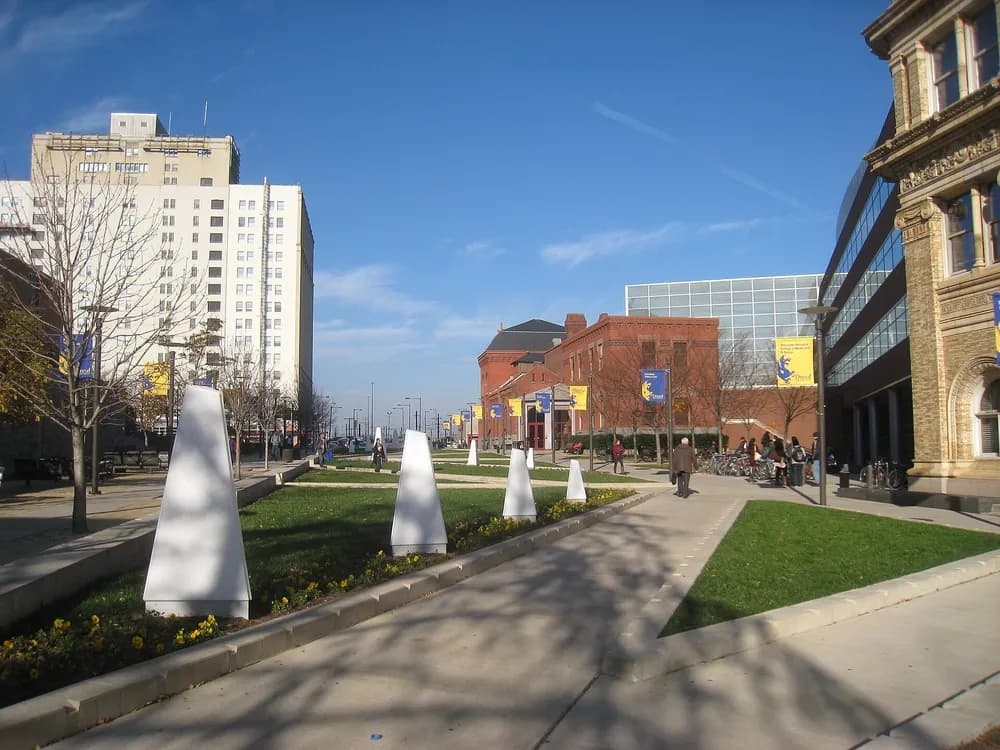



Photo: Daderot · Public domain · cropped
Photo: User TexasDex on en.wikipedia · CC BY-SA 3.0 · Photo: Zhicheng Zhao · CC BY-SA 4.0 · Photo: Max Binder · CC BY-SA 3.0
How to get into Drexel University College of Medicine (MD) medicine
Step-by-step: entry requirements, admission tests, personal statement, interview format and the key deadlines.
Open the guide →Drexel University College of Medicine (MD) entry requirements
Admission profile, interview format, decision dates and what makes Drexel University College of Medicine (MD) different.
See the profile →The Drexel University College of Medicine (MD) medicine interview
Drexel University College of Medicine uses a traditional interview format — two one-on-one sessions of 30–40 minutes each with a faculty physician and a current medical student. The interview day is held on the Queen Lane campus in Philadelphia’s East Falls neighborhood.
Drexel is one of the largest medical schools in the US (~255 students/year) with one of the largest applicant pools (~15,000–18,000). Interviewers are experienced at distinguishing candidates with genuine resilience and self-awareness from those with well-rehearsed generic narratives — authenticity and self-reflection are weighted heavily.
The school traces its lineage through Woman’s Medical College of Pennsylvania (1850), one of the first institutions to award the MD degree to women. This history shapes a commitment to inclusive medical education that interviewers often probe. Expect questions that probe the AAMC Premed Competencies.
Drexel University College of Medicine (MD) interview at a glance (2027 entry)
| Annual MD class size | ~255 |
|---|---|
| Applications received | ~15,000–18,000 per cycle |
| Interview format | Traditional one-on-one — 2 sessions, 30–40 min each |
| Curriculum | Foundations and Frontiers dual-track (Tradition + Fusion PBL) |
| Tuition (2025–26) | ~USD 63,000/year |
| Application system | AMCAS + Drexel secondary |
| Interview window | August–March |
Interview format
- Two one-on-one sessions with a faculty physician and a current medical student — each 30–40 minutes.
- Interviewers have reviewed the full application; expect questions about academic trajectory, non-linear pathways, and resilience.
- Campus tour of Queen Lane campus and basic sciences facilities.
- Informal lunch with students; admissions information session including the Foundations and Frontiers curriculum overview.
- No MMI; no timed stations.
Working towards the MCAT score Drexel University College of Medicine (MD) expects? Build a week-by-week plan from your test date — free for the first two weeks.
Sample interview questions
Drexel's College of Medicine traces its history through Woman's Medical College of Pennsylvania, founded in 1850. What does that legacy of expanding access to medical education mean to you personally?
Reference the historic exclusion of women and minorities from medicine; connect to your own sense of mission or identity. Avoid surface-level tribute — show you have engaged with what inclusive medical education requires in 2026.
The Foundations and Frontiers curriculum offers two tracks — Tradition (lecture-based) and Fusion (problem-based learning). Which would you choose and why?
Demonstrate genuine self-knowledge about how you learn. Fusion/PBL suits collaborative self-directed learners; Tradition suits structured processors. Assessors probe whether you have thought this through or are giving a strategic answer.
Philadelphia has significant healthcare inequality between wealthier neighborhoods and lower-income communities like North Philadelphia. What structural drivers do you see, and what is a physician's responsibility in addressing them?
Philadelphia-specific:
- insurance coverage gaps
- Temple/Jefferson safety-net role
- FQHC networks
- Medicaid reimbursement inadequacy
- residential segregation as a health determinant
A classmate tells you they are selling their Adderall prescription to other students who say it helps them study. What do you do?
What they are listening for:
- Controlled substance diversion
- peer professionalism
- patient safety vs. loyalty to classmates
- appropriate escalation channels at a medical school
You are volunteering at a free clinic. A patient says they do not trust doctors because they feel they were dismissed previously for being overweight. How do you respond?
Weight bias in medicine is documented and harmful. Non-defensive acknowledgment, trust-building, and setting a different expectation in this encounter. AAMC Understanding Others competency.
Drexel accepts one of the largest MD classes in the country. Some applicants see that as a concern about quality or individual attention. How do you see it?
Class size has real implications for simulation access, small-group learning ratios, and residency mentorship. Honest engagement with tradeoffs is more compelling than unqualified defense.
Tell me about an academic experience that did not go the way you expected — an exam, a research project, a course. What did you take from it?
Drexel sees many applicants with varied academic trajectories. This question probes resilience and self-awareness more than the specific failure. Authentic reflection over polished narrative.
A new FDA-approved drug offers modest benefit over an existing generic but costs 50× more. Your patient cannot afford the generic. How do you approach the prescription decision?
What they are listening for:
- Drug affordability
- cost-effectiveness
- shared decision-making
- patient financial toxicity
- the physician's role in challenging pharmaceutical pricing
[Role-play] You are a Drexel medical student volunteering at a free clinic in North Philadelphia. A patient is upset that they have been told they must travel to a different site for an MRI they cannot easily reach without a car. They are ready to give up on the whole process. You have 8 minutes.
Open with empathy and acknowledge the real transportation barrier. Drexel weights authenticity and self-reflection — avoid scripted reassurance. Explore concrete options (community resources, care coordination, telehealth follow-up) and be honest about constraints while keeping the patient engaged.
An interviewer shows you life-expectancy data by Philadelphia ZIP code, with a gap of roughly 20 years between adjacent neighborhoods. How do you interpret this, and what would you want to know before drawing conclusions about causes?
Distinguish correlation from causation; name structural drivers (income, insurance, environmental exposure, residential segregation) without assuming a single cause. Show you understand neighborhood-level disparities as a health determinant, consistent with Drexel's urban setting.
A patient with limited health literacy has just been diagnosed with type 2 diabetes and seems to nod along without really understanding. How do you confirm they have understood their new medication plan?
What they are listening for:
- Teach-back technique
- plain language
- avoiding jargon
- surfacing barriers (cost, food access, work schedule)
Show genuine attention to whether understanding actually occurred rather than assuming it from nodding.
Drexel's Foundations and Frontiers curriculum lets you choose between lecture-based and problem-based learning. Beyond which track you would pick, describe a time you genuinely changed how you study after realizing your old method was not working.
This probes metacognition and self-awareness, which Drexel weights heavily. Use a concrete example of recognizing a flawed approach and adapting — connect it honestly to whether Tradition or Fusion fits how you actually learn.
Woman's Medical College of Pennsylvania trained physicians who were excluded from the profession in their era. Tell me about a time you advocated for someone — or yourself — who was being overlooked or excluded. What did you do?
Connect Drexel's inclusive-education legacy to a genuine personal experience rather than a historical tribute. Show courage and follow-through, and reflect on what it taught you about access and belonging in medicine today.
A classmate confides that they have been struggling with their mental health and are barely keeping up, but they beg you not to tell anyone because they fear it will affect their standing. You are worried about them and about patient safety on their upcoming rotation. What do you do?
Balance loyalty and confidentiality against duty to the colleague's wellbeing and patient safety. Discuss encouraging them toward support services, the limits of secrecy when safety is at risk, and the difference between mandatory escalation and supportive nudging.
You are presenting a patient on rounds and your attending interrupts to challenge your plan in front of the team. You still believe your reasoning is sound. How do you respond in the moment?
Show you can defend clinical reasoning respectfully without being defensive or capitulating purely to hierarchy. Demonstrate openness to being wrong, willingness to ask clarifying questions, and the ability to disagree professionally.
Practise the Drexel University College of Medicine (MD) interview
Rehearse the real format before the day — on demand with our AI interviewers, or live with a tutor.
Sit a mock with photoreal AI interviewers — any time
A timed MMI or panel interview on video — American & international voices — with interviewers who listen, react and press with follow-ups. Rubric-scored feedback and a replay the moment you finish.






Live mocks with a tutor who’s been in the room
A full Drexel University College of Medicine (MD)-style mock with a medic or dentist tutor — honest scoring against real marking criteria, a station-by-station debrief and a written action plan.
Book a mock interviewHow to prepare for the Drexel University College of Medicine (MD) interview
Common pitfalls to avoid
Drexel University College of Medicine (MD) interview — frequently asked questions
Sources & official admissions information
Ready to nail your Drexel University College of Medicine (MD) interview?
Book a mock interview with a tutor who knows the US interview formats, orpractice unlimited stations from our interview question bank.