
Geisinger Commonwealth School of Medicine Interview
Format, Questions & Prep Tips
Geisinger Commonwealth School of Medicine medicine interviews for 2027 entry are multiple mini interviews (MMI). Published figures: Annual MD class size 126 (Class of 2029); Applications received ~5,000–7,000 per cycle; Interview format MMI — 8 stations, ~8 min each.
- Institution
- Geisinger Commonwealth School of Medicine
- Interview (2027 entry)
- October through February; rolling invitations following secondary and CASPer review
- Decisions (2027 entry)
- Rolling decisions; final decisions by March 30

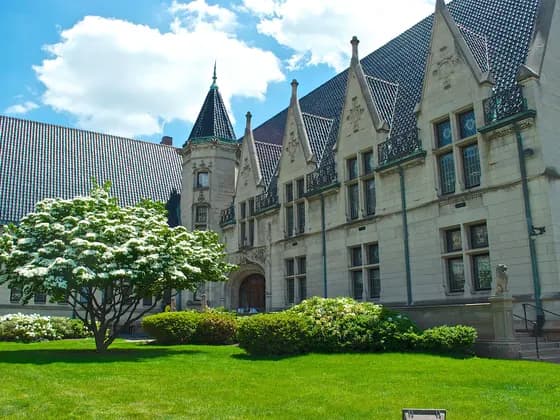


Photo: NEPAAtty · CC BY-SA 4.0 · cropped
Photo: Brad Clinesmith · CC BY-SA 2.0 · Photo: Christopher Seliga · CC BY-SA 3.0 · Photo: Rolfmueller · CC BY-SA 4.0
How to get into Geisinger Commonwealth School of Medicine (MD) medicine
Step-by-step: entry requirements, admission tests, personal statement, interview format and the key deadlines.
Open the guide →Geisinger Commonwealth School of Medicine (MD) entry requirements
Admission profile, interview format, decision dates and what makes Geisinger Commonwealth School of Medicine (MD) different.
See the profile →The Geisinger Commonwealth School of Medicine (MD) medicine interview
Geisinger Commonwealth School of Medicine uses a **Multiple Mini Interview (MMI)** format — 8 stations of approximately 8 minutes each with 2-minute preparation windows. The MMI is held in Scranton, Pennsylvania.
Geisinger Commonwealth is uniquely integrated with the Geisinger Health System, one of the US’s most prominent integrated health organizations and the originator of the ProvenCare value-based care model. Interviewers probe whether applicants genuinely understand health-systems science and want to be trained within a model integrated health system — not just conventional clinical medicine.
Casper is not currently required — verify on the official admissions page each cycle. Applicants should treat CASPer preparation as part of the Geisinger application strategy, not an afterthought. Expect questions that probe the AAMC Premed Competencies, with particular emphasis on service orientation, community health commitment, and interpersonal skills.
Geisinger Commonwealth School of Medicine (MD) interview at a glance (2027 entry)
| Annual MD class size | 126 (Class of 2029) |
|---|---|
| Applications received | ~5,000–7,000 per cycle |
| Interview format | MMI — 8 stations, ~8 min each |
| CASPer required | No |
| Curriculum | Integrated MD with health systems science thread |
| Tuition (2025–26) | ~USD 62,000/year |
| CASPer required | No |
| Interview window | October–February |
Interview format
- 8 MMI stations; each approximately 8 minutes with a 2-minute preparation window.
- Stations span ethical scenarios, role-play, community health policy, collaborative tasks, and reflective prompts.
- Assessors include Geisinger faculty, standardized patients, and community representatives.
- Full day includes Geisinger Health System information session, campus tour, and informal student lunch.
- In-person format in Scranton; station assessors do not see your file.
Working towards the MCAT score Geisinger Commonwealth School of Medicine (MD) expects? Build a week-by-week plan from your test date — free for the first two weeks.
Sample interview questions
Geisinger is known for the ProvenCare model — evidence-based care bundles with guaranteed outcomes. What does training within that model mean for how you will practice medicine?
Understand ProvenCare:
- bundled payments
- standardized care pathways
- outcomes guarantees
- the implications for clinical autonomy vs. standardization
Show genuine engagement with health systems thinking.
A rural Pennsylvania patient must drive 45 minutes to the nearest specialist. Telehealth could solve the access problem but the patient's insurance does not cover it. What do you do?
What they are listening for:
- Telehealth reimbursement gaps post-COVID
- rural access as a structural equity issue
- the physician's role in documenting medical necessity
- advocacy for policy change
- pragmatic workarounds
[Role-play] A patient has just been told they need surgery. They are clearly frightened and asking you to explain what will happen. The surgeon is very busy and asked you to "handle it." You have 8 minutes.
Informed consent process, empathic communication, honest scope of your role (do not overpromise), and flagging the patient's emotional state back to the surgeon.
Geisinger has implemented genetic screening programs that identify disease risk before symptoms appear. A patient's genomic result shows high risk for an untreatable condition. Should they be told?
Predictive genomics ethics:
- duty to disclose vs. right not to know
- psychological impact
- family implications
- life insurance discrimination
- GINA protections
Why Scranton and Northeast Pennsylvania — what draws you to a school embedded in a rural and semi-rural community rather than a major urban academic center?
Northeast PA demographics:
- working-class post-industrial communities
- Appalachian fringe
- aging population
- opioid crisis
Be specific about what rural/community-embedded training offers that a major urban center does not.
A hospital system administrator asks physicians to reduce average length of stay to improve profitability metrics. You believe several patients are being discharged before they are ready. What do you do?
Health systems science:
- cost pressures vs. quality of care
- the attending physician's duty of care
- the importance of documented clinical reasoning
- escalation through quality committees
Describe a situation where you had to persuade a skeptic to consider a different approach to a problem. What strategy worked, and why?
AAMC Premed Competencies: Teamwork and Collaboration, Oral Communication. Change management and persuasion skills are central to health systems work — show you can lead without authority.
Population health management programs sometimes prioritize patients with the highest cost burden or the greatest risk scores, rather than those who show up most consistently. Is this ethically justified?
Utilitarian population health logic vs. individual patient equity; underserved populations are often underidentified by risk scores; justice and access in care management targeting.
[Role-play] You are a student in a Geisinger clinic. A patient with congestive heart failure has been readmitted for the third time this month. They tell you they cannot afford both their medications and their groceries, so they have been skipping doses. You have 8 minutes.
Lead with empathy and avoid lecturing about adherence. Explore the real trade-off the patient is making, discuss medication assistance, simplified regimens, and care-management resources — exactly the kind of population-health problem Geisinger's integrated model is built to address.
A Geisinger care-management dashboard ranks patients by a risk score and flags the top decile for intensive outreach. You notice several clearly struggling rural patients are not in that top decile. What questions do you ask about the model?
Health systems science: risk scores can under-identify underserved or low-utilization patients; ask about the model's inputs, validation population, and equity implications. Connect to Geisinger's population-health approach and the limits of algorithmic targeting.
Geisinger pioneered embedding genomics and health-systems science into routine care. Describe a research or quality-improvement question you would want to investigate within an integrated system like Geisinger.
Show genuine engagement with systems thinking — care-pathway variation, readmission drivers, genomic screening uptake in rural populations. Avoid generic 'I want to do research'; tie it to what an integrated delivery system uniquely enables.
You disagree with a more senior team member about a discharge plan for a complex patient. You believe the patient needs another day; the team is under pressure on length-of-stay metrics. How do you raise your concern?
Demonstrate speaking up without authority, framing the concern around documented clinical reasoning and patient safety rather than confronting the metric directly. Connect to Geisinger's health-systems-science emphasis on quality versus throughput.
Why are you drawn to training within an integrated health system rather than a standalone academic hospital, and what do you think that environment will teach you that a traditional center would not?
Show real understanding of integration: aligned incentives, longitudinal data, care coordination, value-based care. Avoid simply praising Geisinger's reputation — articulate what systems training adds to your development as a physician.
Geisinger's MyCode program returns clinically actionable genomic findings to participants. A participant's results reveal a serious hereditary risk that also implicates close relatives who are not enrolled. What are the ethical considerations in handling this?
Predictive genomics ethics:
- the participant's right to know
- duty to warn versus relatives' autonomy and privacy
- GINA protections
- how a research-and-care program like MyCode manages cascade disclosure
Avoid asserting a single 'correct' answer.
[Role-play] A standardized patient has just learned that a screening result needs urgent follow-up, but they have no transport and live 50 minutes from the Danville campus. They are frightened and overwhelmed. You have 8 minutes.
Address the fear before the logistics; validate, then problem-solve transport and follow-up within an integrated system (care coordination, telehealth, community resources). Geisinger assessors watch for empathy and scope-setting before information delivery in role-play stations.
Practise the Geisinger Commonwealth School of Medicine (MD) interview
Rehearse the real format before the day — on demand with our AI interviewers, or live with a tutor.
Sit a mock with photoreal AI interviewers — any time
A timed MMI or panel interview on video — American & international voices — with interviewers who listen, react and press with follow-ups. Rubric-scored feedback and a replay the moment you finish.






Live mocks with a tutor who’s been in the room
A full Geisinger Commonwealth School of Medicine (MD)-style mock with a medic or dentist tutor — honest scoring against real marking criteria, a station-by-station debrief and a written action plan.
Book a mock interviewHow to prepare for the Geisinger Commonwealth School of Medicine (MD) interview
Common pitfalls to avoid
Geisinger Commonwealth School of Medicine (MD) interview — frequently asked questions
Sources & official admissions information
Ready to nail your Geisinger Commonwealth School of Medicine (MD) interview?
Book a mock interview with a tutor who knows the US interview formats, orpractice unlimited stations from our interview question bank.