
Duquesne University Nasuti COM Interview
Format, Questions & Prep Tips
Duquesne University Nasuti COM medicine interviews for 2027 entry are a traditional interview, held September 2026 through February 2027. Published figures: Annual DO class size ~110 (growing); Tuition (2025–26) ~USD 53,000/year (estimated).
- Institution
- Duquesne University Nasuti College of Osteopathic Medicine
- Interview (2027 entry)
- September through February
- Decisions (2027 entry)
- Rolling decisions, typically 4–8 weeks post-interview

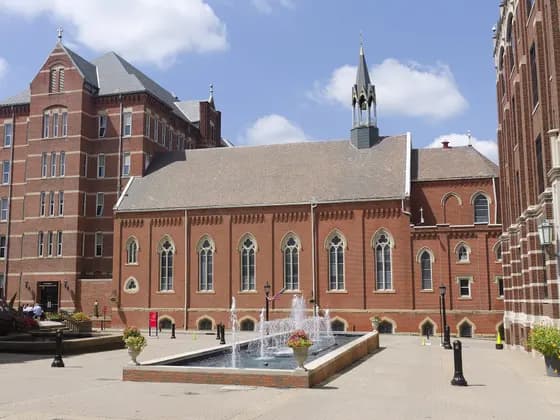
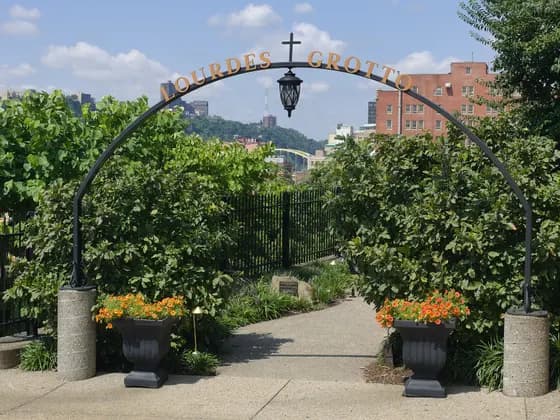

Photo: Cbaile19 · CC0 · cropped
Photo: Alekjds · CC BY 4.0 · Photo: Alekjds · CC BY 4.0 · Photo: Cbaile19 · CC0
How to get into Duquesne University Nasuti COM (DO) medicine
Step-by-step: entry requirements, admission tests, personal statement, interview format and the key deadlines.
Open the guide →Duquesne University Nasuti COM (DO) entry requirements
Admission profile, interview format, decision dates and what makes Duquesne University Nasuti COM (DO) different.
See the profile →The Duquesne University Nasuti COM (DO) medicine interview
Duquesne University Nasuti College of Osteopathic Medicine uses a traditional interview format — faculty sessions at its Pittsburgh, Pennsylvania campus on the Duquesne University bluff above the Mon Valley.
AACOMAS is the primary application service. CASPer is not currently required (verify for current cycle).
Duquesne is a Spiritan Catholic university — home to the Congregation of the Holy Spirit (Spiritans/Holy Ghost Fathers), whose charism is explicitly service to the most marginalized: the poor, migrants, and refugees. This is not merely a legal disclaimer; it fundamentally shapes the Nasuti COM’s culture and the kind of physician it seeks to train. Pittsburgh, meanwhile, has distinctive post-industrial urban health challenges — Mon Valley communities, the Hill District, growing refugee populations — that provide the clinical training context. Newer programs like this one (inaugural class 2024) also probe whether applicants can thrive in an innovative, evolving environment.
Duquesne University Nasuti COM (DO) interview at a glance (2027 entry)
| Annual DO class size | ~110 (growing) |
|---|---|
| Interview format | Traditional — faculty session |
| CASPer required | No |
| Application system | AACOMAS primary + Duquesne secondary |
| Tuition (2025–26) | ~USD 53,000/year (estimated) |
| Interview window | September–February |
Interview format
- Traditional faculty interview; approximately 30–45 minutes.
- Spiritan mission and Pittsburgh community commitment are central themes.
- No MMI.
Working towards the MCAT score Duquesne University Nasuti COM (DO) expects? Build a week-by-week plan from your test date — free for the first two weeks.
Sample interview questions
Duquesne is a Spiritan university with a founding charism of service to the poor, migrants, and refugees. How does that mission connect to your calling as a physician?
Research the Spiritans specifically: the Congregation of the Holy Spirit's tradition of working in underserved communities globally and locally. Connect to your own values and experiences of service to marginalized communities.
Pittsburgh has experienced significant deindustrialization and has communities — the Mon Valley, the Hill District — with persistent poverty and health disparities. Why do you want to serve in this context?
Know Pittsburgh's specific health geography: Allegheny County health data, the steel mill legacy and environmental health (particulate matter, cancer clusters), and the Hill District's history as a historically Black neighborhood with persistent health disparities.
The Nasuti COM was founded in 2024. Does it concern you to attend a very new medical school, and why or why not?
What they are listening for:
- Research COCA accreditation status
- Duquesne's institutional resources and existing health sciences infrastructure
- the specific benefits of a newer program
Show informed confidence rather than naivety.
A migrant farmworker presents to your Pittsburgh clinic with serious symptoms but cannot provide any identification and has no insurance. What do you do?
What they are listening for:
- EMTALA rights
- FQHC sliding-scale care
- community health worker navigation
- immigrant-serving health resources in Pittsburgh
- the Spiritan tradition of serving the marginalized regardless of legal status
Describe your most meaningful experience serving someone on the margins — poor, homeless, immigrant, refugee, or otherwise marginalized.
Authenticity over polish. Draw on real experience where you engaged with structural disadvantage directly, not just proximity to poverty. Reflect on what serving in that context required of you.
Duquesne has established pharmacy, nursing, and physical therapy programs. How do you plan to use Duquesne’s interprofessional health sciences environment in your training?
Interprofessional education in practice: simulated team-based care, understanding pharmacy's role in medication access for low-income patients, and how PT/OT complement OMT in musculoskeletal care.
What draws you specifically to the DO degree, and how does the Spiritan tradition of whole-person service connect to osteopathic principles?
The connection is natural: osteopathic philosophy — the body as a unit, structure-function, self-healing — resonates with the Spiritan view of the whole person. Make that connection explicitly and authentically.
Pittsburgh has a growing refugee population from various countries. What specific health challenges do refugee populations face upon resettlement in the US?
Refugee health screening requirements (TB, vaccinations, lead), mental health (PTSD, depression), nutrition transition, language and cultural barriers, and the FQHC-refugee health program model.
A patient from Pittsburgh's Mon Valley mining community is stoic about symptoms and reluctant to seek care. How do you build a therapeutic relationship with him?
Cultural competency for working-class Appalachian-influenced communities: distrust of "outsiders," stoicism about illness, economic barriers, and building trust through presence and plain communication.
The Spiritan tradition calls physicians to be "people of mission." What does that mean to you, and how does it differ from simply being a good doctor?
Mission implies intentional commitment beyond technical competence — choosing to practice where need is greatest, advocating for structural change, and staying in relationship with communities over time rather than parachuting in.
Pittsburgh's Mon Valley carries a legacy of steel-industry environmental exposure, and the Hill District has persistent, race-linked health disparities. How would you think about measuring whether a clinic is actually narrowing these neighborhood-level gaps?
What they are listening for:
- Equity-stratified
- geographically-aware metrics: disaggregating outcomes by neighborhood and race
- environmental exposure context
- process versus outcome measures
- community-level interventions
Keep figures conceptual.
A stoic older man from a Mon Valley mining family minimizes chest discomfort he's had for weeks and clearly does not want to be in your clinic. Show me how you'd build enough trust to take the symptom seriously.
Demonstrate the encounter: respect his self-reliance, avoid alarmism, use plain language, acknowledge his reluctance, and create enough safety for him to disclose. Working-class, Appalachian-influenced cultural competence.
As an early cohort at a 2024-founded program, you'll help establish study culture. What is your evidence-based plan for COMLEX-USA preparation and keeping OMT skills sharp with limited upper-year mentorship?
What they are listening for:
- Spaced repetition
- active recall
- a board-preparation timeline
- deliberate hands-on OMT practice
- building peer-study structures
Resourcefulness in a young program.
A migrant patient without documentation needs a referral that, in practice, will be hard to access without insurance or ID. The Spiritan mission calls you to serve the marginalized, but the system is not built for him. How do you act?
EMTALA and FQHC safety-net pathways, sliding-scale and charity-care resources, advocacy within system constraints, and connecting mission values to concrete action rather than rhetoric — without overpromising what you cannot deliver.
Describe how you would explain a complex care plan to a refugee patient through an interpreter, and then hand that same plan off to a pharmacy and a physical-therapy student on your team. What changes between the two?
Audience adaptation: teach-back and cultural humility with the patient via interpreter; structured clinical handover to teammates. Relevant to Duquesne's interprofessional health-sciences environment.
Practise the Duquesne University Nasuti COM (DO) interview
Rehearse the real format before the day — on demand with our AI interviewers, or live with a tutor.
Sit a mock with photoreal AI interviewers — any time
A timed MMI or panel interview on video — American & international voices — with interviewers who listen, react and press with follow-ups. Rubric-scored feedback and a replay the moment you finish.





Live mocks with a tutor who’s been in the room
A full Duquesne University Nasuti COM (DO)-style mock with a medic or dentist tutor — honest scoring against real marking criteria, a station-by-station debrief and a written action plan.
Book a mock interviewHow to prepare for the Duquesne University Nasuti COM (DO) interview
Common pitfalls to avoid
Duquesne University Nasuti COM (DO) interview — frequently asked questions
Sources & official admissions information
Ready to nail your Duquesne University Nasuti COM (DO) interview?
Book a mock interview with a tutor who knows the US interview formats, orpractice unlimited stations from our interview question bank.