
Lake Erie College of Osteopathic Medicine Interview
Format, Questions & Prep Tips
Lake Erie College of Osteopathic Medicine medicine interviews for 2027 entry are a traditional interview, held September 2026 through March 2027. Published figures: Annual DO class size ~637 first-years across all campuses (Fall 2025); Tuition (2025–26) ~USD 53,000/year.
- Institution
- Lake Erie College of Osteopathic Medicine
- Interview (2027 entry)
- September through March
- Decisions (2027 entry)
- Rolling decisions; LECOM moves quickly


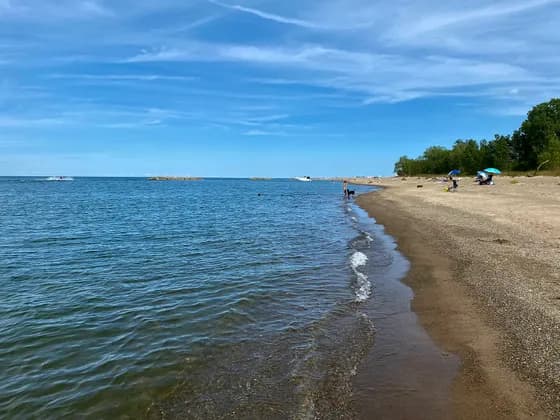
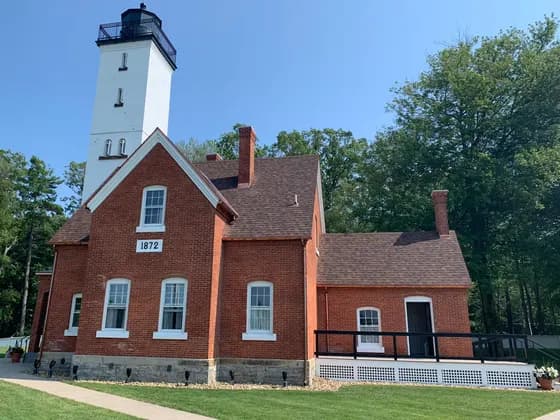
Photo: Pat Noble (User:Pnoble805, English Wikipedia) · CC BY-SA 3.0 · cropped
Photo: Cards84664 · CC BY-SA 4.0 · Photo: Andre Carrotflower · CC BY-SA 4.0 · Photo: Cards84664 · CC BY-SA 4.0
How to get into Lake Erie College of Osteopathic Medicine (DO) medicine
Step-by-step: entry requirements, admission tests, personal statement, interview format and the key deadlines.
Open the guide →Lake Erie College of Osteopathic Medicine (DO) entry requirements
Admission profile, interview format, decision dates and what makes Lake Erie College of Osteopathic Medicine (DO) different.
See the profile →The Lake Erie College of Osteopathic Medicine (DO) medicine interview
Lake Erie College of Osteopathic Medicine (LECOM) uses a traditional interview format — typically a single faculty session or two brief sessions. LECOM is notable for offering three distinct educational pathways — Lecture-Discussion (traditional), Problem-Based Learning (PBL), and Independent Study (IS) — and applicants must select a pathway at application. Interviewers probe which pathway fits the applicant and why.
Casper is not currently required at Lake Erie College of Osteopathic Medicine — verify on the official admissions page each cycle, as requirements change. Interviewers explicitly probe professionalism and ethical reasoning.
LECOM has campuses in Erie, PA; Bradenton, FL; LECOM at Seton Hill (Greensburg, PA); and Elmira, NY — each with different community contexts. Confirming campus and knowing the local health environment is essential.
Lake Erie College of Osteopathic Medicine (DO) interview at a glance (2027 entry)
| Annual DO class size | ~637 first-years across all campuses (Fall 2025) |
|---|---|
| Interview format | Traditional — typically one to two sessions |
| CASPer required | No |
| Application system | AACOMAS primary + LECOM secondary |
| Educational pathways | Lecture-Discussion, Problem-Based Learning, Independent Study |
| Tuition (2025–26) | ~USD 53,000/year |
| Interview window | September–March |
Interview format
- One or two sessions: faculty; typically shorter than most school interviews (~20–30 min).
- Very professionalism-focused — dress code and conduct expectations are enforced strictly even on interview day.
- Interviewers probe educational pathway selection explicitly.
Working towards the MCAT score Lake Erie College of Osteopathic Medicine (DO) expects? Build a week-by-week plan from your test date — free for the first two weeks.
Sample interview questions
LECOM offers Lecture-Discussion, Problem-Based Learning, and Independent Study pathways. Which did you select, and why does it align with how you learn best?
Demonstrate genuine self-knowledge about your learning style: PBL demands self-direction and group work, Independent Study demands extreme discipline, and Lecture-Discussion is the most structured. Know each pathway's trade-offs.
Why osteopathic medicine — what specifically about the osteopathic philosophy drew you to a DO degree rather than an MD?
The single most important DO question. Reference the osteopathic tenets — body unity, self-healing, structure-function interrelation, and rational treatment — and frame osteopathic medicine on its own terms, not as a fallback from MD.
Why LECOM specifically, beyond the pathway you chose? What about the school's culture and campuses fits you?
Be honest and specific. Reference LECOM's affordability, its primary-care orientation, its professionalism-focused culture, or the particular campus community, rather than generic praise.
Tell us about a time you had to manage your own learning with little external structure. What does it reveal about whether your chosen LECOM pathway fits you?
Especially important for PBL and Independent Study applicants. Show evidence — not just assertion — that your study habits match the autonomy the pathway demands.
LECOM has a strict dress code and conduct policy that extends to clinical sites. Some students find these policies unnecessarily restrictive. How do you think about professional dress and conduct norms in medicine?
Professional identity and institutional culture. LECOM's conservative culture is distinctive; articulate genuine respect for professionalism norms and the patient-trust rationale without being disingenuous.
A classmate is visibly hungover at a clinical site and asks you to cover for them with the preceptor. What do you do?
Patient safety and professionalism over loyalty, addressing the friend directly, refusing to misrepresent to the preceptor, and connecting them to help if there is a deeper problem. Relevant given LECOM's conduct standards.
A patient requests OMT but a colleague intends to perform it without explicitly obtaining the patient's informed consent. What do you do?
Informed consent applies to OMT as to any procedure. Address the immediate consent issue and the broader implication for the credibility and ethics of osteopathic practice.
You realize you made a small documentation error that no one has noticed and that did not harm the patient. Do you correct it, and how?
Integrity and accurate records, correcting it through proper channels (amendment rather than alteration), and honesty even when no one would know. Connect to professional trust.
How would you explain to a patient who has never heard of a DO what osteopathic medicine is and how it differs from seeing an MD?
Plain language: DOs are fully licensed physicians with the same rights and residencies as MDs, trained additionally in the whole-person osteopathic approach and OMT. Avoid jargon and avoid implying DOs are lesser.
Describe a time you had to give difficult feedback to a peer or earn the trust of someone skeptical of you. How did you handle it?
AAMC Interpersonal Skills competency. Trust-building and respectful honesty are central to whole-person osteopathic care. Show concrete actions and what you learned.
What does the osteopathic principle that the body is a self-regulating, self-healing unit mean clinically? Give an example.
AAMC science and thinking-and-reasoning competencies. Define the tenet and ground it — e.g. supporting the body's own recovery and removing barriers to healing — showing you grasp osteopathic theory, not just slogans.
What do you understand about the evidence base for OMT, and where is it strongest?
Show research literacy: OMT has its best evidence for conditions such as low back pain, with weaker or mixed evidence elsewhere. Honesty about limits signals maturity.
Describe a subject you found genuinely difficult. How did you adapt your study approach to master it?
Show metacognition and resilience — diagnosing the difficulty and changing strategy — which also speaks to your fit for your chosen LECOM pathway.
A patient is skeptical of OMT, saying it sounds like 'cracking backs' and is not for them. You have a few minutes. How do you talk with them?
Explore the concern, correct misconceptions in plain language, describe what OMT involves and its evidence for their condition, and respect their choice to decline. Inform, do not pressure.
A first-year classmate confides they are overwhelmed by the self-directed demands of the PBL pathway and are falling behind. How do you respond?
Listen and validate, share practical strategies, encourage use of academic and wellness support, and avoid either dismissing the struggle or amplifying their panic.
You are shown a trial of OMT plus usual care versus usual care alone for low back pain with a modest but statistically significant benefit. How do you interpret it for a patient?
Distinguish statistical from clinical significance, weigh effect size and the population studied, and translate it honestly into what it might mean for one patient. Avoid overselling a modest result.
Practise the Lake Erie College of Osteopathic Medicine (DO) interview
Rehearse the real format before the day — on demand with our AI interviewers, or live with a tutor.
Sit a mock with photoreal AI interviewers — any time
A timed MMI or panel interview on video — American & international voices — with interviewers who listen, react and press with follow-ups. Rubric-scored feedback and a replay the moment you finish.





Live mocks with a tutor who’s been in the room
A full Lake Erie College of Osteopathic Medicine (DO)-style mock with a medic or dentist tutor — honest scoring against real marking criteria, a station-by-station debrief and a written action plan.
Book a mock interviewHow to prepare for the Lake Erie College of Osteopathic Medicine (DO) interview
Common pitfalls to avoid
Lake Erie College of Osteopathic Medicine (DO) interview — frequently asked questions
Sources & official admissions information
Ready to nail your Lake Erie College of Osteopathic Medicine (DO) interview?
Book a mock interview with a tutor who knows the US interview formats, orpractice unlimited stations from our interview question bank.