
LECOM Seton Hill Interview
Format, Questions & Prep Tips
LECOM Seton Hill medicine interviews for 2027 entry are a traditional interview, held September 2026 through March 2027. Published figures: Annual DO class size ~104; Tuition (2025–26) ~USD 54,000/year.
- Institution
- Lake Erie College of Osteopathic Medicine at Seton Hill
- Interview (2027 entry)
- September through March
- Decisions (2027 entry)
- Rolling decisions after interview


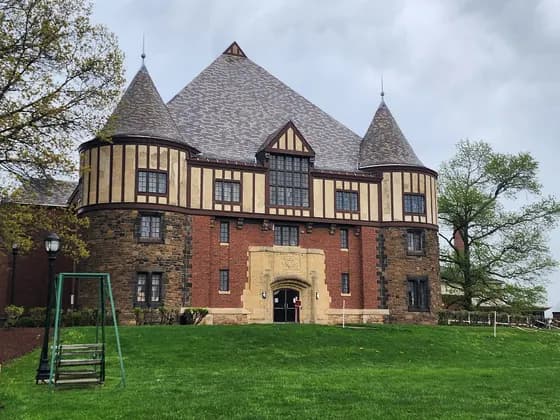
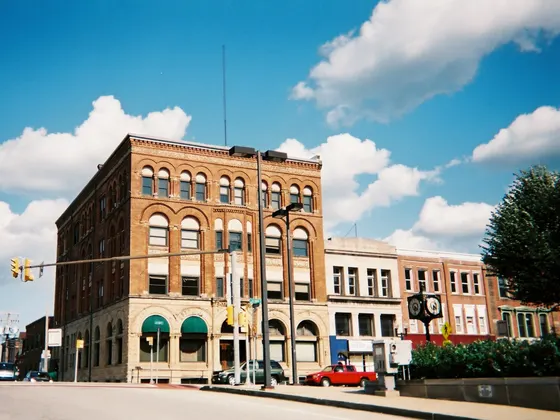
Photo: Irteagle102704 at English Wikipedia · Public domain · cropped
Photo: Farragutful · CC BY-SA 4.0 · Photo: Luna2130 · CC BY-SA 4.0 · Photo: Canadian2006 · CC BY-SA 3.0
How to get into LECOM Seton Hill (DO) medicine
Step-by-step: entry requirements, admission tests, personal statement, interview format and the key deadlines.
Open the guide →LECOM Seton Hill (DO) entry requirements
Admission profile, interview format, decision dates and what makes LECOM Seton Hill (DO) different.
See the profile →The LECOM Seton Hill (DO) medicine interview
Lake Erie College of Osteopathic Medicine at Seton Hill uses a traditional interview format — typically a one-on-one or small panel faculty interview at its Greensburg, Pennsylvania campus. As part of the LECOM system — one of the largest DO medical school networks in the US — Seton Hill shares LECOM’s emphasis on professionalism, osteopathic philosophy, and primary care mission.
The Seton Hill campus is notable for offering LECOM’s Problem-Based Learning (PBL) pathway, distinguishing it from LECOM Erie’s lecture-based Didactic pathway. Interviewers assess whether applicants understand and are suited to self-directed, collaborative learning.
LECOM does not typically require CASPer but has a thorough secondary application. Rolling admissions places a high premium on early submission.
LECOM Seton Hill (DO) interview at a glance (2027 entry)
| Annual DO class size | ~104 |
|---|---|
| Interview format | Traditional — faculty interview |
| CASPer required | No |
| Application system | AACOMAS primary + LECOM secondary |
| Tuition (2025–26) | ~USD 54,000/year |
| Interview window | September–March |
Interview format
- One-on-one or small panel interview with faculty; approximately 30–45 minutes.
- Interview day includes campus tour, financial aid overview, and student Q&A.
- No MMI format.
Working towards the MCAT score LECOM Seton Hill (DO) expects? Build a week-by-week plan from your test date — free for the first two weeks.
Sample interview questions
LECOM Seton Hill offers the PBL pathway — why do you think that learning model suits you, and how have you demonstrated self-directed learning in your academic career?
Be specific about your study habits and experiences with independent learning. Reference the PBL model directly: case-based small-group sessions, self-directed research, peer teaching.
Why do you want to be a DO rather than an MD? What does the osteopathic philosophy offer patients that aligns with your vision of medicine?
Go beyond "holistic approach." Reference OMT, the musculoskeletal system's role in health, osteopathic principles (the body as a unit, structure and function), and your DO shadowing experiences.
A patient asks you to prescribe an opioid for chronic back pain. You believe OMT could help, but the patient is resistant. How do you approach this?
Demonstrate patient-centered communication, OMT advocacy without coercion, shared decision-making, and awareness of the opioid crisis context in rural/community practice.
LECOM has a strong primary care and community health mission. Where do you see yourself practicing in 15 years, and how does that connect to why you chose LECOM?
Be honest about your specialty interests while connecting them to primary care pipeline or underserved community service. LECOM rewards candidates who value broad-scope osteopathic practice.
Tell me about a time you worked in a team where conflict arose. How did you resolve it?
Interpersonal competency. Use a real healthcare or academic example. Focus on active listening, finding common ground, and the outcome for the team or patient.
Describe a time you received critical feedback. How did you respond and what did you change?
LECOM places very high emphasis on professionalism and self-reflection. Show genuine receptiveness to feedback and concrete behavioral change.
What is the biggest challenge facing primary care in the United States today, and how can DO physicians help address it?
What they are listening for:
- Physician shortage
- rural access
- burnout
- reimbursement disparities
- insurance barriers
Connect DO philosophy and osteopathic match rates to primary care pipeline.
Why Seton Hill specifically — what about Western Pennsylvania and this campus drew your application here?
What they are listening for:
- Research Greensburg
- PA — the Pittsburgh metro area's communities
- rural Westmoreland County health challenges
- the Seton Hill University affiliation
Be specific.
In your PBL small group, one member consistently arrives unprepared and leans on others to carry the case discussions. You're the facilitator this week. Address the group — and that member — about it.
PBL depends on shared accountability. Show how you'd raise the issue constructively, separate the behavior from the person, set group norms, and protect both learning and relationships without public shaming.
Westmoreland County and rural Western Pennsylvania have an aging, declining population and limited specialist access. What would you expect the dominant primary care challenges to be, and why?
Chronic disease in an older population, mental health and substance use, transport and access barriers, and a primary-care-heavy burden where specialists are scarce. Reason from demographics to clinical reality.
Problem-based learning shifts much of the responsibility for mastering content onto you. Describe a specific time you taught yourself difficult material without a lecture, and how you knew you'd actually learned it.
Concrete self-directed learning example with a verification step (teaching others, application, self-testing). This directly tests PBL readiness — vague answers about 'being independent' won't suffice.
A patient with chronic low back pain is convinced only an opioid will help and is frustrated that you want to try OMT and physical therapy first. Talk to him.
Validate his pain and frustration, explain OMT and conservative management without coercion, set realistic expectations, and use shared decision-making. Show you can advocate for osteopathic options while preserving trust.
You notice a classmate has been sharing answers to graded PBL assessments in a group chat. LECOM has a strict honor code. What do you do?
What they are listening for:
- Academic integrity
- peer accountability
- the honor-code reporting expectation
- balancing loyalty against the integrity of the credential and future patient safety
Show willingness to act, ideally starting with the peer where appropriate.
What is one thing about osteopathic philosophy — beyond OMT — that genuinely changes how you'd approach a patient compared with a purely allopathic model?
What they are listening for:
- Body as a unit
- self-healing and self-regulation
- structure-function relationship
- primary-care/prevention orientation
Push beyond 'holistic' to a concrete change in clinical reasoning or patient interaction.
Imagine a Greensburg-area clinic finds no-show rates are double in its lowest-income zip codes. Before you assume patients 'don't prioritize health,' what would you want to know?
What they are listening for:
- Transport
- work inflexibility
- childcare
- cost
- reminder systems
- clinic scheduling
Demonstrate that you'd interrogate structural drivers rather than defaulting to a patient-blame narrative.
Practise the LECOM Seton Hill (DO) interview
Rehearse the real format before the day — on demand with our AI interviewers, or live with a tutor.
Sit a mock with photoreal AI interviewers — any time
A timed MMI or panel interview on video — American & international voices — with interviewers who listen, react and press with follow-ups. Rubric-scored feedback and a replay the moment you finish.




Live mocks with a tutor who’s been in the room
A full LECOM Seton Hill (DO)-style mock with a medic or dentist tutor — honest scoring against real marking criteria, a station-by-station debrief and a written action plan.
Book a mock interviewHow to prepare for the LECOM Seton Hill (DO) interview
Common pitfalls to avoid
LECOM Seton Hill (DO) interview — frequently asked questions
Sources & official admissions information
Ready to nail your LECOM Seton Hill (DO) interview?
Book a mock interview with a tutor who knows the US interview formats, orpractice unlimited stations from our interview question bank.