
Penn State College of Medicine Interview
Format, Questions & Prep Tips
Penn State College of Medicine medicine interviews for 2027 entry are a traditional interview. Published figures: Annual MD class size ~148; Applications received ~6,000–8,000 per cycle; Interview format Traditional one-on-one — 2 sessions, 30–45 min each.
- Institution
- Penn State College of Medicine
- Interview (2027 entry)
- October through February; rolling invitations
- Decisions (2027 entry)
- Decisions by late March; waitlist movement through May–August

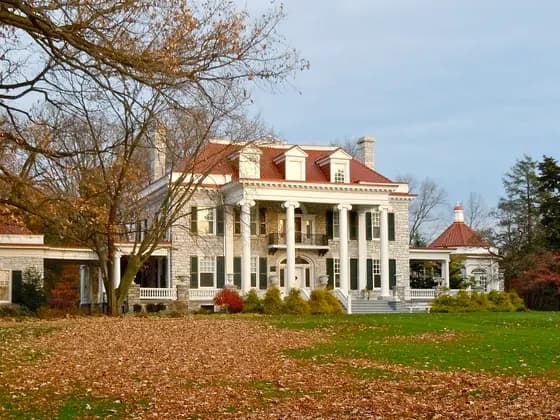


Photo: Penn State Health · CC BY 2.0 · cropped
Photo: Smallbones · CC0 · Photo: Smallbones · CC0 · Photo: J. Passepartout · CC BY-SA 4.0
How to get into Penn State College of Medicine (MD) medicine
Step-by-step: entry requirements, admission tests, personal statement, interview format and the key deadlines.
Open the guide →Penn State College of Medicine (MD) entry requirements
Admission profile, interview format, decision dates and what makes Penn State College of Medicine (MD) different.
See the profile →The Penn State College of Medicine (MD) medicine interview
Penn State College of Medicine uses a traditional interview format — two one-on-one sessions of 30–45 minutes each with a faculty physician and a current medical student or resident. The interview day is held at the Penn State Hershey Medical Center campus in Hershey, Pennsylvania.
Penn State is a research-intensive public medical school with one of Pennsylvania’s strongest MD/PhD programs and major NIH-funded initiatives in cancer biology and neuroscience. Interviewers probe research depth and intellectual curiosity more rigorously than at primarily teaching-focused public schools.
The MESH (Medical Education for Stress and Healing) medical humanities program is a nationally recognized feature; knowing it signals genuine institutional research. Expect questions that probe the AAMC Premed Competencies.
Penn State College of Medicine (MD) interview at a glance (2027 entry)
| Annual MD class size | ~148 |
|---|---|
| Applications received | ~6,000–8,000 per cycle |
| Interview format | Traditional one-on-one — 2 sessions, 30–45 min each |
| Curriculum | Integrated MD with MESH humanities + MSTP |
| Tuition (2025–26) | ~USD 36,000 in-state / ~USD 52,000 out-of-state |
| Application system | AMCAS + Penn State secondary |
| Interview window | October–February |
Interview format
- Two one-on-one sessions with a faculty physician and a current student or resident — each 30–45 minutes.
- Interviewers read the full application; expect targeted questions about research experience, clinical narrative, and intellectual interests.
- Tour of Penn State Hershey Medical Center, Cancer Institute, and simulation facilities.
- Informal lunch with current students; admissions information session.
- No MMI; no timed stations.
Working towards the MCAT score Penn State College of Medicine (MD) expects? Build a week-by-week plan from your test date — free for the first two weeks.
Sample interview questions
Penn State Hershey has significant strengths in cancer biology and the Penn State Cancer Institute. How do your research or clinical interests align with what this environment offers?
Reference specific Penn State Cancer Institute programs, faculty, or research themes if applicable. If not oncology, explain how another Penn State strength (neuroscience, biomedical engineering) aligns with your interests.
Penn State's MESH program integrates medical humanities, arts, and healing across the four years. Why does that kind of integration matter to you?
What they are listening for:
- Physician identity
- the humanistic dimension of medicine
- burnout prevention
- patient communication
Show you have read about MESH specifically — it is a unique program, not a generic wellness mention.
A patient with a terminal diagnosis asks you about experimental treatments that are not FDA-approved. What is your responsibility?
Informed consent for experimental therapy, right-to-try legislation, compassionate use pathways, clinical trial eligibility, and managing patient hope alongside honest prognosis.
Rural Central Pennsylvania has significant opioid and methamphetamine crises. A patient presenting for a different complaint mentions they are using. How do you approach this?
What they are listening for:
- Non-punitive SBIRT approach
- brief intervention
- referral to treatment
- harm reduction
Pennsylvania-specific context: limited rural treatment infrastructure, waiting lists for MAT.
You are a third-year student presenting a patient to your attending. You notice a medication error in the chart from the prior shift. How do you proceed in the moment?
What they are listening for:
- Patient safety reporting culture
- the hierarchy context (student vs. attending)
- speaking up clearly and non-accusatorily
- documenting appropriately
Distinguish error (fixable now) from adverse event (disclosure to patient required).
Describe a research experience where the methods you chose influenced the conclusions you could draw. What would you have done differently?
Scientific epistemology — methodology shapes findings. Penn State faculty interviewers at a research school probe whether applicants understand the relationship between method and interpretation.
Hershey, Pennsylvania is a relatively isolated campus setting. How do you think living in a medical community rather than a major city will affect your training and lifestyle?
Authentic self-awareness about campus isolation. Penn State students often cite the tight-knit community, focus on academics, and access to Harrisburg and Philadelphia as positives. Avoid pretending it has no impact.
A pharmaceutical company contacts you as a researcher about publishing your findings before peer review in exchange for funding for future studies. What do you do?
What they are listening for:
- Research integrity
- prepublication disclosure
- conflict of interest
- the norms of scientific publishing
- the reputational risk to your institution
[Role-play] You are a student in a Hershey clinic. A patient from a rural Central Pennsylvania county has been told they need to see a specialist 90 minutes away and is clearly weighing whether to go at all because of work and travel. You have 8 minutes.
Lead with understanding of the real barrier rather than insisting on the referral. Explore telehealth options, the genuine stakes of delaying care, and shared decision-making. Show empathy for rural access constraints, which pervade Central Pennsylvania practice.
An interviewer shows you a forest plot from a clinical trial with a wide confidence interval crossing the line of no effect. How do you interpret it, and what would you tell a patient who read a headline saying the drug 'works'?
Penn State is research-intensive — show you can read effect estimates and uncertainty, distinguish statistical from clinical significance, and translate nuance into honest, plain-language patient communication. Avoid overstating a result the data do not support.
Penn State's MESH humanities program uses narrative and the arts in training. Tell me about a book, film, or piece of art that genuinely changed how you understand illness, suffering, or care.
This is a chance to show authentic humanistic engagement, not name-dropping. Pick something specific, explain what shifted in your thinking, and connect it to the kind of physician you want to be — the heart of why MESH exists.
You are a co-author on a research paper and notice that a figure has been presented in a way that overstates the finding. The senior author says it is 'standard practice' and not worth the delay of redoing it. What do you do?
What they are listening for:
- Research integrity
- the difference between defensible presentation and misleading framing
- your obligations as a co-author
- how to raise the concern constructively within a power hierarchy
Penn State faculty interviewers value scientific honesty highly.
Tell me about a time your curiosity led you to dig far deeper into a question than you were required to. What did you do with what you found?
Penn State weights intellectual curiosity and research depth. Show genuine, self-directed inquiry rather than assigned work, and reflect on how you pursued and applied the answer — this signals fit with a research-intensive environment.
A rural patient enrolled in a clinical trial you are involved in wants to withdraw because the study visits are burdensome, but staying would benefit the science and possibly future patients. How do you handle the conversation?
What they are listening for:
- Voluntariness of consent and the right to withdraw without penalty
- the distinction between the patient's interest and the study's interest
- avoiding any coercive framing
Reaffirm the patient's autonomy while ensuring they understand the implications.
[Role-play] A patient was given a wrong dose of a medication during their admission. No harm resulted, but disclosure is required. The team has asked you to be present when they are told. The patient becomes upset and asks why this happened. You have 8 minutes.
Honest disclosure of a near-miss, sincere apology without deflecting blame onto colleagues, plain-language explanation, and what will change. Validate the patient's distress and reaffirm the team's commitment to their safety — a patient-facing complement to in-the-moment error recognition.
Practise the Penn State College of Medicine (MD) interview
Rehearse the real format before the day — on demand with our AI interviewers, or live with a tutor.
Sit a mock with photoreal AI interviewers — any time
A timed MMI or panel interview on video — American & international voices — with interviewers who listen, react and press with follow-ups. Rubric-scored feedback and a replay the moment you finish.






Live mocks with a tutor who’s been in the room
A full Penn State College of Medicine (MD)-style mock with a medic or dentist tutor — honest scoring against real marking criteria, a station-by-station debrief and a written action plan.
Book a mock interviewHow to prepare for the Penn State College of Medicine (MD) interview
Common pitfalls to avoid
Penn State College of Medicine (MD) interview — frequently asked questions
Sources & official admissions information
Ready to nail your Penn State College of Medicine (MD) interview?
Book a mock interview with a tutor who knows the US interview formats, orpractice unlimited stations from our interview question bank.