
Perelman School of Medicine, UPenn Interview
Format, Questions & Prep Tips
Perelman School of Medicine, UPenn medicine interviews for 2027 entry are a traditional interview. Published figures: Annual MD class size ~150; Scholarly requirement Scholarly Pursuit (12+ week independent research project); Tuition (2025–26) ~USD 64,000/year.
- Institution
- Perelman School of Medicine at the University of Pennsylvania
- Interview (2027 entry)
- September through February; Penn begins reviewing secondaries early — a complete secondary by late September often yields an October interview
- Decisions (2027 entry)
- Rolling decisions; majority by late March; waitlist active April–August


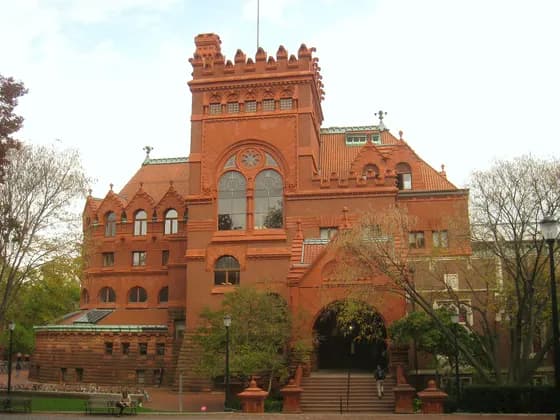

Photo: Rehua · CC BY-SA 3.0 · cropped
Photo: Ajaxean · CC BY-SA 3.0 · Photo: Daderot · Public domain · Photo: 颐园居 · CC BY-SA 4.0
How to get into Perelman School of Medicine, UPenn (MD) medicine
Step-by-step: entry requirements, admission tests, personal statement, interview format and the key deadlines.
Open the guide →Perelman School of Medicine, UPenn (MD) entry requirements
Admission profile, interview format, decision dates and what makes Perelman School of Medicine, UPenn (MD) different.
See the profile →The Perelman School of Medicine, UPenn MD program
Integrated, 4 years, clinical rotations across Philadelphia, plus some sites outside the city.
See the program →The Perelman School of Medicine, UPenn (MD) medicine interview
Penn Medicine uses a traditional open-file interview — typically two sessions (one faculty/physician, one current student). Perelman requires every student to complete a Scholarly Pursuit — a 12+ week independent research project — alongside one of the school's Areas of Concentration (Clinical Informatics, Medical Humanities, Public Health, Global Health, Health Management Education (H-MET), Academic Surgery). Interviewers probe which concentration aligns with the applicant's background.
A distinctive Penn emphasis is bioethics and social medicine — Perelman hosts one of the country's oldest bioethics programs and the Leonard Davis Institute of Health Economics. Interviewers often present ethical dilemmas drawn from Penn Bioethics case archives.
Penn is notable for gene therapy and CAR-T innovation — Penn Medicine pioneered the first FDA-approved CAR-T therapy, so applicants interested in translational research should be prepared to discuss the ethics and access implications of high-cost breakthrough therapies.
Perelman School of Medicine, UPenn (MD) interview at a glance (2027 entry)
| Annual MD class size | ~150 |
|---|---|
| Interview format | Traditional open-file — faculty + student sessions |
| Scholarly requirement | Scholarly Pursuit (12+ week independent research project) |
| Tuition (2025–26) | ~USD 64,000/year |
| Application system | AMCAS + Perelman secondary |
| Interview window | September–February |
Interview format
- Two sessions: faculty/physician (open-file, ~45 min) and student interviewer (~30 min).
- Interviewers receive applicant files in advance — expect questions drilling into specific experiences and secondary essays.
- No MMI stations; no role-play prompts.
Working towards the MCAT score Perelman School of Medicine, UPenn (MD) expects? Build a week-by-week plan from your test date — free for the first two weeks.
Sample interview questions
Which of the Perelman Areas of Concentration do you see yourself pursuing as part of your Scholarly Pursuit, and what in your background points toward that choice?
Scholarly Pursuit is a graduation requirement. Answer concretely, not as a hedge. Reference a specific past experience that maps to one of the Areas of Concentration: Clinical Informatics, Medical Humanities, Public Health, Global Health, H-MET, or Academic Surgery.
Penn Medicine developed the first approved CAR-T therapy. It costs over USD 400,000 per infusion. How should healthcare systems decide who receives access to breakthrough therapies at this price point?
What they are listening for:
- ICER cost-effectiveness analysis
- insurance coverage decisions
- outcomes-based contracts
- Medicaid budget implications
- equity concerns
Tell me about a patient or person you encountered during your clinical experiences who changed how you think about what it means to provide good care.
Humanistic medicine. Choose a case that illuminates your interpersonal competency and cultural sensitivity.
A patient refuses blood transfusion on religious grounds. Without it, they will likely die. What are the ethical and legal obligations of the treating team?
What they are listening for:
- Patient autonomy
- informed refusal
- Cruzan precedent
- advance directives
- blood conservation alternatives
Penn Bioethics is a landmark program — show engagement.
Describe a time you needed to shift your communication style significantly to reach a particular person. What cues did you notice, and what did you change?
What they are listening for:
- Cross-cultural communication
- health literacy
- interprofessional dynamics
Penn trains physicians to work in diverse West Philadelphia communities.
West Philadelphia has some of the highest rates of firearm injury in the country. As a physician at Penn Medicine, what responsibility do you have beyond treating individual gunshot wounds?
What they are listening for:
- Violence as a public health issue
- trauma-informed care
- hospital violence intervention programs
- physician advocacy
Penn Medicine has an active HVI program.
Penn pioneered CAR-T therapy. Pick a translational research question you find genuinely exciting and explain how you would move it from bench observation toward patient benefit.
Show you understand the translational pipeline — mechanism, preclinical validation, trial design, and the access and cost questions that follow approval. Connect it to a Perelman Area of Concentration and your own background rather than reciting a textbook.
You are shown trial data for a new CAR-T product showing strong remission rates but a high incidence of severe cytokine release syndrome and a price over USD 400,000 per infusion. How do you weigh this evidence for a real patient?
Balance efficacy against serious toxicity and cost. Discuss number-needed-to-treat versus harm, informed consent, ICER-style cost-effectiveness, and equity of access. Penn expects applicants to hold breakthrough enthusiasm and sober realism at once.
A patient who is a Jehovah's Witness is refusing a blood transfusion that the team believes is life-saving. She is alert and has capacity. Talk with her about her decision.
Respect informed refusal and capacity, explore her values and what she understands, discuss bloodless-medicine alternatives, and avoid coercion. The skill is honoring autonomy while ensuring the choice is genuinely informed — Penn's bioethics depth rewards this.
You are a Penn student volunteering at a West Philadelphia clinic. A young man who survived a gunshot wound tells you he plans to retaliate. Respond to him.
Combine trauma-informed empathy with the limits of confidentiality and any duty to protect. Connect him to hospital violence-intervention resources and address the cycle of retaliatory violence — Penn runs an active HVI program, so systemic awareness matters.
Explain to a patient with limited health literacy what a clinical trial is and why being in the control arm might mean they do not receive the new drug.
What they are listening for:
- Plain language
- no jargon
- honesty about randomization and equipoise
Address the therapeutic misconception gently and confirm understanding with teach-back. Trust in West Philadelphia communities depends on transparency.
Tell me about a time you had to advocate for a patient or a person against a system or institution that was not serving them. What did it cost you?
Penn trains physicians who engage with structural barriers. Choose a real instance of sustained advocacy, reflect on the personal cost and the limits of what you could change, and avoid casting yourself as a lone hero.
Penn Medicine's high-cost innovations are funded partly through a health system that also serves a low-income catchment. Is it ethical for an academic center to invest heavily in USD 400,000 therapies while local residents lack basic access? Defend a position.
Engage the tension honestly. Argue a clear view while acknowledging cross-subsidy, the public good of innovation, and the obligation of an anchor institution to its immediate community.
Why dentistry-adjacent fields, policy, or research were not enough — why does Penn's MD path specifically fit you, given how strong its non-clinical programs are?
Probe whether you genuinely need the clinical degree. Connect your motivation to a gap only direct patient care fills, and tie it to a concrete experience rather than prestige.
The Scholarly Pursuit is a graduation requirement. Walk me through a past project where you owned a question from start to finish — and what you would change with hindsight.
Show intellectual ownership and self-criticism. The 'what I'd change' answer signals scholarly maturity, which Penn weighs heavily given the required independent research.
Practise the Perelman School of Medicine, UPenn (MD) interview
Rehearse the real format before the day — on demand with our AI interviewers, or live with a tutor.
Sit a mock with photoreal AI interviewers — any time
A timed MMI or panel interview on video — American & international voices — with interviewers who listen, react and press with follow-ups. Rubric-scored feedback and a replay the moment you finish.






Live mocks with a tutor who’s been in the room
A full Perelman School of Medicine, UPenn (MD)-style mock with a medic or dentist tutor — honest scoring against real marking criteria, a station-by-station debrief and a written action plan.
Book a mock interviewHow to prepare for the Perelman School of Medicine, UPenn (MD) interview
Common pitfalls to avoid
Perelman School of Medicine, UPenn (MD) interview — frequently asked questions
Sources & official admissions information
Ready to nail your Perelman School of Medicine, UPenn (MD) interview?
Book a mock interview with a tutor who knows the US interview formats, orpractice unlimited stations from our interview question bank.