
The Perelman School of Medicine, UPenn MD program
What you actually study, and where you will be
Perelman School of Medicine, UPenn's MD is a 4-year program with an integrated curriculum, with patient contact from Year 1 and clinical rotations in Philadelphia, plus some sites outside the city (2027 entry). Penn's MD follows the IMPaCT curriculum, split into three Cores. Core 1 teaches the sciences, mostly by organ system, with clinical skills alongside, for about a year and a half. Core 2 is a year of clerkships (required clinical rotations) in four 12-week blocks. Core 3 combines a sub-internship, where you work at the level of a first-year resident, with electives and a required research project. It also leaves flexible time, which many students use for a dual degree or a research year.
- Degree
- MD
- Length
- 4 years
- Teaching
- Integrated
- Clinical contact
- Year 1

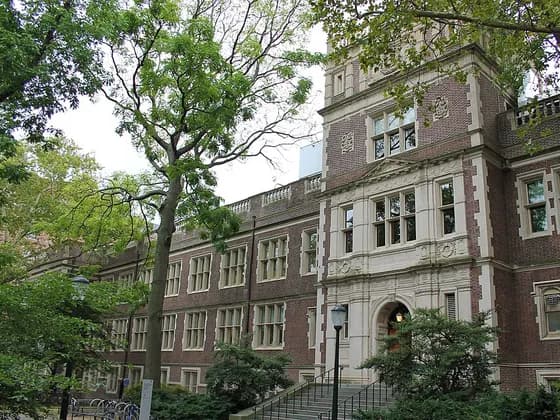
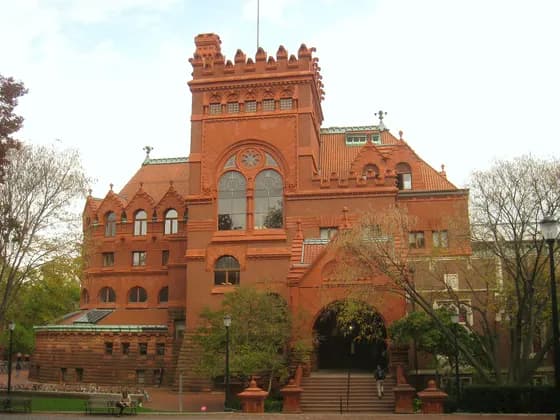

Photo: Rehua · CC BY-SA 3.0 · cropped
Photo: Ajaxean · CC BY-SA 3.0 · Photo: Daderot · Public domain · Photo: 颐园居 · CC BY-SA 4.0
The Perelman School of Medicine, UPenn MD program at a glance (2027 entry)
The Perelman School of Medicine (PSOM) at the University of Pennsylvania runs a four-year MD program in Philadelphia. The school was founded in 1765 and describes itself as the nation's first medical school. Teaching is based in the Henry A. Jordan Medical Education Center. In 2026–27, 154 students entered: 129 in the MD program and 25 in the MD/PhD program. The program is accredited by the Liaison Committee on Medical Education (LCME), which accredits MD programs in the US.
The curriculum is called IMPaCT, short for Integrating Medicine, Patient Care, Transitions, and is split into three Cores. You may also see the name Learning for Life, which the 2026–27 university catalog uses for the same four-year curriculum. Core 1 is the pre-clerkship (pre-clinical) phase, before full-time work in hospitals. It lasts about a year and a half and is graded Pass/Fail. You learn the sciences, first in foundation courses and then in organ-system blocks, with clinical skills alongside.
Core 2 is the clerkship year, when you work full time on hospital and clinic teams. It runs for one calendar year, January of Year 2 to December of Year 3 (school years start in August), in four 12-week blocks whose order varies by student. The school's 2022 Technical Standards say hospital teaching takes place mainly at the Hospital of the University of Pennsylvania (HUP), Penn Presbyterian Medical Center and Pennsylvania Hospital. They also name the Children's Hospital of Philadelphia (CHOP) and the Philadelphia VA Medical Center, and place outpatient teaching in clinics across the health system.
Core 3 runs from January of Year 3 to graduation in May of Year 4. It holds the national licensing exams (USMLE Step 1 and Step 2 CK), a sub-internship, electives, the required Scholarly Pursuit research project and flexible time. Many students stretch it into a fifth year: the school says more than half of each class stays at Penn beyond four years for dual degrees, certificates, global health or research.
| Degree | MD |
|---|---|
| Program length | 4 years; the school says over half of each class stays longer |
| Class size | 154 entering in 2026–27: 129 MD and 25 MD/PhD |
| Teaching style | Organ-system blocks integrating science and clinical medicine, with learning teams |
| Anatomy | Clinical anatomy linked to imaging, ultrasound and physical exam, with virtual reality |
| First patient contact | Year 1: standardized patients, patient panels, student-led clinics; clerkships from January of Year 2 |
| Clinical sites | HUP, Penn Presbyterian, Pennsylvania Hospital, CHOP and the Philadelphia VA |
| Step 1 timing | By June 30 of Year 3; can be taken before Core 2 |
| Grading | Pass/Fail in Core 1; Honors/High Pass/Pass/Fail for clerkships, the sub-internship and electives |
| Accreditation | LCME: full; the school reports a follow-up review in 2026 |
What makes the Perelman School of Medicine, UPenn MD program different
A long final phase you shape around your plans
Core 3's requirements leave flexible time for research, a concentration, a dual degree, global health or community projects, exam preparation or your personal life. The Core 3 page and the 2026 brochure count 24 weeks of it; the August 2026 Introduction to Core 3 slides, which list Step study weeks separately, put it at 3.5 months.
A research project every student completes
The Scholarly Pursuit is a graduation requirement: at least 12 weeks of full-time, mentored research after Core 2, ending in a formal paper. A research year, a master's degree or the MD/PhD satisfies it instead.
Three unscheduled afternoons a week in Core 1
Three afternoons each week of the pre-clerkship phase are left free. The school suggests using them to work at a community clinic, take classes outside medicine, do research, play sports, keep up hobbies or relax.
Palliative care and communication in all four years
CARE-7 is a required curriculum from Year 1 to graduation. The name stands for communication, attention, responsiveness and empathy, with seven key goals. Through simulation and structured clinical practice, it teaches you to talk with seriously ill patients and their families and to manage pain and symptoms. It includes a palliative medicine experience in Year 2 and a Vital Talk session in the final year.
Concentrations and master's degrees across Penn
The Areas of Concentration page lists 15 concentrations, from global health to clinical informatics, each noted on your transcript and completable within four years. Six formal MD/master's programs include an MBA from Wharton and a Master in Law. The 2026 brochure says 59.1% of the 159 May 2026 graduates finished with a concentration, a master's, a PhD or a combination.
How Perelman School of Medicine, UPenn teaches medicine
Core 1 is built on integration: science and clinical medicine are taught together, one organ system at a time. The cardiology block, for example, takes in the heart's normal development and function, its diseases and their treatment, and the imaging and lab tests used to diagnose them. The first semester is the exception, with separate foundation courses in subjects such as genetics, biochemistry and immunology.
The school organizes the curriculum around three themes: the science of medicine, the technology and practice of medicine, and professionalism and humanism. In Core 1 the clinical side is taught through Introduction to Clinical Medicine (ICM), Doctoring 1, Ultrasound Diagnostics and Health Systems Sciences. The last covers health policy, how care is financed and the social causes of ill health.
The ways you will learn
| Seminars, workshops and case discussions | Core 1 teaching mixes lectures, seminars, workshops and case discussions, and each organ-system block includes patient panels, sessions in which patients take part. |
|---|---|
| Learning teams | Small-group sessions run in learning teams, which the school uses to keep students and faculty engaged, and every small group is compulsory. Teams also sit exams together: many Core 1 exams have a team part as well as an individual one. |
| Clinical skills with standardized and virtual patients | Clinical sessions, including ICM, teach history taking, physical examination and differential diagnosis, the reasoned list of conditions that could explain a patient's problem. You practice with standardized patients, who are trained actors, and with virtual patients before full-time work with patients in Core 2. |
| Ultrasound Diagnostics | A three-semester ultrasound curriculum runs through Core 1. You learn how to acquire ultrasound images, how to read them and how to apply them to patient care. |
| Doctoring | Doctoring 1 runs through Core 1 with a faculty preceptor and fourth-year student facilitators, ending in capstones in December of Year 2. Doctoring 2 meets monthly in the clerkship year, using near-peer mentoring, narrative medicine (reading and writing about illness and care) and a longitudinal preceptor to help you reflect on your experiences. |
| Clerkship teaching and simulation | Each clerkship has weekly teaching on the evidence behind the diseases you see. The Health Systems and Clinical Skills Practicum adds health systems topics and skills you use on rotations. Simulation mannequins, standardized patients and virtual patients supplement real patients for skills, procedures and physical exams. The OB/GYN clerkship opens with a week of team-based learning and simulation practice in skills such as pelvic exams, suturing and vaginal delivery. |
A typical week on the Perelman School of Medicine, UPenn program
During the first 18 months, the work hours policy caps scheduled teaching, teamwork and self-study at 50 to 60 hours a week. Lectures are optional to attend. Labs, small groups and clinical encounters, meaning sessions with patients present or clinical skills and simulation work, are required and flagged in OASIS, the school's online scheduling system. Three afternoons a week are unscheduled.
Clerkship weeks are longer. Students can be assigned up to 80 hours of clinical duties a week, averaged over a rotation, with at least one day in seven free and at least 10 hours off between shifts. Internal medicine, emergency medicine and OB/GYN include weekend work.
The Core 3 course page's 2026 updates describe the internal medicine sub-internship schedule. At HUP, Penn Presbyterian and Pennsylvania Hospital, students work 7am to 7pm three days a week and 7am to 5pm on three more: 66 hours a week. From 2027 the VA switches from 27-hour calls every fourth day to the same pattern.
How anatomy is taught at Perelman School of Medicine, UPenn
Anatomy is taught as clinical anatomy, linked directly to radiology images, ultrasound techniques and physical exam findings, and it includes a virtual reality component. In the first semester it sits in the Anatomy & Imaging course within Biomedical Science. The fall 2026 calendar schedules three anatomy exams for first-years, in October, November and December.
The school's Technical Standards, approved in August 2022, say that dissecting the human body and examining normal and abnormal specimens, by eye and under the microscope, require sensory, motor, emotional and intellectual abilities. The school receives donated bodies for teaching through the Humanity Gifts Registry, Pennsylvania's body donation agency. Senior students can also work as anatomy teaching assistants through the Medical Education concentration.
When you first meet patients at Perelman School of Medicine, UPenn
Your first patient encounters in Core 1 are mostly with standardized and virtual patients, so you can practice safely. Each organ-system block also includes patient panels. By the end of Core 1, the school expects you to take a basic history that covers social factors and to use basic exam techniques in a simulated setting.
You can meet real patients earlier through community programs, which start in the first year. The 2026 brochure lists 12 student-led clinics, such as United Community Clinic, Puentes de Salud and the Refugee Health Clinic, and Penn clinicians supervise all clinical care. The school says over three-quarters of students work in a student-led clinic or alongside Penn professionals in schools and community centers.
In Year 2, CARE-7 adds a palliative medicine experience. Students who join the Measey Primary Care Pathway in Year 1 or 2 also take PLACE. It places you with a primary care doctor for one or two afternoons a month, in spring of Year 1 and fall of Year 2. Full-time patient care begins with Core 2 in January of Year 2, in hospital and outpatient settings across all age groups.
Year by year at Perelman School of Medicine, UPenn
- Year 1 (Core 1)
Biomedical science, then the first organ systems
The first semester lays scientific foundations, and the Integrative Systems and Disease blocks begin in the second. For the class that entered in 2026, orientation ran from August 10 to 14 and classes began on August 17.
- Fall Biomedical Science courses: genetics, biochemistry, embryology, cell and tissue biology, Anatomy & Imaging, immunology, microbiology, health promotion and epidemiology. The fall 2026 exam calendar also lists a cancer biology final.
- Spring blocks: Mechanisms of Disease and Therapeutic Intervention (MDTI), then Brain and Behavior, Reproduction, Endocrinology, and Gastroenterology and Nutrition, which finishes in June.
- Summer break starts in mid-June. The research office's guide for first-years works toward eight weeks of summer research in June and July, with a mentor found and applications made during the year.
- Year 2, August to December (Core 1)
The last organ systems and the move onto the wards
The third Core 1 semester finishes the organ systems and the Core 1 clinical courses. It ends with exams, the Core 1 OSCE (a clinical skills exam), a clerkship preparation week and the required Student Clinician Ceremony, which mark the move into clerkships in January.
- Blocks in cardiology, dermatology, nephrology, pulmonology and infectious disease, plus the Health Systems Sciences final exam.
- Doctoring 1 capstones and the ICM differential diagnosis final, both in December in the 2026 calendar.
- The Core 1 OSCE, scheduled over four dates in late November and early December 2026.
- Clerkship Prep, the final week of Core 1 (December 14 to 17 in 2026), a guided review before the wards.
- Core 2 (January of Year 2 to December of Year 3)
The clerkship year
Core 2 is 48 weeks of required clerkships, with a two-week vacation from late June to early July. Your block order is set through OASIS, and the school says grades show no significant differences by the order in which clerkships are taken.
- Block A: obstetrics and gynecology (6 weeks) and pediatrics (6 weeks).
- Block B: family medicine (4 weeks) and internal medicine (8 weeks).
- Block C: surgery (8 weeks) and one week each of orthopedics, otolaryngology (ear, nose and throat), ophthalmology and anesthesiology. The surgery department splits the 8 weeks into 4 of general surgery and two 2-week surgical specialties.
- Block D: neurology, psychiatry and emergency medicine, 4 weeks each. Psychiatry covers inpatient units, clinics and consultation services, with a focus on the mental status exam.
- Doctoring 2 meets 12 times in 2027, and the seven Practicum sessions fall at the start of each block.
- In the 2027 calendar, Block 1 runs from January 4 to March 26 and Block 4 ends on December 17, with vacation from June 19 to July 5.
- Core 3 (January of Year 3 to May of Year 4)
Licensing exams, sub-internship, electives and research
Core 3 is the most self-directed phase: you build your schedule with your advisory dean and specialty advisers. Planning starts in the clerkship year with an Introduction to Core 3 in August. The August 2026 slides set mid-October for sub-internship rankings, with assignments announced in November.
- USMLE Step 1 early in the phase for most students, after the 4 to 5 weeks of study the school recommends. The Clinical Skills Inventory (CSI), a clinical skills exam, is offered between January and April.
- A 4-week inpatient sub-internship in emergency medicine, family medicine, internal medicine or pediatrics.
- Sixteen weeks of Penn clinical electives and eight weeks of other electives, including four weeks of direct patient care in or after September of the final year.
- The Scholarly Pursuit, with the proposal due by September 15 and the final paper by February 28 of the final year.
- Residency applications in September of the final year, interviews from November to January and Match Day in March. Residency is the specialty training doctors complete after medical school; the National Resident Matching Program (NRMP) pairs graduates with programs.
- Measey STeP to Residency, a coaching course with Foundations sessions in fall and March; a one-week Bioethics course in March; and ACLS (Advanced Cardiac Life Support) or PALS (Pediatric Advanced Life Support) certification.
- Optional one- to two-week specialty boot camps in internal medicine, OB/GYN, pediatrics and surgery prepare you for the first year of residency.
How you are assessed at Perelman School of Medicine, UPenn
Core 1 is graded Pass/Fail. Clerkships, the sub-internship and Core 3 electives are graded Honors, High Pass, Pass or Fail; the Scholarly Pursuit, Measey STeP and Bioethics are Pass/Fail. Final grades must be in within six weeks of a course ending.
Core 1 exams run from 8am to 1pm unless noted otherwise. Many have a team part and an individual part, and some midterms are team-only. An OSCE, or objective structured clinical exam, has you rotate through timed stations, each testing a clinical task such as interviewing or examining a patient. The Core 1 OSCE comes in the last weeks of the phase.
Each main clerkship ends with an NBME shelf exam, a standardized test from the National Board of Medical Examiners. It has 110 questions in 2 hours 45 minutes, written by the committees that prepare USMLE Step 2 material. The Core 2 FAQ lists OSCEs in family and internal medicine (at the Simulation Center, with standardized patients), neurology (at HUP, without them), pediatrics and surgery. The 2027 exam calendar has OSCE columns for those and for psychiatry, emergency medicine and OB/GYN. If illness makes you miss a requirement such as a shelf exam, you get an Incomplete until it is done.
The United States Medical Licensing Examination (USMLE) is the national licensing exam series. Step 1 has been pass/fail since January 2022; Step 2 Clinical Knowledge (CK), a one-day, nine-hour exam on clinical science, is still scored. Policy UME.CU.106 (effective August 10, 2026) requires you to pass both to graduate. Step 1 must be taken by June 30 of your third year, can come before Core 2, and must be passed before you start a master's, PhD or research year.
The August 2026 Core 3 slides say 36% of students took Step 1 within four weeks of January 1 and 66% within six. The policy strongly encourages Step 2 CK by August 31 at the start of your final year, or before a scholarly year, and requires a pass before you submit your Match rank list. The slides also note that designated test dates begin in 2029. That is a national USMLE change: from January 2029, Step exams will be offered on fewer, designated dates each year, so Penn's timing advice may change for students entering in 2027.
The CSI is a school-run graduation exam taken early in the calendar year after Core 2. You interview and examine standardized patients and write a note after each. The August 2026 slides describe six cases at Penn Medicine at Rittenhouse on about 15 dates from January to April; the MD/PhD program's page describes 8 to 12 stations. A 2025 Core 3 FAQ says it is pass/fail, with separate scores for cognitive and interpersonal skills, and if you fail either part, you must retake the exam.
- A written narrative of your performance is produced at the end of each clerkship. These narratives feed your Medical Student Performance Evaluation (MSPE), the dean's letter released to residency programs in the fall of your final year.
- The LCME directory (updated July 2026) lists the school as fully accredited, with its next survey in 2025–26. The school reports full accreditation in 2024, with a follow-up review in 2026. For MD students, LCME accreditation is what makes you eligible to sit the USMLE and to enter residencies accredited by the Accreditation Council for Graduate Medical Education (ACGME).
Where you will actually train at Perelman School of Medicine, UPenn
Clinical training is centered on Philadelphia. The Technical Standards (approved 2022) place hospital teaching mainly at HUP, Penn Presbyterian Medical Center and Pennsylvania Hospital, the major affiliates, and at CHOP and the Philadelphia VA Medical Center. They add other affiliated hospitals within 100 miles and nearly 150 outpatient sites. Several major teaching hospitals are within walking distance of the school.
Department pages fill in some clerkships. Internal medicine students rotate at two of HUP, Penn Presbyterian, the VA and Pennsylvania Hospital, across two or three services. OB/GYN students move between HUP, Penn Presbyterian and Pennsylvania Hospital, dividing time among labor and delivery, gynecology services and clinics. A 2021 CHOP article says Penn students do their pediatrics clerkship at CHOP, and the surgery department's student FAQ refers to students at HUP, Penn Presbyterian, Pennsylvania Hospital and the VA.
The family medicine department says its clerkship runs at family medicine residency sites, federally qualified health centers (community health centers that serve under-served areas) and private practices in several communities. Some sites are outside Philadelphia and may provide housing. The Core 2 FAQ adds that outpatient pediatrics can also involve travel.
The 2025 Core 3 FAQ says electives run at HUP, the VA, Penn Presbyterian, Pennsylvania Hospital and CHOP. The Department of Medicine says the internal medicine sub-internship runs on a general medicine service at HUP, Penn Presbyterian, the VA or Pennsylvania Hospital, with primary responsibility for up to six patients. The 2026 course catalog lists the family medicine sub-internship at Penn Presbyterian, the emergency medicine one at HUP and Penn Presbyterian, and the pediatrics one at CHOP.
The major affiliates, used by internal medicine, OB/GYN, the internal medicine sub-internship and many Core 3 electives.
- Hospital of the University of Pennsylvania (HUP) and its Pavilion
- Penn Presbyterian Medical Center
- Pennsylvania Hospital
CHOP hosts the pediatrics clerkship (per a 2021 CHOP article), the pediatrics sub-internship and pediatric electives. The VA hosts internal medicine and its sub-internship.
- Children's Hospital of Philadelphia (CHOP)
- Philadelphia VA Medical Center
Mainly family medicine sites, spread across several communities.
- Family medicine residency sites, community health centers and private practices
- Other affiliated hospitals within a 100-mile radius
Electives, selectives and away rotations at Perelman School of Medicine, UPenn
Electives start in Core 1, in areas such as humanism, the arts and medicine, narrative medicine, nutrition, leadership, advocacy and writing for publication. The school counts about 150 electives in all.
In Core 3, the sub-internship, also called an acting internship, puts you in the role of an intern (a first-year resident), admitting and managing your own patients under supervision. You choose emergency medicine, inpatient family medicine, internal medicine or pediatrics; ACLS certification comes first for internal medicine and emergency medicine. You also need 16 weeks of standard Penn clinical electives and 8 weeks of other electives, such as extra research, away rotations, non-clinical courses or dual-degree coursework.
Electives are assigned by lottery. The August 2026 slides schedule the spring lottery for mid-November, summer for mid-March and fall for mid-June. Most electives last a month, though two- and three-week ones count. Options include consult services, intensive care unit months, dermatology, radiology, radiation oncology and one-on-one surgical preceptorships.
Away rotations are electives at another medical school. The slides say students do one to three, and that they have historically been required in emergency medicine, orthopedics, neurosurgery, plastic surgery and urology, among others. Most students who go away do so in the summer and fall of the final year, often applying through Visiting Student Learning Opportunities (VSLO). After two months away at accredited institutions, one month of your Penn clinical electives can also be away.
International rotations run through the Center for Global Health, at partners in countries including Botswana, Chile, the Dominican Republic, Ireland, Japan, Peru and Tanzania, plus Alaska Native Medical Center and Indian Health Service sites. They last at least six weeks unless the partner only offers four. After two away rotations at LCME schools, an international rotation can count toward your Penn clinical electives.
Dual degrees and research years at Perelman School of Medicine, UPenn
Every student completes a Scholarly Pursuit: at least 12 dedicated weeks, ideally consecutive, of full-time mentored research after Core 2. The project must test a specific hypothesis and can be basic, translational, clinical, social science, health services or global health research. Research done before Core 3 cannot count toward the three-month route, though you can continue an earlier project.
You register a proposal of up to 500 words, setting out your aims, hypothesis, design, timeline and mentorship plan. The final product is a manuscript draft or a 10-page report, graded Pass, Fail or Incomplete by your mentor and the school's assistant dean for student research.
A Scholarly Year extends your studies by up to a year for at least six months of full-time research, on or off campus, with a Penn mentor. It counts as the Scholarly Pursuit plus two elective months. Funding options the school lists include society fellowships and a Center for Global Health year-out program.
The Combined Degree office lists six formal MD/master's programs and advises students on them: MD/MBA (with Wharton), MD/MBE (bioethics), MD/ML (law), MD/MPH (public health), MD/MSHP (health policy research) and MD/MSTR (translational research). Others can be arranged ad hoc, such as MD/MSCE, MD/MSE, MD/MSEd, MD/MSME, MD/MSNS and MD/JD. Most take five years, with the master's year after Core 2 and six to eight months of Core 3. A master's counts as your Scholarly Pursuit.
The MD/PhD runs through the Medical Scientist Training Program (MSTP), founded in 1958, with 229 MD/PhD students enrolled in 2026–27. In the typical plan, the first two years combine medical school with graduate courses and lab rotations, ending with six months of clerkships and Step 1 in the spring and summer of year 2. Years 3 to 6 go to graduate courses and thesis research. After the defense, usually early in year 7, you return to clerkships, and you apply to residency in year 8.
The Areas of Concentration page lists 15 concentrations that add a notation to your transcript and MSPE. Each combines seminars or courses, an internship or capstone and scholarly work. The Measey Primary Care Pathway, open to students in Years 1 to 3, includes mentoring groups and a primary care externship. That can be a four-week block or PRACTICE, a weekly half-day clinic for 32 sessions in your elective year.
- Seven of the 15 concentrations are Academic Surgery; Bridging the Gaps; Clinical Informatics; Clinical Neurosciences Training Program; Community Health IMPaCT Program; Global Health; and Healthcare Management, Entrepreneurship and Technology. The other eight are Leadership in Healthcare Improvement and Patient Safety; Measey Primary Care Pathway; Medical Education; Medical Humanities; Palliative Care; Public Health in Medicine; Spirituality and Health; and Women's Health.
Facilities and support at Perelman School of Medicine, UPenn
Where you will learn
The Henry A. Jordan Medical Education Center (JMEC) is the school's teaching base. It sits where the Perelman Center for Advanced Medicine and the Smilow Center for Translational Research meet, linking classrooms with clinical and research space, and it is designed around small-group learning.
The Penn Medicine Clinical Simulation Center at Penn Medicine at Rittenhouse covers 22,000 square feet. Its six simulation rooms include a procedure room, a labor and delivery room, an inpatient room and an emergency department. It also has 12 standardized patient exam rooms with cameras, task trainer rooms with virtual reality and laparoscopic trainers, and the Measey Surgical Suite.
The Standardized Patient Program launched in 1997 with Penn medical students as its primary clients and now serves more than 4,000 learners a year. The Holman Biotech Commons, the health sciences library in Johnson Pavilion, offers an Anatomage table for life-size digital dissection, anatomy software such as Acland's Atlas and Visible Body, and a 3D printing lab.
Support while you study
When you arrive, you join one of four Houses, Dickens, Mossell, Rhoads or Wood, set up in 2013 to create smaller communities across class years. Each has four advisory deans, 16 in all, who help with transitions, wellness, mentoring, career advice and emergencies. You meet your advisory dean at least twice a semester in Core 1 and once a semester after that.
By the end of Year 1 you draw up an Individualized Learning Plan with your advisory dean, revisited as you progress. The ASCEND office (Academic Success, Community Engagement, Networking and Development) offers peer tutors for each preclinical subject, coaching and workshops, for example on preparing for Step exams. Penn's Weingarten Center adds learning support and disability services. Your Doctoring preceptor is another adviser, with at least one meeting a semester in Core 1 and two or three in Core 2.
Specialty career advisers help with residency planning, and every student meets an associate dean of student affairs in the summer of the graduating year. Wellness support includes free Penn gym membership, a hiking trip for first-years, mindfulness electives and crisis help through Student Intervention Services and Student Health and Counseling. MD/PhD students have their own advisory dean.
Is the Perelman School of Medicine, UPenn program right for you?
This program may suit you if
- You want a long, flexible final phase, with months of open time in Core 3 for research, a concentration or a dual degree.
- You want research built into the degree, since every student completes a mentored Scholarly Pursuit.
- You are interested in pairing medicine with business, law, bioethics, public health or policy research through an MD/master's program.
- You value communication and palliative care training, which CARE-7 builds into all four years.
Things to think about
- The clerkship year is 48 weeks of fixed 12-week blocks with one two-week vacation, and internal medicine, emergency medicine and OB/GYN include weekend work.
- Step 1 usually comes after the clerkship year, so you go through clerkships before your first licensing exam and study for it at the start of Core 3.
- A fifth year is common, since most MD/master's programs and the Scholarly Year add one.
- Family medicine and outpatient pediatrics can mean travel, and some family medicine sites are outside Philadelphia.
- Core 3 takes active planning: sub-internship rankings, three elective lotteries a year, away rotation applications and Scholarly Pursuit deadlines.
Perelman School of Medicine, UPenn MD program — frequently asked questions
Applying to Perelman School of Medicine, UPenn?
How to get into Perelman School of Medicine, UPenn
Prerequisites, MCAT, AMCAS personal statement, secondaries and interview, step by step.
Open the guide →Perelman School of Medicine, UPenn admissions profile
MCAT and GPA profile, acceptance rate, interview format and key dates.
See the profile →Compare Perelman School of Medicine, UPenn with other schools
Put the teaching style, anatomy teaching and clinical sites next to another school.
Open the comparison →Prepare for the Perelman School of Medicine, UPenn interview
Format breakdown, school-specific sample questions and prep tips from tutors who interviewed here.
Read the guide →Where this Perelman School of Medicine, UPenn program guide came from
This guide was written from 75 official sources — Perelman School of Medicine at the University of Pennsylvania's own program pages and curriculum documents, plus the accreditor and the hospitals and health systems the school trains students in where they publish detail — read on 2026-10-10, then checked claim by claim against those sources.
- Penn Medicine MD Admissions: IMPaCT Curriculum
- Penn Medicine MD Admissions: Core 1
- Penn Medicine MD Admissions: Core 2
- Penn Medicine MD Admissions: Core 3
- Perelman School of Medicine IMPaCT Educational Program curriculum brochure, 2026
- Graduation Requirements, Policy UME.CU.106 (revised June 2026, effective August 10, 2026)
- MD Program: Curriculum (IMPaCT defined)
- Medical Education Program Objectives (updated January 2025)
- Core 1 Attendance and Absence: Clinical Encounters and Small Group
- MS-1 Critical Dates, 2026–27
- MS-2 Critical Dates, 2026–27
- MS-4 Critical Dates, 2026–27
- 2027 Clerkship Dates
- MD Program: FAQ, Core 2
- Core 3 FAQ (last updated August 2025)
- Introduction to Core 3, August 2026 (slides)
- Core 3: How to Plan for Core 3
- Core 3 Changes in Response to Student Feedback, 2026
- Core 3: Scholarly Year
- Scholarly Pursuit Planning Info Session, April 30, 2026 (slides)
- Research and Fellowship Opportunities for Penn Med Students: guide for MS1s
- Research and Fellowship Opportunities for Penn Med Students: Frequently Asked Questions
- Total Allowable Time in Medical School, Policy UME.AC.121
- Additional Courses Policy and Guidelines, Policy UME.CU.104 (revised September 2025)
- Work Hours Policy, Policy UME.CU.110
- Penn Medicine MD Admissions: Dual Degrees and Areas of Concentration
- Penn Medicine MD Admissions: Special Study and Research
- MD Program: Areas of Concentration
- Combined Degree and Physician Scholar Programs
- Combined Degree and Physician Scholar Programs: MD/Master's at PSOM
- Combined Degree and Physician Scholar Programs: MD/MBA
- Combined Degree and Physician Scholar Programs: MD/MPH
- Combined Degree and Physician Scholar Programs: MD/MSHP
- Combined Degree and Physician Scholar Programs: MD/MSTR
- Medical Scientist Training Program: curriculum overview
- Medical Scientist Training Program: about Penn MSTP
- Medical Scientist Training Program: CSI and Step 2 CK information
- CARE-7 Palliative Care Curriculum
- Measey Primary Care Pathway: Overview and Requirements
- Measey Primary Care Pathway: Program Highlights
- Measey Primary Care Pathway: Clinical Experiences
- Center for Global Health: Penn Med Students
- Penn Medicine MD Admissions: Teaching Facilities
- MD Program: Technology Setup and Resources
- Simulation at Penn Medicine: About
- Simulation at Penn Medicine: Floor Plan
- Penn Medicine Standardized Patient Program
- Technical Standards for Admission (approved August 2022)
- Department of Medicine: medical student rotations
- Department of Surgery: student clerkship (SUR 200)
- Department of Obstetrics and Gynecology: medical student education
- Department of Family Medicine and Community Health: medical student education
- Penn Psychiatry: Psychiatry Clerkship
- OASIS public course catalog, 2026 (visiting student listing)
- Children's Hospital of Philadelphia: Shifting Medical Education to Better Prepare Students (June 2021)
- MD Program: LCME Accreditation
- MD Program: Current Accreditation Status
- LCME: Accredited Programs directory (updated July 22, 2026)
- USMLE: Updated Timeline for Designated Testing Dates, Transition in January 2029 (August 2026)
- USMLE Bulletin of Information: Eligibility
- University of Pennsylvania 2026–27 Graduate Catalog: Perelman School of Medicine
- 2026–27 Total Enrollment and Entering Class Profile
- Perelman School of Medicine Morgue
- MD Program: Office of Student Affairs
- MD Program: Houses and Advisory Deans
- Academic and Career Advising Program Policy, UME.AC.111 (revised September 2025)
- MD Program: Pathways to Wellness
- ASCEND: Academic Success
- ASCEND: Community Engagement
- Medical Student Community Clinical Training Experiences, Policy UME.CU.107
- Medical Student Performance Evaluation Policy, UME.AC.119
- Timely Submission of Grades, Policy UME.AC.120
- Penn Libraries: Holman Biotech Commons
- Penn Libraries: Anatomage
- LCME: About the LCME
Curricula are restructured between cycles. Anything here that decides your application — how anatomy is taught, a clinical campus assignment, a required research year — should be confirmed against the official page for your entry year.
Applying to Perelman School of Medicine, UPenn?
We help US applicants with MCAT strategy, the AMCAS personal statement, secondary essays and interview prep — everything you need for a competitive Perelman School of Medicine, UPenn application.