Geisinger Commonwealth School of Medicine (MD) Medical School - 2027 Entry Requirements & Interview Format
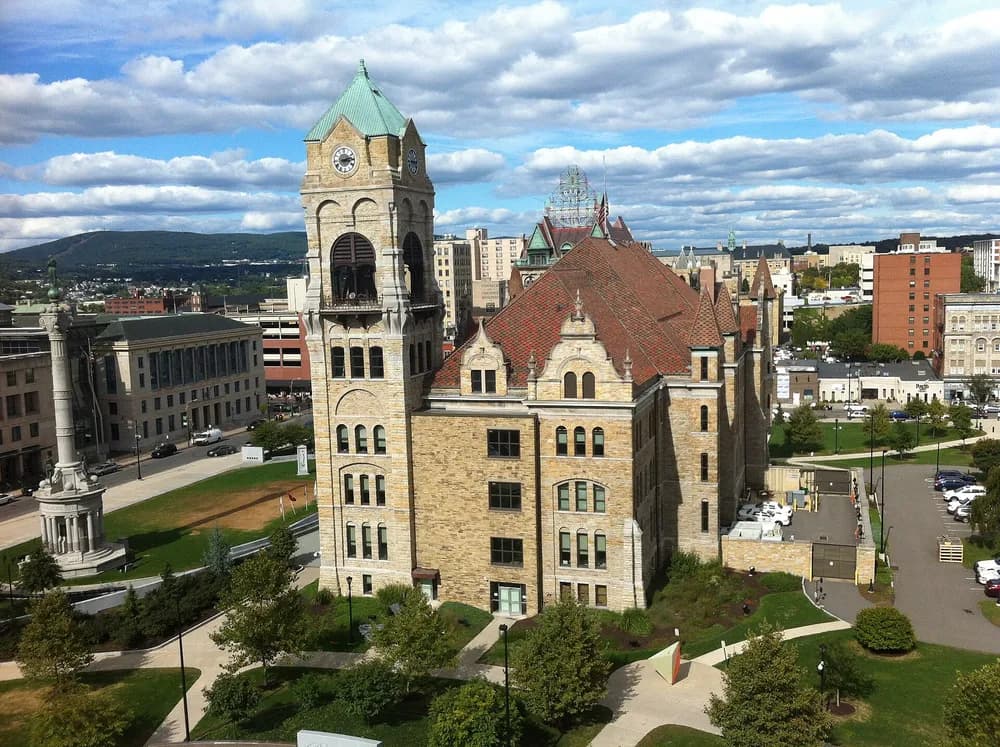
Geisinger Commonwealth School of Medicine, located in Scranton, Pennsylvania, is a private medical school uniquely integrated with the Geisinger Health System — a nationally recognised integrated health system known for its ProvenCare value-based care model and rural health innovation. The school trains physicians with a strong emphasis on community health, population health management, and health systems science. Geisinger Commonwealth graduates are well-positioned for health systems leadership, primary care, and rural medicine careers.
Entry Requirements
What you need to apply to Geisinger Commonwealth School of Medicine (MD).
Admission overview
Bachelor's degree and MCAT required. Applications via AMCAS. Geisinger Commonwealth is a private school with no in-state preference; national applicants are considered. Secondary application required. The AAMC PREview exam is recommended but not required (Geisinger Commonwealth replaced CASPer with PREview).
MCAT median
512 (range 506–517)
GPA median
3.81 overall / 3.77 science (BCPM)
Acceptance rate
2.0%
Class size
126
In-state preference
Strong — primarily in-state
In-state matriculants
72%
CASPer
Not required
Holistic review emphasis
Community health mission, health systems science interest, AAMC PREview (recommended, optional), and clinical/service experience.
Notes
Class of 2029 profile: 126 matriculants, ~72% PA residents, average GPA 3.81 (science 3.77), MCAT ~513. AAMC PREview is recommended but optional; CASPer is not required.
Specialities offered
Primary Care, Health Systems Science, Rural Medicine, Internal Medicine, Population Health
Interview Format
How Geisinger Commonwealth School of Medicine (MD) interviews applicants.
Format
MMI (multiple stations, typically 8, in-person)
Interview window
October–February
Decision date
March 30 (AAMC standard)
Post-interview chances
Estimated post-interview acceptance rate approximately 18–25%; MMI stations assess community health fit alongside standard AAMC competencies.
What to expect at a Geisinger Commonwealth School of Medicine (MD) interview
Geisinger Commonwealth School of Medicine uses a Multiple Mini Interview (MMI) format comprising 8 stations of approximately 8 minutes each with 2-minute preparation windows. Stations are held in Scranton and cover ethical scenarios, communication and role-play, collaborative problem-solving, motivation, and reflective prompts. Assessors include Geisinger faculty physicians, standardised patients, and community representatives. The full day includes an information session about the Geisinger Health System integration, a student-led campus tour, and informal lunch with current students. Geisinger Commonwealth's MMI specifically assesses community health orientation given the school's rural Pennsylvania mission.
What makes Geisinger Commonwealth School of Medicine (MD) different
Geisinger Commonwealth School of Medicine is uniquely integrated with the Geisinger Health System — one of the most prominent integrated health systems in the US — giving students direct clinical training within a model care-delivery organisation known nationally for its ProvenCare value-based care model. The school is in Scranton, Pennsylvania, serving a rural and semi-rural patient population in Northeast and North Central Pennsylvania. The MD programme has a strong emphasis on health-system science, population health, and value-based care alongside traditional clinical training.
Tutor insight
Geisinger Commonwealth is a strong option for applicants who genuinely want to understand healthcare as a system — ProvenCare, value-based bundled payments, and population health management are central to the training. If you are applying purely for a clinical science education without interest in health systems, interviewers will detect the mismatch. The AAMC PREview exam is recommended but optional (it replaced CASPer); if you take it, prepare for it as a separate component of your application. The Scranton location is rural-adjacent and the patient population reflects Northeast Pennsylvania's working-class and agricultural communities; applicants who engage with that population context in their answers stand out. The Geisinger Health System affiliation provides excellent early exposure to an integrated EMR (Epic) and value-based care workflows.
PrometheusQuestion Bank
595 medicine questions inside
Interview questions matched to Geisinger Commonwealth School of Medicine (MD)
Two questions our tutors flagged as a strong fit for Geisinger Commonwealth School of Medicine (MD)’s interview style. Try answering them out loud, then open Prometheus for the model answers and follow-up tips.
Hard·MMIQ1
US Healthcare Ethics: Resource Allocation in a Hospital Surge
A regional hospital is experiencing a severe surge following a mass-casualty event. There are three patients who need the hospital's one remaining ICU ventilator: Patient A is a 28-year-old trauma victim with otherwise good health prognosis; Patient B is a 65-year-old patient with metastatic cancer and moderate trauma; Patient C is a 45-year-old with a chronic lung condition who had been on the ventilator for six days with modest improvement. Crisis standards of care have been formally declared. What ethical framework guides resource allocation in this context, and what are the tensions involved?
Likely follow-up · What is the difference between 'crisis standards of care' and ordinary standard of care, and who declares them in the US system?
3 expert tips in Prometheus
Medium·MMIQ2
AAMC Core Competency: Social Skills and Empathic Communication
You are shadowing a family medicine physician when a patient in her 70s begins to cry while discussing her diagnosis of early-stage Alzheimer's disease. The physician steps out to take an urgent call, leaving you alone with the patient. You are a pre-medical student with no clinical training. How do you respond in this moment, and what does this situation reveal about what patients need from all healthcare team members?
Likely follow-up · What are the limits of emotional support that a non-clinician or pre-clinical student should offer?
Apply to Geisinger Commonwealth School of Medicine (MD) with confidence
We've helped students get into Geisinger Commonwealth School of Medicine (MD) and other US medicine schools. Get tailored support for each stage of the application.
Geisinger Commonwealth School of Medicine (MD) - Frequently asked questions
Bachelor's degree and MCAT required. Applications via AMCAS. Geisinger Commonwealth is a private school with no in-state preference; national applicants are considered. Secondary application required. The AAMC PREview exam is recommended but not required (Geisinger Commonwealth replaced CASPer with PREview).
MMI (multiple stations, typically 8, in-person). Geisinger Commonwealth School of Medicine uses a Multiple Mini Interview (MMI) format comprising 8 stations of approximately 8 minutes each with 2-minute preparation windows. Stations are held in Scranton and cover ethical scenarios, communication and role-play, collaborative problem-solving, motivation, and reflective prompts. Assessors include Geisinger faculty physicians, standardised patients, and community representatives. The full day includes an information session about the Geisinger Health System integration, a student-led campus tour, and informal lunch with current students. Geisinger Commonwealth's MMI specifically assesses community health orientation given the school's rural Pennsylvania mission.
Geisinger Commonwealth School of Medicine (MD) typically interviews in October–February.
Decisions are released March 30 (AAMC standard).
Geisinger Commonwealth School of Medicine is uniquely integrated with the Geisinger Health System — one of the most prominent integrated health systems in the US — giving students direct clinical training within a model care-delivery organisation known nationally for its ProvenCare value-based care model. The school is in Scranton, Pennsylvania, serving a rural and semi-rural patient population in Northeast and North Central Pennsylvania. The MD programme has a strong emphasis on health-system science, population health, and value-based care alongside traditional clinical training.