
Rutgers Robert Wood Johnson Medical School Interview
Format, Questions & Prep Tips
Rutgers Robert Wood Johnson Medical School medicine interviews for 2027 entry are multiple mini interviews (MMI). Published figures: Annual MD class size ~170; Interview format Traditional panel — 1–2 interviewers, ~30 min each; MCAT median ~513.
- Institution
- Rutgers Robert Wood Johnson Medical School
- Interview (2027 entry)
- September through March; rolling invitations
- Decisions (2027 entry)
- Rolling decisions; most offers by March 30; waitlist movement through summer

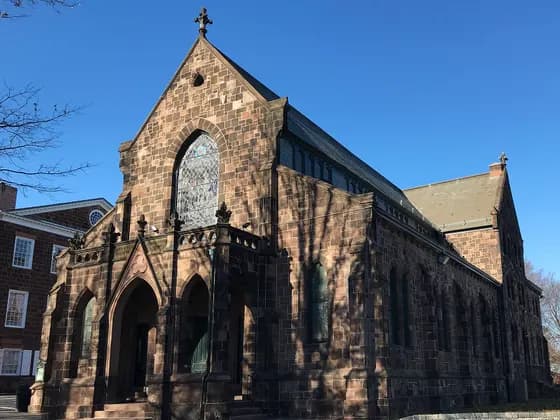
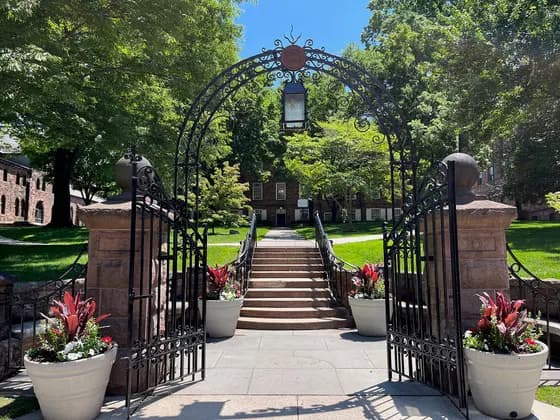
Photo: Ekem · CC BY-SA 3.0 · cropped
Photo: Zeete · CC BY-SA 4.0 · Photo: Antony-22 · CC BY-SA 4.0 · Photo: Tomwsulcer · CC0
How to get into Rutgers Robert Wood Johnson Medical School (MD) medicine
Step-by-step: entry requirements, admission tests, personal statement, interview format and the key deadlines.
Open the guide →Rutgers Robert Wood Johnson Medical School (MD) entry requirements
Admission profile, interview format, decision dates and what makes Rutgers Robert Wood Johnson Medical School (MD) different.
See the profile →The Rutgers Robert Wood Johnson Medical School (MD) medicine interview
Rutgers Robert Wood Johnson Medical School uses a traditional panel interview format. Applicants typically complete one or two 30-minute sessions with faculty members, clinicians, or medical students who have read the application in advance.
RWJMS is Rutgers Health’s Central NJ flagship, with a strong identity in primary care, clinical research, and combined-degree programs. Interviewers probe motivation for medicine, research background, career goals, and fit with the Central NJ clinical environment anchored by Robert Wood Johnson University Hospital.
The school’s proximity to major pharmaceutical research campuses (BMS, J&J) and combined MD/PhD, MD/MBA, and MD/MPH tracks create distinctive opportunities — candidates who can articulate a clear interest in these dimensions will stand out.
Rutgers Robert Wood Johnson Medical School (MD) interview at a glance (2027 entry)
| Annual MD class size | ~170 |
|---|---|
| Interview format | Traditional panel — 1–2 interviewers, ~30 min each |
| MCAT median | ~513 |
| GPA median | ~3.79 |
| Application system | AMCAS |
| Interview window | September–March |
| Combined degree options | MD/PhD, MD/MBA, MD/MPH available |
Interview format
- One or two traditional one-on-one sessions with faculty or medical students.
- Each session ~30 minutes; full interview day spans ~4–6 hours.
- Non-blind — interviewers review your full application file.
- Research, primary care, and career goals are common conversation threads.
- Student lunch and Robert Wood Johnson University Hospital tour are informal evaluation opportunities.
Working towards the MCAT score Rutgers Robert Wood Johnson Medical School (MD) expects? Build a week-by-week plan from your test date — free for the first two weeks.
Sample interview questions
Why Rutgers RWJMS specifically? What draws you to Central New Jersey and to this program?
Reference RWJUH, combined degree options, proximity to pharma research, or primary care pipeline. Show regional and program-specific knowledge.
Tell me about your research experience. What was the question you were trying to answer, and what did you contribute?
Emphasize your intellectual ownership. Be ready for follow-up questions on methodology and what you would change in hindsight.
A patient you have been following for years asks you to prescribe an opioid for chronic pain after they have shown multiple red flags for misuse. How do you approach this conversation?
Discuss risk stratification tools (ORT), state PDMP checking, pain management alternatives, and the therapeutic relationship. Avoid dismissive refusal and avoid enabling harm.
Are you considering any combined degree program? If so, which one and why?
If genuinely interested in MD/PhD, MD/MBA, or MD/MPH, be specific. If not, explain your reasoning — interviewers respect genuine reflection over formulaic answers.
The pharmaceutical industry funds much of the medical research in Central NJ and nationally. How should physicians manage industry relationships and potential conflicts of interest?
Relevant given RWJMS's proximity to pharma campuses. Discuss PhRMA guidelines, disclosure requirements, institutional conflict-of-interest policies, and evidence that industry funding can bias research outcomes.
You have just delivered a terminal diagnosis to a patient. They say "I'd rather not know the details right now." How do you respond?
Respect the patient's pace. Offer to continue when they are ready, provide an information resource, ensure they have support. Do not withhold information but do not force it on a patient not ready to receive it.
Primary care physicians are in short supply nationally and in New Jersey. What do you believe is the most effective policy lever to address this shortage?
Options:
- loan forgiveness
- residency funding reform
- scope-of-practice expansion for NPs/PAs
- rural health training
- payment reform
Argue one with evidence; acknowledge trade-offs.
You are a resident and your attending physician asks you to document a procedure as performed when you know the attending only supervised it briefly. What do you do?
Documentation fraud is a serious issue. Discuss the ethical and legal obligations, how to address it with the attending, and escalation options. Do not be complicit — but navigate the hierarchy carefully.
A patient's family disagrees with each other about the patient's care. Both factions approach you separately. How do you manage this?
Center the patient's wishes and advance directives. Facilitate a family meeting, involve social work and ethics consultation if needed, and avoid being triangulated into family conflict.
New Jersey has one of the highest rates of childhood obesity in the Northeast. What can a primary care physician do at the practice level to address this effectively?
Reference evidence-based screening (BMI percentile tracking), motivational interviewing with families, school-based referral, community health center partnerships, and policy advocacy. Show practical knowledge.
Primary care physicians are projected to remain in significant shortage in New Jersey and nationally over the coming decade, even as demand rises with an aging population. Which part of the pipeline — interest, training capacity, or retention — is the binding constraint, and what would you prioritize fixing?
Distinguish stages:
- student interest and income disparities
- residency slot funding
- post-training retention/burnout
Argue a priority with evidence and acknowledge trade-offs. RWJMS emphasizes primary care, so engage it substantively.
Role play: a long-standing patient with chronic low-back pain insists on continuing the opioid you have prescribed for years, but you have growing concern about misuse and want to taper. They feel accused and threaten to find another doctor. Talk to them.
Preserve the therapeutic relationship while being honest about safety. Avoid abrupt abandonment, reference the prescription-monitoring data non-judgmentally, offer a tapering plan and alternatives, and frame the change as care, not punishment.
Tell me about a time you communicated a complex or technical idea to a non-expert audience. How did you check that they actually understood?
STAR. Primary care depends on clear patient education. Emphasize plain language, analogy, teach-back, and adjusting to the listener rather than simplifying once and moving on.
Given RWJMS's proximity to major pharmaceutical research, suppose a study you contributed to produces results unfavorable to the sponsor's product and there is subtle pressure to delay or downplay publication. What do you do?
Engage research integrity, publication bias, pre-specified analysis and registration, disclosure, and authorship/data-access protections. Reference institutional and PhRMA-style safeguards — and that suppressing unfavorable data harms patients.
You can pursue MD/PhD, MD/MBA, or MD/MPH at RWJMS, or none of them. Walk me through your genuine reasoning — interviewers want to know whether dual-degree interest is real or credential-collecting.
Whichever way you lean, show authentic reflection tied to a career vision. If yes, be specific about the why and the plan; if no, explain the trade-off thoughtfully rather than reflexively claiming interest.
Practise the Rutgers Robert Wood Johnson Medical School (MD) interview
Rehearse the real format before the day — on demand with our AI interviewers, or live with a tutor.
Sit a mock with photoreal AI interviewers — any time
A timed MMI or panel interview on video — American & international voices — with interviewers who listen, react and press with follow-ups. Rubric-scored feedback and a replay the moment you finish.






Live mocks with a tutor who’s been in the room
A full Rutgers Robert Wood Johnson Medical School (MD)-style mock with a medic or dentist tutor — honest scoring against real marking criteria, a station-by-station debrief and a written action plan.
Book a mock interviewHow to prepare for the Rutgers Robert Wood Johnson Medical School (MD) interview
Common pitfalls to avoid
Rutgers Robert Wood Johnson Medical School (MD) interview — frequently asked questions
Sources & official admissions information
Ready to nail your Rutgers Robert Wood Johnson Medical School (MD) interview?
Book a mock interview with a tutor who knows the US interview formats, orpractice unlimited stations from our interview question bank.