
Virginia Tech Carilion School of Medicine Interview
Format, Questions & Prep Tips
Virginia Tech Carilion School of Medicine medicine interviews for 2027 entry are multiple mini interviews (MMI). Published figures: Annual MD class size ~54; Applications received ~4,000–6,000 per cycle; Established 2010.
- Institution
- Virginia Tech Carilion School of Medicine
- Interview (2027 entry)
- October through February; rolling invitations issued after secondary review
- Decisions (2027 entry)
- Primary decisions by late February; final decisions by March 30. Waitlist movement through May–August

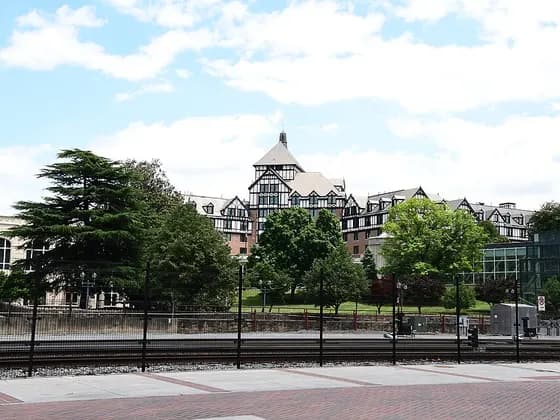

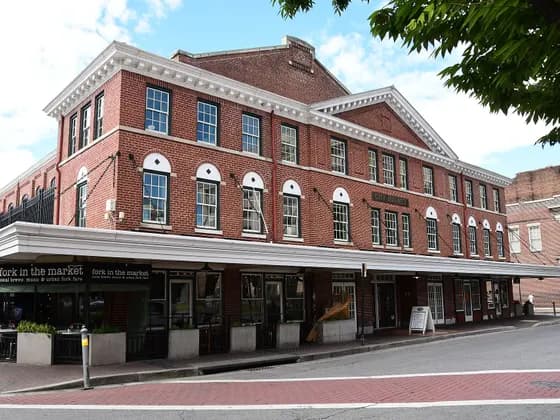
Photo: Warfieldian · CC BY-SA 3.0 · cropped
Photo: Joe Ross from Lansing, Michigan · CC BY-SA 2.0 · Photo: SchuminWeb · CC BY-SA 2.0 · Photo: Joe Ross from Lansing, Michigan · CC BY-SA 2.0
How to get into Virginia Tech Carilion School of Medicine (MD) medicine
Step-by-step: entry requirements, admission tests, personal statement, interview format and the key deadlines.
Open the guide →Virginia Tech Carilion School of Medicine (MD) entry requirements
Admission profile, interview format, decision dates and what makes Virginia Tech Carilion School of Medicine (MD) different.
See the profile →The Virginia Tech Carilion School of Medicine (MD) medicine interview
Virginia Tech Carilion School of Medicine uses an **MMI (Multiple Mini Interview) format with multiple stations. Founded in 2010, VTC Carilion is one of the newest and smallest MD programs in the US — approximately 54 students per year** — and its interview process explicitly evaluates whether candidates will thrive in its uniquely collaborative, team-science learning environment.
Located in Roanoke in the Virginia Blue Ridge, the school’s clinical partner is Carilion Clinic, which serves the Roanoke Valley and surrounding rural Appalachian communities. MMI stations often reflect team-based problem-solving, Appalachian health challenges, and translational research themes.
As a private school, VTC Carilion has no formal in-state preference — national applicants are considered. The tiny class size means every candidate is evaluated with unusual care for collaborative fit.
Virginia Tech Carilion School of Medicine (MD) interview at a glance (2027 entry)
| Annual MD class size | ~54 |
|---|---|
| Applications received | ~4,000–6,000 per cycle |
| Interview format | MMI — multiple stations, in-person |
| Curriculum | Problem-based team-science with integrated research |
| Application system | AMCAS (private — no in-state preference) |
| Interview window | October–February |
| Established | 2010 |
Interview format
- MMI format: multiple stations, each with ~2 minutes reading time and ~8 minutes response time.
- Station types include ethical scenarios, collaborative tasks, communication role-plays, and critical thinking problems.
- Some stations may include a group component or collaborative exercise to assess team dynamics — confirm format with admissions.
- Each station scored independently; small class size means individual fit is scrutinized more carefully than at larger schools.
- Full day includes orientation, Roanoke Carilion clinical campus tour, and informal Q&A with current students.
- In-person; professional dress. Roanoke is accessible by air (ROA) or driving from several major Virginia cities.
Working towards the MCAT score Virginia Tech Carilion School of Medicine (MD) expects? Build a week-by-week plan from your test date — free for the first two weeks.
Sample interview questions
VTC Carilion has a class size of ~54 students and a team-science curriculum. What specifically draws you to this learning environment over a larger, more traditional medical school?
Reference the problem-based team-science model, the small learning teams, the collaborative research culture, and the Roanoke/Appalachian clinical context. Show you have made an active choice to seek this environment, not just applied broadly.
Describe a specific experience where you contributed to a team outcome that you could not have achieved alone. What role did you play, and what did you learn about collaborative work?
VTC Carilion evaluators prize collaborative learners above solo high-achievers. Detail your specific contribution, how you adapted to others' strengths and weaknesses, and what you would do differently. Avoid framing yourself as the indispensable individual.
A rural Appalachian patient refuses a referral to a specialist in Roanoke because the three-hour round trip and time away from work are impossible for her. What are your options?
Explore telehealth consultation, co-management with Carilion specialists, transportation assistance programs, and re-evaluating the urgency of the referral. Show you understand that access barriers are structural problems requiring creative solutions, not patient non-compliance.
A team member in your small learning group consistently shows up to sessions without completing assigned preparation, affecting the group's ability to progress. How do you handle this?
Directly relevant to VTC Carilion's team-science model. Address progressive communication: peer conversation first, then facilitator involvement if unresolved. Frame the issue around shared academic responsibility and patient safety culture, not personal grievance.
You are counseling a patient from a rural community who has been diagnosed with opioid use disorder. He does not identify as having a "drug problem" and resists the idea of medication-assisted treatment. How do you approach this?
Appalachian opioid epidemic context. Apply motivational interviewing: explore ambivalence rather than confronting denial, use patient language ("medication for cravings" vs. "treatment for addiction"), discuss what a small first step toward health might look like. Avoid coercive framing.
What does "translational research" mean to you, and what specific health problem would you most want to see translated from bench to bedside?
VTC Carilion has a translational research emphasis through the VT-Carilion Research Institute. Show you understand the translational pipeline (basic discovery → preclinical → clinical trials → implementation). Be specific about a problem and why translation is the bottleneck.
Appalachian communities often have cultural values around self-reliance and distrust of government programs. How does this affect your approach to recommending preventive care programs to patients from these communities?
Cultural humility applied to Appalachian context. Avoid stereotyping while acknowledging real cultural dynamics. Discuss meeting patients where they are, using community trust networks, and framing preventive care in terms of the patient's own values (family health, self-sufficiency) rather than public health benefit.
Describe a moment in your scientific or research experience when a failure or setback pushed your thinking forward. What did you learn about yourself as a scientific thinker?
VTC Carilion values research orientation even in future clinicians. The failure narrative reveals intellectual resilience and growth mindset — key to the iterative team-science culture. Be specific about the experiment, the failure, and the epistemic shift that followed.
Your small learning group has reached an impasse on how to interpret a clinical scenario — two students are advocating strongly for opposing diagnoses. You are the de facto mediator. What do you do?
This is a collaborative process scenario. Structure the mediation: clarify each position, identify the shared evidence, introduce a systematic framework (e.g., pre-test probability, diagnostic criteria), and guide the group toward evidence-based resolution without imposing your own conclusion.
Should medical schools prioritize training primary care physicians over specialists, given the persistent primary care shortage? What are the trade-offs?
Engage with the workforce data, the incentive structures driving specialization (pay differential, prestige), policy interventions (loan forgiveness, targeted admissions), and the counterargument that forcing career choices undermines physician autonomy and quality.
Role-play: I am a fellow member of your small learning group. The group blames me for our team's poor performance on the last case, and I have just told you privately that I am thinking of asking to switch groups. The assessor will play your teammate — talk with me.
VTC Carilion's team-science model makes this central. Listen to your teammate's experience without taking sides, help reframe the problem as the group's process rather than one person's fault, and explore constructive next steps. Assessors evaluate genuine collaborative instinct, not a rehearsed conflict-resolution script.
You are shown county-level data from southwest Virginia showing that life expectancy is several years lower in the rural Appalachian counties than in the Roanoke metro, alongside higher rates of disability and lower physician density. How do you interpret this, and what would you want to know next?
Connect the gap to access, occupational injury, chronic disease, and economic decline rather than individual behavior alone. Note confounders (age structure, out-migration) and what additional data (cause-specific mortality, access metrics) would sharpen the picture. The Carilion catchment makes Appalachian health data directly relevant.
VTC Carilion is built around problem-based, team-science learning. What does the educational evidence say about problem-based learning compared with traditional lecture-based instruction, and where are its limits?
Discuss evidence on knowledge retention, self-directed learning, and collaborative skills versus efficiency and content-coverage concerns with PBL. Show you have engaged with why the school chose this model rather than simply praising it. This signals genuine fit with the pedagogy that defines the school.
Your translational research team discovers a promising finding, but a senior author wants to publish before a key experiment is repeated, arguing a competing lab may publish first. How do you respond?
Engage with research integrity versus competitive pressure: the importance of reproducibility, the harm of premature or irreproducible claims, and how to raise the concern respectfully within the team hierarchy. VTC Carilion's translational research emphasis (Fralin Biomedical Research Institute) makes scientific-integrity scenarios fair game.
An older Appalachian patient is deeply skeptical of a clinical trial you mention, telling you 'people like us are just guinea pigs.' How do you respond?
Acknowledge the legitimate historical basis for research distrust without being defensive, explain consent protections and the patient's right to decline, and prioritize the relationship over enrollment. Respect their autonomy and self-reliance values. Cultural humility toward Appalachian communities is core to the school's mission.
Practise the Virginia Tech Carilion School of Medicine (MD) interview
Rehearse the real format before the day — on demand with our AI interviewers, or live with a tutor.
Sit a mock with photoreal AI interviewers — any time
A timed MMI or panel interview on video — American & international voices — with interviewers who listen, react and press with follow-ups. Rubric-scored feedback and a replay the moment you finish.






Live mocks with a tutor who’s been in the room
A full Virginia Tech Carilion School of Medicine (MD)-style mock with a medic or dentist tutor — honest scoring against real marking criteria, a station-by-station debrief and a written action plan.
Book a mock interviewHow to prepare for the Virginia Tech Carilion School of Medicine (MD) interview
Common pitfalls to avoid
Virginia Tech Carilion School of Medicine (MD) interview — frequently asked questions
Sources & official admissions information
Ready to nail your Virginia Tech Carilion School of Medicine (MD) interview?
Book a mock interview with a tutor who knows the US interview formats, orpractice unlimited stations from our interview question bank.