
LMU-DCOM Interview
Format, Questions & Prep Tips
LMU-DCOM medicine interviews for 2027 entry are a traditional interview, held September 2026 through March 2027. Published figures: Annual DO class size ~160 (Harrogate campus); Tuition (2025–26) ~USD 55,000/year.
- Institution
- Lincoln Memorial University DeBusk College of Osteopathic Medicine
- Interview (2027 entry)
- September through March
- Decisions (2027 entry)
- Rolling decisions after interview

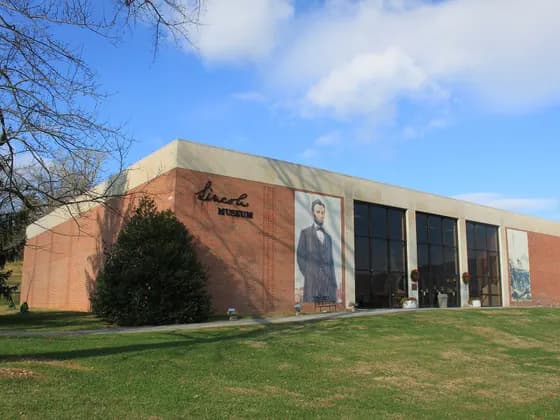
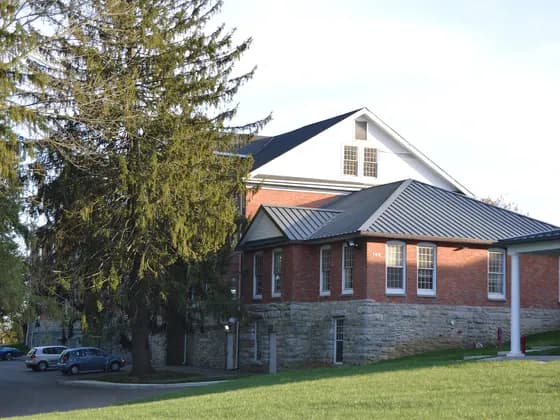

Photo: Dwight Burdette · CC BY 3.0 · cropped
Photo: Dwight Burdette · CC BY 3.0 · Photo: Nyttend · Public domain · Photo: w_lemay · CC BY-SA 2.0
How to get into LMU-DCOM (DO) medicine
Step-by-step: entry requirements, admission tests, personal statement, interview format and the key deadlines.
Open the guide →LMU-DCOM (DO) entry requirements
Admission profile, interview format, decision dates and what makes LMU-DCOM (DO) different.
See the profile →The LMU-DCOM (DO) medicine interview
Lincoln Memorial University DeBusk College of Osteopathic Medicine (LMU-DCOM) uses a traditional interview format at its Harrogate, Tennessee campus in the Cumberland Gap region of Appalachia. LMU-DCOM has one of the most distinct and focused missions of any DO school in the US: training osteopathic physicians to serve rural and underserved Appalachian communities.
Interviewers probe genuine commitment to rural medicine, knowledge of Appalachian health challenges, and DO philosophy. Applicants who cannot articulate a clear rural health mission are unlikely to advance post-interview.
LMU-DCOM does not require CASPer. Rolling admissions rewards early AACOMAS submission.
LMU-DCOM (DO) interview at a glance (2027 entry)
| Annual DO class size | ~160 (Harrogate campus) |
|---|---|
| Interview format | Traditional — faculty interview |
| CASPer required | No |
| Application system | AACOMAS primary + LMU-DCOM secondary |
| Tuition (2025–26) | ~USD 55,000/year |
| Interview window | September–March |
Interview format
- One-on-one or small panel faculty interview; approximately 30–45 minutes.
- Interview day includes OMM laboratory tour and campus overview.
- No MMI format.
Working towards the MCAT score LMU-DCOM (DO) expects? Build a week-by-week plan from your test date — free for the first two weeks.
Sample interview questions
LMU-DCOM is located in one of the most medically underserved regions of the US. Why do you want to practice in a rural or underserved setting?
This is LMU-DCOM’s foundational question. Be specific: name Appalachian health challenges (opioid epidemic, cardiovascular disease, diabetes, lack of specialists). Connect your personal history to rural or underserved medicine.
Why osteopathic medicine over allopathic medicine, and why LMU-DCOM specifically?
DO philosophy, OMT’s role in rural primary care, and LMU-DCOM’s unique location. Reference DO shadowing in rural settings if you have it.
You are the only physician for 50 miles. A patient presents with a complex condition outside your usual scope. What do you do?
What they are listening for:
- Rural medicine resource constraints
- telemedicine
- consultation networks
- patient safety vs. access
Show comfort with the realities of rural solo practice.
What Appalachian health challenges concern you most, and how would your medical training at LMU-DCOM prepare you to address them?
What they are listening for:
- Opioid epidemic
- COPD from coal mining
- cardiovascular disease
- diabetes
- mental health access
- dental/vision gaps
Connect OMM and primary care to Appalachian-specific needs.
How do you build trust with a patient who is skeptical of the medical system?
Relevant to Appalachian communities, which have historical reasons for medical distrust. Show cultural humility, active listening, meeting patients where they are.
Describe a time you had to work with very limited resources to achieve a goal. What did you do?
Rural medicine is resource-constrained medicine. Show adaptability, creativity, and composure under resource limitations.
What is the opioid epidemic and how has it specifically affected Appalachian Tennessee?
What they are listening for:
- Kentucky
- Tennessee
- West Virginia — highest opioid overdose rates nationally
Prescription origin, economic despair, limited treatment access. DO/OMT as alternative pain management.
LMU-DCOM has satellite campuses in Knoxville, TN and Orange Park, FL. How do you see that expanded network fitting your training goals?
Show awareness of LMU-DCOM’s multi-campus model and how Knoxville’s urban/suburban and Florida’s suburban settings complement the Harrogate rural mission.
You're the only physician in a Cumberland Gap clinic. A coal-country patient with worsening COPD keeps smoking and skips his inhalers because money is tight and 'they don't help anyway.' Talk with him.
Meet distrust and fatalism without judgment, explore cost and beliefs, use motivational interviewing, find affordable options, and set small achievable goals. Show rural, relationship-based persistence rather than a lecture.
Central Appalachia has higher rates of cardiovascular disease, diabetes, and overdose deaths than national averages. What interlocking factors drive this, and where could a rural osteopathic primary care physician have the most leverage?
Poverty, the coal-economy decline, tobacco use, food and care access, and the opioid epidemic. Identify high-leverage primary-care points — prevention, continuity, OMT for pain, MAT — while acknowledging structural limits.
Rural practice means staying current largely on your own, far from academic centers. Tell us how you keep learning independently, with a specific example, and how that habit will support board preparation here.
Concrete self-directed learning habit and a verification method, scaled to COMLEX-USA and lifelong rural CME realities. Show genuine intellectual self-reliance, not vague enthusiasm.
A grandmother raising her grandchildren brings the youngest in for asthma but you suspect the whole household has unmet needs. How do you open a conversation about the family's broader situation without overstepping?
What they are listening for:
- Build trust
- ask permission
- focus on the child's care as the entry point
- connect to social work and community resources
- respect the family's dignity and autonomy in a tight-knit community
In a small Appalachian town, you discover that a patient you're treating for chronic pain is also a relative of a clinic staff member who has been informally sharing details about him. How do you handle the confidentiality breach?
What they are listening for:
- Patient privacy
- professional accountability
- addressing the staff conduct appropriately
- rebuilding trust — heightened by the dual relationships inherent in small-community practice
What does the osteopathic principle of treating the whole person mean in a community where a patient's job, family, and faith are inseparable from their health? Give a concrete picture.
Connect whole-person osteopathic care to the lived reality of Appalachian patients — occupation-driven illness, family caregiving, faith, and community. Avoid reciting tenets without grounding them in this context.
If clinic records showed that rural Appalachian patients filled prescriptions far less often than urban patients, what would you want to investigate before calling it 'non-adherence'?
What they are listening for:
- Pharmacy distance
- cost
- transport
- trust
- side-effect experience
Demonstrate you'd treat low fill rates as a structural signal rather than a moral failing of patients.
Practise the LMU-DCOM (DO) interview
Rehearse the real format before the day — on demand with our AI interviewers, or live with a tutor.
Sit a mock with photoreal AI interviewers — any time
A timed MMI or panel interview on video — American & international voices — with interviewers who listen, react and press with follow-ups. Rubric-scored feedback and a replay the moment you finish.




Live mocks with a tutor who’s been in the room
A full LMU-DCOM (DO)-style mock with a medic or dentist tutor — honest scoring against real marking criteria, a station-by-station debrief and a written action plan.
Book a mock interviewHow to prepare for the LMU-DCOM (DO) interview
Common pitfalls to avoid
LMU-DCOM (DO) interview — frequently asked questions
Sources & official admissions information
Ready to nail your LMU-DCOM (DO) interview?
Book a mock interview with a tutor who knows the US interview formats, orpractice unlimited stations from our interview question bank.