
UTHSC College of Medicine Interview
Format, Questions & Prep Tips
UTHSC College of Medicine medicine interviews for 2027 entry are a traditional interview. Published figures: Annual MD class size ~175 (across all campuses); Interview format Traditional — faculty + student panel, 20–30 min each; In-state preference Strong (~90–95% Tennessee residents).
- Institution
- University of Tennessee Health Science Center College of Medicine
- Interview (2027 entry)
- October through February; rolling invitations issued after secondary review
- Decisions (2027 entry)
- Decisions released on rolling basis; final decisions by March 30 (AAMC standard)


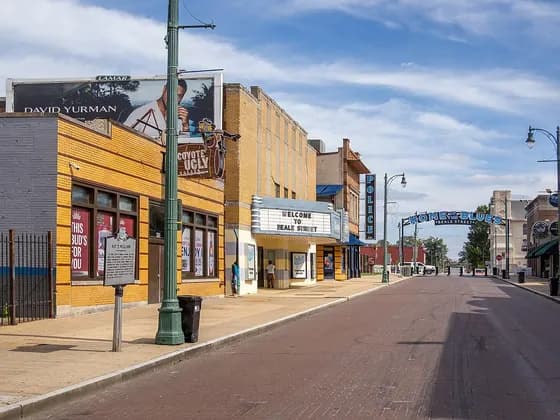

Photo: Own work (Wikimedia Commons uploader) · Public domain · cropped
Photo: Antony-22 · CC BY-SA 4.0 · Photo: Rhododendrites · CC BY-SA 4.0 · Photo: Bubbahotepblues · CC BY-SA 4.0
How to get into UTHSC College of Medicine (MD) medicine
Step-by-step: entry requirements, admission tests, personal statement, interview format and the key deadlines.
Open the guide →UTHSC College of Medicine (MD) entry requirements
Admission profile, interview format, decision dates and what makes UTHSC College of Medicine (MD) different.
See the profile →The UTHSC College of Medicine (MD) medicine interview
The University of Tennessee Health Science Center College of Medicine uses a traditional panel interview format. Applicants typically meet with a faculty physician and a current medical student in separate 20–30 minute sessions. Interviewers have read the full application and focus on motivation for medicine, commitment to Tennessee communities, and the applicant’s understanding of rural and underserved health challenges.
UTHSC trains physicians for a state with significant rural health disparities and primary care shortages. Interviewers probe whether applicants have genuine understanding of and commitment to serving Tennessee’s medically underserved populations rather than generic interest in clinical medicine.
The multi-campus system (Memphis, Knoxville, Chattanooga, Nashville) is a distinctive UTHSC feature; interviewers often explore which campus and clinical environment resonates with the applicant’s goals.
UTHSC College of Medicine (MD) interview at a glance (2027 entry)
| Annual MD class size | ~175 (across all campuses) |
|---|---|
| Interview format | Traditional — faculty + student panel, 20–30 min each |
| Application system | AMCAS + secondary |
| In-state preference | Strong (~90–95% Tennessee residents) |
| MCAT median | ~511–513 |
| GPA median | ~3.65–3.75 |
| Interview window | October–February |
Interview format
- Two separate traditional interview sessions — one with faculty physician, one with current MD student or resident.
- Each session approximately 20–30 minutes; full interview day runs ~5–7 hours.
- Interviewers have reviewed full AMCAS application prior to interview.
- Campus and hospital tour of Memphis facilities including Regional One Health.
- Informal lunch with current students — used informally but candidates should remain professional.
- Group admissions information session typically included.
Working towards the MCAT score UTHSC College of Medicine (MD) expects? Build a week-by-week plan from your test date — free for the first two weeks.
Sample interview questions
Why do you want to practice medicine in Tennessee specifically, and which communities do you hope to serve?
Be concrete — name specific regions, populations (rural Appalachian, Memphis inner-city, Delta communities), or specialties relevant to Tennessee health needs. Avoid generic mission statements.
Tell me about a clinical experience that confirmed your decision to pursue medicine.
STAR structure. Focus on a specific patient interaction or moment of insight. Reflect on what you learned about yourself as a future physician, not just the clinical skill observed.
A patient from a rural Tennessee community refuses a recommended surgery because of cost and fear. How do you approach this conversation?
Address autonomy, financial barriers, rural healthcare access, social determinants of health, and shared decision-making. Reference TennCare and Medicaid expansion context if relevant.
You discover a colleague is experiencing burnout and has made a minor prescribing error. What do you do?
Balance peer support with patient safety obligations. Discuss duty to report, supporting the colleague through well-being resources, and systemic causes of physician burnout.
Describe a time you had to navigate a difficult conversation with someone from a different background or value system.
Demonstrate cultural humility and communication skill. Focus on listening, perspective-taking, and finding common ground rather than convincing the other person.
What is a health issue significantly affecting Tennessee that you think deserves more attention?
Show knowledge of Tennessee health data — opioid crisis (TN is consistently top-10 in overdose rates), rural hospital closures, infant mortality in Memphis, obesity and diabetes rates.
Why did you choose UTHSC among Tennessee's medical schools, and which campus would you prefer?
Research the campus differences. Memphis offers trauma and urban health; Knoxville/Chattanooga offer Appalachian rural experience; Nashville offers academic medical center exposure. Have a genuine preference with rationale.
Tennessee has one of the highest rates of uninsured residents in the US, having not fully expanded Medicaid. What role should physicians play in healthcare policy advocacy?
Acknowledge physicians' dual role as clinicians and public health advocates. Reference TennCare limitations, the coverage gap, and professional organizations (TMA, AMA) as channels for advocacy.
How would you explain to a patient why they need to take a medication daily even when they feel fine?
Demonstrate plain-language communication, empathy, and the ability to tailor education to patient health literacy. Use analogy and check-back questions.
What experience outside of medicine has most shaped how you think about people?
This probes breadth of experience and self-awareness. Choose something authentic that connects meaningfully to a clinical value — humility, resilience, service, curiosity.
Role-play: a patient from a rural West Tennessee county tells you he skipped his last two clinic appointments because the drive is long, he misses work, and 'the medicine didn't seem to be doing anything anyway.' Respond to him.
Address the structural barriers (distance, lost wages) without dismissing them, re-engage him on why the treatment matters, and problem-solve practically — telehealth follow-up, longer intervals, pharmacy options. This reflects the rural-access reality UTHSC trains for.
Shelby County has persistently high infant mortality, especially among Black infants. If you were on a team asked to reduce it, what data would you want and what would you be cautious about concluding?
Show population-health thinking: prenatal care access, social determinants, preterm birth drivers, and disaggregated data — while being cautious about confounding and not reducing a structural problem to individual behavior. Reference Memphis specificity.
Tennessee consistently ranks among the worst states for opioid overdose deaths. From a clinician's standpoint, what makes this crisis so hard to reverse?
Discuss the interplay of prescribing history, fentanyl supply, limited rural treatment access, stigma, and the gap between policy and frontline reality. Show you understand it as a systems problem, not a moral one.
You are a third-year student and a patient asks you a direct question about their prognosis that you genuinely do not know the answer to. What do you say?
Model honesty within your role — acknowledge the limits of your knowledge, commit to finding out or bringing the team, and don't fabricate reassurance. Shows integrity and appropriate use of the team hierarchy.
A patient who lacks insurance and lives two hours away needs a follow-up procedure that is only offered at the Memphis academic center. The system has no clear funding pathway. What is your role?
Combine individual advocacy (charity care, social work, scheduling around the travel burden) with awareness of the systemic coverage gap in a non-expansion state. Show you see both the patient in front of you and the structure around them.
Practise the UTHSC College of Medicine (MD) interview
Rehearse the real format before the day — on demand with our AI interviewers, or live with a tutor.
Sit a mock with photoreal AI interviewers — any time
A timed MMI or panel interview on video — American & international voices — with interviewers who listen, react and press with follow-ups. Rubric-scored feedback and a replay the moment you finish.






Live mocks with a tutor who’s been in the room
A full UTHSC College of Medicine (MD)-style mock with a medic or dentist tutor — honest scoring against real marking criteria, a station-by-station debrief and a written action plan.
Book a mock interviewHow to prepare for the UTHSC College of Medicine (MD) interview
Common pitfalls to avoid
UTHSC College of Medicine (MD) interview — frequently asked questions
Sources & official admissions information
Ready to nail your UTHSC College of Medicine (MD) interview?
Book a mock interview with a tutor who knows the US interview formats, orpractice unlimited stations from our interview question bank.