
How to get into UTHSC College of Medicine
Your 2027 Entry step-by-step guide
University of Tennessee Health Science Center College of Medicine is a US MD program in Memphis, TN that takes 2027-entry applications through AMCAS. Its published class profile lists a median MCAT of 511 (range 507–518), a median GPA of 3.86, a 9.7% acceptance rate and a class of 181. The school holds a traditional interview: October 2026–February 2027. Decisions for 2027 entry: March 30, 2027 (AAMC standard).
- Interviews (2027 entry)
- October 2026–February 2027
- Decisions (2027 entry)
- March 30, 2027 (AAMC standard)




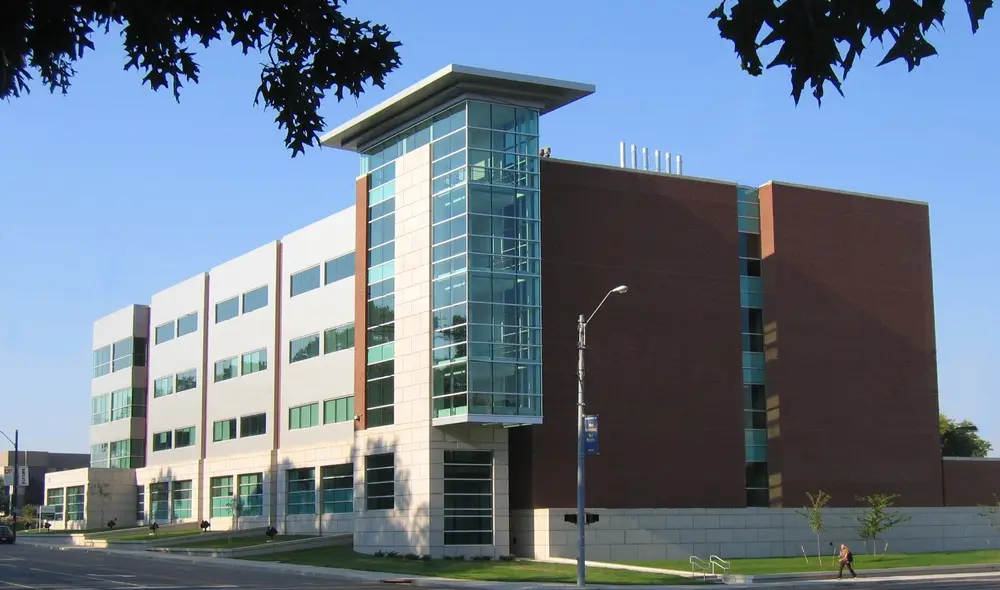
Photo: Own work (Wikimedia Commons uploader) · Public domain · cropped
Photo: Antony-22 · CC BY-SA 4.0 · Photo: Rhododendrites · CC BY-SA 4.0 · Photo: Bubbahotepblues · CC BY-SA 4.0
Still deciding where to apply? Hear it from a student who's there
Honest student guides to US medical schools
Current medical students at US schools are filming their guides right now: what the course and teaching are really like, the city they live in, the social side, and whether they'd pick it again.
Coming soonNot on sale yet — we'll open these up as soon as the first US videos land.
Filming now
UTHSC College of Medicine (MD) expects a competitive the MCAT score and GPA (cumulative and science) for its 4-year Medicine (MD/DO) program and uses Virtual interview day: two one-on-one interviews with Committee on Admissions members, plus presentations and a virtual campus tour for interviews in the 2027 Entry cycle.
Applications go through AMCAS / AACOMAS (and TMDSAS for Texas) and are read on a holistic, rolling basis against a limited number of seats, so submitting a complete primary early in the cycle materially improves your odds.
This guide is written for 2027 Entry applicants and updated annually before each AMCAS / AACOMAS cycle. Sources include University of Tennessee Health Science Center College of Medicine's official admissions page, the AAMC (MCAT and AMCAS), AACOMAS, and direct conversations with current students. Read time: ~12 minutes.
Checked against University of Tennessee Health Science Center College of Medicine's own website on 13 September 2026: our record for the school was reconciled with what it publishes there. For most US schools that is class size and interview format only, so MCAT, GPA and acceptance-rate figures remain unconfirmed.
UTHSC College of Medicine (MD) at a glance
| MCAT / GPA (medians) | 511 · 3.86 (MCAT range 507–518) |
|---|---|
| Interview format | Virtual interview day: two one-on-one interviews with Committee on Admissions members, plus presentations and a virtual campus tour |
| Interviews (2027 entry) | October 2026–February 2027 |
| Decisions (2027 entry) | March 30, 2027 (AAMC standard) |
UTHSC College of Medicine (MD) entry requirements
UTHSC College of Medicine (MD) is a US MD program that evaluates applicants holistically via AMCAS. The core academic filters are MCAT and GPA (cumulative + science).
UTHSC College of Medicine (MD) admissions profile
- MCAT median:
- 511 (range 507–518)
- GPA median:
- 3.86 overall / 3.78 science (BCPM)
- Acceptance rate:
- 9.7%
- Class size:
- 181
- In-state preference:
- Strong — primarily in-state
- CASPer:
- Not required
- AAMC PREview:
- Not required
- Holistic review emphasis:
- Tennessee residency, primary care and rural medicine mission fit, community service, clinical experience.
- Notes:
- Checked 2026-09-13 against the school's own published figures (class entering in 2026): mean MCAT 511; mean GPA 3.86; class of 181; 155 of 181 in-state; 271 accepted of 2,798 applicants. Where a figure is marked mean, the school publishes a mean rather than a median. Not confirmed from the school's own pages: science GPA. Interview format checked 2026-10-07 against https://uthsc.edu/medicine/admissions/interview-day.php.
MCAT, GPA, acceptance-rate and class-size figures are taken from University of Tennessee Health Science Center College of Medicine's published admissions data. Class profiles are republished each year — confirm which entering class these numbers describe before you rely on them.
MCAT
The MCAT is a 7.5-hour standardized test covering Biological & Biochemical Foundations (BB), Chemical & Physical Foundations (CP), Psychological, Social & Biological Foundations (PS), and Critical Analysis & Reasoning Skills (CARS). Total score: 472–528; national median ~511. Competitive applicants to top MD programs typically score 515+. MCAT scores are valid for 3 years (AAMC policy). Register through AAMC at aamc.org/mcat.
Working towards the MCAT score UTHSC College of Medicine (MD) expects? Build a week-by-week plan from your test date — free for the first two weeks.
AMCAS personal statement
Your AMCAS (and AACOMAS for DO) primary carries one personal statement of about 5,300 characters that goes to every school you apply to - so it must answer "why medicine?" without naming a specific school. Lead with a concrete scene, build a reflective arc through your clinical, research and service experience, and close with a forward-looking sense of the physician/dentist you want to become. After the primary, each school sends secondary (supplemental) essays - this is where school-specific "why us?" and mission-fit content belongs. Treat the personal statement and the secondaries as two distinct writing jobs.
The primary personal statement runs to about 5,300 characters including spaces (AMCAS ~5,300; AACOMAS ~5,300). On top of that you will write many secondary essays - often 3-8 prompts per school, frequently with their own word or character caps. First drafts are always too long, so plan to edit the personal statement down and to reuse a pre-written secondary bank.
Five things that win
Four things that lose
Worked-example opener (do not copy — for shape only)
"At 17, scribing in the emergency department, I watched the attending physician explain a difficult prognosis to a frightened family in plain, unhurried language. The exam took minutes; the conversation took far longer, and it taught me that medicine is as much about clarity and trust as it is about clinical knowledge. Since then I have spent…"
Notice: a specific scene rather than a cliché, a precise detail (the nine-minute conversation), and a closing sentence that bridges to the next paragraph. We have a step-by-step AMCAS personal statement service if you want a tutor to help shape yours.
The MMI interview at UTHSC College of Medicine (MD)
UTHSC College of Medicine (MD) uses Virtual interview day: two one-on-one interviews with Committee on Admissions members, plus presentations and a virtual campus tour. For 2027 entry, interviews typically take place in October 2026–February 2027. Final decisions are released March 30, 2027 (AAMC standard).
At UTHSC College of Medicine (MD), expect the following from the MMI. Multiple Mini Interviews - typically 6-10 stations of 5-8 minutes each, often with reading time before each station. Stations rotate; assessors do not see your performance at previous stations, so a poor station does not derail the rest. Many US schools run MMIs virtually (Kira Talent / Zoom) between August and March of the rolling cycle.
How the UTHSC College of Medicine (MD) MMI actually runs
UTHSC Memphis holds a virtual interview day that includes admissions presentations, two one-on-one interviews with members of the Committee on Admissions, and a virtual tour of the campus and clinical training sites. Interviewers have reviewed the full AMCAS application in advance and probe motivation for medicine in Tennessee, community service experience, and clinical preparation.
Applicants with interest in primary care, rural medicine, or serving Tennessee's medically underserved populations stand out in this review.
What they assess
What UTHSC College of Medicine (MD) assessors are scoring: MMI assessors score against a structured rubric for each station - usually a 4-5 point scale per skill (communication, empathy, ethical reasoning, professionalism). You don't need to be perfect; you need to demonstrate you can think on your feet, listen, and reflect honestly. Many schools also fold in a CASPer or AAMC PREview situational-judgment score alongside the live MMI.
Common station / question themes
- Motivation for medicine (why this career, why now, why this school, MD vs DO fit)
- Ethical scenarios (informed consent, capacity, end-of-life care, allocation of scarce resources)
- Role play (often with an actor - break difficult news, support a distressed peer)
- Communication & teamwork (describe a time you led, follow instructions to assemble something)
- Data interpretation (read a graph, justify a clinical decision)
- Personal-statement and experiences (Work & Activities) deep dive at one station
- US health-system awareness (access, cost, insurance, health disparities, public health)
- Reflection on clinical and research experience
Sample questions you might face at UTHSC College of Medicine (MD)
Why medicine rather than another health-care career?
Describe a time you worked in a team - what was your contribution?
A patient refuses life-saving treatment. How would you respond?
What do you see as the biggest challenge facing the US health-care system?
Walk me through what you observed during your clinical experience and what you learned.
How would you decide between two patients who both need a single available ICU bed?
Tell me about a non-academic interest and what it has taught you.
What concerns you about a career in medicine in the US?
Model-answer guidance: “Why medicine?”
Our MMI prep program covers ethics frameworks (SPIES, the four pillars), structured behavioral answers (STAR), and live mock interviews with admissions specialists.
Practise the UTHSC College of Medicine (MD) interview
Rehearse the real format before the day — on demand with our AI interviewers, or live with a tutor.
Sit a mock with photoreal AI interviewers — any time
A timed MMI or panel interview on video — American & international voices — with interviewers who listen, react and press with follow-ups. Rubric-scored feedback and a replay the moment you finish.






Live mocks with a tutor who’s been in the room
A full UTHSC College of Medicine (MD)-style mock with a medic or dentist tutor — honest scoring against real marking criteria, a station-by-station debrief and a written action plan.
Book a mock interviewMonth-by-month timeline for 2027 Entry
The cycle runs roughly January 2025 (start of prep), AMCAS / AACOMAS opens in May 2026 with primaries submitted from June 2026, secondary applications over summer 2026, interviews from August 2026 through March 2027, and rolling decisions to course start in August 2027. Here are the milestones you cannot miss.
Decide and build clinical + research experience
Confirm medicine or dentistry as your career direction. Start banking the experience US schools expect: clinical exposure (scribing, EMT, hospital volunteering, shadowing MDs/DOs or dentists), research, and community service. Admissions committees review holistically, so depth, reflection and longitudinal commitment matter more than a long list of one-off activities.
Open your MCAT / DAT prep window
Begin structured prep 4-6 months before your test date. The MCAT (medicine) is a ~7.5-hour exam across four sections including CARS; the DAT (dentistry) tests sciences, perceptual ability and reading. Aim to test in spring of your apply year so a verified score is ready when the primary opens.
Sit the MCAT / DAT
Take the MCAT (medicine) or DAT (dentistry) by spring so scores post before you submit. MCAT scores release ~30-35 days after the test and are valid for 3 years (AAMC policy). Leave a contingency retake window only if you must - a later score delays your whole rolling application.
Primary application opens
AMCAS (MD), AACOMAS (DO) and TMDSAS (Texas public schools) open in early May; ADEA AADSAS (dentistry) opens in early May too. Begin entering coursework, experiences, and your personal statement immediately - verification of transcripts takes weeks, so an early submission protects your place in the rolling queue.
Submit your primary
Submit your verified primary in late May or June. This is the single most important deadline you control: in a rolling cycle, a complete June application is materially stronger than the same application in August. Request transcripts and letters of recommendation early so verification is not the bottleneck.
Secondary (supplemental) applications begin
Schools send secondary applications soon after receiving your verified primary. Turn each around within ~1-2 weeks - schools track responsiveness. Pre-write answers to common prompts ("Why our school?", diversity, adversity, future goals) so you can localize quickly. CASPer and AAMC PREview are required by some schools - schedule them now.
Interview invitations begin
Complete files (primary + secondary + letters + any CASPer/PREview) move to committee, and interview invitations start going out from August. Invitations and offers are issued on a rolling basis, so completing files early in summer puts you in front of committees while the most seats remain open.
Interviews + first rolling acceptances
Interviews run from August through March (MMI, traditional one-on-one, or panel). MD schools may begin releasing acceptances around October 15 under AMCAS Traffic Rules. Each school sets its own primary deadline, most of them in the fall - but applying that late in a rolling cycle is a disadvantage, not a target.
Interviews continue + manage offers
Interview season peaks. Acceptances, waitlists and holds accumulate on a rolling basis. Track each school's deadline to commit, and use AMCAS / AACOMAS "Plan to Enroll" and "Commit to Enroll" tools (and TMDSAS / AADSAS equivalents) as instructed.
Final interviews + waitlist movement
The last interviews wrap up around March. From spring onward, schools work their waitlists as accepted applicants narrow their choices. Stay responsive: a strong letter of intent and updated achievements can move you off a waitlist.
Commit to one school
Narrow to a single acceptance by the AAMC "Commit to Enroll" date (typically late April) for MD; AACOMAS, TMDSAS and AADSAS have parallel deadlines. Withdraw from other schools promptly so seats free up for waitlisted applicants.
Matriculation
US medical and dental school begins in August. Orientation, white-coat ceremony, and the first pre-clinical (or integrated) coursework start the 4-year program.
What makes UTHSC College of Medicine (MD) different
UTHSC College of Medicine operates across multiple Tennessee campuses (Memphis, Knoxville, Chattanooga, and Nashville), giving students access to diverse clinical environments and patient populations. The school has a strong public health mission focused on rural and underserved Tennessee communities. Regional One Health (Memphis) provides Level I trauma and high-acuity exposure from the clinical years.
Notable research areas
Curriculum (Integrated)
4-year MD. Preclinical years (Year 1–2) at Memphis with integrated organ-system curriculum. Clinical rotations (Year 3–4) may be completed at Memphis or one of three regional campuses (Knoxville, Chattanooga, or Nashville), allowing students to experience different healthcare delivery contexts.
Location: Memphis, TN, United States
Founded in 1851. Whether the city suits you matters - four years is a long commitment. Visit on an open day if you can; current students will be the most honest assessors of culture and clinical placement quality.
Application statistics for UTHSC College of Medicine (MD)
UTHSC College of Medicine (MD) intake
Approximately 175 students per year across all campuses.
How UTHSC College of Medicine (MD) selects, at a glance
Source: University of Tennessee Health Science Center College of Medicine admissions data; AAMC published class profiles; MSAR data; school-reported class statistics.
Six mistakes that derail medicine applications
UTHSC College of Medicine (MD) — frequently asked questions
Sources for this UTHSC College of Medicine (MD) guide
Apply to UTHSC College of Medicine (MD) with confidence
We help US applicants with MCAT strategy, AMCAS personal statements, secondary essays and MMI prep — everything you need for a competitive UTHSC College of Medicine (MD) application.