
WCUCOM Interview
Format, Questions & Prep Tips
WCUCOM medicine interviews for 2027 entry are a traditional interview, held September 2026 through March 2027. Published figures: Annual DO class size ~112.
- Institution
- William Carey University College of Osteopathic Medicine
- Interview (2027 entry)
- September through March
- Decisions (2027 entry)
- Rolling decisions after interview
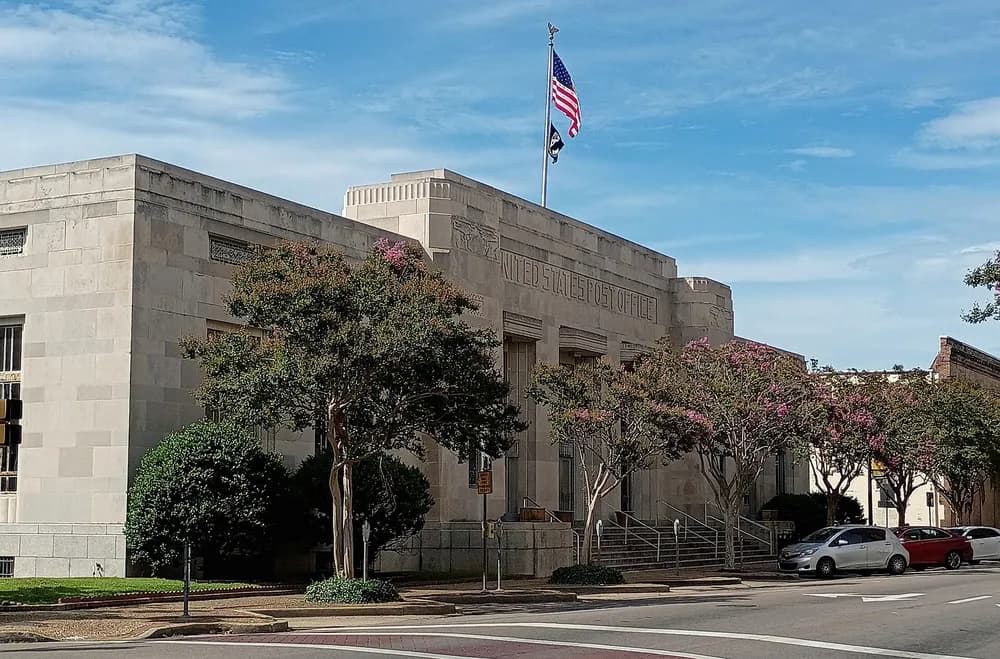
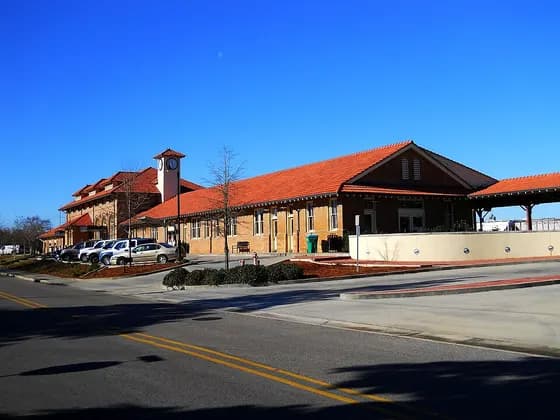

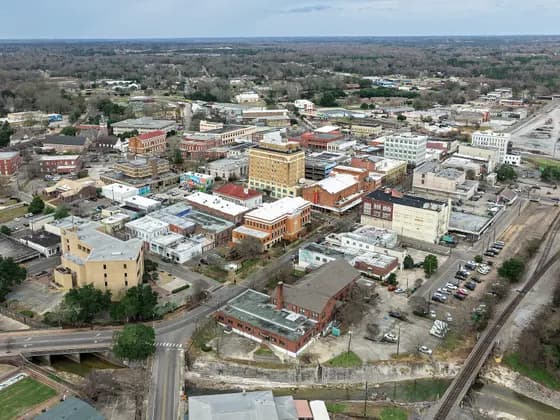
Photo: Paul Lowry · CC BY 2.0 · cropped
Photo: Woodlot · CC BY-SA 3.0 · Photo: Woodlot · CC BY-SA 3.0 · Photo: Quintin Soloviev · CC BY 4.0
How to get into WCUCOM (DO) medicine
Step-by-step: entry requirements, admission tests, personal statement, interview format and the key deadlines.
Open the guide →WCUCOM (DO) entry requirements
Admission profile, interview format, decision dates and what makes WCUCOM (DO) different.
See the profile →The WCUCOM (DO) medicine interview
WCUCOM uses a traditional faculty interview at its Hattiesburg, Mississippi campus. Founded in 2010 as part of William Carey University — a Christian liberal arts institution — WCUCOM is one of the few explicitly faith-based osteopathic medical schools in the US.
Mississippi has some of the worst health outcomes in the country: highest obesity rates, among the worst cardiovascular, diabetes, and infant mortality statistics nationally. WCUCOM exists to train physicians to change those outcomes, and interviewers probe both osteopathic commitment and service orientation toward Mississippi’s deeply underserved communities.
Applicants of faith who connect their calling to medicine are well-aligned with the school’s culture. Casper is required at WCUCOM — confirm current-cycle deadlines on the admissions site.
WCUCOM (DO) interview at a glance (2027 entry)
| Annual DO class size | ~112 |
|---|---|
| Interview format | Traditional — faculty panel |
| CASPer required | Yes — Casper + Duet (verify current cycle) |
| Application system | AACOMAS primary + WCUCOM secondary |
| Faith affiliation | Christian (William Carey University) |
| Interview window | September–March |
Interview format
- Traditional one-on-one or small panel; ~30–45 minutes.
- Hattiesburg campus tour on interview day.
- Faith mission and service orientation are central interview themes.
Working towards the MCAT score WCUCOM (DO) expects? Build a week-by-week plan from your test date — free for the first two weeks.
Sample interview questions
WCUCOM is part of a Christian university with an explicit faith mission. How does your personal background align with that mission, and how do you envision integrating faith and medicine in your practice?
Be honest and respectful. If you are a person of faith, connect your calling to medicine. If not, articulate genuine respect for the faith ethos and explain how you will serve within it.
Mississippi has among the worst health outcomes of any state in the US. What specific health challenges most motivate you to train and practice here?
What they are listening for:
- Obesity
- cardiovascular disease
- diabetes
- infant mortality
- rural poverty
- lack of specialist access
Specific Mississippi knowledge signals genuine intent.
Why osteopathic medicine, and why a rural Deep South program?
OMM philosophy tied to whole-person care in under-resourced communities. Deep South rural primary care as the highest-need environment in the US.
A patient requests an abortion in your rural Mississippi clinic. Mississippi has restrictive abortion laws. How do you navigate your personal values, the law, and your obligations to the patient?
What they are listening for:
- Patient-centered counseling
- non-abandonment
- referral to appropriate services
- honest discussion of legal constraints
Show you can separate personal belief from clinical obligation.
Mississippi did not expand Medicaid under the ACA for many years. What are the health consequences of that decision, and what would you advocate for as a physician?
What they are listening for:
- Uninsured population health outcomes
- emergency department overuse
- delayed care for chronic disease
Policy advocacy as a physician responsibility.
A rural Mississippi patient with type 2 diabetes, hypertension, and chronic pain works two jobs and has no time for lifestyle interventions. How do you approach his care using osteopathic principles?
Whole-person care acknowledging social determinants. OMM for chronic pain as a comorbidity management tool. Practical primary care in resource-limited environments.
What experience have you had serving the rural South, faith-based communities, or populations facing health disparities driven by poverty?
Specific. Name the community, the patients, the barriers, and what you learned about structural inequality in healthcare.
Hattiesburg is a mid-sized city in southern Mississippi. What do you know about the community, and how do you plan to engage with it during your training?
Research Hattiesburg: the University of Southern Mississippi is nearby, African American cultural heritage, Gulf Coast proximity. Show genuine curiosity about the city.
As a physician, how would you approach a patient whose treatment preference conflicts with your personal religious convictions?
What they are listening for:
- Clinical non-abandonment
- patient autonomy
- obligation to refer to another provider if you cannot in conscience treat
The faith-based setting makes this question especially likely.
William Carey University is named after the pioneering Baptist missionary William Carey, known for service to underserved communities in colonial India. What resonance, if any, does that heritage have for you as a medical applicant?
What they are listening for:
- Service
- sacrifice
- mission as a framework for medicine
You do not need to be Baptist — but show awareness of the institution's ethos and genuine alignment.
Mississippi consistently ranks worst or near-worst nationally for obesity, infant mortality and cardiovascular death. Shown county-level data confirming these rankings, how would you reason about the upstream causes, and what would you avoid concluding?
Upstream drivers:
- rural poverty
- food access
- uninsurance (no full Medicaid expansion for years)
- provider shortages and structural inequity
Avoid blaming individual behavior or culture. Show structural reasoning grounded in Mississippi's specific context.
Role-play: a devout rural Mississippi patient with poorly controlled diabetes tells you he is 'leaving it in God's hands' and is hesitant about medication. Counsel him in a way that honors his faith.
What they are listening for:
- Spiritual humility
- finding shared ground
- framing self-care as stewardship consistent with faith
- motivational interviewing
The faith-based setting makes respectful engagement with religious belief essential — neither dismiss nor simply defer to it.
WCUCOM is a faith-based program with a board-focused curriculum. How do you learn best, and how would you thrive academically within a community where the institutional faith ethos shapes daily life?
Concrete study systems and COMLEX preparation, plus genuine comfort within the faith-informed culture (whatever your own beliefs). Show respect for the environment and the ability to integrate into the community while meeting rigorous academic demands.
You must deliver a difficult terminal prognosis to a patient and her large, close-knit family who expect to make decisions collectively, as is common in the Deep South. How do you handle the conversation?
What they are listening for:
- Respect family-centered decision-making while honoring patient autonomy
- deliver news with empathy and clarity
- manage a roomful of emotion
- clarify the patient's wishes about information-sharing
Cultural competency in Deep South family dynamics.
For years Mississippi did not expand Medicaid, and analyses link that to coverage gaps and worse outcomes for the working poor. How would you weigh that kind of policy-outcome data, and what limits would you keep in mind before treating it as proof of cause and effect?
Reason about the difficulty of isolating one policy's effect amid many confounders, the strength of comparative state evidence, and what you would want to see (natural experiments, trends). Show policy literacy and humility about causal claims from observational data.
Practise the WCUCOM (DO) interview
Rehearse the real format before the day — on demand with our AI interviewers, or live with a tutor.
Sit a mock with photoreal AI interviewers — any time
A timed MMI or panel interview on video — American & international voices — with interviewers who listen, react and press with follow-ups. Rubric-scored feedback and a replay the moment you finish.





Live mocks with a tutor who’s been in the room
A full WCUCOM (DO)-style mock with a medic or dentist tutor — honest scoring against real marking criteria, a station-by-station debrief and a written action plan.
Book a mock interviewHow to prepare for the WCUCOM (DO) interview
Common pitfalls to avoid
WCUCOM (DO) interview — frequently asked questions
Sources & official admissions information
Ready to nail your WCUCOM (DO) interview?
Book a mock interview with a tutor who knows the US interview formats, orpractice unlimited stations from our interview question bank.