
University of Maryland School of Medicine Interview
Format, Questions & Prep Tips
University of Maryland School of Medicine medicine interviews for 2027 entry are a traditional interview. University of Maryland School of Medicine describes the format as: the published schedule lists one possible 45-minute interview, plus a student lunch and a tour. Published figures: Annual MD class size ~165; Interview format Two traditional one-on-one interviews, 30 min each; Founded 1807 — oldest public medical school in the US.
- Institution
- University of Maryland School of Medicine
- Interview (2027 entry)
- October through February; rolling invitations after secondary review
- Decisions (2027 entry)
- Rolling decisions from November through March 30; waitlist movement through summer

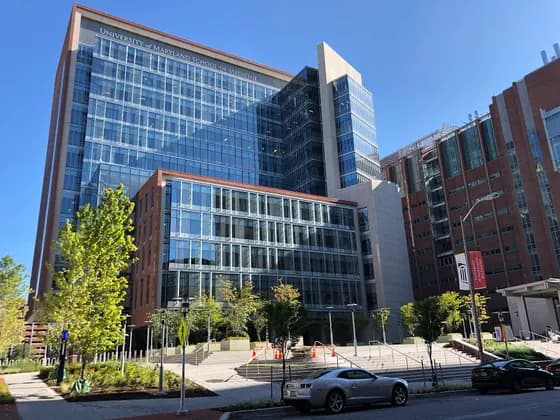
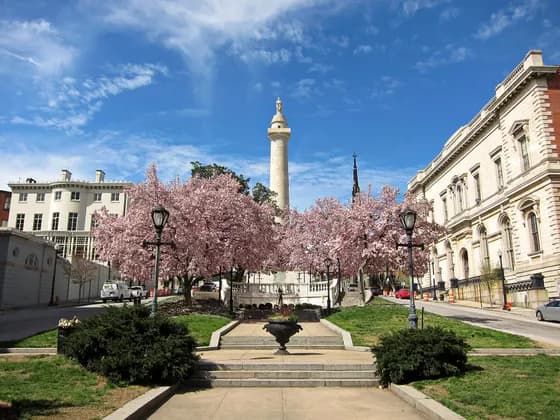
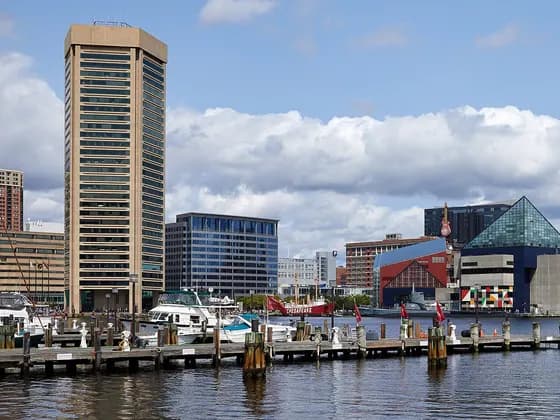
Photo: Baltimore Heritage · CC0 · cropped
Photo: Alx bio · CC BY-SA 4.0 · Photo: AgnosticPreachersKid · CC BY-SA 4.0 · Photo: Xiaokui Qin · CC BY-SA 4.0
How to get into University of Maryland School of Medicine (MD) medicine
Step-by-step: entry requirements, admission tests, personal statement, interview format and the key deadlines.
Open the guide →University of Maryland School of Medicine (MD) entry requirements
Admission profile, interview format, decision dates and what makes University of Maryland School of Medicine (MD) different.
See the profile →The University of Maryland School of Medicine (MD) medicine interview
The University of Maryland School of Medicine uses a traditional interview format. Interview days in Baltimore include two one-on-one interviews — one faculty/clinician and one current student — each approximately 30 minutes, along with a tour of the University of Maryland Medical Center and Shock Trauma Center.
UMSOM is the oldest public medical school in the United States (founded 1807), and this history permeates the school’s culture and interview conversations. The school is home to the R Adams Cowley Shock Trauma Center — which pioneered the Golden Hour concept — and the Institute of Human Virology, a world leader in HIV research and global infectious disease.
Interviewers probe research experience, clinical exposure, Baltimore health context awareness, and genuine engagement with the school’s distinctive strengths. Expect questions that probe the AAMC Premed Competencies.
University of Maryland School of Medicine (MD) interview at a glance (2027 entry)
| Annual MD class size | ~165 |
|---|---|
| Interview format | Two traditional one-on-one interviews, 30 min each |
| Founded | 1807 — oldest public medical school in the US |
| Signature program | R Adams Cowley Shock Trauma Center; Institute of Human Virology |
| In-state preference | Moderate — ~60% Maryland residents |
| Application system | AMCAS |
| Interview window | October–February |
Interview format
- Two traditional one-on-one interviews: one faculty/clinician, one current MD student.
- Each session approximately 30 minutes; interviewers have reviewed the full application.
- Tour of University of Maryland Medical Center and R Adams Cowley Shock Trauma Center.
- Financial aid and curriculum overview session.
- Informal student interactions.
- Full day approximately 5–6 hours.
Working towards the MCAT score University of Maryland School of Medicine (MD) expects? Build a week-by-week plan from your test date — free for the first two weeks.
Sample interview questions
UMSOM is the oldest public medical school in the US and has the R Adams Cowley Shock Trauma Center and the Institute of Human Virology. Which of these aspects most excites you, and how does it fit your career goals?
Shows genuine school research. Connect your interest to one of UMSOM's distinctive features — not generic public school or Baltimore appeal. Reference specific research programs, the trauma surgery training, or the IHV's global HIV work.
Baltimore has one of the highest rates of opioid overdose mortality, HIV incidence, and cardiovascular disease in the US. How has that context shaped your thinking about practicing medicine in an urban environment?
Baltimore health disparities are well-documented and directly relevant to UMSOM training. Show genuine awareness: West Baltimore community health statistics, the city's needle exchange history, and the intersection of poverty and chronic disease.
Tell me about a research experience that challenged your assumptions. What happened and what did you do?
UMSOM values research engagement. Show intellectual honesty — negative results, surprising findings, or methodological challenges are more revealing of scientific maturity than smooth success stories.
The R Adams Cowley Shock Trauma Center treats extremely complex trauma cases, some involving patients with no family present and no ability to provide consent. What ethical framework governs care in these situations?
What they are listening for:
- Emergency exception to informed consent
- implied consent
- substituted judgment
- POLST/advance directives if available
- post-stabilization family engagement
Trauma-specific ethical context.
If you pursued the MSTP (MD-PhD) program, what research question would you want to investigate, and why?
Not required for all applicants, but shows intellectual depth. If research-track, connect to UMSOM strengths: HIV immunology, trauma physiology, cardiovascular biology, or neuroscience. If not MSTP, adapt to: "what research questions excite you most in medicine?"
HIV prevention tools (PrEP, needle exchanges) have been politically controversial in some Maryland communities. As a physician, how do you navigate prescribing and advising on evidence-based preventive care in the face of community opposition?
Baltimore's HIV epidemic and the IHV's public health work make this directly relevant. Evidence-based medicine, community trust-building, addressing stigma, and working within community norms while maintaining clinical responsibilities.
Describe a time you worked with someone from a very different socioeconomic or cultural background. What did you learn about your own assumptions?
Cultural humility — especially relevant in Baltimore's highly racially and economically segregated neighborhoods. Focus on learning and adjustment of your own assumptions, not on how you helped the other person.
A trauma patient arrives at the Shock Trauma Center with a limb injury. Saving the limb would take additional surgical time and resources; amputation would be faster and safer given current patient volume. What guides the decision?
What they are listening for:
- Trauma triage ethics
- patient best interests
- resource constraints in mass casualty contexts
- the shared decision-making model in urgent but non-emergent decisions
Shows engagement with the real complexity of trauma surgery.
What subject in your academic preparation do you feel least prepared for in medical school, and what have you done to address it?
Self-awareness over defensiveness. Medical school is academically demanding; interviewers appreciate candidates who know their weak spots and have taken proactive steps rather than claiming uniform readiness.
UMSOM is part of the University of Maryland Baltimore campus alongside law, pharmacy, nursing, and social work schools. How does an interprofessional academic health center influence your thinking about how healthcare should be delivered?
Interprofessional education (IPE) is a genuine UMSOM strength. Show awareness of team-based care models, how physicians collaborate with pharmacists, nurses, social workers, and lawyers, and why this matters for patient outcomes.
You are shown overdose-mortality data for Baltimore over the last decade showing a sharp rise coinciding with the spread of fentanyl, alongside flat naloxone distribution in the hardest-hit ZIP codes. How would you interpret this, and what would you want to verify before recommending a policy response?
Demonstrate appraisal: question how deaths were attributed, the ecological fallacy of ZIP-code-level analysis, and whether naloxone distribution data captures community access. Connect to Baltimore's documented epidemic without asserting a precise figure.
Role play: you are a student at UMMC. A young West Baltimore patient eligible for PrEP is hesitant, telling you he does not trust 'what the hospital is really trying to do' to people from his neighborhood. Begin the conversation.
Demonstrate trust-building live. Acknowledge the legitimate historical basis for that distrust, avoid being defensive about the institution, and focus on his autonomy and concrete questions. Tie implicitly to the IHV's public-health work.
As the oldest public medical school in the US, UMSOM sits within a deep research tradition. If you joined a lab studying trauma physiology or HIV immunology, how would you handle a result that contradicted the lab's prevailing hypothesis?
Thinking & Reasoning and scientific integrity. Show intellectual honesty — pursuing the anomaly, checking methodology, and valuing the result over the hypothesis — which signals the research maturity UMSOM looks for.
Describe a time you worked on a genuinely interprofessional team — with people from non-medical disciplines — to solve a problem none of you could solve alone. What did each discipline contribute?
Interpersonal competency mapped to UMSOM's interprofessional Baltimore campus (law, pharmacy, nursing, social work). Emphasize respect for other disciplines' expertise and how that improved the outcome.
UMSOM and Johns Hopkins sit in the same city but serve it differently. Setting comparisons aside, what specifically about UMSOM's role in Baltimore makes it the place you want to train?
Clarity of purpose. Interviewers screen for candidates applying out of genuine UMSOM interest rather than as a Hopkins fallback — anchor the answer in Shock Trauma, the IHV, the interprofessional campus, or the safety-net role at UMMC.
Practise the University of Maryland School of Medicine (MD) interview
Rehearse the real format before the day — on demand with our AI interviewers, or live with a tutor.
Sit a mock with photoreal AI interviewers — any time
A timed MMI or panel interview on video — American & international voices — with interviewers who listen, react and press with follow-ups. Rubric-scored feedback and a replay the moment you finish.





Live mocks with a tutor who’s been in the room
A full University of Maryland School of Medicine (MD)-style mock with a medic or dentist tutor — honest scoring against real marking criteria, a station-by-station debrief and a written action plan.
Book a mock interviewHow to prepare for the University of Maryland School of Medicine (MD) interview
Common pitfalls to avoid
University of Maryland School of Medicine (MD) interview — frequently asked questions
Sources & official admissions information
Ready to nail your University of Maryland School of Medicine (MD) interview?
Book a mock interview with a tutor who knows the US interview formats, orpractice unlimited stations from our interview question bank.