
Meritus School of Osteopathic Medicine Interview
Format, Questions & Prep Tips
Meritus School of Osteopathic Medicine medicine interviews for 2027 entry are a traditional interview, held September 2026 through March 2027. Published figures: Annual DO class size ~90 (inaugural).
- Institution
- Meritus School of Osteopathic Medicine
- Interview (2027 entry)
- September through March
- Decisions (2027 entry)
- Rolling decisions after interview
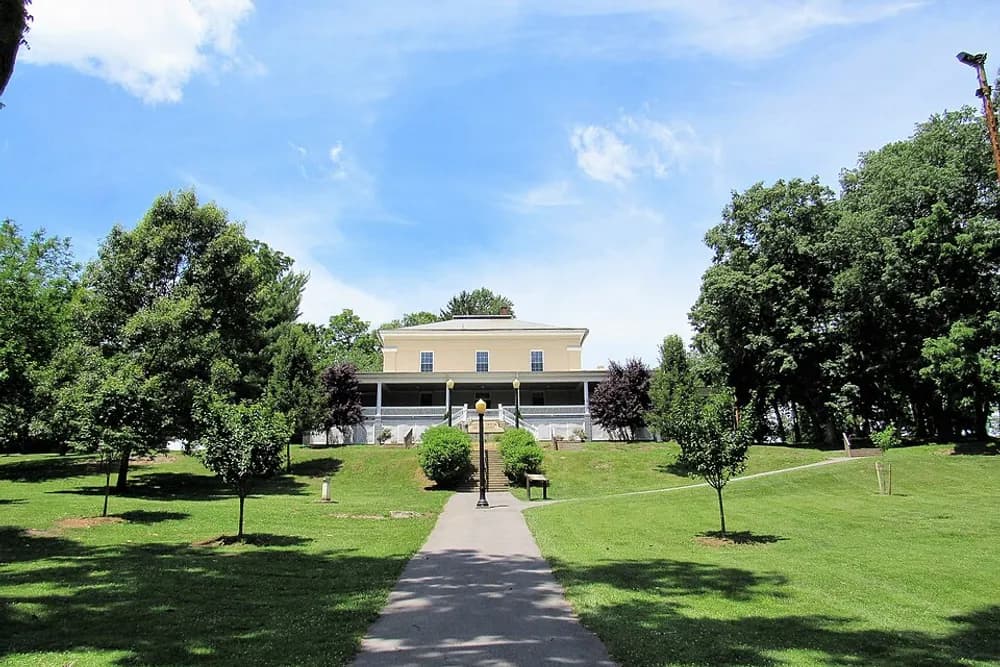
Photo: Farragutful · CC BY-SA 4.0 · cropped
Photo: Farragutful · CC BY-SA 4.0 · Photo: Acroterion · CC BY-SA 4.0 · Photo: Eli Pousson ( eli.pousson ) · CC BY-SA 2.0
How to get into Meritus School of Osteopathic Medicine (DO) medicine
Step-by-step: entry requirements, admission tests, personal statement, interview format and the key deadlines.
Open the guide →Meritus School of Osteopathic Medicine (DO) entry requirements
Admission profile, interview format, decision dates and what makes Meritus School of Osteopathic Medicine (DO) different.
See the profile →The Meritus School of Osteopathic Medicine (DO) medicine interview
Meritus School of Osteopathic Medicine uses a traditional interview format at its Hagerstown, Maryland campus, embedded within Meritus Medical Center. Meritus SOM is one of the newest DO schools in the US (founded 2021), built around a hospital-integrated training model that provides clinical immersion from Year 1.
Interviewers assess genuine commitment to Western Maryland’s underserved communities and enthusiasm for an innovative, community hospital-based training model. Candidates should be comfortable with the realities of a newer program and the opportunity to help shape its culture.
Meritus SOM does not require CASPer (confirm current cycle). As a smaller program (~60–80 students), the selection process is selective relative to class size.
Meritus School of Osteopathic Medicine (DO) interview at a glance (2027 entry)
| Annual DO class size | ~90 (inaugural) |
|---|---|
| Interview format | Traditional — faculty interview |
| CASPer required | No |
| Application system | AACOMAS primary + Meritus secondary |
| Tuition (2025–26) | Confirm with Meritus SOM |
| Interview window | September–March |
Interview format
- One-on-one faculty interview; approximately 30–45 minutes.
- Interview day includes hospital tour, program overview, and faculty/student interaction.
- No MMI format.
Working towards the MCAT score Meritus School of Osteopathic Medicine (DO) expects? Build a week-by-week plan from your test date — free for the first two weeks.
Sample interview questions
Meritus SOM is a hospital-integrated DO program in a physician shortage area. Why is this model of medical education appealing to you?
Hospital-integrated training from Year 1: early patient contact, community health immersion, understanding of how a community hospital functions. Show genuine excitement about this model.
Why osteopathic medicine, and why are you specifically drawn to a newer program rather than an established school?
DO philosophy plus comfort with institutional ambiguity. Opportunity to shape culture, be close to leadership, smaller cohort benefits. Show maturity and confidence.
As a community hospital physician, resources are limited and you face pressure to discharge patients earlier than you believe is medically appropriate. How do you handle this?
What they are listening for:
- Patient advocacy
- documentation
- consultation with attending/ethics committee
- understanding of DRG/discharge pressures
Show you can advocate without being naive.
Western Maryland has significant physician shortage and underserved rural populations. What draws you to serving this type of community?
What they are listening for:
- Hagerstown/Washington County
- MD: rural
- semi-rural
- tri-state border region (MD/PA/WV)
- socioeconomic challenges
- limited specialist access
Genuine rural health commitment.
How do you establish trust with a patient from a rural community who has not seen a doctor in years?
What they are listening for:
- Non-judgmental approach
- patient-centered communication
- understanding barriers to care (cost, transport, distrust)
- building long-term therapeutic relationship
Meritus SOM is a newer school still building its systems and culture. How do you handle ambiguity and help build something that doesn’t yet have decades of precedent?
What they are listening for:
- Growth mindset
- adaptability
- comfort with feedback loops and iteration
Show you see building a culture as an opportunity.
What is a physician shortage area and how does Meritus SOM address the physician pipeline challenge in Western Maryland?
What they are listening for:
- Health Professional Shortage Areas (HPSAs)
- community hospital pipeline model
- local residency training
- keeping physicians where they train
What do you know about Meritus Medical Center and how does its role as an integrated training site shape your expectations of medical school?
Meritus Medical Center: Washington County’s primary hospital, community-based, not a major academic medical center — but that is the point. Show you understand and value community hospital medicine.
You're a student-doctor on the wards at Meritus Medical Center. The team is under pressure to free up beds, and you believe a tri-state-border patient with no nearby support is being discharged too soon. The attending is busy. How do you raise your concern?
What they are listening for:
- Patient advocacy with humility
- framing the concern around safety and likely readmission
- suggesting concrete alternatives (social work, follow-up, observation)
- escalating appropriately without undermining the team
Washington County, Maryland, is a designated physician-shortage area at a tri-state border (MD/PA/WV). How might a border location complicate care coordination and worsen access, and how could a community hospital model help?
Patients crossing state lines for care, fragmented records, insurance and licensure boundaries, and referral gaps. The hospital-integrated, locally trained pipeline aims to retain physicians and anchor coordinated regional care.
Meritus SOM integrates clinical exposure from Year 1, blurring the usual preclinical-clinical split. Describe how you learn best when classroom theory and real practice happen together, with a specific example.
Concrete account of experiential or integrated learning and how you'd manage simultaneous didactic and clinical demands, scaled to COMLEX-USA preparation. Show readiness for an unconventional structure.
A patient who hasn't seen a doctor in a decade finally comes in, visibly anxious and defensive about being judged for letting things go. How do you build rapport in the first few minutes?
Non-judgmental opening, validating that showing up is hard, exploring barriers (cost, transport, distrust), and signaling a long-term partnership rather than a one-time scolding.
As a brand-new school, Meritus is still writing some of its policies. You encounter a situation where no clear rule exists yet but something feels ethically wrong. How do you act?
What they are listening for:
- Fall back on core ethical principles and patient safety
- seek guidance
- document
- propose process improvements
Show that ethics doesn't depend on a policy already being written.
Why does community hospital medicine — rather than a major academic medical center — genuinely appeal to you, and how does osteopathic whole-person care fit that setting?
What they are listening for:
- Breadth
- continuity
- knowing patients in context
- a primary-care/prevention orientation
Connect osteopathic philosophy to community practice authentically rather than treating the community setting as second-best.
Suppose Meritus data showed that locally raised students were more likely to stay and practice in Western Maryland after training. How would that evidence shape your view of why this school exists?
The 'grow your own' workforce thesis — that training physicians locally increases regional retention — and why that informs Meritus's mission and admissions. Show you grasp the pipeline rationale behind the school.
Practise the Meritus School of Osteopathic Medicine (DO) interview
Rehearse the real format before the day — on demand with our AI interviewers, or live with a tutor.
Sit a mock with photoreal AI interviewers — any time
A timed MMI or panel interview on video — American & international voices — with interviewers who listen, react and press with follow-ups. Rubric-scored feedback and a replay the moment you finish.




Live mocks with a tutor who’s been in the room
A full Meritus School of Osteopathic Medicine (DO)-style mock with a medic or dentist tutor — honest scoring against real marking criteria, a station-by-station debrief and a written action plan.
Book a mock interviewHow to prepare for the Meritus School of Osteopathic Medicine (DO) interview
Common pitfalls to avoid
Meritus School of Osteopathic Medicine (DO) interview — frequently asked questions
Sources & official admissions information
Ready to nail your Meritus School of Osteopathic Medicine (DO) interview?
Book a mock interview with a tutor who knows the US interview formats, orpractice unlimited stations from our interview question bank.