
Johns Hopkins University School of Medicine Interview
Format, Questions & Prep Tips
Johns Hopkins University School of Medicine medicine interviews for 2027 entry are a traditional interview, held October 2026 through February 2027. Published figures: Annual MD class size ~120; Interview format Traditional panel — faculty + student, ~30–45 min each; Tuition (2025–26) Free for families under $300k; tuition+fees+living covered under $175k (Bloomberg 2024 gift).
- Institution
- Johns Hopkins University School of Medicine
- Interview (2027 entry)
- October through February
- Decisions (2027 entry)
- Notifications by late March; waitlist active May–August

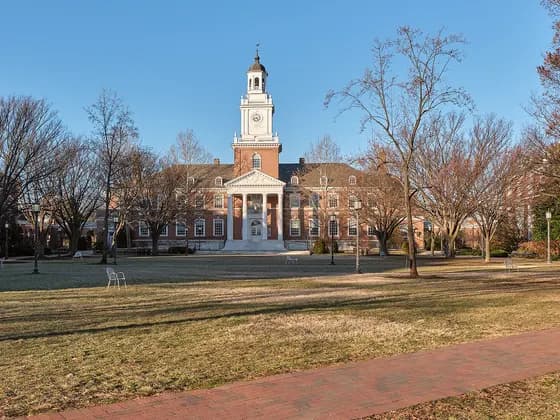
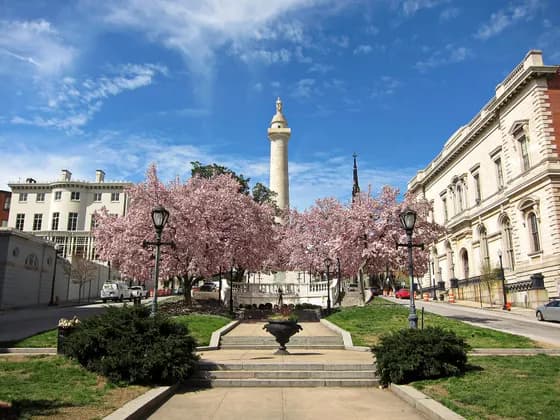

Photo: Paul Sableman from St. Louis, MO · CC BY 2.0 · cropped
Photo: chris.rycroft · CC BY 2.0 · Photo: AgnosticPreachersKid · CC BY-SA 4.0 · Photo: Oldlinestate · Public domain
How to get into Johns Hopkins University School of Medicine (MD) medicine
Step-by-step: entry requirements, admission tests, personal statement, interview format and the key deadlines.
Open the guide →Johns Hopkins University School of Medicine (MD) entry requirements
Admission profile, interview format, decision dates and what makes Johns Hopkins University School of Medicine (MD) different.
See the profile →The Johns Hopkins University School of Medicine MD program
Integrated + Case-based learning, 4 years, clinical rotations across the Baltimore-Washington area, plus St. Petersburg, Florida.
See the program →The Johns Hopkins University School of Medicine (MD) medicine interview
Johns Hopkins School of Medicine uses a traditional panel interview with two separate sessions — one with a faculty member and one with a current medical student. The committee probes research depth, resilience, and genuine commitment to underserved communities, reflecting Hopkins's historical role serving Baltimore's East Side.
Hopkins prizes intellectual rigor above most attributes — applicants who can discuss research, clinical observations, or healthcare policy at depth are at an advantage. Interviewers often weave questions about clinical systems, quality improvement, and patient safety into the conversation.
A distinctive Hopkins emphasis is global health — the Bloomberg School of Public Health is on the same campus, and interviewers frequently probe global health interests and commitment to resource-limited settings.
Johns Hopkins University School of Medicine (MD) interview at a glance (2027 entry)
| Annual MD class size | ~120 |
|---|---|
| Interview format | Traditional panel — faculty + student, ~30–45 min each |
| Tuition (2025–26) | Free for families under $300k; tuition+fees+living covered under $175k (Bloomberg 2024 gift) |
| Application system | AMCAS + Hopkins secondary |
| Affiliated hospital | Johns Hopkins Hospital (Baltimore) |
| Interview window | October–February |
Interview format
- Two separate conversational sessions: faculty/clinician (typically non-blind) and current MD student.
- No MMI; open-ended sessions that follow applicant-led threads.
- Interview day includes campus tour including the hospital, and lunch with students.
- Some interviewers deliberately probe intellectual depth by asking follow-up questions until candidates reach the edge of their knowledge.
Working towards the MCAT score Johns Hopkins University School of Medicine (MD) expects? Build a week-by-week plan from your test date — free for the first two weeks.
Sample interview questions
Why Hopkins specifically — what is it about this institution's mission in Baltimore and its global health footprint that connects to your vision as a physician?
Reference East Baltimore community health initiatives, Johns Hopkins Medicine International, the Bloomberg School of Public Health, and specific research centers. Avoid prestige framing.
Tell me about the most intellectually challenging moment in your research. Where did your knowledge run out, and what did you do?
Hopkins prizes intellectual humility. The moment you hit the limit of your knowledge is as important as what you knew. Show how you navigated uncertainty.
A patient with end-stage renal disease on dialysis tells you he has decided to stop treatment. He is alert, oriented, and has capacity. His family is distraught. How do you proceed?
What they are listening for:
- Informed consent
- patient autonomy
- surrogate decision-making
- palliative care consultation
- the ethics of withdrawal of life-sustaining treatment
Hopkins has a prominent bioethics program (Berman Institute).
Baltimore has some of the highest rates of childhood lead poisoning, asthma, and infant mortality in the US. What do you think medical schools have an obligation to do about that?
Engage substantively — community benefit agreements, community health workers, and pipeline programs. Hopkins's dual role as an anchor institution is a genuine tension.
You discover that a colleague has been falsifying data in a study not yet published. What do you do?
What they are listening for:
- Research misconduct obligations
- ORI process
- whistleblower protections
Distinguish falsification from honest error.
Describe a time you worked with someone whose values or worldview were very different from yours. How did you build a working relationship?
AAMC Interpersonal Skills competency. Focus on process: active listening, curiosity about difference, finding shared goals.
If you could change one structural feature of US healthcare to improve outcomes for underserved populations, what would it be and why?
Show healthcare policy literacy. Good options: Medicaid expansion, workforce incentives for primary care in HPSAs, community health center funding, or pharmaceutical price regulation.
You are shown East Baltimore neighborhood data where childhood blood-lead levels and asthma ED visits cluster tightly in the same ZIP codes near the Hopkins campus. What does this suggest, and what would you want to know before acting?
Read the spatial correlation as a signal of shared upstream causes — old housing stock, environmental exposure, poverty — not proof of one mechanism. Distinguish association from causation and identify what additional data (housing age, remediation history, insurance) would sharpen an anchor institution's response.
A patient with end-stage renal disease who has decided to stop dialysis asks you to be the one to explain his decision to his distraught daughter, who believes he is giving up. Have that conversation with the daughter.
Honor the patient's autonomy and confidentiality limits while showing the daughter compassion. Acknowledge her grief, correct the 'giving up' framing toward comfort-focused care, and connect her to palliative support. The Berman Institute's ethics ethos rewards balancing competing loyalties humanely.
Explain to a community member in East Baltimore, who is skeptical of Hopkins after a history of mistrust, why they should enroll in a study you are recruiting for.
Acknowledge the legitimate historical roots of mistrust, be transparent about risks and benefits, emphasize voluntariness and the right to withdraw, and avoid coercive or paternalistic framing. Trust-building, not persuasion, is what is assessed.
Pick a finding from a field you follow and steel-man the strongest argument against it. What evidence would actually change your mind?
Hopkins prizes intellectual rigor and humility. Show you hold beliefs proportionate to evidence, can articulate falsifiability, and do not defend a position past where the data support it.
A pharmaceutical company offers your lab a large unrestricted gift while you are studying one of its products. Your PI is keen to accept. What are the ethical considerations?
What they are listening for:
- Conflict of interest
- the integrity of the science
- mandatory disclosure
- institutional COI policy
Distinguish an unrestricted gift from a contract that constrains publication, and identify who must be informed.
Hopkins shares a campus with the Bloomberg School of Public Health. If you had a year and a budget to improve one population health outcome in Baltimore, what would you target and how?
Show population-health literacy and realism. Pick a tractable outcome — infant mortality, opioid overdose, lead exposure — and sketch an evidence-based, community-partnered intervention rather than a vague aspiration.
Tell me about a time you changed your mind because someone with less formal expertise than you pushed back. What did that teach you?
Intellectual humility and interpersonal openness — both core Hopkins values. Choose a genuine reversal and reflect on how you now weigh input from outside the formal hierarchy, including patients and community members.
A junior research assistant on your team confides that they think the data you both collected last week may have been mislabelled, but they are afraid to tell the PI. Respond to them.
What they are listening for:
- Normalize raising concerns
- protect the integrity of the data
- model how to escalate honestly without blame
Reinforce that catching errors early is a strength, not a liability — the foundation of a trustworthy research culture.
Practise the Johns Hopkins University School of Medicine (MD) interview
Rehearse the real format before the day — on demand with our AI interviewers, or live with a tutor.
Sit a mock with photoreal AI interviewers — any time
A timed MMI or panel interview on video — American & international voices — with interviewers who listen, react and press with follow-ups. Rubric-scored feedback and a replay the moment you finish.






Live mocks with a tutor who’s been in the room
A full Johns Hopkins University School of Medicine (MD)-style mock with a medic or dentist tutor — honest scoring against real marking criteria, a station-by-station debrief and a written action plan.
Book a mock interviewHow to prepare for the Johns Hopkins University School of Medicine (MD) interview
Common pitfalls to avoid
Johns Hopkins University School of Medicine (MD) interview — frequently asked questions
Sources & official admissions information
Ready to nail your Johns Hopkins University School of Medicine (MD) interview?
Book a mock interview with a tutor who knows the US interview formats, orpractice unlimited stations from our interview question bank.