
USU Hébert School of Medicine Interview
Format, Questions & Prep Tips
USU Hébert School of Medicine medicine interviews for 2027 entry are a traditional interview. USU Hébert School of Medicine describes the format as: Two 30-minute virtual interviews, each with a clinical faculty member and/or a current medical student. Published figures: Annual MD class size ~170–180; Interview format 2–3 traditional one-on-one interviews, 30 min each; Tuition Fully covered by federal government; students receive military pay (O-1).
- Institution
- Uniformed Services University of the Health Sciences F. Edward Hébert School of Medicine
- Interview (2027 entry)
- September through January; invitations issued after application screening and background check initiation
- Decisions (2027 entry)
- Rolling decisions from November through March 30; applicants must obtain DoD clearance concurrently

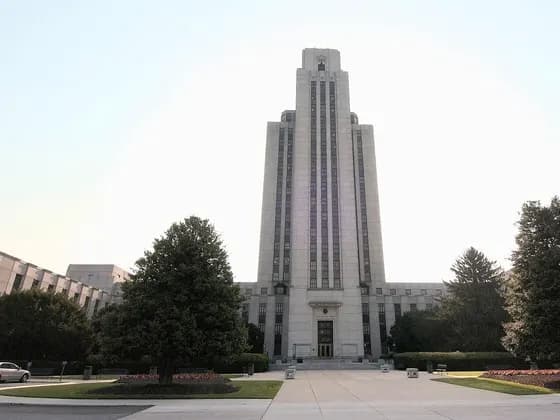


Photo: Unknown author (U.S. Government / DoD) · Public domain · cropped
Photo: U.S. Navy photo by Chief Warrant Officer 4 Seth Rossman. · Public domain · Photo: Judy Gallagher · CC BY 2.0 · Photo: AgnosticPreachersKid · CC BY-SA 3.0
How to get into USU Hébert School of Medicine (MD) medicine
Step-by-step: entry requirements, admission tests, personal statement, interview format and the key deadlines.
Open the guide →USU Hébert School of Medicine (MD) entry requirements
Admission profile, interview format, decision dates and what makes USU Hébert School of Medicine (MD) different.
See the profile →The USU Hébert School of Medicine (MD) medicine interview
The Uniformed Services University Hébert School of Medicine uses a traditional interview format at its Bethesda campus, adjacent to Walter Reed National Military Medical Center. Applicants complete two or three one-on-one interviews with military physician faculty and current students, each approximately 30 minutes.
USU is the only federal medical school in the US — all students are commissioned officers, receive full federal tuition coverage and military pay, and commit to a minimum of seven years of active-duty service following residency. The interview assesses not just medical school readiness but readiness for a military officer career and the service obligation that entails.
Interviewers probe military service understanding, leadership, ethical reasoning under operational constraints, and whether the service commitment is genuinely embraced rather than instrumentally tolerated. Expect questions that probe the AAMC Premed Competencies alongside military-specific professional attributes.
USU Hébert School of Medicine (MD) interview at a glance (2027 entry)
| Annual MD class size | ~170–180 |
|---|---|
| Interview format | 2–3 traditional one-on-one interviews, 30 min each |
| Tuition | Fully covered by federal government; students receive military pay (O-1) |
| Service obligation | Minimum 7 years active duty following residency |
| Citizenship requirement | US citizenship required; DoD security clearance eligibility required |
| Application system | AMCAS |
| Interview window | September–January |
Interview format
- Two to three traditional one-on-one or panel interviews: military physician faculty and/or current student officers.
- Each session approximately 30 minutes; interviewers have reviewed the full application.
- Orientation session on military service structure, the service obligation, and officer career progression.
- Tour of USU campus and Walter Reed National Military Medical Center complex.
- Physical fitness and military bearing observed throughout the day.
- Informal interactions with current student officers.
- Full day approximately 5–7 hours.
Working towards the MCAT score USU Hébert School of Medicine (MD) expects? Build a week-by-week plan from your test date — free for the first two weeks.
Sample interview questions
Why do you want to be a military physician, and have you fully understood what the seven-year active-duty service obligation means for your life and career?
The most important USU question. Show genuine understanding: deployment risk, geographic instability, family implications, rank and command structure, and the transition from military to civilian medicine (or staying in). Answers that only address the free tuition raise red flags.
What specifically draws you to the training environment at USU and Walter Reed, rather than applying to civilian medical schools?
Reference combat casualty care, operational medicine, the DHA (Defense Health Agency) system, aerospace medicine opportunities, the DoD's unique patient population (service members, veterans, dependents), and the specific clinical breadth at Walter Reed.
As a military physician, you are ordered to deploy with a combat unit, but you have serious concerns about the ethical justification for the military operation. What is your role?
The tension between military orders and professional medical ethics. Commissioned officer obligations, the Medical Geneva Convention, conscientious objection in the military context, and the physician's dual role as officer and clinician. There is no easy answer — show you have engaged seriously with this.
Describe an experience where you led a team under difficult or high-pressure conditions. What did you learn about yourself as a leader?
Leadership is a core USU competency — students become officers. Show decision-making under pressure, accountability, and how you developed as a leader from the experience. Military or ROTC experience is relevant here but civilian leadership experience is equally valid.
A wounded enemy combatant is brought to your forward surgical team. Your unit commander says to prioritize your own soldiers. How do you respond?
What they are listening for:
- Geneva Convention obligations
- Laws of Armed Conflict
- the principle of treating all casualties based on medical urgency
Military physicians have specific legal obligations that supersede operational commands in triage. Show knowledge of these obligations.
What do you know about the current operational tempo and deployment demands on military physicians in the current geopolitical environment?
Shows that you are applying with awareness of the real implications. Reference current deployment contexts, the DHA system's structure, and the range of military medical assignments from garrison hospitals to forward operating environments.
Describe a time you had to communicate under extreme time pressure. How did you manage clarity and composure?
Operational medicine requires clear communication under pressure. Show a concrete example — trauma simulation, emergency volunteer work, or military experience — and what specific communication discipline you applied.
Military physicians sometimes have access to classified information about a patient's service history that affects clinical care but cannot be shared. How do you navigate the tension between thorough clinical care and operational security?
Unique to military medicine. Show awareness that this tension is real and routine — not hypothetical — and that military physicians must operate within information security constraints while still providing optimal patient care.
What aspect of USU's curriculum — military medicine, operational training, or the clinical breadth at Walter Reed — most excites you from a learning perspective?
Shows school-specific engagement. Reference specific USU curriculum features: operational medicine modules, trauma training at Walter Reed, the field training exercises, and the transition to active-duty residency.
How do you maintain your own wellbeing and resilience under sustained high-stress conditions?
What they are listening for:
- Military medicine involves exposure to combat casualties
- mass casualty events
- sustained operational stress
Show self-awareness about your own resilience strategies — not just idealism about handling stress.
You are shown data on post-deployment mental health among service members, showing elevated rates of PTSD and a treatment-seeking rate far below the estimated need. How would you interpret the gap, and what would you want to know before recommending how military medicine should respond?
Demonstrate appraisal:
- ask about screening methods
- self-report bias
- the role of stigma and career-impact fears in low treatment-seeking
Connect to the military physician's dual role and the operational culture around mental health, without asserting precise figures.
Role play: you are a junior medical officer. A senior enlisted service member confides that he has been having intrusive memories and trouble sleeping since deployment, but says he 'can't afford to get flagged' for his career. Begin the conversation.
Demonstrate the encounter live. Balance genuine concern, honesty about confidentiality limits in the military context, and the duty to both the patient and the mission. Avoid either dismissing his career fears or making promises you cannot keep.
Combat casualty care has driven major civilian trauma advances, such as tourniquet use and damage-control resuscitation. How would you reason about whether a lesson learned in a forward operating environment should change practice in a civilian hospital?
Thinking & Reasoning about evidence translation. Show you can question whether the operational context (injury patterns, resources, timelines) generalizes to civilian settings rather than assuming military innovations transfer wholesale.
Describe a time you had to give difficult, direct feedback to a peer or subordinate while maintaining their respect and the team's cohesion. What did you do?
Leadership and interpersonal competency central to officership. Emphasize candour paired with respect and accountability — a core USU attribute given graduates lead teams as officers.
Twenty years into a military medical career, you may have served in garrison hospitals, on deployments, and in administrative or command roles. Which part of that arc do you find most compelling, and which part are you least sure about?
Honest self-assessment. USU interviewers respect candidates who have realistically imagined the full officer-physician career — including its uncertainties — rather than focusing only on the appealing parts or on free tuition.
Practise the USU Hébert School of Medicine (MD) interview
Rehearse the real format before the day — on demand with our AI interviewers, or live with a tutor.
Sit a mock with photoreal AI interviewers — any time
A timed MMI or panel interview on video — American & international voices — with interviewers who listen, react and press with follow-ups. Rubric-scored feedback and a replay the moment you finish.






Live mocks with a tutor who’s been in the room
A full USU Hébert School of Medicine (MD)-style mock with a medic or dentist tutor — honest scoring against real marking criteria, a station-by-station debrief and a written action plan.
Book a mock interviewHow to prepare for the USU Hébert School of Medicine (MD) interview
Common pitfalls to avoid
USU Hébert School of Medicine (MD) interview — frequently asked questions
Sources & official admissions information
Ready to nail your USU Hébert School of Medicine (MD) interview?
Book a mock interview with a tutor who knows the US interview formats, orpractice unlimited stations from our interview question bank.