
Burrell College of Osteopathic Medicine — New Mexico Interview
Format, Questions & Prep Tips
Burrell College of Osteopathic Medicine — New Mexico medicine interviews for 2027 entry are a traditional interview, held September 2026 through February 2027. Published figures: Annual DO class size ~138; Tuition (2025–26) ~USD 50,000/year (estimated).
- Institution
- Burrell College of Osteopathic Medicine
- Interview (2027 entry)
- September through February
- Decisions (2027 entry)
- Rolling decisions, typically 4–8 weeks post-interview

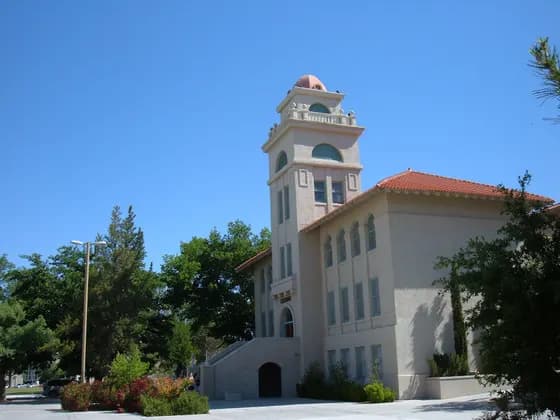
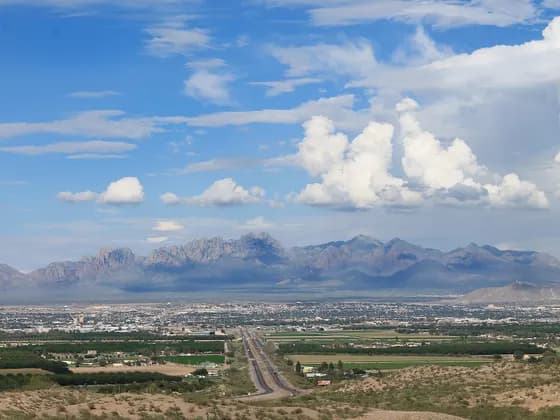
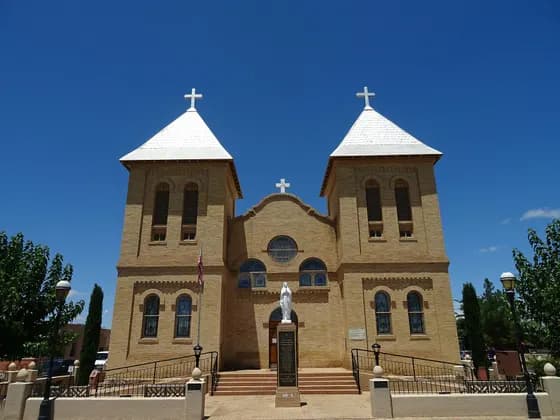
Photo: Mac2678 · CC BY-SA 4.0 · cropped
Photo: AllenS · Public domain · Photo: Jpawela · CC BY-SA 4.0 · Photo: Annette Teng · CC BY 3.0
How to get into Burrell College of Osteopathic Medicine — New Mexico (DO) medicine
Step-by-step: entry requirements, admission tests, personal statement, interview format and the key deadlines.
Open the guide →Burrell College of Osteopathic Medicine — New Mexico (DO) entry requirements
Admission profile, interview format, decision dates and what makes Burrell College of Osteopathic Medicine — New Mexico (DO) different.
See the profile →The Burrell College of Osteopathic Medicine — New Mexico (DO) medicine interview
Burrell College of Osteopathic Medicine (BCOM) uses a traditional interview format — faculty sessions at its Las Cruces, New Mexico campus, located at New Mexico State University near the US-Mexico border.
AACOMAS is the primary application service. CASPer is not currently required (verify for current cycle).
BCOM’s location at the US-Mexico border near El Paso/Ciudad Juárez defines its entire mission. The college was founded to address severe healthcare disparities in a predominantly Hispanic, largely underinsured border region. Interviewers assess whether applicants genuinely understand border health — not as an abstract concept, but as a specific epidemiological and cultural reality — and whether their post-graduation plans align with serving communities like those surrounding Las Cruces.
Burrell College of Osteopathic Medicine — New Mexico (DO) interview at a glance (2027 entry)
| Annual DO class size | ~138 |
|---|---|
| Interview format | Traditional — faculty session |
| CASPer required | No |
| Application system | AACOMAS primary + BCOM secondary |
| Tuition (2025–26) | ~USD 50,000/year (estimated) |
| Interview window | September–February |
Interview format
- Traditional faculty interview; approximately 30–45 minutes.
- Strong emphasis on cultural competency and border health mission.
- No MMI.
Working towards the MCAT score Burrell College of Osteopathic Medicine — New Mexico (DO) expects? Build a week-by-week plan from your test date — free for the first two weeks.
Sample interview questions
Las Cruces is located on the US-Mexico border in one of the most medically underserved regions in the United States. What specific health challenges do border communities face, and why do you want to address them?
Know the specific epidemiology: high rates of type 2 diabetes, cardiovascular disease, uninsurance, limited primary care access, language barriers, immigration-related health stress, and binational health dynamics.
Describe any experience you have had working with Hispanic, Latino, or Spanish-speaking patients or communities. What did you learn about cultural humility?
BCOM values authentic experience. If you have worked with these communities, draw on that. If not, be honest about your learning edge and demonstrate genuine curiosity and respect.
Does your Spanish language proficiency inform your choice to apply to BCOM? If not, how will you communicate with patients who prefer Spanish?
What they are listening for:
- Medical interpreter services
- community health workers
- language-concordant care
- the importance of cultural humility in language-discordant encounters
Spanish is preferred but not required.
An undocumented immigrant presents to your clinic with a serious medical condition. She is afraid to seek hospital care due to her immigration status. How do you handle this?
What they are listening for:
- Confidentiality
- EMTALA rights
- community clinic resources
- non-discrimination
- the physician's ethical obligation to provide care regardless of immigration status
BCOM is located at New Mexico State University. How does being embedded in a university community shape your view of your medical training?
What they are listening for:
- Interprofessional education
- research opportunities
- access to NMSU's agricultural and engineering expertise (relevant for rural/border health)
- the multidisciplinary nature of community health
Border health is shaped by policies on both sides of the US-Mexico border. How does binational health policy affect the patients you will see at BCOM?
What they are listening for:
- Binational disease surveillance
- PAHO
- immigrant health provisions under US law
- Medicaid coverage gaps for undocumented patients
- cross-border healthcare seeking behaviors
You are seeing a patient whose adult child is acting as interpreter. You suspect the interpreter is filtering what the patient says. What do you do?
Professional medical interpreters are the standard. Discuss how to request formal interpretation services while maintaining the therapeutic relationship with both patient and family member.
Border region clinics often rely heavily on community health workers (promotoras). How do you see your role in relation to a community health worker on your care team?
Non-hierarchical, collaborative model. Community health workers have cultural and community knowledge that physicians do not — show genuine respect for that expertise.
What do you think you will find most challenging about training and practicing in a border region community?
Self-awareness:
- resource limitations
- language barriers
- patient trust challenges
- complexity of undocumented patient care
- navigating a high-need
- often under-resourced health system
Why osteopathic medicine rather than an MD program, and how does the DO philosophy connect to the health needs of the Las Cruces/border region?
OMM/OMT's whole-person approach connects naturally to community health and social determinants. Show genuine osteopathic philosophy knowledge and connect it to the patient populations BCOM serves.
Doña Ana County has type 2 diabetes prevalence well above national figures. As a future BCOM-trained physician, how would you think about measuring whether a border clinic is actually improving diabetes outcomes for its population?
Population-health framing:
- control rates (HbA1c thresholds)
- complication screening (retinal, foot, nephropathy)
- continuity and no-show data
- the role of community health workers (promotoras) in the denominator
Conceptual is fine — avoid asserting exact figures.
A Spanish-preferring mother brings her child to your Las Cruces clinic. The professional interpreter is delayed and the mother is anxious about a rash. Show me how you begin the encounter.
Demonstrate the moment: acknowledge the language gap, use whatever bridging is appropriate while waiting for the interpreter, avoid relying on the child as interpreter for anything sensitive, and convey warmth and competence non-verbally.
BCOM places students into clinical sites across a large, partly rural border region. What is your plan for staying disciplined with osteopathic and clinical didactics and COMLEX-USA preparation when you are spread across distributed sites?
What they are listening for:
- Spaced repetition
- board-preparation timeline
- self-directed habits
Show you can sustain academic rigor in a school whose mission pulls students into geographically dispersed, high-need settings.
A binational patient receives some care in Ciudad Juárez and some in Las Cruces, including medications you did not prescribe and cannot verify. How do you manage the risks of fragmented, cross-border care?
What they are listening for:
- Medication reconciliation
- polypharmacy and drug-interaction risk
- respecting the patient's circumstances without judgment
- pragmatic strategies for safe care when records cross an international border
You are precepting alongside a promotora who tells you, gently, that the way you explained a treatment plan will not land with this family. How do you respond in the moment?
What they are listening for:
- Receiving feedback from a non-physician community expert with humility
- adapting on the spot
- treating the community health worker's cultural knowledge as authoritative rather than subordinate
Practise the Burrell College of Osteopathic Medicine — New Mexico (DO) interview
Rehearse the real format before the day — on demand with our AI interviewers, or live with a tutor.
Sit a mock with photoreal AI interviewers — any time
A timed MMI or panel interview on video — American & international voices — with interviewers who listen, react and press with follow-ups. Rubric-scored feedback and a replay the moment you finish.


Live mocks with a tutor who’s been in the room
A full Burrell College of Osteopathic Medicine — New Mexico (DO)-style mock with a medic or dentist tutor — honest scoring against real marking criteria, a station-by-station debrief and a written action plan.
Book a mock interviewHow to prepare for the Burrell College of Osteopathic Medicine — New Mexico (DO) interview
Common pitfalls to avoid
Burrell College of Osteopathic Medicine — New Mexico (DO) interview — frequently asked questions
Sources & official admissions information
Ready to nail your Burrell College of Osteopathic Medicine — New Mexico (DO) interview?
Book a mock interview with a tutor who knows the US interview formats, orpractice unlimited stations from our interview question bank.