USU Hébert School of Medicine (MD) Medical School - 2027 Entry Requirements & Interview Format
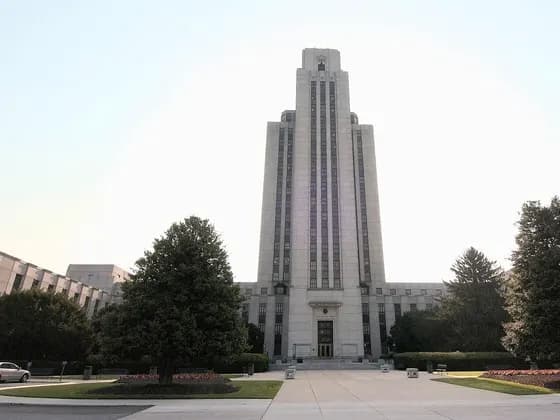
The Uniformed Services University of the Health Sciences F. Edward Hébert School of Medicine, founded in 1972, is a federal medical school under the US Department of Defense located in Bethesda, Maryland. It is the sole institution dedicated to training physicians for careers in the US military medical services across all branches — Army, Navy, Air Force, and the Public Health Service. Students are commissioned officers throughout medical school and receive full federal tuition coverage plus a military salary. USU graduates serve the most medically complex and operationally demanding patient populations in the world, from combat casualty care to disaster medicine to occupational and aerospace medicine.
Entry Requirements
What you need to apply to USU Hébert School of Medicine (MD).
Admission overview
Bachelor's degree and MCAT required. Applications via AMCAS. Applicants must be US citizens and eligible for a Department of Defense security clearance. Age typically ≤ 35 at time of matriculation (waivers possible). Prior military service is valued but not required. Secondary application required; candidates who advance undergo a Department of Defense background investigation.
MCAT median
513 (range 508–519)
GPA median
3.73 overall / 3.68 science (BCPM)
Acceptance rate
4.5%
Class size
175
In-state preference
None
CASPer
Not required
Holistic review emphasis
Military service commitment, leadership, citizenship, physical fitness, ethical reasoning, and motivation for military medicine.
Notes
Estimates from public AAMC FACTS / AACOMAS / ADEA AADSAS / class-profile; verify current cycle. US citizenship required; age eligibility applies.
Specialities offered
Military Medicine, Trauma and Combat Surgery, Aerospace Medicine, Preventive Medicine, Disaster and Emergency Medicine
Interview Format
How USU Hébert School of Medicine (MD) interviews applicants.
Format
Traditional one-on-one and panel interviews with military faculty and students at the Bethesda campus
Interview window
September–January
Decision date
March 30 (AAMC standard)
Post-interview chances
Estimated post-interview acceptance rate approximately 25–35%; the applicant pool is already highly filtered for citizenship, age eligibility, and security clearance eligibility before interview.
What to expect at a USU Hébert School of Medicine (MD) interview
USU Hébert interview days are held at the Bethesda campus adjacent to Walter Reed National Military Medical Center. Applicants complete two or three traditional interviews with military physician faculty and current students, each lasting approximately 30 minutes. Interviewers probe commitment to military service, motivation for medicine, leadership experience, ethical reasoning, and understanding of the military medical service obligation. The day includes an orientation on the service commitment structure (seven years of active duty following residency), a campus tour of USU and Walter Reed facilities, and interactions with current students and faculty. Physical fitness and military bearing are observed throughout the day.
What makes USU Hébert School of Medicine (MD) different
USU Hébert is the only federal medical school in the United States and the primary source of active-duty military physicians for all branches of the US armed forces. Tuition is fully covered by the federal government, and students receive a military salary (O-1 pay) throughout medical school. In exchange, graduates serve a minimum of seven years on active duty as commissioned officers following residency completion. The school provides unique training in military medicine, disaster response, and operational medicine unavailable at civilian institutions.
Tutor insight
USU is genuinely unique — it offers debt-free medical education in exchange for a substantial military service commitment. If you are drawn to military medicine, the training environment (adjacent to Walter Reed, access to the DHA system, operational medicine rotations) is unmatched. The service obligation (seven years post-residency) is a real commitment that should be genuinely considered, not treated as a minor detail. In your interview, demonstrate that you have researched what military physician service looks like — not just training, but deployment, operational medicine, and family life implications. Applicants who seem motivated primarily by the free tuition without genuine military mission alignment are identified quickly.
PrometheusQuestion Bank
595 medicine questions inside
Interview questions matched to USU Hébert School of Medicine (MD)
Two questions our tutors flagged as a strong fit for USU Hébert School of Medicine (MD)’s interview style. Try answering them out loud, then open Prometheus for the model answers and follow-up tips.
Medium·PanelQ1
MCAT: Personal Statement and the 5,300-Character Limit
The AMCAS personal statement allows applicants 5,300 characters to answer: 'Why do you want to be a doctor?' Many applicants report that this constraint is one of the most challenging aspects of the application. You have had multiple formative experiences — clinical, research, personal loss, service — and feel that no single essay can capture your motivation. An interviewer asks: 'How did you decide what to leave out of your personal statement, and what does that editorial process tell us about you?'
Likely follow-up · Is the personal statement the place to address a weakness or gap in your application, such as a low grade or a year off?
3 expert tips in Prometheus
Easy·PanelQ2
Holistic Review: Research Experience Without Publication
You spent two years as an undergraduate research assistant in a neuroscience laboratory working on a project studying the neurochemistry of chronic pain. The project has not yet resulted in a publication. You are concerned this weakens your application compared to peers who have publications. How do you present your research experience, and what value does unpublished research experience have?
Likely follow-up · What are the most valuable things a medical school applicant can demonstrate through undergraduate research, whether or not it results in publication?
Apply to USU Hébert School of Medicine (MD) with confidence
We've helped students get into USU Hébert School of Medicine (MD) and other US medicine schools. Get tailored support for each stage of the application.
USU Hébert School of Medicine (MD) - Frequently asked questions
Bachelor's degree and MCAT required. Applications via AMCAS. Applicants must be US citizens and eligible for a Department of Defense security clearance. Age typically ≤ 35 at time of matriculation (waivers possible). Prior military service is valued but not required. Secondary application required; candidates who advance undergo a Department of Defense background investigation.
Traditional one-on-one and panel interviews with military faculty and students at the Bethesda campus. USU Hébert interview days are held at the Bethesda campus adjacent to Walter Reed National Military Medical Center. Applicants complete two or three traditional interviews with military physician faculty and current students, each lasting approximately 30 minutes. Interviewers probe commitment to military service, motivation for medicine, leadership experience, ethical reasoning, and understanding of the military medical service obligation. The day includes an orientation on the service commitment structure (seven years of active duty following residency), a campus tour of USU and Walter Reed facilities, and interactions with current students and faculty. Physical fitness and military bearing are observed throughout the day.
USU Hébert School of Medicine (MD) typically interviews in September–January.
Decisions are released March 30 (AAMC standard).
USU Hébert is the only federal medical school in the United States and the primary source of active-duty military physicians for all branches of the US armed forces. Tuition is fully covered by the federal government, and students receive a military salary (O-1 pay) throughout medical school. In exchange, graduates serve a minimum of seven years on active duty as commissioned officers following residency completion. The school provides unique training in military medicine, disaster response, and operational medicine unavailable at civilian institutions.