
MSU College of Osteopathic Medicine Interview
Format, Questions & Prep Tips
MSU College of Osteopathic Medicine medicine interviews for 2027 entry are a traditional interview, held September 2026 through February 2027. Published figures: Annual DO class size ~281; In-state preference Strong (~75% Michigan residents estimated); Tuition (2025–26) ~USD 38,000/year in-state; ~USD 66,000/year out-of-state (estimated).
- Institution
- Michigan State University College of Osteopathic Medicine
- Interview (2027 entry)
- September through February
- Decisions (2027 entry)
- Rolling decisions after interview

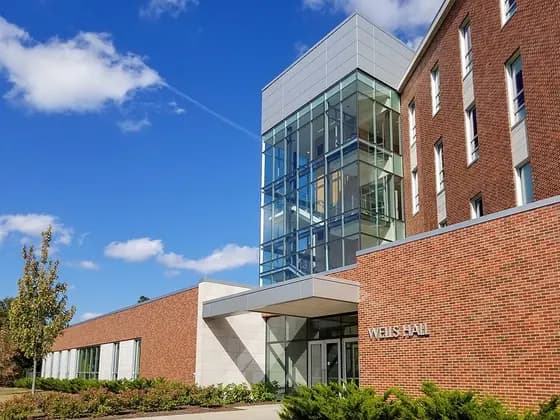
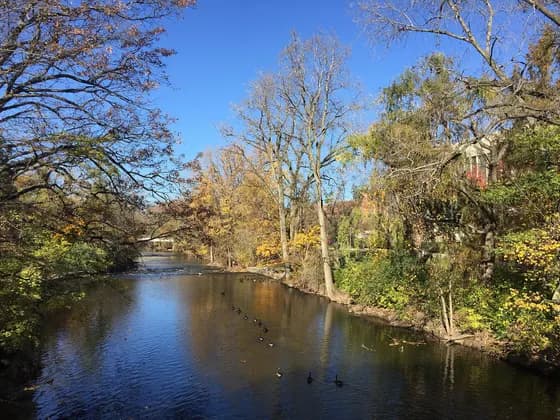
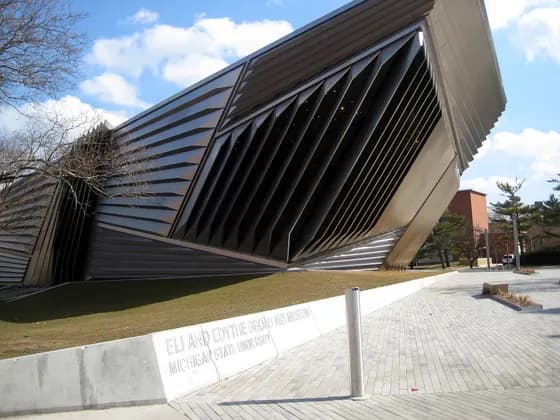
Photo: Jeffness (original uploader at English Wikipedia) · CC BY-SA 2.5 · cropped
Photo: Iswzo · CC BY-SA 4.0 · Photo: Guettarda · CC BY-SA 4.0 · Photo: Dj1997 · CC BY-SA 3.0
How to get into MSU College of Osteopathic Medicine (DO) medicine
Step-by-step: entry requirements, admission tests, personal statement, interview format and the key deadlines.
Open the guide →MSU College of Osteopathic Medicine (DO) entry requirements
Admission profile, interview format, decision dates and what makes MSU College of Osteopathic Medicine (DO) different.
See the profile →The MSU College of Osteopathic Medicine (DO) medicine interview
Michigan State University College of Osteopathic Medicine (MSUCOM) uses a traditional interview format at its East Lansing campus. MSUCOM holds a distinctive position as the first DO school embedded within a major public research university — giving it access to Big Ten biomedical research, interprofessional health education, and MSU’s vast academic infrastructure.
MSUCOM has a strong in-state preference as a public university with a mission to train physicians for Michigan’s underserved communities. Out-of-state applicants face stiffer competition and must articulate specific Michigan connections.
Casper is not currently required — verify on the official admissions page each cycle. Rolling admissions rewards early AACOMAS submission. MSUCOM’s distributed clinical model places students in communities across Michigan — Detroit, Flint, Grand Rapids, rural Upper Peninsula — creating genuine rural/community health training.
MSU College of Osteopathic Medicine (DO) interview at a glance (2027 entry)
| Annual DO class size | ~281 |
|---|---|
| Interview format | Traditional — faculty interview |
| CASPer required | No |
| In-state preference | Strong (~75% Michigan residents estimated) |
| Application system | AACOMAS primary + MSUCOM secondary |
| Tuition (2025–26) | ~USD 38,000/year in-state; ~USD 66,000/year out-of-state (estimated) |
| Interview window | September–February |
Interview format
- One-on-one faculty interview; approximately 30–45 minutes.
- Interview day includes OMM lab tour, program overview, and campus experience.
- No MMI format.
Working towards the MCAT score MSU College of Osteopathic Medicine (DO) expects? Build a week-by-week plan from your test date — free for the first two weeks.
Sample interview questions
MSUCOM is located at a major public research university. How do you envision using MSU's research resources during your medical training?
Research opportunities at a Big Ten university: faculty mentorship, dual-degree options (DO/MPH, DO/PhD), biomedical research labs. Show intellectual curiosity beyond clinical practice.
Why osteopathic medicine at a research university rather than an MD program?
DO philosophy, OMT in primary care and sports medicine, whole-body approach. The research university context means you should also show scholarly interest.
You are caring for a patient in Flint, Michigan — a community affected by the water crisis and historical medical neglect. How do you build trust with a patient who distrusts the medical system?
Flint water crisis and its health legacy. Medical distrust in communities harmed by systemic failures. Active listening, transparency, community-based care, long-term relationship building.
MSUCOM’s distributed clinical model trains students in communities across Michigan. Where in Michigan would you want to do your clinical rotations and why?
Know the placement options: Detroit (urban underserved), Flint, Grand Rapids, Traverse City, Upper Peninsula (rural). Show you’ve researched these and have genuine reasons.
Describe an experience where you worked in an interprofessional team. What was your role and what did you learn?
MSUCOM’s research university setting emphasizes interprofessional health education. Nursing, pharmacy, social work, public health — show you see collaborative practice as essential.
What does academic integrity mean to you in a medical school context?
Big Ten research culture takes academic integrity seriously. Medical school honor codes, research ethics, clinical documentation integrity.
Michigan has some of the US’s most significant rural and urban health disparities. What policy or practice approaches would you advocate for as a future physician?
Medicaid expansion (Michigan did expand), rural hospital closures, Flint environmental health legacy, Detroit urban health disparities, telemedicine access.
What specifically draws you to MSUCOM over other DO schools, including other large public DO programs?
What they are listening for:
- Big Ten research access
- distributed clinical model
- sports medicine excellence
- interprofessional education
- Michigan’s specific health mission
Be specific — don’t give generic DO school answers.
You're a student-doctor at a Flint clinic. A mother is convinced the tap water is still harming her children and distrusts everything you say after years of being dismissed by officials. Talk with her.
Acknowledge the legitimacy of her distrust given the water crisis, avoid defensiveness, be transparent about what you do and don't know, validate her vigilance, and rebuild trust through partnership and follow-through.
Michigan spans dense urban Detroit, mid-size cities like Flint and Grand Rapids, and the rural Upper Peninsula. How would you expect the leading health challenges to differ across these settings, and why does MSUCOM's distributed model matter for that?
Urban disparities and chronic disease vs. rural access and workforce shortage vs. environmental legacies. The distributed clinical model exposes students to this range, building physicians for varied Michigan communities.
MSUCOM sits inside a Big Ten research university. Tell us about a research or scholarly project you've done, what you learned, and how you'd use MSU's resources during medical school.
What they are listening for:
- Concrete research experience
- the questions and methods involved
- a realistic plan to engage MSU's labs
- mentorship
- dual-degree options
Show scholarly curiosity beyond clinical practice.
On an interprofessional team rounding on a complex patient, the pharmacist and the social worker disagree sharply about the discharge plan in front of the patient. As the student, how do you contribute constructively?
What they are listening for:
- Team-based care
- respectful conflict navigation
- keeping the patient centered
- recognizing each profession's expertise
Show you see collaborative practice as essential, not hierarchical.
You learn that data from a research project you helped with may have been selectively reported to make results look stronger. What do you do?
What they are listening for:
- Research integrity
- the duty to raise concerns through appropriate channels
- protecting the scientific record
- understanding why honest reporting matters for patients downstream
Big Ten research culture takes this seriously.
Why osteopathic medicine at a research-intensive university specifically? How do you see the DO emphasis on whole-person care and OMT coexisting with a scholarly, research-oriented training environment?
Show that DO philosophy and rigorous science are complementary, not in tension — OMT and whole-person care alongside evidence-based, research-informed practice. Avoid framing DO as 'less academic.'
If statewide data showed maternal mortality in Michigan was far higher for Black women than white women, how would you reason about the causes without treating race as a biological explanation?
Frame disparities through socioeconomic, geographic, access, bias-in-care, and lived-experience lenses rather than biology. Show you'd investigate systemic and structural drivers and the role of clinician bias.
Practise the MSU College of Osteopathic Medicine (DO) interview
Rehearse the real format before the day — on demand with our AI interviewers, or live with a tutor.
Sit a mock with photoreal AI interviewers — any time
A timed MMI or panel interview on video — American & international voices — with interviewers who listen, react and press with follow-ups. Rubric-scored feedback and a replay the moment you finish.





Live mocks with a tutor who’s been in the room
A full MSU College of Osteopathic Medicine (DO)-style mock with a medic or dentist tutor — honest scoring against real marking criteria, a station-by-station debrief and a written action plan.
Book a mock interviewHow to prepare for the MSU College of Osteopathic Medicine (DO) interview
Common pitfalls to avoid
MSU College of Osteopathic Medicine (DO) interview — frequently asked questions
Sources & official admissions information
Ready to nail your MSU College of Osteopathic Medicine (DO) interview?
Book a mock interview with a tutor who knows the US interview formats, orpractice unlimited stations from our interview question bank.