
USC Floyd School of Medicine Interview
Format, Questions & Prep Tips
USC Floyd School of Medicine medicine interviews for 2027 entry are a traditional interview. Published figures: Annual MD class size ~100; Interview format Traditional individual or panel — 1–2 sessions, ~25–30 min each; MCAT median (est.) ~511.
- Institution
- University of South Carolina Floyd School of Medicine
- Interview (2027 entry)
- September through February; rolling invitations after secondary review
- Decisions (2027 entry)
- Rolling decisions through late March; waitlist movement through summer

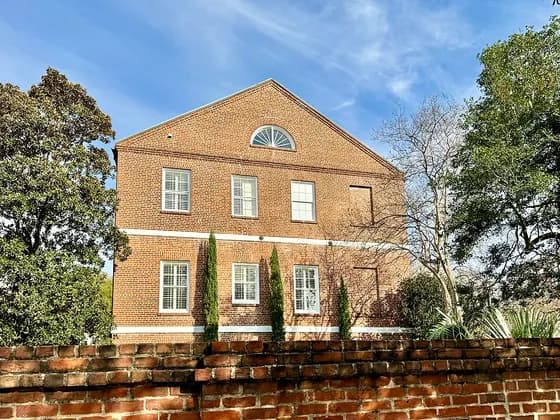
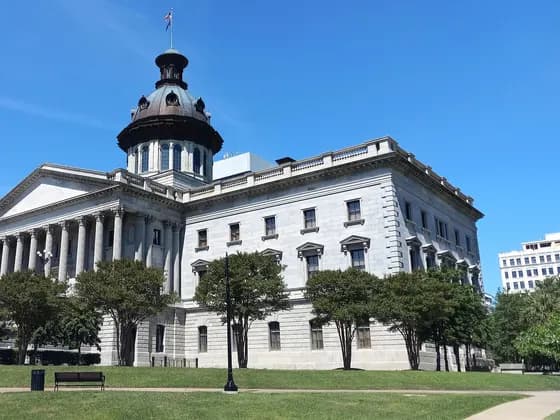

Photo: w_lemay · CC BY-SA 2.0 · cropped
Photo: w_lemay · CC BY-SA 2.0 · Photo: Thomas Kirchel · CC BY-SA 4.0 · Photo: Dr. Blazer · CC BY-SA 4.0
How to get into USC Floyd School of Medicine (MD) medicine
Step-by-step: entry requirements, admission tests, personal statement, interview format and the key deadlines.
Open the guide →USC Floyd School of Medicine (MD) entry requirements
Admission profile, interview format, decision dates and what makes USC Floyd School of Medicine (MD) different.
See the profile →The USC Floyd School of Medicine (MD) medicine interview
University of South Carolina Floyd School of Medicine uses a traditional individual interview format — applicants meet one-on-one or in small panels with faculty members and admissions committee representatives on the Columbia campus. Typically one to two sessions of 25–30 minutes; interviewers are application-aware.
As a state-funded school affiliated with Prisma Health (South Carolina’s largest health system), USC Med trains physicians with an explicit primary care and SC workforce mandate. Interviewers weight South Carolina ties, community service orientation, and commitment to the Midlands region heavily.
Expect questions that probe the AAMC Premed Competencies; Service Orientation and Interpersonal Skills receive particular emphasis given the school’s community health mission.
USC Floyd School of Medicine (MD) interview at a glance (2027 entry)
| Annual MD class size | ~100 |
|---|---|
| Interview format | Traditional individual or panel — 1–2 sessions, ~25–30 min each |
| Primary hospital affiliate | Prisma Health (formerly Palmetto Health) |
| Application system | AMCAS |
| Interview window | September–February |
| MCAT median (est.) | ~511 |
Interview format
- Traditional one-on-one or small-panel interviews with faculty and admissions committee members; 1–2 sessions of 25–30 minutes each.
- Interviewers have reviewed the full application — expect specific follow-up on SC experiences and secondary essay content.
- Full day in Columbia includes Prisma Health hospital tour and campus visit.
- Group admissions information session and informal student Q&A included.
- No MMI; entirely conversational and application-focused.
Working towards the MCAT score USC Floyd School of Medicine (MD) expects? Build a week-by-week plan from your test date — free for the first two weeks.
Sample interview questions
Why USC School of Medicine Columbia specifically — and what do you see as the most pressing health challenge in the South Carolina Midlands region?
Reference Prisma Health's clinical network, the state capital policy environment, and specific Midlands health data (high diabetes, obesity, cardiovascular disease rates, rural access gaps). Avoid generic SC answers.
Describe a community health experience that shaped your understanding of healthcare delivery in a Southern state context.
STAR structure with reflection on structural factors: poverty, lack of transportation, uninsurance (no Medicaid expansion in SC), food deserts. Show systemic awareness, not just clinical task completion.
South Carolina has not expanded Medicaid. A patient you see in the safety-net clinic cannot afford the medication you prescribe. How do you handle this in the short and long term?
Short-term:
- PAP programs
- formulary alternatives
- social work referral
Long-term: physician advocacy through medical societies, community health center support, policy engagement.
A rural patient drives two hours to your clinic. Their primary care physician back home has given them conflicting advice about a treatment. How do you handle this consultation?
Respect both the patient and the primary physician. Gather complete information, consult collegially, clarify without undermining, and ensure the patient has a clear care plan and understands who to contact.
How would you approach a patient from a rural farming community who is deeply skeptical of mainstream medicine and prefers herbal remedies?
Show non-judgmental curiosity, cultural humility, motivational interviewing, and integration of patient preferences within evidence-based care. Avoid dismissive or confrontational approaches.
What public health research question about the SC Midlands or Southeast would you most want to investigate?
Be specific — cardiovascular disease in Black men in Columbia, diabetes management in rural Clarendon County, mental health access in post-COVID SC communities. Show genuine intellectual engagement with local context.
Your supervising physician makes a treatment decision that you believe is not in the best interest of the patient. You are a third-year student. What do you do?
Show appropriate professional hierarchy awareness while prioritizing patient safety. Direct respectful discussion when safe to do so; escalation pathways if the patient is at genuine risk. Never passive silence when harm is likely.
Where do you see yourself practicing in fifteen years, and what will your patient population look like?
Be concrete and aligned with USC Med's primary care/community health mission. A vision of academic primary care in the Midlands, rural SC practice, or community health leadership fits well here.
Tell me about a time you helped someone navigate a complex system. What did you learn about your own role as an advocate?
STAR structure. Connect the systemic navigation skill to physician advocacy — helping patients navigate insurance, referral networks, social services — which is central to community medicine.
Is it ethical for a public medical school funded by state taxpayers to produce physicians who then leave the state to practice elsewhere?
Engage honestly with both sides: personal career choice vs. public investment return. Discuss retention incentives, loan repayment programs, and what data shows about in-state practice rates for public school graduates.
[Role-play] You are a USC Columbia student in a Midlands safety-net clinic. A patient caught in South Carolina's Medicaid coverage gap cannot afford a medication you have prescribed and is embarrassed to admit it. Respond to the patient.
Lead with empathy and remove the stigma. Discuss patient-assistance programs, formulary alternatives, and social-work support, and acknowledge the systemic coverage gap honestly. Reflects USC Columbia's community-medicine mission in a non-expansion state.
An interviewer shows you data comparing South Carolina health outcomes with national averages on diabetes, obesity, and cardiovascular disease, with SC faring worse. How do you interpret this, and what would you want to know before concluding what drives it?
Distinguish outcomes from causes; name structural drivers (the Medicaid coverage gap, rural access, food environment, poverty) and confounders. Connect to the Midlands context without over-reading a single comparison.
Tell me about a time you became genuinely curious about why a community had worse health outcomes, and what you did to understand it better.
USC Columbia's public-health orientation (and its Arnold School connection) rewards self-directed inquiry. Use a specific example of curiosity plus action, ideally connectable to a Midlands or Southern health challenge.
You are coordinating care for a patient between a rural primary-care physician and a Columbia specialist who have given conflicting advice. How do you communicate with both to get the patient a clear plan?
Respect both clinicians, gather complete information, clarify without undermining, and ensure the patient leaves with one coherent plan and a clear point of contact. Reflects the rural-to-academic referral patterns common in the Midlands.
Tell me about a place or community you are genuinely committed to. How does that connect to staying and practicing in South Carolina after you graduate?
As a public school with a workforce mandate, USC Columbia weights SC ties and in-state retention heavily. Use a real, specific connection and engage honestly with what would keep you practicing in the state.
Practise the USC Floyd School of Medicine (MD) interview
Rehearse the real format before the day — on demand with our AI interviewers, or live with a tutor.
Sit a mock with photoreal AI interviewers — any time
A timed MMI or panel interview on video — American & international voices — with interviewers who listen, react and press with follow-ups. Rubric-scored feedback and a replay the moment you finish.






Live mocks with a tutor who’s been in the room
A full USC Floyd School of Medicine (MD)-style mock with a medic or dentist tutor — honest scoring against real marking criteria, a station-by-station debrief and a written action plan.
Book a mock interviewHow to prepare for the USC Floyd School of Medicine (MD) interview
Common pitfalls to avoid
USC Floyd School of Medicine (MD) interview — frequently asked questions
Sources & official admissions information
Ready to nail your USC Floyd School of Medicine (MD) interview?
Book a mock interview with a tutor who knows the US interview formats, orpractice unlimited stations from our interview question bank.