
USC Greenville School of Medicine Interview
Format, Questions & Prep Tips
USC Greenville School of Medicine medicine interviews for 2027 entry are a traditional interview. USC Greenville School of Medicine describes the format as: One 50-minute virtual (Webex) interview with two members of the Admissions Evaluation Committee. Published figures: Annual MD class size ~100; Interview format Traditional individual — 1–2 sessions, ~25–30 min each; Founded 2012 — newest MD school in South Carolina.
- Institution
- University of South Carolina School of Medicine Greenville
- Interview (2027 entry)
- September through February; rolling invitations after secondary review
- Decisions (2027 entry)
- Rolling decisions through late March; waitlist movement through summer
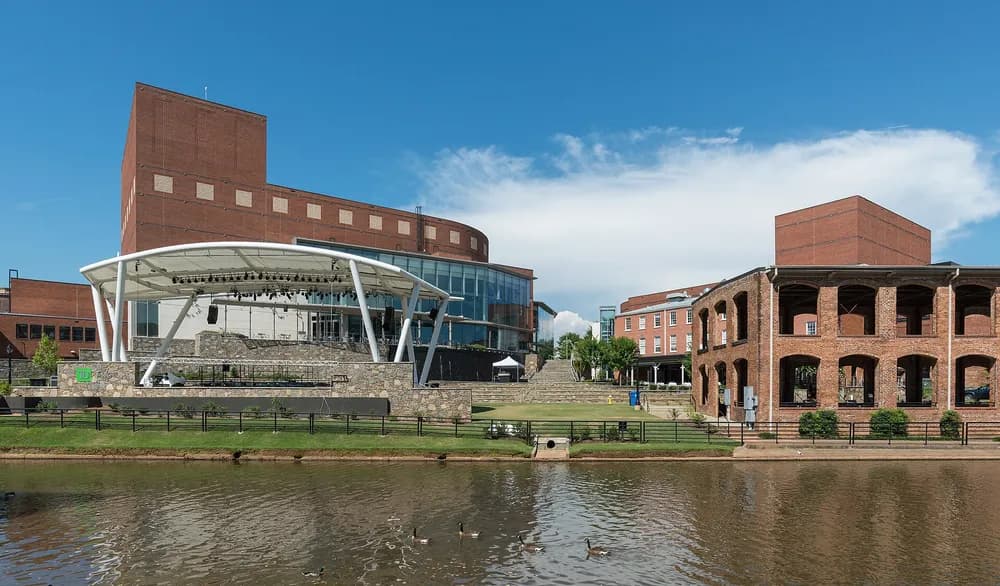

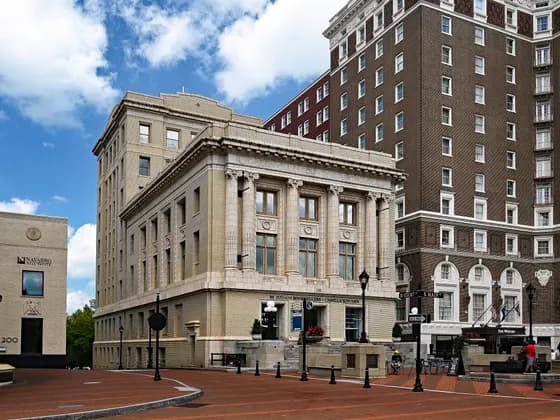

Photo: DXR · CC BY-SA 4.0 · cropped
Photo: P. Hughes · CC BY-SA 4.0 · Photo: P. Hughes · CC BY-SA 4.0 · Photo: Thomson200 · CC0
How to get into USC Greenville School of Medicine (MD) medicine
Step-by-step: entry requirements, admission tests, personal statement, interview format and the key deadlines.
Open the guide →USC Greenville School of Medicine (MD) entry requirements
Admission profile, interview format, decision dates and what makes USC Greenville School of Medicine (MD) different.
See the profile →The USC Greenville School of Medicine (MD) medicine interview
University of South Carolina School of Medicine Greenville uses a traditional individual interview format — applicants meet one-on-one with faculty members and Prisma Health physician preceptors on the Greenville campus. Typically one to two sessions of 25–30 minutes; interviewers have reviewed the full application.
As South Carolina’s newest MD school (founded 2012) with a small class and an intimate campus culture, USC Greenville places strong emphasis on collaborative fit, Upstate SC commitment, and growth mindset. Interviewers look for applicants who see opportunity in a growing institution rather than viewing newer-school status as a limitation.
Expect questions that probe the AAMC Premed Competencies; Service Orientation and Interpersonal Skills are weighted heavily given the school’s primary care and community mission.
USC Greenville School of Medicine (MD) interview at a glance (2027 entry)
| Annual MD class size | ~100 |
|---|---|
| Interview format | Traditional individual — 1–2 sessions, ~25–30 min each |
| Founded | 2012 — newest MD school in South Carolina |
| Primary hospital affiliate | Prisma Health Upstate (Greenville Memorial) |
| Application system | AMCAS |
| Interview window | September–February |
Interview format
- Traditional one-on-one interviews with faculty members and Prisma Health physician educators; 1–2 sessions of 25–30 minutes each.
- Interviewers are application-aware — expect specific follow-up on experiences and secondary essays.
- Full day includes Prisma Health Greenville Memorial Hospital tour and campus facilities.
- Group admissions information session and informal student interaction included.
- Small campus means informal interactions during the day are also part of the holistic evaluation.
Working towards the MCAT score USC Greenville School of Medicine (MD) expects? Build a week-by-week plan from your test date — free for the first two weeks.
Sample interview questions
Why USC Greenville specifically — what draws you to the Upstate region and to training at a newer, growing medical school?
Reference Greenville's rapid growth, the Prisma Health Upstate clinical network, the small-class collaborative culture, and specific aspects of the Upstate region's changing health demographics.
What does it mean to you to be part of one of the newer cohorts of a school still establishing its identity and reputation?
Show enthusiasm for building something — earlier cohorts shape school culture, have more faculty accessibility, and can influence institutional development. Avoid answers that reveal preference for established prestige.
A rural patient in the Upstate region cannot afford follow-up visits for their hypertension management. What do you do?
Discuss telehealth options (increasingly available post-COVID), free/community clinic referrals, CHW support, simplified medication regimens, and addressing the social determinants behind non-adherence.
You are the only bilingual Spanish-English physician in your community clinic. A Spanish-speaking patient has been seen by several providers who used family members as interpreters. How do you approach their care?
Address limitations of non-professional interpretation, privacy, accuracy. Use professional interpreter services, document thoroughly, and show awareness of how language barriers affect quality of care and patient safety.
Tell me about a time you adapted your communication style significantly to meet another person's needs. What did that teach you?
STAR structure. Show active listening, adaptability, and genuine interest in the other person's perspective. Connect to patient communication across diverse literacy, cultural, and linguistic backgrounds.
What health challenge facing the Greenville Upstate region would you most want to research or address clinically during your training here?
Reference specific Upstate health data: high obesity and cardiovascular rates, rapidly growing Latino/Hispanic immigrant population with access barriers, opioid crisis in Appalachian-adjacent counties, rural mental health.
A patient's family member aggressively questions your recommendation in front of the patient. How do you manage the interaction?
De-escalate respectfully, acknowledge the family member's concern, refocus on the patient's goals, clarify the plan calmly, and offer a private family conversation if helpful — always keeping the patient's autonomy central.
The Greenville Upstate metro is one of the fastest-growing areas in the Southeast. How does that demographic and economic growth affect your vision of what physicians will need to do here in ten years?
Show forward-looking health systems thinking: increasing diversity requiring cultural competence, expanding suburban sprawl creating new access challenges, economic inequality visible in health outcomes.
Describe a time you worked effectively in a team that included people with very different working styles. What did you contribute to the team dynamic?
STAR structure. Show self-awareness about your own style and genuine appreciation for complementary styles. Connect to interprofessional teamwork in medicine.
How should medical schools respond when the communities they serve hold deeply held cultural or religious beliefs that conflict with standard medical recommendations?
What they are listening for:
- Navigate tension between cultural respect
- patient autonomy
- evidence-based care
Discuss community engagement, health education, trust-building over time, and the importance of not imposing values while still providing accurate information.
[Role-play] You are a USC Greenville student in a Prisma Health Upstate clinic. A patient who recently moved to the area for work is confused about how to access ongoing care for a chronic condition and is frustrated by the system. Respond to the patient.
Acknowledge the difficulty of navigating care in a rapidly growing region. Lead with empathy, orient the patient to resources and follow-up, and avoid bureaucratic or defensive language. Fits the Upstate's growth context and USC Greenville's community focus.
An interviewer shows you data on the rapid growth of the Upstate's Latino/Hispanic population alongside lower rates of insurance coverage and a regular source of care. How do you interpret this, and what would you want to know before drawing conclusions?
Distinguish growth from access barriers; name confounders (language, immigration status, clinic capacity) and avoid over-reading a single dataset. Connect to the Upstate's changing demographics and the cultural-competence demands they create.
Tell me about a time your curiosity about a local health problem led you to look deeper. What did you find, and what did you do about it?
USC Greenville's small, collaborative culture rewards genuine engagement. Use a specific example of self-directed inquiry plus action — ideally connectable to Upstate health challenges like obesity, cardiovascular disease, or immigrant-community access.
You are in a small learning group where one member dominates discussion and another rarely speaks. As a peer, how do you help the group function better?
USC Greenville weights collaborative fit heavily given its small cohort. Show emotional intelligence — drawing out the quieter member, channelling the dominant one constructively, and improving team dynamics without confrontation.
Tell me about a time you helped build or shape something in its early stages. What did you contribute, and what did you learn from the ambiguity?
As one of South Carolina's newest schools, USC Greenville values applicants energized by building institutional culture. Use a real example and frame the school's growing status as an opportunity you are drawn to, not a limitation.
Practise the USC Greenville School of Medicine (MD) interview
Rehearse the real format before the day — on demand with our AI interviewers, or live with a tutor.
Sit a mock with photoreal AI interviewers — any time
A timed MMI or panel interview on video — American & international voices — with interviewers who listen, react and press with follow-ups. Rubric-scored feedback and a replay the moment you finish.





Live mocks with a tutor who’s been in the room
A full USC Greenville School of Medicine (MD)-style mock with a medic or dentist tutor — honest scoring against real marking criteria, a station-by-station debrief and a written action plan.
Book a mock interviewHow to prepare for the USC Greenville School of Medicine (MD) interview
Common pitfalls to avoid
USC Greenville School of Medicine (MD) interview — frequently asked questions
Sources & official admissions information
Ready to nail your USC Greenville School of Medicine (MD) interview?
Book a mock interview with a tutor who knows the US interview formats, orpractice unlimited stations from our interview question bank.