
PCOM South Georgia Interview
Format, Questions & Prep Tips
PCOM South Georgia medicine interviews for 2027 entry are a traditional interview, held September 2026 through February 2027. Published figures: Annual DO class size 90 (2025–26; expanded from 55); Tuition (2025–26) ~USD 57,000/year (estimate).
- Institution
- Philadelphia College of Osteopathic Medicine South Georgia
- Interview (2027 entry)
- September through February
- Decisions (2027 entry)
- Rolling decisions after interview

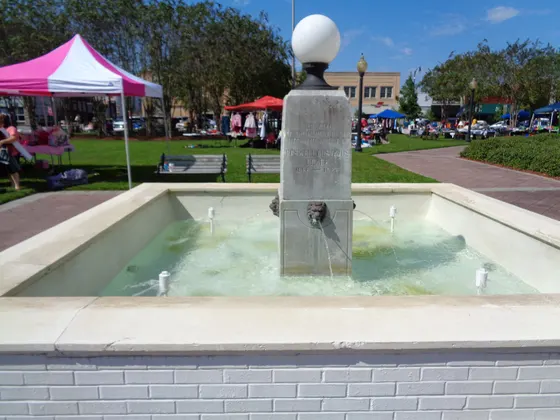
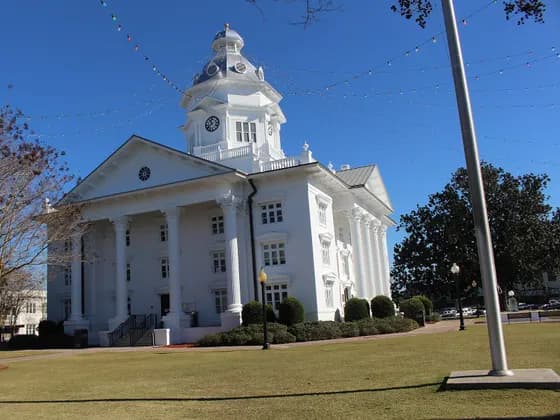
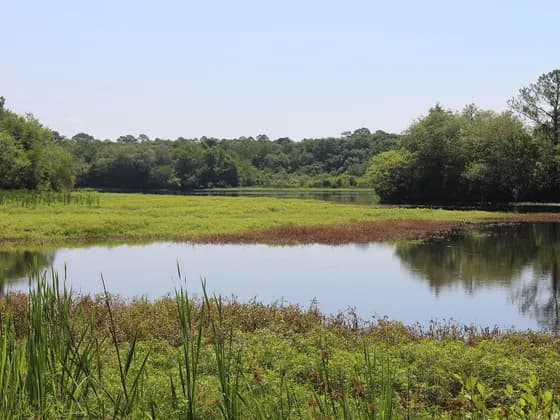
Photo: Flame1899 · CC BY-SA 4.0 · cropped
Photo: Michael Rivera · CC BY-SA 4.0 · Photo: Michael Rivera · CC BY-SA 4.0 · Photo: Michael Rivera · CC BY-SA 4.0
How to get into PCOM South Georgia (DO) medicine
Step-by-step: entry requirements, admission tests, personal statement, interview format and the key deadlines.
Open the guide →PCOM South Georgia (DO) entry requirements
Admission profile, interview format, decision dates and what makes PCOM South Georgia (DO) different.
See the profile →The PCOM South Georgia (DO) medicine interview
Philadelphia College of Osteopathic Medicine South Georgia (PCOM South Georgia) is PCOM’s rural campus in Moultrie, Georgia, one of the most distinctly small-town and agricultural osteopathic medical school training environments in the United States. The school uses a traditional interview format with faculty sessions focused almost entirely on the applicant's genuine commitment to rural and underserved South Georgia communities.
Opened in 2019, PCOM South Georgia is a small campus (~70 students per year) embedded in a rural agricultural community in southwest Georgia. The small cohort creates an intimate training environment — but it also means interviewers are highly attuned to whether applicants understand and embrace what rural South Georgia actually looks and feels like.
CASPer requirements should be confirmed separately for the South Georgia campus, as they may differ from PCOM Philadelphia and Georgia campuses.
PCOM South Georgia (DO) interview at a glance (2027 entry)
| Annual DO class size | 90 (2025–26; expanded from 55) |
|---|---|
| Interview format | Traditional — faculty sessions |
| CASPer required | No |
| Application system | AACOMAS primary + PCOM secondary |
| Tuition (2025–26) | ~USD 57,000/year (estimate) |
| Interview window | September–February |
Interview format
- One or two faculty sessions; approximately 30–45 minutes each.
- Small campus interview day has an intimate feel — fewer concurrent candidates than larger DO schools.
- Rural medicine commitment is the dominant assessment theme.
- No MMI format.
Working towards the MCAT score PCOM South Georgia (DO) expects? Build a week-by-week plan from your test date — free for the first two weeks.
Sample interview questions
PCOM South Georgia is located in Moultrie — a small agricultural town of about 14,000 people in southwest Georgia. What draws you to training here, and how did you learn about this community before applying?
Demonstrate genuine prior research: Moultrie's agricultural economy (poultry and row crops), Colquitt County's demographics, health disparities in southwest Georgia. Generic rural interest is not enough — show you know this specific place.
Why do you want to be a DO, and how does osteopathic manipulative medicine fit into how you envision practicing in a rural underserved setting?
Connect OMT directly to rural practice: musculoskeletal complaints from agricultural labor, non-pharmacological pain management in communities with opioid vulnerability, and the value of hands-on diagnostic skills when specialist access is limited.
Rural South Georgia faces physician shortages, high rates of poverty, and limited healthcare infrastructure. If you were the only physician in a rural community, what would your priorities be?
Broad scope of practice, preventive care, managing chronic disease, knowing when to refer and how to arrange transport, building community trust, and the emotional demands of being a sole provider.
A patient in your rural South Georgia clinic needs a specialist referral for a potentially serious condition, but the nearest specialist is three hours away and the patient cannot afford the travel. What are your obligations and options?
What they are listening for:
- Telemedicine as a bridge
- financial assistance resources
- coordinating care with community health workers
- patient advocacy
- the ethical tension between ideal care and resource constraints in rural medicine
Rural hospital closures have accelerated across Georgia and the Southeast. What are the causes and consequences, and what role can osteopathic physicians play?
Hospital closure drivers:
- Medicare/Medicaid reimbursement
- thin margins
- physician recruitment challenges
- regulatory factors
DO primary care pipeline, loan repayment programs, and rural health policy advocacy.
Describe a time you built a trusting relationship with someone very different from yourself — different background, culture, or circumstances. What made that possible?
Authentic connection-building in community contexts. Rural South Georgia's demographic complexity (significant African American population, immigrant agricultural workers) requires genuine cross-cultural relationship skills.
The PCOM South Georgia class is approximately 70 students. How do you feel about the intimacy of a small cohort, and what do you bring to that community?
Small-cohort training requires and rewards collaboration, peer support, and a low-ego communal learning environment. Articulate what you specifically contribute — not just what you receive — from a small community.
Rural physicians often become de facto community leaders — attending town events, knowing patients outside clinical settings. Are you prepared for that kind of boundary navigation, and how would you handle it?
Professional boundary maintenance in rural contexts, the visibility of being a rural physician, and the community integration that is part of rural medicine's social contract. Show you have thought about this realistically.
Suppose Colquitt County data shows lower childhood vaccination rates and higher rates of preventable hospitalizations than the Georgia average. As a future rural physician, how would you reason about what is driving this, and how would you decide where to intervene first?
Link the two figures: undervaccination and preventable admissions both point to access and trust gaps. Reason about distance, clinic availability, health literacy, and vaccine hesitancy. Prioritize high-yield, feasible interventions (outreach, school partnerships) and acknowledge limits of population data at small-county scale.
Role-play: you are the only clinician available and a longtime patient's adult son corners you after a town event, asking you about his mother's recent test results because 'everyone here knows everyone'. Respond as you would in real life.
Maintain confidentiality warmly but firmly, explain you cannot discuss another adult's care without consent, and redirect appropriately. This tests rural boundary navigation — the school explicitly cares about it given the small-town context.
PCOM South Georgia is a small campus of around 70 students with close faculty contact. How do you learn best, and would a small, tight-knit cohort help or hinder you compared with a large class?
Reflect honestly on learning style. Frame the small cohort as enabling mentorship, accountability and collaborative board prep, while acknowledging the lack of anonymity and the need for strong peer relationships. Show self-awareness rather than a generic 'I love small classes'.
A patient in rural Southwest Georgia is reluctant to start a statin because a neighbor told her it 'destroys the liver'. How do you address this in a way that respects her and the tight community information network?
Acknowledge community trust networks, correct the misconception with empathy and simple framing, use shared decision-making, and recognize that in small communities your credibility spreads by word of mouth. Avoid dismissing the neighbor's influence.
Being one of very few physicians in a small county can mean treating people you know socially — your child's teacher, a fellow church member. How would you handle the blurred line between professional and personal relationships?
Discuss professional boundaries, when to refer a close personal contact elsewhere, confidentiality, and managing dual relationships. Show you have thought realistically about the social contract of being a visible rural doctor rather than treating it as hypothetical.
Rural Southwest Georgia struggles not just to recruit physicians but to keep them. Beyond 'I want to serve the underserved', what specific things about your own life and priorities make you likely to actually stay in a place like Moultrie?
Concrete anchors:
- family or regional ties
- comfort with small-town life
- alignment of career goals with rural primary care
- realistic expectations about isolation and lifestyle
Generic altruism is the trap; specificity and self-knowledge are the signal.
Your rural clinic is short-staffed and you are asked to see more patients per hour than you think is safe to keep the clinic financially viable. How do you weigh access (seeing everyone) against quality (enough time per patient)?
Acknowledge the real tension in rural sustainability: turning patients away also harms them. Discuss triage, team-based care, telehealth, and raising safety concerns constructively. Show you can hold patient safety as a limit while understanding clinic survival pressures.
Practise the PCOM South Georgia (DO) interview
Rehearse the real format before the day — on demand with our AI interviewers, or live with a tutor.
Sit a mock with photoreal AI interviewers — any time
A timed MMI or panel interview on video — American & international voices — with interviewers who listen, react and press with follow-ups. Rubric-scored feedback and a replay the moment you finish.


Live mocks with a tutor who’s been in the room
A full PCOM South Georgia (DO)-style mock with a medic or dentist tutor — honest scoring against real marking criteria, a station-by-station debrief and a written action plan.
Book a mock interviewHow to prepare for the PCOM South Georgia (DO) interview
Common pitfalls to avoid
PCOM South Georgia (DO) interview — frequently asked questions
Sources & official admissions information
Ready to nail your PCOM South Georgia (DO) interview?
Book a mock interview with a tutor who knows the US interview formats, orpractice unlimited stations from our interview question bank.