
Mercer University School of Medicine Interview
Format, Questions & Prep Tips
Mercer University School of Medicine medicine interviews for 2027 entry are a traditional interview. Mercer University School of Medicine describes the format as: A 30–45-minute virtual (Zoom) interview with two interviewers, plus an hour with Year II student ambassadors. Published figures: Annual MD class size ~120; Interview format Traditional — 2–3 interviews, 30–45 min each; Curriculum PBL — 4-year MD with community health integration.
- Institution
- Mercer University School of Medicine
- Interview (2027 entry)
- October through January; invitations issued on a rolling basis after secondary review
- Decisions (2027 entry)
- Rolling decisions; final decisions by March 30; waitlist activity through summer

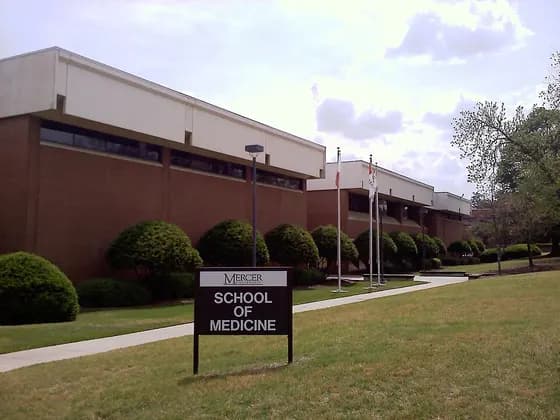
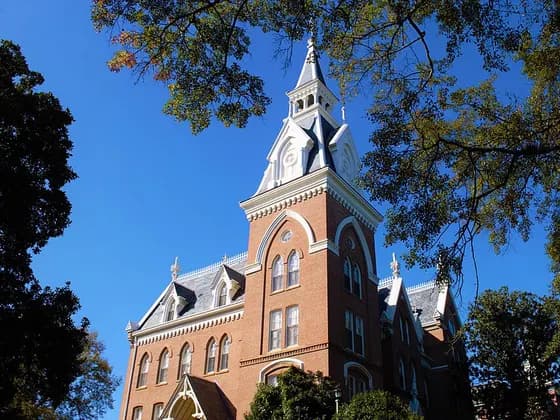
Photo: Korea2006 · CC BY-SA 3.0 · cropped
Photo: Korea2006 · CC BY-SA 3.0 · Photo: Brandon Dolley from Duluth, GA, United States · CC0 · Photo: NPS · Public domain
How to get into Mercer University School of Medicine (MD) medicine
Step-by-step: entry requirements, admission tests, personal statement, interview format and the key deadlines.
Open the guide →Mercer University School of Medicine (MD) entry requirements
Admission profile, interview format, decision dates and what makes Mercer University School of Medicine (MD) different.
See the profile →The Mercer University School of Medicine MD program
Problem-based learning, 4 years, clinical rotations across Macon, Savannah, Columbus, Valdosta, Carrollton and rural Georgia.
See the program →The Mercer University School of Medicine (MD) medicine interview
Mercer University School of Medicine uses a traditional interview format held at its Macon, Savannah, or Columbus campuses. Applicants meet with two or three interviewers — faculty physicians and community members — in sessions of 30–45 minutes each. The entire interview process is built around evaluating mission fit for rural and underserved Georgia medicine; academic credentials are necessary but secondary to demonstrated commitment to the communities the school serves.
Mercer was founded in 1982 explicitly to address Georgia’s rural physician shortage, and that founding mission remains the school’s central identity. The distributed campus model means students train in the very communities they are being prepared to serve — interviewers probe whether this resonates genuinely.
The AAMC groups its 17 Premed Competencies into three categories: professional, science, and thinking and reasoning. Mercer interviewers weight professional competencies such as ethical responsibility, reliability, and resilience most highly. They are looking for candidates whose values and self-understanding are authentically aligned with a primary care, community-serving career.
Mercer University School of Medicine (MD) interview at a glance (2027 entry)
| Annual MD class size | ~120 |
|---|---|
| Interview format | Traditional — 2–3 interviews, 30–45 min each |
| Application system | AMCAS |
| Curriculum | PBL — 4-year MD with community health integration |
| In-state preference | Very strong — ~97% Georgia residents |
| Interview window | October–January |
| Campuses | Macon (main), Savannah, Columbus |
Interview format
- Two or three traditional one-on-one interviews with faculty physicians and community members.
- Community member interviewer reflects Mercer's commitment to community-oriented medical education.
- Each session approximately 30–45 minutes; interviewers have reviewed the application.
- Campus tour at the assigned interview campus (Macon, Savannah, or Columbus).
- Information session covering the PBL curriculum and distributed campus model.
- Informal interactions with current students during lunch or breaks.
Working towards the MCAT score Mercer University School of Medicine (MD) expects? Build a week-by-week plan from your test date — free for the first two weeks.
Sample interview questions
Mercer's mission is to train physicians for rural and underserved Georgia communities. Which specific communities have shaped your commitment to this mission?
Name specific Georgia towns, counties, clinics, or organizations. Mercer interviewers can identify candidates who rehearsed a generic rural medicine answer — concrete geography and organizations are essential.
Where do you see yourself practicing in 10 years, and which Georgia community do you envision serving?
Mercer wants physicians who will stay in Georgia. Be specific about geography, specialty, and community type. Uncertainty is acceptable if genuine — Mercer values honesty over a polished "perfect answer."
A patient living 60 miles from the nearest hospital needs a procedure that requires anesthesia. They want to be treated locally but local facilities are not equipped. How do you manage this?
What they are listening for:
- Rural access
- transport barriers
- informed consent about limitations
- the physician's advocacy role in resource-limited settings
Mercer trains physicians to work creatively within these constraints.
Describe a time you worked with someone from a very different socioeconomic background than your own. What did you learn about providing care or service to people whose life circumstances differ from yours?
What they are listening for:
- Cultural humility
- self-awareness
- community engagement
STAR structure. End with genuine insight, not a formulaic conclusion.
A patient in your rural practice refuses a recommended cancer screening test because of cost. How do you approach the conversation and the decision?
What they are listening for:
- Patient autonomy
- cost as a barrier
- financial counseling
- free screening resources
- the physician's role as advocate
Do not moralize — show you can problem-solve practical barriers.
Mercer uses a problem-based learning curriculum. Describe how you learn best and give an example of when you thrived in a self-directed learning environment.
PBL requires intrinsic motivation and group collaboration. Reference specific self-directed learning experiences — research, independent study, team projects. Acknowledging your learning style honestly is valued.
Why family medicine or primary care? And how do you respond when colleagues or family suggest a subspecialty might be a better career choice?
Mercer has one of the highest primary care production rates in the US. Show genuine conviction, and demonstrate that you have thought through the career trade-offs honestly.
You discover that a rural community your clinic serves has significantly higher rates of a particular disease than surrounding areas. What do you do with that information?
What they are listening for:
- Community health investigation
- reporting obligations
- public health engagement
- the physician's role in population health
Show systems-level thinking alongside individual patient care.
A community member interviewer (not a physician) asks you to explain what a CT scan is and why you would recommend one. How do you explain it without medical jargon?
Health literacy and plain-language communication. This question type is especially common at Mercer given community member interviewers. Practice layering — start simple, add detail only as needed.
Mercer graduates are expected to serve underserved populations rather than maximize income. How do you reconcile the financial realities of medical education debt with a commitment to underserved practice?
An honest, practical answer is valued over idealism. Reference NHSC loan repayment, primary care shortage area incentives, and the practical financial planning that makes underserved practice sustainable.
Role-play: A community-member interviewer is playing a patient in a small Georgia town. They have just been told they need a CT scan and are worried about both the cost and what it might find. Explain what the scan is, why you recommend it, and address their concerns — without medical jargon.
Layer the explanation: start with a plain-language description, check understanding, then address cost and fear directly. Mercer's community-member interviews specifically assess whether you can communicate comfortably with non-physicians.
An interviewer notes that Mercer produces among the highest proportions of graduates entering family medicine and rural practice of any US medical school. Why do you think mission-focused schools achieve this, and what would it take for you to be one of those graduates?
Discuss the role of admissions selection, curriculum exposure, distributed training, and loan-repayment incentives in shaping outcomes. Be honest and specific about your own trajectory rather than simply affirming the statistic.
In a PBL small group, two members are in open conflict over how to divide the case work and the tension is stalling the group. As a peer, how do you help the group move forward?
Mercer's curriculum is fully PBL. Show facilitation skills — surfacing the underlying disagreement, refocusing on shared goals, and involving the facilitator only if needed — rather than taking sides.
Mercer's problem-based learning relies on self-directed study between sessions. Describe a time you had to teach yourself something difficult with no formal instruction. How did you structure it and verify you actually understood it?
Give a concrete example demonstrating intrinsic motivation, metacognition, and the ability to identify your own knowledge gaps — the precise habits PBL demands.
Many Mercer graduates stay and practice in Georgia long-term. Where specifically do you imagine yourself in 10 years, and what would keep you in an underserved Georgia community rather than leaving for a larger market?
Be concrete about geography and the practical and personal factors (family ties, loan repayment, community connection) that make a long-term rural commitment realistic for you. Mercer values honesty over an idealized answer.
Practise the Mercer University School of Medicine (MD) interview
Rehearse the real format before the day — on demand with our AI interviewers, or live with a tutor.
Sit a mock with photoreal AI interviewers — any time
A timed MMI or panel interview on video — American & international voices — with interviewers who listen, react and press with follow-ups. Rubric-scored feedback and a replay the moment you finish.





Live mocks with a tutor who’s been in the room
A full Mercer University School of Medicine (MD)-style mock with a medic or dentist tutor — honest scoring against real marking criteria, a station-by-station debrief and a written action plan.
Book a mock interviewHow to prepare for the Mercer University School of Medicine (MD) interview
Common pitfalls to avoid
Mercer University School of Medicine (MD) interview — frequently asked questions
Sources & official admissions information
Ready to nail your Mercer University School of Medicine (MD) interview?
Book a mock interview with a tutor who knows the US interview formats, orpractice unlimited stations from our interview question bank.