
Emory University School of Medicine Interview
Format, Questions & Prep Tips
Emory University School of Medicine medicine interviews for 2027 entry are a traditional interview, held September 2026 through February 2027. Published figures: Annual MD class size ~141; Tuition (2025–26) ~USD 61,000/year.
- Institution
- Emory University School of Medicine
- Interview (2027 entry)
- September through February
- Decisions (2027 entry)
- Regular decisions by late March; waitlist through spring

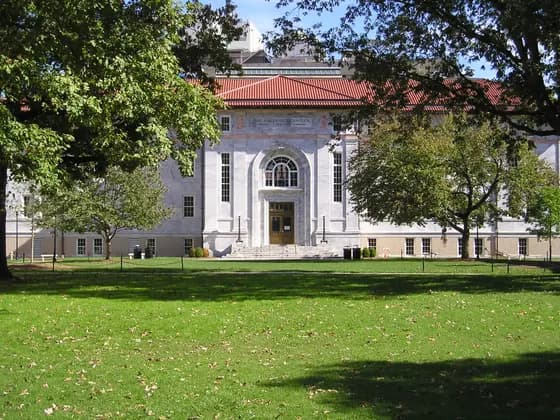


Photo: Sinan · CC BY 2.0 · cropped
Photo: Revesq · Public domain · Photo: Haha169 · CC0 · Photo: Mike Schinkel · CC BY 2.0
How to get into Emory University School of Medicine (MD) medicine
Step-by-step: entry requirements, admission tests, personal statement, interview format and the key deadlines.
Open the guide →Emory University School of Medicine (MD) entry requirements
Admission profile, interview format, decision dates and what makes Emory University School of Medicine (MD) different.
See the profile →The Emory University School of Medicine MD program
Integrated, 4 years, clinical rotations across Atlanta and the surrounding metro area.
See the program →The Emory University School of Medicine (MD) medicine interview
Emory School of Medicine uses a traditional interview format with two sessions (faculty and student). Emory is the home of the CDC, the Carter Center, and CARE USA — all headquartered in Atlanta — giving it a unique global public health ecosystem. Interviewers frequently probe global health interests and awareness of infectious disease epidemiology (Emory's Serious Communicable Diseases Unit treated Ebola patients in 2014).
Emory has a strong commitment to health equity in the Southeast — Georgia has not expanded Medicaid and has some of the worst maternal mortality, diabetes, and cardiovascular outcomes of any state. The training context at Grady Memorial Hospital (one of the largest safety-net hospitals in the US) is central to Emory's identity.
Emory's Laney Graduate School and Rollins School of Public Health (ranked top 5) offer strong dual-degree pathways and interviewers probe interest in MD/MPH or population health approaches.
Emory University School of Medicine (MD) interview at a glance (2027 entry)
| Annual MD class size | ~141 |
|---|---|
| Interview format | Traditional — faculty + student sessions |
| Tuition (2025–26) | ~USD 61,000/year |
| Application system | AMCAS + Emory secondary |
| Key affiliate | Grady Memorial Hospital (major safety-net) |
| Interview window | September–February |
Interview format
- Two one-on-one sessions: faculty (open-file) and student.
- No MMI.
- Interview day includes Grady Memorial Hospital tour and Rollins School of Public Health overview.
Working towards the MCAT score Emory University School of Medicine (MD) expects? Build a week-by-week plan from your test date — free for the first two weeks.
Sample interview questions
Emory sits near the CDC, the Carter Center and CARE USA. How does Atlanta's public-health ecosystem shape your vision as a future physician?
Show that you see clinical medicine and population health as inseparable. Connect individual care to surveillance, prevention, and policy rather than offering generic 'I care about public health' lines.
Grady Memorial is one of the largest safety-net hospitals in the US. What draws you to training in a setting that cares for so many uninsured and under-served patients?
Demonstrate genuine motivation for the safety-net mission, not just the academic brand. Show awareness of the clinical complexity and social need Grady's patients bring.
Emory treated Ebola patients in 2014 in its Serious Communicable Diseases Unit. What does it mean to be a physician willing to care for patients with dangerous infections, and what prepares someone for that?
Engage professional obligation, calibrated risk, infection-control competence, and institutional preparedness. This unit is a point of pride, so treat the question with seriousness rather than bravado.
Tell us about a community you feel responsible to. How has that sense of responsibility shaped your choices?
Reveal authentic commitment relevant to Emory's equity mission. Ground it in concrete actions and sustained involvement rather than a one-off experience.
Georgia has not expanded Medicaid. A patient at Grady comes in monthly for a preventable hospitalization that primary care and insurance would avoid. What is the physician's obligation beyond each discrete admission?
Engage systemic advocacy, community-health-worker models, care coordination, and the political economy of Medicaid non-expansion. Move beyond treating the immediate episode.
During an outbreak, scarce treatment must be rationed. How should a hospital decide who receives it, and what principles guide you?
Discuss utility, equity, transparency, and consistency, and the danger of bedside rationing without clear policy. Emory's infectious-disease and public-health context makes triage ethics concrete.
A public-health intervention that would reduce disease spread also restricts individual liberty, such as isolation requirements. How do you weigh collective benefit against personal freedom?
Balance autonomy against harm prevention, proportionality, least-restrictive means, and trust. Avoid absolutism in either direction; show structured reasoning suited to a public-health-oriented school.
Georgia has some of the worst maternal mortality in the country, with stark racial disparities. What responsibilities does that place on physicians and the institutions that train them?
Address listening to and believing patients, implicit bias, access to prenatal care, and systemic reform. Frame disparities through socioeconomic and structural factors rather than as inevitable.
Describe an experience that required you to navigate significant cultural or linguistic difference in a healthcare or community setting.
Show cultural humility and adaptive communication with a concrete example. Emphasize listening, professional interpreter use, and meeting people where they are.
Explain to a worried community member, in plain terms, why a vaccine recommended during an outbreak is worth getting.
Avoid jargon, acknowledge legitimate concerns, and build trust rather than lecturing. Emory's public-health setting prizes humane, persuasive risk communication.
Emory's Rollins School of Public Health offers strong MD/MPH pathways. How might population-health methods complement your clinical work?
Show familiarity with epidemiology, study design, and intervention evaluation, and how they inform care at scale. Connect a genuine interest to the MD/MPH option rather than name-dropping it.
How would you investigate why one Atlanta neighborhood has far higher rates of a chronic disease than another?
Outline a structured approach: descriptive epidemiology, candidate determinants, data sources, and intervention testing. Resist single-cause explanations and consider social and environmental factors.
Walk me through a research or scholarly experience. What was genuinely your contribution, and what did it show?
Separate independent thinking from supervised tasks and be honest about limitations. Public-health-oriented schools value methodological clarity.
A Grady patient is frustrated and distrustful after years of feeling dismissed by the healthcare system. Speak with them.
Acknowledge the distrust as reasonable, listen without defensiveness, and rebuild rapport before problem-solving. Dignity and patience matter more than efficiency here.
A patient who needs isolation during an outbreak is desperate to leave to care for a dependent at home. Talk with them.
Validate the genuine dilemma, explain the public-health rationale, and problem-solve support for the dependent rather than simply enforcing rules. Balance compassion with collective responsibility.
You're shown maternal mortality data revealing a large racial disparity in Georgia. How would you interpret it, and what would you want to know next?
Avoid biological essentialism; consider access, quality of care, bias, and socioeconomic factors. Name the further data — timing of care, comorbidities, facility type — needed before drawing conclusions.
Practise the Emory University School of Medicine (MD) interview
Rehearse the real format before the day — on demand with our AI interviewers, or live with a tutor.
Sit a mock with photoreal AI interviewers — any time
A timed MMI or panel interview on video — American & international voices — with interviewers who listen, react and press with follow-ups. Rubric-scored feedback and a replay the moment you finish.






Live mocks with a tutor who’s been in the room
A full Emory University School of Medicine (MD)-style mock with a medic or dentist tutor — honest scoring against real marking criteria, a station-by-station debrief and a written action plan.
Book a mock interviewHow to prepare for the Emory University School of Medicine (MD) interview
Common pitfalls to avoid
Emory University School of Medicine (MD) interview — frequently asked questions
Sources & official admissions information
Ready to nail your Emory University School of Medicine (MD) interview?
Book a mock interview with a tutor who knows the US interview formats, orpractice unlimited stations from our interview question bank.