US Medicine · 2027 Entry

Emory University School of Medicine (MD) Medical School2027 Entry Requirements & Interview Format

Location Atlanta, GA, United StatesEstablished 1915Interviews September–JanuaryDecisions March 30

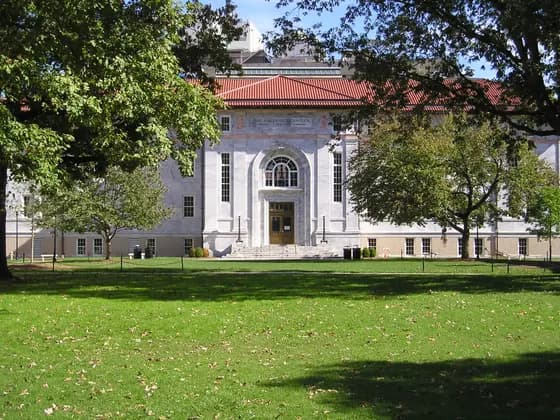
Photo: Sinan · CC BY 2.0

Start here
Overview

About Emory University School of Medicine (MD)

Emory University School of Medicine is a leading private medical school located in Atlanta, Georgia, affiliated with Emory Healthcare — the largest healthcare system in Georgia. The school is particularly renowned for its global health programs (proximity to the CDC headquarters in Atlanta), biomedical research, and commitment to health equity in the Southeast United States. Emory has a long history of training physicians for both academic and community-based practice.

What makes it different

Atlanta's status as home to the CDC, WHO PAHO, the Carter Center, and numerous global health NGOs gives Emory medical students unparalleled access to public health, global medicine, and health policy careers. Grady Memorial Hospital — a large public safety-net hospital — provides clinical training in a uniquely complex urban healthcare environment.

Course & teaching

Integrated curriculum. 4-year MD. Curriculum integrates clinical skills from Year 1 with early clinical rotations. Global health tracks and dual-degree programs available. Clinical rotations at Emory University Hospital, Grady Memorial Hospital (major public safety-net hospital), and affiliated community health centers.

Research strengths

Emory University School of Medicine (MD) has notable research strength in Infectious disease and global health, Cancer immunotherapy, Health equity, Neuroscience, Cardiovascular disease.

Interview

Emory University School of Medicine (MD) interviews via Traditional interviews (typically two one-on-one sessions with faculty and/or a student).

Intake

Approximately 140 students per year.

At a glance

Founded in 1915, based in Atlanta, GA. Programmes offered: Global Health, Infectious Disease, Oncology, Health Equity, Community Medicine.

Entry requirements

What you need to apply to Emory University School of Medicine (MD)

Admission overview
Bachelor's degree and MCAT required. Research experience, clinical exposure, and community service expected. Proximity to the CDC and other major public health institutions in Atlanta creates distinctive global health training opportunities.
MCAT median
515 (range 510–520)
GPA median
3.81 overall / 3.83 science (BCPM)
Acceptance rate
1.9%
Class size
140
In-state preference
None
CASPer
Not required
AAMC PREview
Not required
Holistic review emphasis
Global health, research, community service, health equity, and public health mission alignment.
Notes
MCAT/GPA approximate from Emory Med class profile.
Specialities offered
Global Health, Infectious Disease, Oncology, Health Equity, Community Medicine
Interview

How Emory University School of Medicine (MD) interviews applicants

Format
Traditional interviews (typically two one-on-one sessions with faculty and/or a student)
Interview window
September–January
Decision date
March 30
Tutor insight
Emory's MMI often includes public health and global health scenarios reflecting the school's mission and location — prepare for questions about disease surveillance, health equity, and international healthcare systems alongside standard clinical ethics scenarios. If you have a genuine interest in global health or public health, Emory is one of the best medical schools in the country to pursue those interests, with unmatched access to the CDC and WHO. Express specific enthusiasm for training at Grady Memorial in your secondary essays — its diverse, complex patient population is a genuine educational asset that signals your commitment to underserved care.
Practice

Practise for your Emory University School of Medicine (MD) interview

PrometheusQuestion Bank621 medicine questions inside

Interview questions matched to Emory University School of Medicine (MD)

Two questions our tutors flagged as a strong fit for Emory University School of Medicine (MD)’s interview style. Try answering them out loud, then open Prometheus for the model answers and follow-up tips.

MediumPanelQ1

Academic Path: Why an Academic Medical Center and Teaching

You are interviewing at a large academic medical center where physicians are expected to balance patient care with teaching residents and students, and often with research. Some applicants would be happier in a pure community-practice setting. Why does training and potentially building a career in an academic environment appeal to you?

Likely follow-up · What draws you to teaching, and do you have any experience that suggests you would be good at it?

3 expert tips in Prometheus
HardMMI · PanelQ2

AAMC Core Competency: Quantitative Reasoning in Clinical Decision-Making

A screening test for a rare cancer has a sensitivity of 95 percent and a specificity of 90 percent. The disease prevalence in the population you are screening is 1 in 1,000. A patient tests positive. How do you calculate and explain the positive predictive value to a patient who is now frightened by their result, and what does this teach you about population-level versus individual-level medical decisions?

Likely follow-up · Why does a high-sensitivity, high-specificity test still generate many false positives when screening for rare diseases?

3 expert tips in Prometheus
Get support

Apply to Emory University School of Medicine (MD) with confidence

We've helped students into Emory University School of Medicine (MD) and other US medicine schools — get tailored support for each stage of the application.

FAQ

Emory University School of Medicine (MD) — frequently asked questions

Apply to Emory University School of Medicine (MD) with confidence

We've helped students turn their MCAT, personal statement and interview prep into offers from Emory University School of Medicine (MD) and other US medicine schools.