
LSU Health Shreveport School of Medicine Interview
Format, Questions & Prep Tips
LSU Health Shreveport School of Medicine medicine interviews for 2027 entry are a traditional interview. LSU Health Shreveport School of Medicine describes the format as: Two semi-blind one-on-one virtual interviews of about 30 minutes each with Admissions Committee members. Published figures: Annual MD class size 150 (since 2021); Interview format 1–2 traditional one-on-one interviews, 30 min each; In-state preference Very strong — ~95% Louisiana residents.
- Institution
- Louisiana State University School of Medicine in Shreveport
- Interview (2027 entry)
- October through January; rolling invitations after secondary review
- Decisions (2027 entry)
- Rolling decisions from November through March 30; waitlist movement through spring


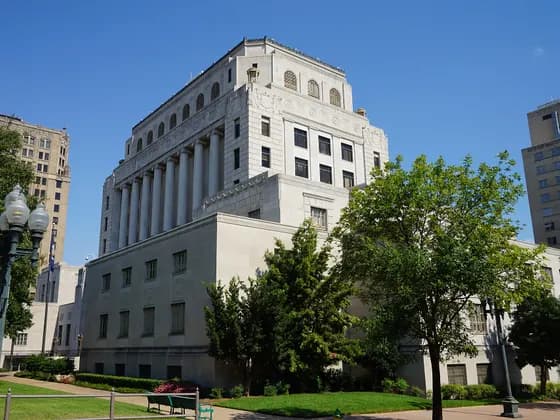

Photo: Billy Hathorn · CC BY-SA 3.0 · cropped
Photo: Shreveport-Bossier Convention and Tourist Bureau · CC BY 2.0 · Photo: Michael Barera · CC BY-SA 4.0 · Photo: Lindsay Hickman from Shreveport, US · CC BY-SA 2.0
How to get into LSU Health Shreveport School of Medicine (MD) medicine
Step-by-step: entry requirements, admission tests, personal statement, interview format and the key deadlines.
Open the guide →LSU Health Shreveport School of Medicine (MD) entry requirements
Admission profile, interview format, decision dates and what makes LSU Health Shreveport School of Medicine (MD) different.
See the profile →The LSU Health Shreveport School of Medicine (MD) medicine interview
LSU Health Shreveport School of Medicine uses a traditional interview format. Interview days on the Shreveport campus include one to two one-on-one faculty or clinician interviews of approximately 30 minutes each, along with a campus tour and student interactions.
The school has an explicit regional mission: training physicians for north Louisiana and the medically underserved rural communities of the Deep South. Interviewers probe candidates’ awareness of northwest Louisiana health challenges — high rates of diabetes, cardiovascular disease, and rural access barriers — and their genuine commitment to practicing in this region.
University Health Shreveport (the school’s main clinical affiliate) is a high-volume public safety-net hospital, and training there emphasizes trauma, critical care, and general medicine breadth. Expect questions that probe the AAMC Premed Competencies, with particular emphasis on service orientation and community commitment.
LSU Health Shreveport School of Medicine (MD) interview at a glance (2027 entry)
| Annual MD class size | 150 (since 2021) |
|---|---|
| Interview format | 1–2 traditional one-on-one interviews, 30 min each |
| Clinical affiliate | University Health Shreveport — regional public safety-net hospital |
| In-state preference | Very strong — ~95% Louisiana residents |
| Application system | AMCAS |
| Interview window | October–January |
| Tuition (in-state approx.) | ~USD 28,000–33,000/year |
Interview format
- One to two traditional one-on-one or panel interviews with faculty, clinicians, or current students.
- Each session approximately 30 minutes; interviewers have typically reviewed the application.
- Tour of LSU Health Shreveport campus and University Health Shreveport facilities.
- Financial aid and curriculum overview session.
- Informal student interactions.
- Full day approximately 4–5 hours.
Working towards the MCAT score LSU Health Shreveport School of Medicine (MD) expects? Build a week-by-week plan from your test date — free for the first two weeks.
Sample interview questions
Why do you want to train at LSU Health Shreveport specifically, and how does this regional environment fit your career goals?
Reference northwest Louisiana health challenges, University Health Shreveport's safety-net role, the trauma/critical care training environment, and why you want to practice in this part of Louisiana or the Deep South.
Northwest Louisiana has some of the highest rates of diabetes, cardiovascular disease, and rural health access problems in the US. What draws you to training in this environment?
Shows genuine regional engagement. Specific statistics and awareness of which parishes face the most acute access problems are valued over generic statements about serving underserved communities.
A patient at the public hospital cannot afford a medication that is essential for managing their chronic condition. What resources do you explore and how do you approach the conversation?
Safety-net hospital context:
- Medicaid
- patient assistance programs
- 340B drug pricing
- generic alternatives
- social work referral
Show practical knowledge, not just acknowledgment of the problem.
Tell me about an experience working with a patient or community member from a background very different from your own. What did you learn?
Cultural humility — essential in Shreveport's diverse patient population (large African American, rural, and economically disadvantaged communities). STAR structure; focus on what you actively learned, not just on having the experience.
Are you planning to practice in Louisiana after residency? If yes, where and in what specialty? If not, why are you applying to LSU Shreveport?
Honest answer preferred over performance. If you intend to stay in Louisiana, articulate why this region specifically. If not, be transparent about your intentions and why LSU Shreveport still represents the right training environment.
A patient presents to the ED with signs consistent with domestic violence but denies any abuse. How do you proceed?
Mandatory reporting obligations vary by state. In Louisiana, discuss documentation, safety planning, social work referral, and creating an environment of trust for future disclosure. Patient safety vs. autonomy tension.
Describe the academic or personal challenge that most tested your resilience. How did you respond?
Resilience and adaptability. Medical school in a high-acuity safety-net environment is demanding. Show genuine resilience, not just success after adversity.
What does a physician's responsibility to their community look like in a city like Shreveport?
What they are listening for:
- Community medicine
- social determinants of health
- the role of the physician as both clinician and advocate
Shreveport has significant socioeconomic disparities — show you have thought about what community-embedded medicine means.
Louisiana has significant food insecurity and obesity-related disease burden. As a physician, what is your responsibility beyond treating individual patients?
What they are listening for:
- Public health
- community advocacy
- policy engagement
Show you have thought about upstream determinants of health, not just downstream clinical management.
Describe a time when you had to work under pressure as part of a team. How did you contribute?
High-acuity clinical environments require teamwork under stress. Show that you maintain composure, communicate clearly, and support team function when the stakes are high.
You are shown county-level data for northwest Louisiana showing that Caddo and several surrounding parishes have diabetes and uncontrolled-hypertension rates well above the national average, alongside lower rates of routine primary care visits. How would you interpret the relationship, and what would you caution against concluding from it?
Show that correlation is not causation: low visit rates and high chronic-disease burden may share upstream causes (poverty, access, food environment). Connect to University Health Shreveport's safety-net role without asserting a precise figure you are unsure of.
Role play: you are a student in the safety-net clinic. A patient who works two jobs without paid leave tells you he keeps missing follow-up appointments and has run out of his insulin. Begin the conversation.
Demonstrate the encounter live. Lead with the practical barriers (work, cost, transportation), explore solutions (340B pharmacy access, patient assistance, telehealth follow-up, appointment timing), and avoid framing missed appointments as the patient's failing.
Training at a high-volume safety-net hospital means seeing advanced disease that has gone untreated for years. How do you reason through managing a patient whose textbook 'first-line' option is impractical given their resources?
Thinking & Reasoning under real-world constraints. Show that good clinical reasoning includes the social and financial context — choosing the best achievable plan, not just the ideal one.
Describe a time you supported a teammate or colleague who was struggling under heavy workload or stress. What did you do, and what was the effect?
Interpersonal competency relevant to a demanding safety-net training environment. Emphasize practical support and team sustainability, not just sympathy.
Shreveport and northwest Louisiana are sometimes overlooked relative to New Orleans or Baton Rouge. What draws you specifically to this region, and what would keep you here after training?
Authenticity. LSU Shreveport's mission is regional; a credible answer names the region's specific communities and the candidate's genuine ties or intentions rather than generic Deep South interest.
Practise the LSU Health Shreveport School of Medicine (MD) interview
Rehearse the real format before the day — on demand with our AI interviewers, or live with a tutor.
Sit a mock with photoreal AI interviewers — any time
A timed MMI or panel interview on video — American & international voices — with interviewers who listen, react and press with follow-ups. Rubric-scored feedback and a replay the moment you finish.






Live mocks with a tutor who’s been in the room
A full LSU Health Shreveport School of Medicine (MD)-style mock with a medic or dentist tutor — honest scoring against real marking criteria, a station-by-station debrief and a written action plan.
Book a mock interviewHow to prepare for the LSU Health Shreveport School of Medicine (MD) interview
Common pitfalls to avoid
LSU Health Shreveport School of Medicine (MD) interview — frequently asked questions
Sources & official admissions information
Ready to nail your LSU Health Shreveport School of Medicine (MD) interview?
Book a mock interview with a tutor who knows the US interview formats, orpractice unlimited stations from our interview question bank.