
Tulane University School of Medicine Interview
Format, Questions & Prep Tips
Tulane University School of Medicine medicine interviews for 2027 entry are a traditional interview. Published figures: Annual MD class size ~200; Interview format Two traditional one-on-one interviews, 30 min each; Tuition (approx.) ~USD 65,000–70,000/year.
- Institution
- Tulane University School of Medicine
- Interview (2027 entry)
- October through February; rolling invitations after secondary review
- Decisions (2027 entry)
- Rolling decisions from November through March 30; waitlist movement through summer

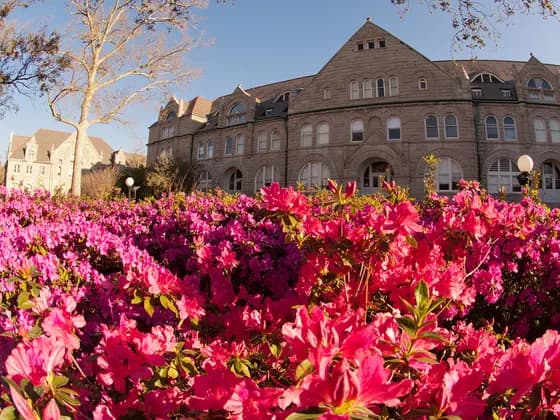


Photo: Infrogmation of New Orleans · CC BY-SA 4.0 · cropped
Photo: Tulane Public Relations · CC BY 2.0 · Photo: Nicolas Henderson · CC BY 2.0 · Photo: Ajay Suresh · CC BY 4.0
How to get into Tulane University School of Medicine (MD) medicine
Step-by-step: entry requirements, admission tests, personal statement, interview format and the key deadlines.
Open the guide →Tulane University School of Medicine (MD) entry requirements
Admission profile, interview format, decision dates and what makes Tulane University School of Medicine (MD) different.
See the profile →The Tulane University School of Medicine (MD) medicine interview
Tulane University School of Medicine uses a traditional interview format. Interview days in New Orleans include two one-on-one interviews — one faculty/physician and one current student — each approximately 30 minutes, along with a campus tour and student interactions.
Tulane is a nationally competitive private school with world-renowned strengths in tropical medicine, infectious disease, and global health. Unlike Louisiana’s public schools, Tulane actively recruits national and international applicants and places no preference on Louisiana residency.
Interviewers probe global health experience, research background, service orientation, and motivation for medicine within Tulane’s specific context — a subtropical city with a historically high infectious disease burden and a deeply distinctive cultural and medical history. Expect questions that probe the AAMC Premed Competencies.
Tulane University School of Medicine (MD) interview at a glance (2027 entry)
| Annual MD class size | ~200 |
|---|---|
| Interview format | Two traditional one-on-one interviews, 30 min each |
| Research strength | World-leading tropical medicine, infectious disease, global health |
| In-state preference | None — private school, national applicant pool |
| Application system | AMCAS |
| Interview window | October–February |
| Tuition (approx.) | ~USD 65,000–70,000/year |
Interview format
- Two traditional one-on-one interviews: one faculty/clinician, one current MD student.
- Each session approximately 30 minutes; interviewers have reviewed the full application.
- Tour of Tulane Medical Center and nearby New Orleans Medical District facilities.
- Financial aid and global health program overview session.
- Informal student interactions; New Orleans cultural immersion often part of the day.
- Full day approximately 5–6 hours.
Working towards the MCAT score Tulane University School of Medicine (MD) expects? Build a week-by-week plan from your test date — free for the first two weeks.
Sample interview questions
Why Tulane specifically — what is it about this school's focus on tropical medicine, infectious disease, or global health that resonates with your background and goals?
Tulane's research identity is specific and distinctive. Reference the Tulane National Primate Research Center, the Center for Infectious Diseases, the Global Health concentration, or the New Orleans clinical context. Generic private school reasoning will not stand out.
Tell me about an experience you have had related to global health, international medicine, or infectious disease. What did you learn and how did it shape your career interests?
Global health experience is a strong differentiator at Tulane. Show genuine engagement with health disparities in resource-limited settings, not just a medical tourism trip. Critical self-reflection on limitations and learning is valued.
In global health work, international medical volunteers sometimes provide care they are not fully qualified to deliver. Is this ethical? What constraints should govern short-term medical volunteering?
Directly relevant to Tulane's global health culture. Cover "voluntourism" critiques, do-no-harm principles, competency standards, and how short-term work can genuinely benefit communities when structured thoughtfully.
New Orleans has been called a laboratory for tropical medicine and public health. What do you know about the city's infectious disease history and current health challenges?
What they are listening for:
- Yellow fever epidemics
- malaria
- HIV rates (one of the highest per capita in the US)
- post-Katrina public health collapse
Shows genuine engagement with the city as a living public health context, not just a cultural destination.
A pharmaceutical company wants to conduct a clinical trial for a new antiparasitic drug in a low-income country with minimal regulatory oversight. You are a Tulane physician-researcher asked to participate. What ethical considerations shape your decision?
Research ethics in global health: Helsinki Declaration, 10/90 gap in research funding, benefit to host populations, informed consent in low-literacy settings, and the role of international academic partners in protecting trial participants.
Describe a research project or scientific problem you have worked on. What was the hypothesis, what did you find, and what would you pursue next?
Tulane values research engagement alongside clinical experience. Show intellectual ownership — not just task completion — and demonstrate curiosity about what comes next, even if the project is not complete.
What concerns you most about the future of infectious disease and global health as you enter medicine?
What they are listening for:
- COVID-19 aftermath
- antimicrobial resistance
- climate change's impact on vector-borne disease range
- emerging pathogen surveillance
Shows engagement with the field's future, not just its history.
A wealthy donor offers Tulane a major endowment for a research program, but the donor's company has been accused of practices that harm low-income communities. What considerations are at stake?
What they are listening for:
- Institutional ethics
- conflicts of interest
- donor influence on research agenda
- the tension between resource acquisition and mission integrity
No simple answer — show nuanced reasoning.
Describe a time you worked across cultural, linguistic, or socioeconomic lines to achieve a shared goal. What obstacles did you face?
Interpersonal competency in diverse settings. Tulane trains physicians who will work across cultural and international contexts. Show specific examples of navigation, not just awareness of diversity.
If you were not pursuing medicine, what would you be doing, and how does that alternative path connect to who you are?
Intellectual breadth — Tulane values candidates who are more than pre-med automatons. A genuine alternative that connects to values of inquiry, service, or creative problem-solving shows a well-rounded intellect.
You are shown results from a clinical trial of a new antiparasitic drug conducted in a low-income country, reporting a statistically significant benefit but with a wide confidence interval and a high loss-to-follow-up rate. As a Tulane physician-researcher, how would you interpret these results before acting on them?
Demonstrate critical appraisal central to Tulane's research culture: address attrition bias, the meaning of a wide confidence interval, external validity to other populations, and whether the host community benefits. Show statistical literacy without overclaiming.
Role play: you are a student volunteering with a Tulane-affiliated global health program. A local community health worker tells you, politely but firmly, that the visiting team's plan ignores how care actually works in her village. Begin the conversation.
Demonstrate humility and partnership live. Listen first, treat her local expertise as authoritative, and resist the instinct to defend the visiting team's plan. This tests the 'voluntourism' self-awareness Tulane prizes.
Climate change is expanding the geographic range of vector-borne diseases. If you wanted to study how a warming Gulf Coast might change infectious-disease patterns in Louisiana, how would you frame a researchable question?
Thinking & Reasoning and research framing. Show you can narrow a broad concern into a specific, measurable question and identify what data you would need — demonstrating the intellectual depth Tulane faculty probe.
Describe a time you had to communicate a complex scientific or research finding to a non-expert audience whose decisions depended on understanding it. How did you adapt your message?
Interpersonal competency relevant to global and public health. Emphasize translating uncertainty honestly without either overstating confidence or losing the audience in jargon.
Global health work can be glamorized. What is the least glamorous part of the field that you are nonetheless genuinely prepared to do, and why does that matter to you?
Authenticity. Tulane values candidates who understand that meaningful global and infectious-disease work is largely unglamorous — data collection, follow-up, partnership-building — rather than short heroic trips.
Practise the Tulane University School of Medicine (MD) interview
Rehearse the real format before the day — on demand with our AI interviewers, or live with a tutor.
Sit a mock with photoreal AI interviewers — any time
A timed MMI or panel interview on video — American & international voices — with interviewers who listen, react and press with follow-ups. Rubric-scored feedback and a replay the moment you finish.






Live mocks with a tutor who’s been in the room
A full Tulane University School of Medicine (MD)-style mock with a medic or dentist tutor — honest scoring against real marking criteria, a station-by-station debrief and a written action plan.
Book a mock interviewHow to prepare for the Tulane University School of Medicine (MD) interview
Common pitfalls to avoid
Tulane University School of Medicine (MD) interview — frequently asked questions
Sources & official admissions information
Ready to nail your Tulane University School of Medicine (MD) interview?
Book a mock interview with a tutor who knows the US interview formats, orpractice unlimited stations from our interview question bank.