
OSU-COM Interview
Format, Questions & Prep Tips
OSU-COM medicine interviews for 2027 entry are a traditional interview, held September 2026 through February 2027. Published figures: Annual DO class size ~168; Tuition (2025–26) ~USD 25,800/year (in-state, AACOM 2025-26).
- Institution
- Oklahoma State University Center for Health Sciences College of Osteopathic Medicine
- Interview (2027 entry)
- September through February
- Decisions (2027 entry)
- Rolling decisions after interview

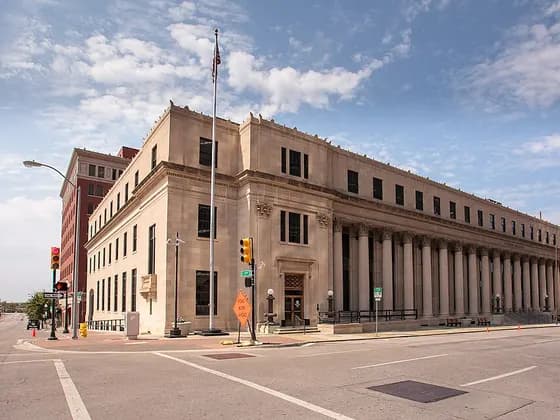
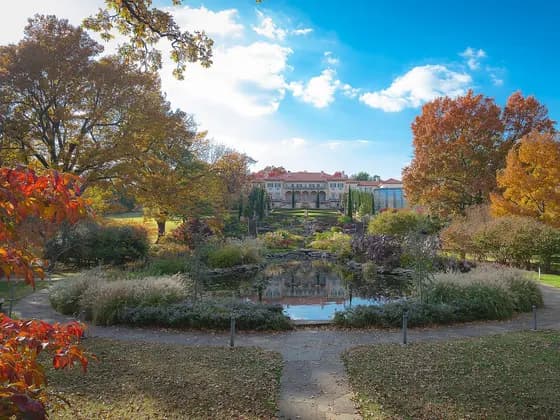
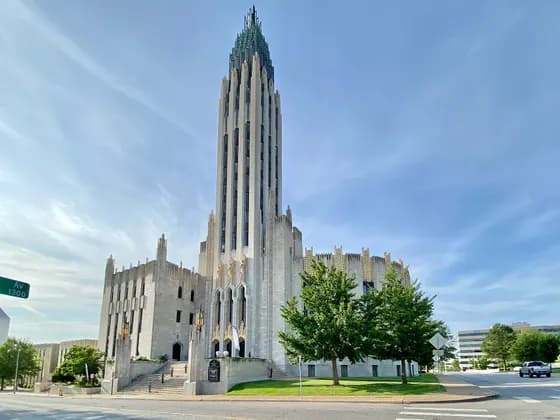
Photo: OSUCHSmarketing · CC BY-SA 4.0 · cropped
Photo: W. R. Oswald · CC BY-SA 3.0 · Photo: Lisagayelaue · CC BY-SA 4.0 · Photo: w_lemay · CC BY-SA 2.0
How to get into OSU-COM (DO) medicine
Step-by-step: entry requirements, admission tests, personal statement, interview format and the key deadlines.
Open the guide →OSU-COM (DO) entry requirements
Admission profile, interview format, decision dates and what makes OSU-COM (DO) different.
See the profile →The OSU-COM (DO) medicine interview
Oklahoma State University Center for Health Sciences College of Osteopathic Medicine (OSU-COM) uses a traditional interview format — one or two faculty sessions at its Tulsa campus, with a separate Tahlequah branch for Native American health. OSU-COM is Oklahoma’s only public osteopathic medical school (founded 1972), giving it a strong in-state focus and an explicit mission to train physicians for rural and underserved Oklahoma communities.
The school’s Tahlequah branch — operated in partnership with the Cherokee Nation — is unique in US osteopathic education and reflects OSU-COM’s deep commitment to Indigenous health. Interviewers probe whether applicants understand and are genuinely committed to this mission, not just attracted to a public-school price point.
OSU-COM does not currently require CASPer. Rolling admissions places a premium on early AACOMAS submission.
OSU-COM (DO) interview at a glance (2027 entry)
| Annual DO class size | ~168 |
|---|---|
| Interview format | Traditional — faculty sessions |
| CASPer required | No |
| Application system | AACOMAS primary + OSU-COM secondary |
| Tuition (2025–26) | ~USD 25,800/year (in-state, AACOM 2025-26) |
| Interview window | September–February |
Interview format
- One or two individual faculty sessions; approximately 30–45 minutes each.
- Interview day includes campus tour, financial aid overview, and program presentation.
- Tahlequah branch campus applicants may receive additional questions about Indigenous and rural health.
- No MMI format.
Working towards the MCAT score OSU-COM (DO) expects? Build a week-by-week plan from your test date — free for the first two weeks.
Sample interview questions
OSU-COM has a branch in Tahlequah in partnership with the Cherokee Nation. What does that tell you about this school's values, and how do those values connect to your own?
Demonstrate knowledge of the Cherokee Nation partnership, health disparities among Native American populations, and the Indian Health Service. Show genuine engagement with Indigenous health equity, not just awareness.
Why do you want to be a DO rather than an MD, and what specifically about the osteopathic philosophy resonates with how you want to practice?
Go beyond "holistic approach." Reference OMT, osteopathic principles (the body as a unit, structure-function relationship), and specific DO shadowing experiences that shaped your understanding.
Rural Oklahoma faces a severe physician shortage. Where do you see yourself practicing in 10 years, and how does OSU-COM fit into that vision?
Be honest and specific. OSU-COM wants physicians who will serve Oklahoma — if your career vision includes rural or underserved practice, articulate it concretely. If it does not, reflect carefully before applying.
A patient from a rural Oklahoma community distrusts the healthcare system because of historical experiences of neglect or mistreatment. How do you build a therapeutic relationship?
What they are listening for:
- Trust-building in underserved communities
- cultural humility
- the legacy of medical mistrust in Indigenous and rural communities
- practical communication strategies
Avoid paternalism.
What are the biggest barriers to healthcare access in rural Oklahoma, and how can an osteopathic physician help address them?
What they are listening for:
- Physician shortage
- geographic barriers
- poverty
- uninsurance
- transportation
- healthcare literacy
Connect osteopathic primary care pipeline to rural practice patterns and community trust.
Describe a time you worked alongside someone from a very different cultural or socioeconomic background. What did you learn about your assumptions?
Cultural humility and self-awareness. Use a concrete healthcare or community service example. Focus on what you changed about yourself, not just what you observed.
Why OSU-COM specifically? What draws you to Tulsa and the Central Oklahoma healthcare community?
What they are listening for:
- Research Tulsa's urban and suburban healthcare landscape
- OSU-COM's clinical affiliates
- the broader Oklahoma physician shortage context
Be specific about what the school and location offer that fits your goals.
Describe a time you made a mistake in an academic or clinical setting. How did you handle it, and what did you learn?
What they are listening for:
- Accountability
- self-reflection
- professional growth
MCAT/academic stumbles are acceptable if you clearly articulate what changed. Avoid trivializing or deflecting.
You're a student-doctor rotating at the Tahlequah branch with the Cherokee Nation. A patient is hesitant to follow a treatment plan, citing past experiences where the healthcare system disregarded his community. Talk with him.
Acknowledge the legitimate history of mistrust without defensiveness, listen, integrate respect for traditional practices and the IHS model, and build a partnership. Cultural humility specific to Indigenous health, not paternalism.
Rural Oklahoma and Native American populations show higher rates of diabetes and cardiovascular disease than national averages. What interlocking factors drive this, and where can osteopathic primary care help most?
What they are listening for:
- Poverty
- food access
- historical trauma
- the IHS funding context
- physician shortage
Identify primary-care leverage points — prevention, continuity, community trust, OMT for pain — while naming structural limits.
As Oklahoma's only public DO school, OSU-COM expects strong academic discipline. Tell us about a time you mastered a heavy academic load, the system you used, and how it scales to COMLEX-USA preparation.
Concrete, self-aware study system tied to the volume of an osteopathic preclinical curriculum and COMLEX-USA Level 1. Show genuine learning discipline rather than generic effort claims.
A rural Oklahoma patient who works long hours and is the family breadwinner keeps deferring care for chest discomfort because he 'can't afford to stop.' How do you talk with him?
What they are listening for:
- Validate his responsibilities
- convey urgency without panic
- problem-solve around time and cost
- frame his health as essential to providing for his family
Persistence with respect for rural economic realities.
You learn that a fellow student joked dismissively about Native patients during a Tahlequah rotation. The school's Indigenous-health mission is central to its identity. What do you do?
What they are listening for:
- Professionalism
- cultural respect as core to the mission
- addressing the conduct directly or through appropriate channels
- recognizing how such attitudes erode community trust that the partnership depends on
How does osteopathic whole-person care align specifically with Indigenous and rural Oklahoma health needs, and where would OMT realistically fit in that practice?
Whole-person care that respects community and cultural context, plus OMT for musculoskeletal and pain complaints common in physically demanding rural and agricultural work. Ground it in DO shadowing, not slogans.
Suppose Indian Health Service data showed long wait times correlating with patients seeking care later in disease. Before concluding it's a 'patient behavior' problem, what would you want to understand?
What they are listening for:
- Chronic IHS underfunding
- staffing shortages
- distance
- trust
Reframe late presentation as driven by access and resource constraints rather than patient choice. Show structural literacy specific to Indigenous health systems.
Practise the OSU-COM (DO) interview
Rehearse the real format before the day — on demand with our AI interviewers, or live with a tutor.
Sit a mock with photoreal AI interviewers — any time
A timed MMI or panel interview on video — American & international voices — with interviewers who listen, react and press with follow-ups. Rubric-scored feedback and a replay the moment you finish.



Live mocks with a tutor who’s been in the room
A full OSU-COM (DO)-style mock with a medic or dentist tutor — honest scoring against real marking criteria, a station-by-station debrief and a written action plan.
Book a mock interviewHow to prepare for the OSU-COM (DO) interview
Common pitfalls to avoid
OSU-COM (DO) interview — frequently asked questions
Sources & official admissions information
Ready to nail your OSU-COM (DO) interview?
Book a mock interview with a tutor who knows the US interview formats, orpractice unlimited stations from our interview question bank.