
University of Louisville School of Medicine Interview
Format, Questions & Prep Tips
University of Louisville School of Medicine medicine interviews for 2027 entry are a traditional interview. Published figures: Annual MD class size ~170; Interview format Two traditional one-on-one interviews, 25–35 min each; In-state preference Strong — ~87% Kentucky residents.
- Institution
- University of Louisville School of Medicine
- Interview (2027 entry)
- October through February; rolling invitations after secondary review
- Decisions (2027 entry)
- Rolling decisions from November through March 30; waitlist movement through summer
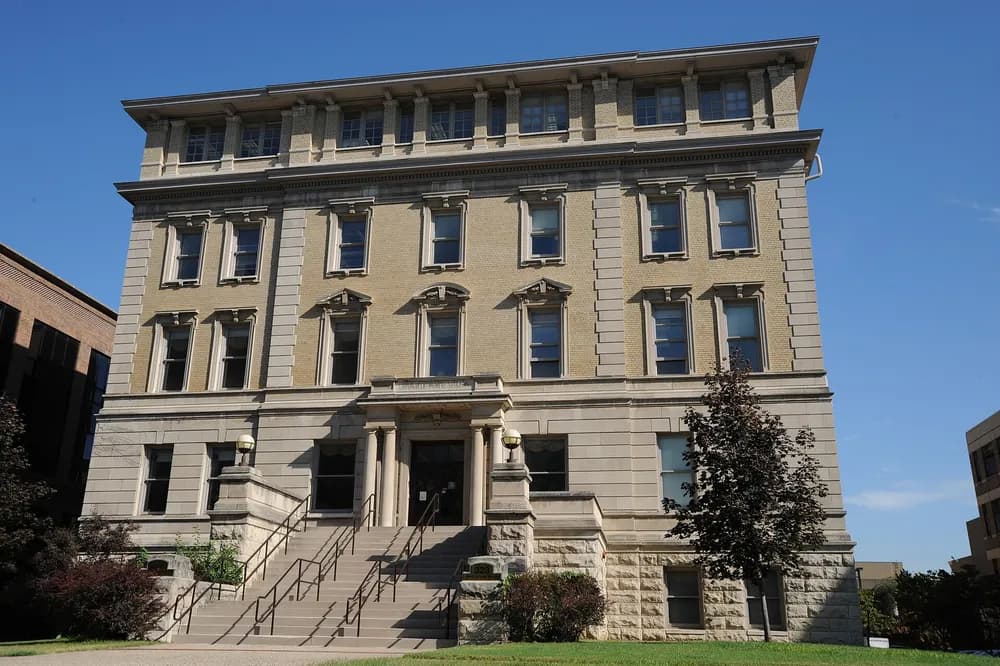



Photo: Photos by S. Harrison University of Louisville · Public domain · cropped
Photo: Photos by S. Harrison University of Louisville · Public domain · Photo: Abbie Myers · CC BY-SA 4.0 · Photo: Antony-22 · CC BY-SA 4.0
How to get into University of Louisville School of Medicine (MD) medicine
Step-by-step: entry requirements, admission tests, personal statement, interview format and the key deadlines.
Open the guide →University of Louisville School of Medicine (MD) entry requirements
Admission profile, interview format, decision dates and what makes University of Louisville School of Medicine (MD) different.
See the profile →The University of Louisville School of Medicine (MD) medicine interview
The University of Louisville School of Medicine uses a traditional interview format. Interview days in Louisville include two traditional one-on-one or panel interviews — one faculty/clinician and one student — each approximately 25–35 minutes, along with a campus and hospital tour.
UofL Med sits within a high-volume clinical training environment: University Hospital is one of only two Level I trauma centers in Kentucky, and the school has historical prestige in cardiovascular surgery (site of the first artificial heart implantation in 1969). Interviewers draw on this clinical culture when probing interest in high-acuity medicine, procedural care, and surgical fields.
Expect questions that probe the AAMC Premed Competencies. UofL interviews are typically described as conversational and professionally collegial.
University of Louisville School of Medicine (MD) interview at a glance (2027 entry)
| Annual MD class size | ~170 |
|---|---|
| Interview format | Two traditional one-on-one interviews, 25–35 min each |
| Clinical affiliate | University Hospital — Level I trauma center; UofL Health system |
| In-state preference | Strong — ~87% Kentucky residents |
| Application system | AMCAS |
| Interview window | October–February |
| Tuition (in-state approx.) | ~USD 36,000–40,000/year |
Interview format
- Two traditional one-on-one or small panel interviews: one faculty/clinician, one current student.
- Each session approximately 25–35 minutes; interviewers have reviewed the full application.
- Tour of University Hospital and UofL Health facilities.
- Curriculum and financial aid overview session.
- Informal student lunch and Q&A.
- Full day approximately 4–6 hours.
Working towards the MCAT score University of Louisville School of Medicine (MD) expects? Build a week-by-week plan from your test date — free for the first two weeks.
Sample interview questions
UofL has a historic legacy in cardiovascular surgery and a Level I trauma center. How does the clinical environment here fit your career interests?
Shows school-specific research. Reference University Hospital's trauma volume, cardiovascular surgery program, and the cancer center. Even if you are not pursuing surgery, show you have engaged with the training environment.
Why did you choose Louisville, and what do you know about healthcare in this city and state?
Louisville-specific context:
- the city's major healthcare employers (Norton, Baptist, UofL Health, CHI)
- Kentucky's two-school MD landscape
- health disparities in rural vs. urban Kentucky
- the city's role as a regional trauma center for surrounding states
A trauma patient arrives unconscious and without identification. You are the treating intern and need to make urgent surgical decisions. What ethical framework guides your actions?
What they are listening for:
- Emergency exception to informed consent
- substituted judgment
- the patient's best interests
- documentation requirements
- family notification when possible
Trauma context is highly relevant to UofL training.
Tell me about an experience where you had to deliver difficult news to a patient or family member. What did you do and what would you do differently?
STAR structure. Focus on the communication process — preparation, environment, emotional attunement, and follow-up. Emotional intelligence over clinical protocol recitation.
Kentucky has among the highest rates of cancer mortality in the US. As a physician trained at UofL, what role might you play in addressing this?
Reference the James Graham Brown Cancer Center, cancer disparities in Appalachian Kentucky, and your own career interest in oncology, primary care prevention, or whatever is authentic.
You are a third-year student on a busy surgical service. You observe a resident performing a procedure incorrectly, but the attending is not present. What do you do?
What they are listening for:
- Patient safety
- hierarchy
- duty to act
Explore your options as a student: immediate patient protection, notifying the attending, reporting through patient safety channels. Avoid both paralysis and impulsivity.
Describe a situation where you had to learn something completely new under pressure. How did you approach it?
Thinking & Reasoning competency. Medical school requires rapid adaptation to new material under stress. Show a specific strategy — structured note-taking, peer study, spaced repetition — and what you learned about yourself as a learner.
What does being a physician in Louisville specifically mean to you, given the city's unique healthcare landscape?
Louisville is a diverse mid-size city with both urban poverty and significant hospital system resources. Show awareness of the city's social demographics, its role as a regional referral center, and how that environment will shape your training.
A patient refuses vaccination for their child based on misinformation they found online. How do you approach the conversation?
What they are listening for:
- Motivational interviewing
- trust-building
- evidence communication without condescension
- the limits of physician authority over parental decision-making
Avoid lecturing — show you can work with resistance.
Describe a time you were part of a healthcare or research team that was not functioning well. What did you do?
Interpersonal competency. Healthcare delivery requires team function. Show initiative, constructive communication, and awareness of team dynamics — without positioning yourself as the hero who single-handedly fixed the problem.
University Hospital is one of only two Level I trauma centers in Kentucky. You are shown data indicating that patients transported to a Level I center within the first hour after major trauma have markedly better survival than those who arrive later. What would you want to know about how that data was collected before using it to argue for trauma-system funding?
Demonstrate appraisal skills: ask about selection bias (sicker patients may die before transport), how 'survival' was defined, and confounding by injury severity. Then connect to the real policy stakes of maintaining trauma capacity for Kentucky and surrounding states.
Role play: you are a student in the surgical ICU. A family member of a critically injured trauma patient stops you in the hallway, frustrated that 'nobody has told us anything for hours.' Begin the conversation.
Demonstrate de-escalation and empathy live. Acknowledge their distress, do not over-promise or share information beyond your role, and commit to getting the team to update them. Avoid defending the team before understanding the concern.
A high-volume trauma center exposes students to enormous case variety very quickly. How do you make sure rapid, high-acuity exposure turns into durable learning rather than a blur of cases?
Thinking & Reasoning and metacognition. Show a concrete strategy — structured reflection, case logs, seeking feedback — that converts volume into reasoning, relevant to UofL's clinical environment.
Tell me about a time you had to keep a team functioning calmly during a sudden, high-pressure situation. What did you specifically do to maintain communication?
Interpersonal competency mapped to the trauma/surgical culture. Show concrete communication discipline (closed-loop communication, clear role assignment) without casting yourself as the lone hero.
Louisville sits at the intersection of significant hospital-system resources and real urban poverty. What kind of physician do you want to be in a city with that contrast, and where would you want to spend your effort?
Clarity of purpose grounded in Louisville's specific landscape. A genuine answer engages with both the high-resource referral-center environment and the underserved neighborhoods, rather than choosing a generic 'help people' framing.
Practise the University of Louisville School of Medicine (MD) interview
Rehearse the real format before the day — on demand with our AI interviewers, or live with a tutor.
Sit a mock with photoreal AI interviewers — any time
A timed MMI or panel interview on video — American & international voices — with interviewers who listen, react and press with follow-ups. Rubric-scored feedback and a replay the moment you finish.






Live mocks with a tutor who’s been in the room
A full University of Louisville School of Medicine (MD)-style mock with a medic or dentist tutor — honest scoring against real marking criteria, a station-by-station debrief and a written action plan.
Book a mock interviewHow to prepare for the University of Louisville School of Medicine (MD) interview
Common pitfalls to avoid
University of Louisville School of Medicine (MD) interview — frequently asked questions
Sources & official admissions information
Ready to nail your University of Louisville School of Medicine (MD) interview?
Book a mock interview with a tutor who knows the US interview formats, orpractice unlimited stations from our interview question bank.