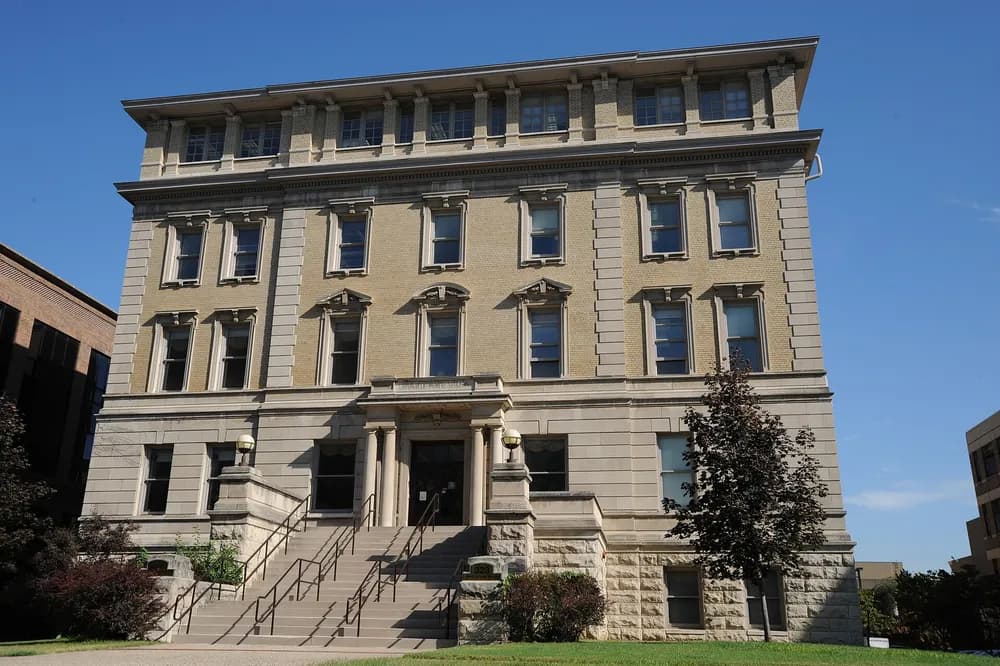
University of Louisville School of Medicine (MD) Medical School - 2027 Entry Requirements & Interview Format
The University of Louisville School of Medicine, founded in 1837, is one of Kentucky's two public medical schools and is situated in Louisville — the state's largest city and a major regional medical centre. The school is closely affiliated with UofL Health and University Hospital, providing students with high-volume Level I trauma, cardiovascular surgery, oncology, and subspecialty exposure. UofL Med has a strong historical legacy in cardiovascular innovation and continues to produce physicians who predominantly serve Kentucky and the surrounding region.
Entry Requirements
What you need to apply to University of Louisville School of Medicine (MD).
Admission overview
Bachelor's degree and MCAT required. Applications via AMCAS. Strong preference for Kentucky residents; limited out-of-state seats available. Standard pre-med science prerequisites expected. Secondary application required.
MCAT median
509 (range 507–518)
GPA median
3.84 overall / 3.68 science (BCPM)
Acceptance rate
4.5%
Class size
170
In-state preference
Strong — primarily in-state
In-state matriculants
75%
CASPer
Not required
Holistic review emphasis
Kentucky residency; clinical experience and community service; research experience; mission fit.
Notes
Estimates from public AAMC FACTS / AACOMAS / ADEA AADSAS / class-profile; verify current cycle.
Specialities offered
Cardiovascular Surgery, Oncology, Trauma Surgery, Internal Medicine, Family Medicine
Interview Format
How University of Louisville School of Medicine (MD) interviews applicants.
Format
Traditional one-on-one and panel interviews with faculty and students
Interview window
October–February
Decision date
March 30 (AAMC standard)
Post-interview chances
Estimated post-interview acceptance rate approximately 25–35%; admissions is highly mission-filtered for Kentucky residency and clinical commitment before interview.
What to expect at a University of Louisville School of Medicine (MD) interview
University of Louisville School of Medicine interview days are held on campus in Louisville, typically including two traditional one-on-one or panel interviews lasting 25–35 minutes each — one with a faculty member or clinician and one with a current student. Interviewers have reviewed the full application beforehand. The day includes a curriculum overview, a tour of UofL Health facilities including University Hospital (Louisville's Level I trauma centre), and informal interactions with students over lunch. Interviewers commonly focus on motivation for medicine, community service, clinical experience, and Louisville-specific healthcare context.
What makes University of Louisville School of Medicine (MD) different
University of Louisville School of Medicine has a notable history in cardiovascular surgery — in 2001 surgeons at Jewish Hospital performed the world's first implant of the AbioCor self-contained (totally implantable) artificial heart. The school benefits from affiliation with UofL Health, a regional health system anchored by University Hospital, one of only two Level I trauma centres in Kentucky. UofL also has significant strength in cancer care through the James Graham Brown Cancer Center.
Tutor insight
UofL Med offers a genuine Level I trauma and high-volume surgical training environment in Louisville — students who want robust procedural and surgical exposure will thrive here. The cardiovascular surgery programme's historic prestige remains relevant, and the James Graham Brown Cancer Center adds oncology depth. In interviews, show you have researched the UofL Health system specifically and frame your clinical interests around the high-acuity exposure available at University Hospital. Kentucky residency is near-essential for a competitive application.
PrometheusQuestion Bank
595 medicine questions inside
Interview questions matched to University of Louisville School of Medicine (MD)
Two questions our tutors flagged as a strong fit for University of Louisville School of Medicine (MD)’s interview style. Try answering them out loud, then open Prometheus for the model answers and follow-up tips.
Hard·MMI · PanelQ1
AAMC Core Competency: Critical Thinking and Artificial Intelligence in Medicine
Artificial intelligence diagnostic tools are increasingly used in clinical settings -- for example, AI algorithms that screen chest X-rays for pneumonia or diabetic retinopathy images for pathology. These tools often have high sensitivity and specificity in controlled studies but show performance drops in real-world clinical settings, particularly among populations underrepresented in training datasets. As a future physician, how do you think critically about AI-assisted diagnostic tools in your practice?
Likely follow-up · What is algorithmic bias, and how does it arise from underrepresentation in training data?
3 expert tips in Prometheus
Hard·Panel · MMIQ2
US Healthcare Ethics: Medicare for All vs. Pluralist Healthcare
You are asked in an interview: 'Do you support Medicare for All?' This is a politically charged question. Some applicants decline to answer; others offer a position. Regardless of your personal view, how do you think a physician's relationship to health policy advocacy should be framed, and what does the evidence say about the comparative strengths and weaknesses of single-payer versus pluralist healthcare systems for population health outcomes?
Likely follow-up · What evidence from countries with single-payer systems — such as Canada or the UK — compares favourably or unfavourably to US outcomes on specific metrics?
Apply to University of Louisville School of Medicine (MD) with confidence
We've helped students get into University of Louisville School of Medicine (MD) and other US medicine schools. Get tailored support for each stage of the application.
University of Louisville School of Medicine (MD) - Frequently asked questions
Bachelor's degree and MCAT required. Applications via AMCAS. Strong preference for Kentucky residents; limited out-of-state seats available. Standard pre-med science prerequisites expected. Secondary application required.
Traditional one-on-one and panel interviews with faculty and students. University of Louisville School of Medicine interview days are held on campus in Louisville, typically including two traditional one-on-one or panel interviews lasting 25–35 minutes each — one with a faculty member or clinician and one with a current student. Interviewers have reviewed the full application beforehand. The day includes a curriculum overview, a tour of UofL Health facilities including University Hospital (Louisville's Level I trauma centre), and informal interactions with students over lunch. Interviewers commonly focus on motivation for medicine, community service, clinical experience, and Louisville-specific healthcare context.
University of Louisville School of Medicine (MD) typically interviews in October–February.
Decisions are released March 30 (AAMC standard).
University of Louisville School of Medicine has a notable history in cardiovascular surgery — in 2001 surgeons at Jewish Hospital performed the world's first implant of the AbioCor self-contained (totally implantable) artificial heart. The school benefits from affiliation with UofL Health, a regional health system anchored by University Hospital, one of only two Level I trauma centres in Kentucky. UofL also has significant strength in cancer care through the James Graham Brown Cancer Center.