US Medicine · 2027 Entry

University of Kentucky College of Medicine (MD) Medical School2027 Entry Requirements & Interview Format

Location Lexington, KY, United StatesEstablished 1956Interviews October–FebruaryDecisions March 30 (AAMC standard)

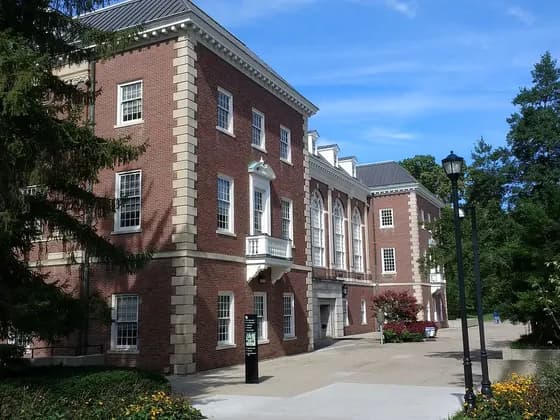
Photo: w_lemay · CC BY-SA 2.0

Start here
Overview

About University of Kentucky College of Medicine (MD)

The University of Kentucky College of Medicine, founded in 1956, is a public medical school embedded within UK HealthCare — the only academic medical center in Kentucky — and is situated in Lexington at the edge of Appalachian Kentucky. The school has a well-established mission to address the profound health disparities of Appalachian and rural Kentucky communities, which suffer among the highest rates of cancer, cardiovascular disease, obesity, and opioid overdose in the nation. UK Med trains a high proportion of physicians who remain in Kentucky for practice.

What makes it different

UK College of Medicine has a distinctive mission focused on improving health outcomes in Appalachian Kentucky, one of the most medically underserved regions in the US. The school is closely affiliated with UK HealthCare — Kentucky's only academic medical center — and the Markey Cancer Center, an NCI-designated cancer center. Beyond the Lexington campus, UK COM operates full four-year regional campuses in Bowling Green and Northern Kentucky, plus the Morehead-based Rural Physician Leadership Program (RPLP) for students committed to rural Kentucky medicine.

Course & teaching

Integrated curriculum. 4-year MD. Years 1–2 are campus-based with integrated basic and clinical science; early patient contact introduced in Year 1 through the longitudinal Patient, Physician, and Society course. Year 3–4 clinical rotations at UK HealthCare (University of Kentucky Hospital, Markey Cancer Center, Kentucky Children's Hospital, and VA Medical Center Lexington).

Research strengths

University of Kentucky College of Medicine (MD) has notable research strength in Cancer disparities in Appalachia, Cardiovascular disease, Opioid addiction and treatment, Rural health, Neuroscience.

Interview

University of Kentucky College of Medicine (MD) interviews via Traditional one-on-one and panel interviews with faculty and students at the Lexington campus. UK College of Medicine interview days are held in Lexington and typically include two to three one-on-one or small panel interviews with faculty, clinicians, and current students, each lasting approximately 30 minutes. Interviewers have reviewed the full application beforehand and often focus on Appalachian and rural health awareness, personal motivation, and clinical exposure. The day includes a financial aid session, a tour of UK HealthCare facilities, and informal student interactions. UK's focus on Appalachian health disparities means interviewers frequently probe commitment to serving medically underserved populations in eastern Kentucky.

Intake

Approximately 207 students per year across four campuses (Lexington ~130, Bowling Green 30, Northern Kentucky 35, Morehead/RPLP ~12).

At a glance

Founded in 1956, based in Lexington, KY. Programmes offered: Oncology, Appalachian and Rural Health, Cardiovascular Medicine, Internal Medicine, Primary Care.

Entry requirements

What you need to apply to University of Kentucky College of Medicine (MD)

Admission overview
Bachelor's degree and MCAT required. Applications via AMCAS. Strong preference for Kentucky residents. Non-Kentucky applicants are considered but acceptance is uncommon. Standard pre-med science prerequisites expected. The Rural Physician Leadership Program requires additional application and commitment to rural Kentucky practice.
MCAT median
508 (range 507–518)
GPA median
3.83 overall / 3.69 science (BCPM)
Acceptance rate
3.8%
Class size
208
In-state preference
Strong — primarily in-state
In-state matriculants
88%
CASPer
Not required
AAMC PREview
Not required
Holistic review emphasis
Kentucky residency; Appalachian and rural health commitment; clinical and community service experience.
Notes
Estimates from public AAMC FACTS / AACOMAS / ADEA AADSAS / class-profile; verify current cycle.
Specialities offered
Oncology, Appalachian and Rural Health, Cardiovascular Medicine, Internal Medicine, Primary Care
Interview

How University of Kentucky College of Medicine (MD) interviews applicants

Format
Traditional one-on-one and panel interviews with faculty and students at the Lexington campus
Interview window
October–February
Decision date
March 30 (AAMC standard)
Post-interview chances
Estimated post-interview acceptance rate approximately 25–35%; the pool is filtered for Kentucky residency and mission alignment before interview.
Tutor insight
UK College of Medicine offers an exceptional training environment if you are committed to Appalachian or rural Kentucky health — the Markey Cancer Center and UK HealthCare provide genuine academic medicine breadth while the school's Appalachian mission gives your training meaningful purpose. In interviews, demonstrate specific knowledge of Kentucky health disparities: cancer rates in eastern Kentucky counties, opioid crisis statistics, and the primary care shortage in rural Appalachia. If you are applying from outside Kentucky, have a genuine connection or compelling reason — admissions is highly state-prioritized.
Practice

Practise for your University of Kentucky College of Medicine (MD) interview

PrometheusQuestion Bank621 medicine questions inside

Interview questions matched to University of Kentucky College of Medicine (MD)

Two questions our tutors flagged as a strong fit for University of Kentucky College of Medicine (MD)’s interview style. Try answering them out loud, then open Prometheus for the model answers and follow-up tips.

MediumPanelQ1

US Healthcare Ethics: ACA Marketplace and Essential Health Benefits

The Affordable Care Act requires all marketplace plans to cover ten categories of Essential Health Benefits, including maternity care, mental health, and preventive services. Before the ACA, many individual market plans excluded these categories, leaving patients exposed to catastrophic costs. A patient complains that their premiums are too high because they are 'paying for things they don't need.' How do you explain the ethical logic behind essential health benefits pooling?

Likely follow-up · What is the risk pool, and how does the 'individual mandate' relate to keeping it stable?

3 expert tips in Prometheus
MediumPanelQ2

Holistic Review: Non-Traditional Applicant Career Pivot

You spent seven years working as a software engineer at a health technology company before deciding to pursue medicine. You are now 34 and completing your pre-medical requirements. An interviewer asks: 'Why did it take you this long to decide, and what makes you confident this is the right path now rather than just a midlife restlessness?'

Likely follow-up · What specific experiences during your technology career crystallised your desire to practise medicine rather than continue improving healthcare through technology?

3 expert tips in Prometheus
Get support

Apply to University of Kentucky College of Medicine (MD) with confidence

We've helped students into University of Kentucky College of Medicine (MD) and other US medicine schools — get tailored support for each stage of the application.

FAQ

University of Kentucky College of Medicine (MD) — frequently asked questions

Apply to University of Kentucky College of Medicine (MD) with confidence

We've helped students turn their MCAT, personal statement and interview prep into offers from University of Kentucky College of Medicine (MD) and other US medicine schools.