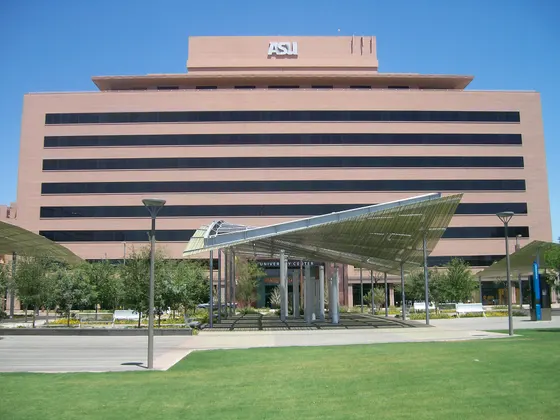
ASU Shufeldt School of Medicine (MD) Medical School - 2027 Entry Requirements & Interview Format
Arizona State University John Shufeldt School of Medicine and Medical Engineering is a brand-new MD programme in Phoenix that received LCME preliminary accreditation in October 2025 and will enrol its inaugural class in Fall 2026. Every student concurrently earns an MD and an MS in Medical Engineering, with the two curricula integrated across all four years. Its distinctive curriculum integrates medical education with engineering and technology innovation. Located within the broader ASU biomedical ecosystem in downtown Phoenix, the school emphasises physician-engineer training, digital health, and addressing healthcare access challenges across Arizona’s diverse urban and rural population.
Entry Requirements
What you need to apply to ASU Shufeldt School of Medicine (MD).
Admission overview
Bachelor’s degree and MCAT required. Applications submitted via AMCAS. The school values science foundation alongside quantitative, engineering, or technology backgrounds. Competitive applicants demonstrate interest in health innovation, clinical experience, and community engagement. Secondary application required.
MCAT median
512 (range 507–518)
GPA median
3.75 overall / 3.70 science (BCPM)
Acceptance rate
5.0%
Class size
70
In-state preference
Moderate — some OOS consideration
In-state matriculants
60%
CASPer
Not required
Holistic review emphasis
Engineering/technology interest, innovation mindset, clinical experience, and community engagement.
Notes
Estimates from publicly available programme statements; inaugural class begins Fall 2026 — no matriculant data published yet; verify all figures with official ASU admissions office.
Specialities offered
Medical Engineering, Digital Health, Primary Care, Community & Population Health, Health Systems Innovation
Interview Format
How ASU Shufeldt School of Medicine (MD) interviews applicants.
Format
Multiple Mini Interview (MMI) conducted in person or via Zoom
Interview window
October–February
Decision date
Rolling; final decisions by March 30
Post-interview chances
Not yet published; as a new programme, post-interview acceptance data are unavailable. Estimates not provided to avoid misleading applicants.
What to expect at a ASU Shufeldt School of Medicine (MD) interview
ASU Shufeldt uses an MMI format with stations designed to assess collaborative problem-solving, ethical reasoning, communication, and innovation mindset. Stations rotate every 6–8 minutes and include written-prompt scenarios, role-play exercises, and open-ended motivation questions. The school’s engineering-integration emphasis means some stations may involve design-thinking or systems-level health challenges, reflecting the programme’s unique physician-engineer identity.
What makes ASU Shufeldt School of Medicine (MD) different
ASU Shufeldt is one of the only MD programmes in the US explicitly integrating medical engineering into the core curriculum — not as an optional track but as a foundational competency. ASU’s extensive engineering, data science, and entrepreneurship ecosystem provides unique interdisciplinary training. The school is located in Phoenix, a rapidly growing metro with significant underserved and Spanish-speaking populations.
Tutor insight
ASU Shufeldt is an exceptional option for applicants at the intersection of medicine and technology, engineering, or innovation. Be explicit in your application about how the engineering-integrated curriculum aligns with your intellectual interests — generic medical school answers will not resonate here. As a new school, residency match data are not yet available; applicants should weigh this against the distinctive training model. The Phoenix location offers rich clinical diversity and exposure to border health and underserved community medicine.
PrometheusQuestion Bank
595 medicine questions inside
Interview questions matched to ASU Shufeldt School of Medicine (MD)
Two questions our tutors flagged as a strong fit for ASU Shufeldt School of Medicine (MD)’s interview style. Try answering them out loud, then open Prometheus for the model answers and follow-up tips.
Medium·MMIQ1
Patient Advocacy: Navigating Prior Authorisation Delay for Mental Health
A 19-year-old college student with newly diagnosed major depressive disorder and a recent suicidal ideation episode has been referred for cognitive behavioural therapy. His insurance requires a prior authorisation that your psychiatric colleague has submitted. Three weeks pass with no decision; the student returns to your office increasingly distressed. What do you do?
Likely follow-up · What is the federal Mental Health Parity and Addiction Equity Act (MHPAEA), and does the insurer's prior authorisation requirement for mental health treatment comply with it?
3 expert tips in Prometheus
Hard·MMI · PanelQ2
Holistic Review: Post-SCOTUS 2023 and Race-Conscious Admissions
In 2023, the US Supreme Court ruled in SFFA v. Harvard and SFFA v. UNC that race-conscious admissions programmes at universities were unconstitutional. The Court noted, however, that applicants may still discuss how race affected their lives, including through discrimination. How should medical schools approach diversity in admissions in this new legal landscape, and why does physician workforce diversity matter for patient outcomes?
Likely follow-up · What is the difference between using race as a category in admissions decisions versus considering an applicant's lived experience of race as a biographical fact?
Apply to ASU Shufeldt School of Medicine (MD) with confidence
We've helped students get into ASU Shufeldt School of Medicine (MD) and other US medicine schools. Get tailored support for each stage of the application.
ASU Shufeldt School of Medicine (MD) - Frequently asked questions
Bachelor’s degree and MCAT required. Applications submitted via AMCAS. The school values science foundation alongside quantitative, engineering, or technology backgrounds. Competitive applicants demonstrate interest in health innovation, clinical experience, and community engagement. Secondary application required.
Multiple Mini Interview (MMI) conducted in person or via Zoom. ASU Shufeldt uses an MMI format with stations designed to assess collaborative problem-solving, ethical reasoning, communication, and innovation mindset. Stations rotate every 6–8 minutes and include written-prompt scenarios, role-play exercises, and open-ended motivation questions. The school’s engineering-integration emphasis means some stations may involve design-thinking or systems-level health challenges, reflecting the programme’s unique physician-engineer identity.
ASU Shufeldt School of Medicine (MD) typically interviews in October–February.
Decisions are released Rolling; final decisions by March 30.
ASU Shufeldt is one of the only MD programmes in the US explicitly integrating medical engineering into the core curriculum — not as an optional track but as a foundational competency. ASU’s extensive engineering, data science, and entrepreneurship ecosystem provides unique interdisciplinary training. The school is located in Phoenix, a rapidly growing metro with significant underserved and Spanish-speaking populations.