
The Case Western Reserve University School of Medicine MD program
What you actually study, and where you will be
Case Western Reserve University School of Medicine's MD is a 4-year (University Program) program taught through problem-based learning in an integrated curriculum, with patient contact from Year 1 and clinical rotations in Cleveland, Ohio, at four affiliated hospital systems (2027 entry). Case Western Reserve's four-year University Program is built around Case Inquiry teams, small groups that work through patient cases three mornings a week, alongside lectures, anatomy and clinical skills. Every student writes an MD thesis from a 12-week research block, and core clerkships start in early May of year 2 at four Cleveland hospital systems. The five-year Cleveland Clinic Lerner College of Medicine is a separate program that you choose on the CWRU secondary application.
- Degree
- MD
- Length
- 4 years (University Program)
- Teaching
- Problem-based learning + Integrated
- Clinical contact
- Year 1

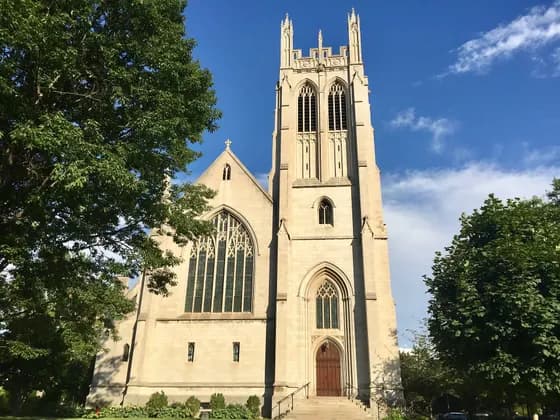
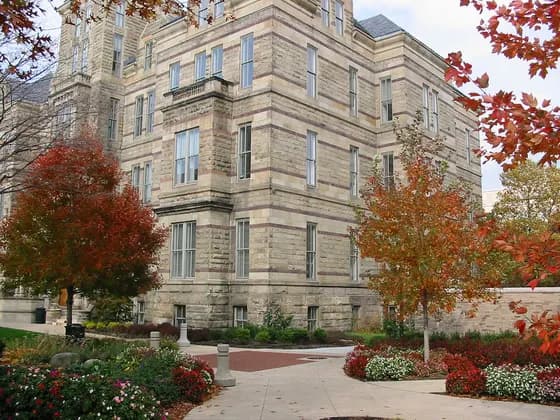
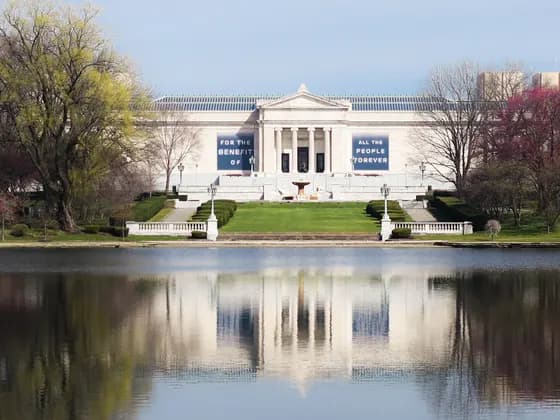
Photo: Rdikeman at English Wikipedia · CC BY-SA 3.0 · cropped
Photo: Warren LeMay from Cincinnati, OH, United States · CC0 · Photo: Mark McCartney · CC BY-SA 2.0 · Photo: Erik Drost · CC BY 2.0
The Case Western Reserve University School of Medicine MD program at a glance (2027 entry)
Case Western Reserve University (CWRU) School of Medicine awards one MD through three programs, according to its 2026-27 bulletin. This guide covers the University Program, the school's oldest and largest: a four-year MD with about 170 students a year. The five-year Cleveland Clinic Lerner College of Medicine (CCLCM) and the MD/PhD Medical Scientist Training Program (MSTP) are separate choices, covered under Dual degrees and research years.
The program follows the Western Reserve2 (WR2) curriculum, launched in 2006. Its pre-clerkship phase, the classroom-based stage before full-time clinical work, is called Foundations of Medicine and Health. It runs from July of year 1 to March of year 2 and is graded pass/fail. After a five-week population health block, the science comes in blocks built around body systems.
Pre-clerkship teaching is on the Health Education Campus, opened in 2019 opposite Cleveland Clinic's main entrance and shared with nursing, dental and physician assistant students. Three mornings a week your Case Inquiry team works through new patient cases. Late mornings bring lectures or team-based learning, and most weekday afternoons are unscheduled.
Clinical experience starts early, from community field experiences in Block 1 to practice with standardized patients (people trained to portray patients) and Clinical Immersion Week in May of year 1. Core clerkships, the required clinical rotations, begin in early May of year 2 in one of three tracks. You can take traditional blocks, a 12-month clerkship at Cleveland Clinic or a longitudinal integrated clerkship at MetroHealth, which runs several specialties side by side all year.
Research is required: a 12-week mentored project in the summer after year 1, written up as an MD thesis by January of year 2. The final year adds acting internships, where you take on much of an intern's role, plus electives and a two-week Capstone course before residency. You sit the first two United States Medical Licensing Examination (USMLE) exams, Step 1 and Step 2 CK, after year 2 and after the clerkships.
| Degree | MD |
|---|---|
| Program length | 4 years; the separate Lerner College program takes 5 |
| Entering class | About 170 a year, not counting MD/PhD students |
| Main campus | Health Education Campus (Samson Pavilion), opposite Cleveland Clinic's main entrance |
| Teaching style | Case Inquiry small groups plus lectures and team-based learning, about half each |
| Anatomy | Two-week dissection Boot Camp, then HoloAnatomy, radiology and living anatomy |
| First patient contact | Year 1: field experiences, standardized patients, preceptorship, Clinical Immersion Week |
| Clinical sites | Cleveland Clinic, University Hospitals, MetroHealth, Louis Stokes Cleveland VA Medical Center |
| USMLE Step 1 | Due by the end of a six-week study period after year 2 |
| Grading | Pass/fail in years 1 and 2; tiered clerkship grades; no class rank |
What makes the Case Western Reserve University School of Medicine MD program different
Case Inquiry teams that set their own learning goals
On Monday your team meets two new paper cases and turns its questions into learning objectives. Every member then researches every objective, rather than splitting them up, and the team reconvenes on Wednesday and Friday to discuss them. Each session ends with a check-out, where members reflect on how the group worked and give each other feedback.
A mentored research project and thesis for everyone
Everyone spends 12 full-time weeks on mentored research in the summer after year 1 and writes it up as a manuscript-style MD thesis, due in January of year 2. Projects range from laboratory science to quality improvement and medical education.
Three ways to run your clerkship year
You can take core clerkships as traditional blocks at University Hospitals, MetroHealth and the VA, or as four 12-week blocks inside Cleveland Clinic. The third option, MetroHealth's longitudinal integrated clerkship, gives you weekly half days with the same physicians all year.
Dissection, mixed reality and ultrasound in one course
A two-week dissection Boot Camp comes early in year 1. After it, each GARLA (Gross Anatomy, Radiology, Living Anatomy) session takes one theme through CWRU's own HoloAnatomy mixed reality program, a radiology reading room and ultrasound on standardized patients.
Afternoons left free for your own learning
In years 1 and 2, most weekday afternoons are unscheduled apart from one assigned clinical skills afternoon. The bulletin says students use them for self-directed learning and to take electives, join one of nine pathways, shadow physicians or pursue a second degree.
How Case Western Reserve University School of Medicine teaches medicine
WR2 expects much of your learning to be self-directed. Classroom hours are deliberately limited, and the MD About page puts the split at about half small-group work and half lectures. Case Inquiry is adapted from a newer form of problem-based learning (PBL) that McMaster University introduced in 2005. In PBL, a small group learns by setting its own questions from a case.
Each Foundations block covers whole biological systems, so teachers from different disciplines share them: Homeostasis, for example, pairs heart, lung and kidney physiology with pharmacology. The 2026-27 bulletin says the school pioneered the organ-systems approach in the 1950s. Every block ends with an Assessment Week that adds no new material and revisits earlier concepts in new contexts.
In the clinical years an attending physician supervises you, observes you with patients when possible and gives regular feedback. You log your patient encounters, noting what you did alone and what you reviewed with faculty. A required Friday afternoon curriculum continues through the clerkships, and you are excused from clinical duties at 11 p.m. on Thursday to attend.
The ways you will learn
| Case Inquiry (IQ) teams | Two-hour sessions, three mornings a week, with a faculty facilitator. Team size differs by page: nine on the Case Inquiry page, nine or ten on the InQuiry Teams page, eight or nine on the 2024-25 curriculum sheet. Preparation is budgeted at 12 hours a week. |
|---|---|
| Lectures, medium groups and team-based learning | Late mornings after Case Inquiry. In team-based learning (TBL) you prepare beforehand, then apply what you know to problems in a small team, six students per group on the 2024-25 sheet. |
| Foundations of Clinical Medicine | A two-year strand. Tuesday seminars cover the doctor-patient relationship, professionalism, health disparities, quality improvement, law, patient safety and end-of-life care. Workshops teach interviewing and breaking bad news, and Physical Diagnosis starts with the basic adult exam, one session a week for eight weeks. |
| Science and Art of Medicine Integrated (SAMI) | Clinician-led small groups in the clerkship year. You reason through an undifferentiated patient, one whose diagnosis is not yet known, from first complaint to treatment, with three standardized patient encounters per case and face-to-face and written feedback. |
| Interprofessional education | Simulations and sessions on the roles of non-physician providers before clerkships, transitions-of-care work in the third year, and team and patient safety simulations at the Simulation Center in the final years. |
A typical week on the Case Western Reserve University School of Medicine program
The school's typical Foundations week runs Case Inquiry from 8 to 10 a.m. on Monday, Wednesday and Friday, then lectures, medium groups or TBL until noon. Tuesday opens with the Foundations of Clinical Medicine seminar, and Tuesday and Thursday late mornings alternate between Structure (anatomy, radiology and histopathology) and Research and Scholarship. Thursday from 8 to 10 is self-directed learning time.
One afternoon a week is assigned to clinical skills, physical diagnosis, communication or procedures sessions or your preceptorship. The rest are for study, electives, interprofessional sessions, pathways and graduate classes.
A workload policy approved in March 2026 caps formal class and clinical time at 22 hours a week and required outside work at 23, a maximum of 45. An older Key Features page still gives the original design limit of 20 contact hours a week.
On-time attendance is required at IQ, Tuesday seminars, TBL and medium groups, Research and Scholarship, anatomy sessions, interprofessional activities and all clinical skills and patient sessions. Lectures are not on the attendance policy's list. Remote attendance by Zoom still counts as an absence.
How anatomy is taught at Case Western Reserve University School of Medicine
Anatomy belongs to Structure, a longitudinal block running through years 1 and 2 that combines gross anatomy, histology and histopathology (normal and diseased tissue, viewed by virtual microscopy), radiology and ultrasound. It begins in Block 1 with a peer-led introduction, in which second-year students meet weekly with small groups of first-years to work through the basics of anatomy and radiology.
The two-week dissection Boot Camp falls between Blocks 1 and 2 (August 17 to 28 in the 2026-27 calendar). In groups of four you dissect one body cavity (thorax or abdomen) and one limb, then present your region to classmates who dissected the other. A formative (practice) test ends week 1 and a summative practical ends week 2, followed by a memorial service where students and donor families honor the donors.
After Boot Camp, each GARLA session takes one theme through three rooms. In the virtual anatomy lab you study it in HoloAnatomy. In the radiology reading room you and a partner scroll through and interpret scans. In Living Anatomy, groups of four examine standardized patients with physical examination and handheld or cart-based ultrasound.
The school says its research found students learn as well with HoloAnatomy as in the cadaver lab in less time, which makes room for radiology, examination and ultrasound in every session. Structure exams test anatomy, histopathology and radiology through clinical scenarios, and you must show mastery of gross anatomy and histopathology separately. The 2026-27 calendar schedules a Structure exam in every block.
When you first meet patients at Case Western Reserve University School of Medicine
Your first weeks include community-based field experiences in Block 1. Clinical reasoning sessions teach you to build a differential diagnosis, a ranked list of possible causes. Procedures training covers skills from sterile technique and suturing to drawing blood and placing IVs.
You meet real patients in the patient-based programs. In an outpatient preceptorship you spend afternoons in a community physician's office, practicing interviews, examinations and presentations with a mentor. The 2026-27 bulletin puts it in spring of year 1, one afternoon a week for seven weeks; the curriculum site says year 1 or year 2. You also do three inpatient sessions of full histories, examinations and write-ups.
In Clinical Immersion Week, in May of year 1, you leave the classroom for assigned clinical sites. You round with inpatient teams, shadow faculty in hospital and community settings, observe procedures and join simulations. Through the Kowal Senior Advisor in Geriatrics Education (SAGE) program you also meet monthly with an older adult partner in the community.
You can also volunteer at the Student-Run Health Clinic, a free clinic founded and run by CWRU students for the Greater Cleveland community. Pairs of medical, nursing or physician assistant students assess each patient, alongside dental and social work students, and work out a plan of care with their supervising preceptor.
Year by year at Case Western Reserve University School of Medicine
- Year 1
Becoming a doctor, then the body by systems
Year 1 runs from orientation and the White Coat Ceremony in early July to late May, then straight into the first four weeks of the research block. Structure, Foundations of Clinical Medicine and a Research and Scholarship course run alongside the blocks.
- Block 1, Becoming a Doctor (5 weeks): population health, epidemiology, biostatistics, bioethics, health disparities and professional identity, with community field experiences, followed by the two-week anatomy Boot Camp.
- Block 2, The Human Blueprint (11 weeks): endocrine and reproductive systems, development, genetics, molecular biology and cancer biology.
- Block 3, Food to Fuel (10 weeks): the gastrointestinal system, nutrition, metabolism and biochemistry.
- Block 4, Homeostasis (14 weeks): cardiovascular, pulmonary and renal systems, cell physiology and pharmacology, including Clinical Immersion Week.
- Clinical Skills Exam (CSE) 1B in May and your first ePortfolio essays on your progress in the school's competencies.
- Year 2
Research, two more blocks and Step 1
Year 2 starts with the last eight weeks of the research block, then the final two systems blocks from late August to mid-March. It ends with a six-week dedicated study period for USMLE Step 1.
- Block 5, Host Defense and Host Response (14 weeks): immunology, microbiology, hematology, oncology, infectious diseases, rheumatology, dermatology and the musculoskeletal system.
- Block 6, Cognition, Sensation and Movement (13 weeks): neurology, ear, nose and throat, ophthalmology and psychiatry.
- MD thesis deadline: January 25, 2027, for the class that started in 2025.
- In the 2026-27 calendar, a National Board of Medical Examiners (NBME) Comprehensive Basic Science Exam in mid-December, then CSE 2B from mid-February to early March. You must pass CSE 2B before clerkships.
- Basic life support training, a second set of ePortfolio essays, then the Step 1 study period (March 22 to April 30 in 2027).
- Clerkship year
Core clerkships in one of three tracks
From early May of year 2, about 22 months after you start, you spend 40 weeks on required rotations. They cover seven core clerkships and two integrated disciplines, Aging and Emergency Care, with the same objectives on every track. The clerkships page calls this the second year, the 2026-27 bulletin the third.
- Traditional: Family Medicine, Geriatrics and Internal Medicine (12 weeks); Pediatrics and Obstetrics and Gynecology (6 weeks each); Neuroscience and Psychiatry (4 weeks each); Emergency Medicine and Surgery (8 weeks).
- Cleveland Clinic track: four 12-week blocks (inpatient medicine and surgery, pediatrics with obstetrics and gynecologic surgery, neurology with psychiatry, and an outpatient Longitudinal Ambulatory Block); two include 4 weeks of electives or research.
- In the Ambulatory Block you work a half day a week with the same preceptor for 12 weeks, and Longitudinal Learning Groups cover quality and safety, high-value care and palliative medicine all year.
- MetroHealth longitudinal integrated clerkship (MetroLIC): a half day each week with the same family physician, internist, pediatrician, obstetrician-gynecologist and surgeon all year, plus inpatient bursts of 14 to 21 days about every four weeks.
- An NBME subject exam, or shelf exam, closes each core clerkship; Aging and Emergency Care have none.
- SAMI small groups run through the year, and clinical duty may not exceed 80 hours a week averaged over four weeks.
- Final year
Acting internships, electives and the Capstone
Most of this outline comes from the 2024-25 curriculum sheet, written for the class that started in July 2025. The sheet runs the year from July to graduation in May, with time for residency applications and interviews. The school's May 2027 to April 2028 clinical calendar instead runs final-year blocks from early May, with the required Transition to Residency course in late March. Both are marked subject to change.
- Eight weeks of dedicated Step 2 CK study time.
- Two 4-week acting internships, at least one at a Cleveland affiliate. The 2024-25 sheet requires one in internal medicine, pediatrics, surgery or inpatient family medicine; the Registrar's policy and the handbook say any type counts.
- Clinical, international and research electives, in Cleveland or at other institutions.
- A required medical education elective, such as facilitating an IQ team or helping develop curriculum; the handbook makes it two weeks.
- The Capstone: Transition to Residency, a required two-week course of simulations and workshops on managing critically ill patients, answering pages, basic procedures, leading teams and end-of-life care.
- CSE3, once your required clerkships are complete.
How you are assessed at Case Western Reserve University School of Medicine
Foundations of Medicine and Health is graded Meets Expectations or Does Not Meet, with no class ranking, and exam scores stay off your permanent record except for MD/PhD students. Each week you submit a Synthesis Essay Question (SEQ), explaining the science behind a short clinical scenario. You then compare your answer with a model answer and get feedback from your IQ facilitator.
Each block ends with a closed-book Summative Synthesis Essay Question exam (SSEQ) of about five clinical scenarios. It lasts 3 to 4 hours on the assessment page, about 4 in the 2024 assessment policy and 3 to 6 in the 2026-27 bulletin. Formative NBME-based Cumulative Achievement Tests, longer each block, track your readiness for Step 1.
Clinical Skills Exams work like an OSCE (Objective Structured Clinical Examination): you move through timed stations with standardized patients. You sit one at the end of each pre-clerkship year and CSE3 after the clerkships. The school's CSE3 page describes eight 15-minute encounters, each followed by 10 minutes to write a note. Passing CSE3 is a graduation requirement.
Core clerkships are graded Honors, Commendable with Clinical Distinction, Commendable, Satisfactory or Unsatisfactory. The grade combines a clinical performance rating from attendings, fellows and residents with your shelf exam result, and you must pass the shelf to pass the clerkship. Honors needs an Outstanding clinical rating and an Honors Eligible exam score, and failing the exam once rules Honors out.
The USMLE is the exam series used for medical licensing in the United States. Step 1, on the sciences basic to medicine, has been pass/fail since January 26, 2022; Step 2 CK tests clinical knowledge. School policies approved in April 2026 (Step 1) and July 2026 (Step 2 CK) make passing both a graduation requirement, with three attempts at each. You are expected to sit Step 1 by the end of the six-week study period after year 2, and Step 2 CK by the September 1 after your clerkships end.
In August 2026 the USMLE program announced a move to designated testing dates from January 2029, with Step exams offered less often each year. Its June 2026 announcement had named an earlier date, 2028. On the current schedule, a July 2027 entrant would sit Step 1 by about the end of April 2029, before clerkships start in early May, and Step 2 CK by September 1, 2030. Both fall after the change, under which the USMLE says Step 2 CK will not run in some months.
- Graduation requirements differ by source. The 2024 policy lists Step 1, Step 2 CK, CSE3, the MD thesis, financial obligations and promotion committee approval. The 2026-27 bulletin adds the ePortfolio, which a 2024 policy requires at the end of years 1 and 2; an older assessment page adds a fourth-year portfolio.
- The Liaison Committee on Medical Education (LCME) accredits MD programs in the United States, and its accreditation is what makes MD students eligible to sit the USMLE. Its directory, updated July 22, 2026, lists the School of Medicine as fully accredited, with its next survey in 2032-33.
- The directory has one entry for the school and none for the Lerner College, which the school and Cleveland Clinic describe as a program within the School of Medicine.
Where you will actually train at Case Western Reserve University School of Medicine
Core clinical training takes place with the school's four affiliated hospital systems: Cleveland Clinic, University Hospitals, MetroHealth and the Louis Stokes Cleveland VA Medical Center. The VA formally calls it the Louis Stokes Cleveland Department of Veterans Affairs Medical Center.
On the traditional track every core rotation runs at University Hospitals, MetroHealth Medical Center and the VA, except pediatrics and obstetrics-gynecology, which the VA does not offer. The Cleveland Clinic and MetroHealth tracks keep all 40 weeks of rotations inside one health system. For University Hospitals or VA rotations, the Registrar arranges parking through CWRU Access Services; Cleveland Clinic and MetroHealth handle their own.
Scheduling starts four to six months before clerkships. You submit track preferences and are assigned at random within each track's capacity. Cleveland Clinic's June 2026 curriculum overview says about 48 University Program students join the 32 Lerner College students in the Cleveland Clinic clerkship.
Once assigned, you can swap schedules and rank hospital sites, and the school tries to honor first choices within capacity. If you have exceptional needs, your Society Dean (the faculty adviser you keep for all four years) or the clerkship director can help arrange another assignment.
Home of the 12-month Cleveland Clinic Longitudinal Clerkship. Founded in 1921, it offers more than 55 specialty elective rotations to CWRU students.
- Cleveland Clinic Health System hospitals and clinics
Traditional-track rotations. The medical center has more than 1,000 beds on a 35-acre University Circle campus and formal ties to the school since 1895. UH's own page and the school's Hospital Partners page give its founding as 1866; the 2026-27 bulletin says 1886.
- UH Cleveland Medical Center
- UH Rainbow Babies & Children's Hospital
- UH Seidman Cancer Center
Cuyahoga County's safety-net health system and a school affiliate since 1914; all its active staff physicians hold CWRU faculty appointments. It hosts traditional rotations and the MetroLIC, and its medical center cares for diverse, urban and medically underserved populations.
- MetroHealth Medical Center
Part of VA Northeast Ohio Health Care. Traditional-track rotations except pediatrics and obstetrics-gynecology; most of its physicians hold faculty appointments at the school.
- Wade Park campus, 10701 East Boulevard, Cleveland
Electives, selectives and away rotations at Case Western Reserve University School of Medicine
Electives in years 1 and 2 are optional mini-courses run by faculty and students. Some appear on your transcript as zero-credit electives. None count toward graduation, and none may clash with the core curriculum. In years 3 and 4 electives are required, in four categories: patient care, non-patient care, research and education. They are graded pass/fail or on a tiered scale.
Elective weeks in the clerkship year vary by source. The clerkships page (updated June 2026) gives the Cleveland Clinic and MetroHealth tracks 8 weeks each, at other Cleveland hospitals or as a visiting student elsewhere. The 2026-27 bulletin gives all three tracks 8, and the 2024-25 curriculum sheet gave 4 traditional, 8 Cleveland Clinic and 6 MetroHealth.
Acting internships, called sub-internships at many schools, are intensive inpatient rotations. You write notes and orders, help direct management and do procedures, with about half an intern's patient load. Each lasts 4 weeks; you need at least two, one at a Cleveland affiliate unless your program approves otherwise.
Away rotations, electives at other institutions, are open in the senior year. Many are booked through the Association of American Medical Colleges' Visiting Student Learning Opportunities (VSLO) service, and the Registrar suggests starting four to five months ahead. One counts as an acting internship only if the host labels it so, and your Society Dean must approve every outside elective.
International electives go through CWRU's Office of Education Abroad. You need your Society Dean's sign-off, a health and safety orientation before departure (not needed for Canada) and required lectures on ethics and travel health. You report back within seven days of returning.
Dual degrees and research years at Case Western Reserve University School of Medicine
The required research project starts with a year 1 Research and Scholarship course: in-person sessions on Tuesday or Thursday mornings plus independent work. The 12-week block then runs full time in three four-week parts, from just after Block 4 to just before Block 5. The school says the thesis is not master's-level work. Afterward you can take research electives in four-week blocks, up to 12 weeks in years 3 and 4, or a research year that makes the program five years.
Nine optional pathways add seminars, mentoring and projects, usually meeting weekly or every other week before clerkships. They cover addiction, advocacy and public health, global health, climate and health, humanities, wellness and preventive care, medical education, health innovation and entrepreneurship, and urban health. The global health pathway, called World Medicine in the bulletin, includes international elective time.
The Cleveland Clinic Lerner College of Medicine is a separate five-year MD program that you choose on your application. It takes 32 students a class. Teaching centers on problem-based learning, with no formal lectures, grades or class rankings, and graduates receive an MD with Special Qualification in Biomedical Research. Cleveland Clinic pages read on October 11, 2026, say every CCLCM student receives a full-tuition scholarship.
CCLCM's first two summers go to research. Year 2 ends early for six weeks of Step 1 study, and Step 1 comes before year 3. On the current schedule, a 2027 entrant would sit Step 1 in spring 2029, after the USMLE's January 2029 change. Year 3 is the Cleveland Clinic clerkship, year 4 a master's-level thesis of 12 to 15 months and year 5 acting internships and electives.
Two Lerner College deadlines differ by source. Cleveland Clinic's June 2026 overview sets Step 2 CK by February 28 of year 4 and the thesis defense before December 1 of year 5. The 2026-27 bulletin gives October 31 and February 15 of year 5 respectively.
The MD/PhD Medical Scientist Training Program takes 10 to 12 students a year within the University Program class and lasts about seven to eight years. The school says it began in 1956 as the country's first MD/PhD program. You take the first two years of medicine with graduate courses and lab rotations, sit Step 1, do the PhD, usually defended in year 5 or 6, and return for clerkships. Most other dual degrees are applied for after you are accepted, and the school's lists differ.
- MD/MA in Bioethics and Medical Humanities: 30 credit hours on the MD page, 27 in the handbook, with a 12-credit course in year 1; no added time.
- MD/MPH: five years, 42 credit hours.
- MD/MS in Applied Anatomy: 30 hours, with an advanced surgical anatomy course in year 4.
- MD/MS in Biomedical Engineering: open to both MD programs; the thesis serves both degrees.
- MD/MA in Anthropology: four years.
- MD/JD (six years) and MD/MBA (five years): the handbook adds these to the five on the MD Dual Degrees page.
- The 2026-27 bulletin lists 13 combinations but no MBA; its additions include master's degrees in clinical research, nutrition and pharmacology and an oral and maxillofacial surgery certificate.
Facilities and support at Case Western Reserve University School of Medicine
Where you will learn
The Sheila and Eric Samson Pavilion on the Health Education Campus opened in 2019 for the School of Medicine, including the Lerner College, and CWRU's nursing and dental schools. CWRU's history page and bulletin give it as 485,000 square feet, while Cleveland Clinic's CCLCM pages give the campus as 477,000. First- and second-year students get lockers, and the fourth-floor commons have lounges and kitchenettes.
The 15,000-square-foot Simulation Center on the second floor has 16 regular exam rooms, three large ones, a bariatric room, four acute care rooms with high-fidelity patient simulators and debriefing rooms. Exam rooms have ceiling cameras and observation windows, so faculty can watch and record your encounters with standardized patients.
The Health Education Campus Library on the Pavilion's second floor has 24/7 quiet study space, and the Allen Memorial Medical Library holds the Dittrick Medical History Center's collections.
Support while you study
At matriculation you are randomly assigned to an academic society and stay in it throughout medical school. The societies page says there are six, but it and the bulletin both name seven: Robbins, Blackwell-McKinley, Wearn, Satcher, Geiger, Gerberding and Caughey. Your Society Dean advises you on personal, academic and career questions. The dean also writes your Medical Student Performance Evaluation (MSPE), the dean's letter for residency programs, with you.
Advising and grading are kept apart: Student Affairs staff never formally assess students they advise, and Society Deans avoid having their own students in IQ teams they facilitate. A Learning Specialist Team coaches study skills, test preparation and time management and runs near-peer tutoring with USMLE-style practice. Free Consult Tables and Tutoring sessions cover block content, gross anatomy, radiology and histopathology.
The school counts pass/fail pre-clerkship grading, infrequent summative exams and team learning as part of its wellbeing design. Medical and counseling care come from University Health and Counseling Services, which is separate from the medical school; its clinicians play no part in teaching or grading you.
Is the Case Western Reserve University School of Medicine program right for you?
This program may suit you if
- You learn best by talking cases through in a team that sets its own questions, three mornings a week.
- You want research built in: a 12-week mentored project and an MD thesis by January of year 2.
- You want free afternoons for self-directed study, a pathway or a second degree, such as the bioethics MA that adds no time.
- You would like a choice of clerkship model, including a year inside Cleveland Clinic or a longitudinal integrated clerkship at MetroHealth.
- You want anatomy that links dissection with imaging, ultrasound and examining standardized patients.
Things to think about
- Hands-on dissection comes in the two-week Boot Camp; the GARLA sessions after it use HoloAnatomy, scans and living anatomy.
- Self-direction is expected: IQ preparation is budgeted at 12 hours a week, plus a weekly essay question.
- You state clerkship track preferences, but places are assigned at random within each track's capacity.
- Step deadlines are set by policy, with delays only by approval, and on the current schedule both exams fall after the USMLE's move to designated testing dates in January 2029.
- If you want a grade-free, five-year MD with a thesis year, that is the separate Lerner College program, chosen when you apply.
Case Western Reserve University School of Medicine MD program — frequently asked questions
Applying to Case Western Reserve University School of Medicine?
How to get into Case Western Reserve University School of Medicine
Prerequisites, MCAT, AMCAS personal statement, secondaries and interview, step by step.
Open the guide →Case Western Reserve University School of Medicine admissions profile
MCAT and GPA profile, acceptance rate, interview format and key dates.
See the profile →Compare Case Western Reserve University School of Medicine with other schools
Put the teaching style, anatomy teaching and clinical sites next to another school.
Open the comparison →Prepare for the Case Western Reserve University School of Medicine interview
Format breakdown, school-specific sample questions and prep tips from tutors who interviewed here.
Read the guide →Where this Case Western Reserve University School of Medicine program guide came from
This guide was written from 80 official sources — Case Western Reserve University School of Medicine's own program pages and curriculum documents, plus the accreditor and the hospitals and health systems the school trains students in where they publish detail — read on 2026-10-11, then checked claim by claim against those sources.
- CWRU School of Medicine: Admission, MD programs overview
- MD University Program: About and fast facts
- MD University Program: Academics (older year-by-year summary)
- CWRU curriculum: Years 1 and 2, Foundations of Medicine and Health
- CWRU curriculum: Case Inquiry Program
- CWRU curriculum: Clinical Immersion Week
- CWRU curriculum: Foundations of Clinical Medicine
- CWRU curriculum: Gross Anatomy, Radiology and Living Anatomy (GARLA)
- CWRU curriculum: Foundations course objectives
- CWRU curriculum: Years 3 and 4, Clinical Education
- CWRU curriculum: Clerkships (traditional, CCLC and MetroLIC)
- CWRU curriculum: Science and Art of Medicine Integrated (SAMI)
- CWRU curriculum: Acting Internships
- CWRU curriculum: The Capstone, Transition to Residency
- CWRU curriculum: Research and Scholarship
- CWRU curriculum: Student Assessment
- CWRU curriculum: Pre-Clerkship Assessments
- CWRU curriculum: Clinical Skills Exam (CSE3)
- CWRU curriculum: Clinical Rotation Assessments
- MD University Program: Clinical Training
- MD University Program: InQuiry Teams
- MD University Program: Dual Degrees
- MD University Program: Pathways Programs
- MD University Program: FAQs (2026-2027 cycle)
- CWRU School of Medicine: Medical Student Handbook (WR2/University Program)
- CWRU School of Medicine: Academic Societies
- CWRU School of Medicine Registrar: Away Rotations
- CWRU School of Medicine Registrar: Elective Policy
- CWRU School of Medicine Registrar: Acting Internship Policy
- CWRU Policy on USMLE Step 1, approved April 2026
- CWRU Policy on USMLE Step 2 CK, approved May to July 2026
- CWRU Policy on Graduation Requirements, approved July 2024
- CWRU Policy on Required Clinical Rotation Assessment, approved July 2026
- CWRU Policy on Assessments in Foundations of Medicine and Health, approved June 2024
- CWRU Policy on Clinical Skills Examination 3, approved October 2024
- CWRU Medical Student Workload Policy, Pre-Clerkship, approved March 2026
- CWRU Participation and Attendance Policy, Pre-clerkship, approved March 2026
- CWRU Policy on Medical Student Clinical Duty Hours and Workload, approved April 2026
- CWRU Policy on Summative ePortfolio, approved March 2024
- CWRU Policy on Domestic External Electives
- Foundations of Medicine and Health Academic Schedule 2026-2027
- CWRU School of Medicine Clinical Calendar, May 2027 to April 2028
- The Western Reserve2 Curriculum: Year-by-Year Curriculum Overview (2024-25 curriculum sheet)
- CWRU School of Medicine: Medical Student Research
- CWRU Simulation Center: Facility
- Student-Run Health Clinic of CWRU: Home
- Student-Run Health Clinic of CWRU: What We Do
- CWRU School of Medicine: International Programs
- CWRU School of Medicine: Hospital Partners
- CWRU School of Medicine: History
- CWRU 2026-27 General Bulletin: School of Medicine
- CWRU 2026-27 General Bulletin: Medicine (MD) Programs
- CWRU 2026-27 General Bulletin: Medicine (WR2/University Program), MD
- CWRU 2026-27 General Bulletin: Medicine (Lerner College Program), MD
- CWRU 2026-27 General Bulletin: Affiliated Hospitals
- CWRU 2026-27 General Bulletin: Medical Scientist Training Program
- CWRU Programs: Medicine, MD University Program
- CWRU curriculum: Key Features (older page)
- CWRU Medical Scientist Training Program: Academics
- CWRU Medical Scientist Training Program: FAQs
- Cleveland Clinic Lerner College of Medicine home page
- Cleveland Clinic Lerner College of Medicine: About
- Cleveland Clinic Lerner College of Medicine: Academics
- Cleveland Clinic Lerner College of Medicine: Curriculum
- Cleveland Clinic Lerner College of Medicine: Overview of the Five-Year Curriculum and Assessment, revised June 2026
- Cleveland Clinic Lerner College of Medicine: Academic Calendar 2025-26
- Cleveland Clinic Lerner College of Medicine: How to Apply
- Cleveland Clinic Lerner College of Medicine: Frequently Asked Questions
- Cleveland Clinic Lerner College of Medicine: Tuition and Financial Aid
- The MetroHealth System: Education
- University Hospitals: UH Cleveland Medical Center
- VA Northeast Ohio Health Care: Louis Stokes Cleveland VA Medical Center
- LCME: About the LCME
- USMLE Bulletin of Information: Eligibility
- LCME directory of accredited programs, updated July 22, 2026
- USMLE Designated Testing Dates Information Hub
- USMLE: Updated timeline for Designated Testing Dates, transition in January 2029 (August 6, 2026)
- USMLE: Transition to limited testing dates, June 23, 2026 announcement with August 2026 update
- USMLE Designated Testing Dates FAQs
- USMLE: Examination Results and Scoring
Curricula are restructured between cycles. Anything here that decides your application — how anatomy is taught, a clinical campus assignment, a required research year — should be confirmed against the official page for your entry year.
Applying to Case Western Reserve University School of Medicine?
We help US applicants with MCAT strategy, the AMCAS personal statement, secondary essays and interview prep — everything you need for a competitive Case Western Reserve University School of Medicine application.