
The University of Florida College of Medicine MD program
What you actually study, and where you will be
University of Florida College of Medicine's MD is a 4-year program with an integrated curriculum, with patient contact from Year 1 and clinical rotations in Gainesville, Jacksonville and community practices in Florida (2027 entry). UF's MD has three phases. Organ-system courses in Gainesville run from August of year 1 to early March of year 2, followed by a year of clerkships from May and a final year of advanced rotations and electives. Clinical skills practice starts in your first semester, with a primary care preceptorship in December, and every student trains in Jacksonville for some or nearly all of the clinical years.
- Degree
- MD
- Length
- 4 years
- Teaching
- Integrated
- Clinical contact
- Year 1

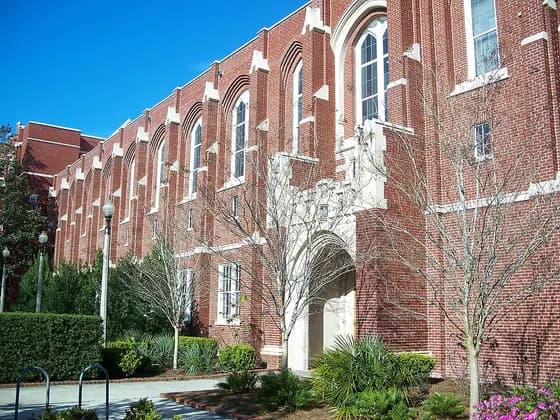
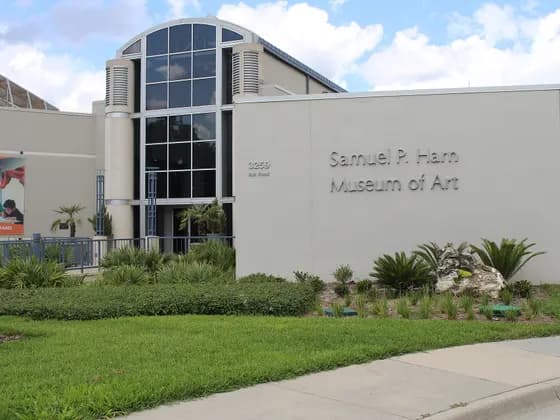
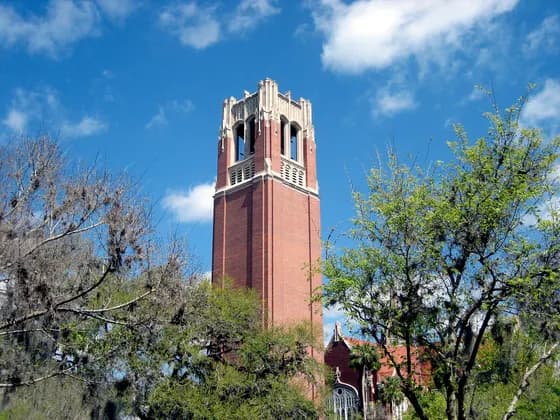
Photo: Unknown · Public domain · cropped
Photo: Ebyabe · CC BY-SA 3.0 · Photo: Michael Rivera · CC BY-SA 4.0 · Photo: Kate Haskell from Gainesville, USA · CC BY 2.0
The University of Florida College of Medicine MD program at a glance (2027 entry)
The University of Florida College of Medicine runs a four-year MD based in Gainesville, at the UF Health Science Center. UF Health's two major teaching hospitals are UF Health Shands Hospital in Gainesville and UF Health Jacksonville. The Malcom Randall Veterans Affairs (VA) Medical Center is across the street from the college.
The program is accredited by the Liaison Committee on Medical Education (LCME), which accredits MD programs in the United States. For MD students, that accreditation is what makes them eligible to sit the United States Medical Licensing Examination (USMLE), the national exam series for a medical license. The LCME directory lists the program as fully accredited, with its first accreditation in 1958.
The curriculum has three phases. Phase 1, Foundations of Medical Practice, is the pre-clerkship (pre-clinical) stage: courses taught mostly one organ system at a time, from August of year 1 to early March of year 2. About two months follow to prepare for and sit Step 1, the first USMLE exam. Clinical skills start at once, with weekly first-semester practice on standardized patients, people trained to portray patients. Phase 1 also includes three short preceptorships, in which you work alongside one physician.
Phase 2, Principles of Medical Practice, starts in the second week of May of year 2, and UF counts it as the third year. It is a year of clerkships, the core clinical rotations: family medicine and ambulatory care, medicine, neurology, obstetrics and gynecology, pediatrics, psychiatry and surgery, plus a year-long continuity clinic.
Phase 3, Advanced Medical Practice, is the fourth year of required rotations and electives, which are rotations you choose. It includes an acting internship (sub-internship), a month in which you work much like an intern, a first-year resident.
Every student trains partly in Jacksonville, where UF Health Jacksonville sits in the city's urban core. From your first semester you will need reliable personal transportation to reach clinical sites. You also belong to a Collaborative Learning Group (CLG), a small group led by a faculty member, which runs through all four years.
| Degree | MD |
|---|---|
| Program length | 4 years, from early August to graduation in mid-May |
| Class size | 135 students start each year, according to the admissions page |
| Main campus | Harrell Medical Education Building, UF Health Science Center, Gainesville |
| Teaching style | Integrated organ-system courses; weekly standardized patient practice in the first semester |
| Anatomy | Group cadaver dissection in year 1, with radiology built into the labs |
| First patient contact | Year 1: weekly standardized patients, then a December primary care preceptorship |
| Clinical sites | UF Health Shands, Malcom Randall VA Medical Center, UF Health Jacksonville |
| Step 1 timing | After Phase 1, between March and early May of year 2 |
| Grading | Pass/fail in posted Phase 1 syllabi; letter grades A to E in third-year clerkships |
What makes the University of Florida College of Medicine MD program different
Three short preceptorships before clerkships
Introduction to Clinical Practice (ICP) pairs you with a working physician three times before clerkships. You spend two weeks in primary care in December of year 1, a week in a specialty you choose near the end of year 1, and a week in November of year 2. Each time you practice histories and exams, and later presentations and differential diagnosis.
Clinical training in Gainesville and Jacksonville
Regular-track students spend part of the clinical years in Jacksonville, with free housing during third-year clerkships there. The Jacksonville Regional Medical Campus track, with 13 places, spends years 3 and 4 there, apart from electives, at an urban safety-net teaching hospital with a Level I adult and pediatric trauma center.
Collaborative Learning Groups through all four years
Collaborative Learning Groups are UF's learning communities: small groups, each with a faculty leader, that run through all three phases. Leaders coach, mentor and advise you and write narrative feedback each semester of years 1 and 2, but they do not assign grades.
A year-long continuity clinic during clerkships
Alongside the seven block clerkships of year 3, the Continuity Clerkship brings you back to one outpatient clinic in half-day sessions all year, with the same preceptor and patient population. It is meant to build your medical decision-making and sense of yourself as a doctor while you rotate.
Research tracks with a funded first summer
The optional Discovery Pathways Program offers 11 tracks, from artificial intelligence in medicine to medical humanities, each built on a funded 10-week research project in the summer after year 1.
How University of Florida College of Medicine teaches medicine
Phase 1 is integrated: science is taught in organ-system courses by teams from basic science and clinical departments. Courses such as Respiratory System and Cardiovascular System teach you to recognize the findings that point to disease and build a list of possible diagnoses. You also learn to choose tests and understand how the diseases develop and are treated.
The four Introduction to Clinical Medicine (ICM) courses run alongside the organ systems through Phase 1. ICM 1A, in your first semester, covers history taking, communication, the physical exam, anatomy, radiology, ethics and clinical empathy. In the spring of year 2, ICM 2B moves on to hypothesis-driven histories and exams, differential diagnosis, clinical reasoning, and oral and written presentations.
Some strands run through all four years. Health Systems Science (HSS) covers how care is delivered, paid for and improved, in four domains: working together effectively, using information effectively, understanding communities and improving patient care. Threads in ethics, integrative and lifestyle medicine, geriatrics, palliative care and research are woven in, and nutrition appears in every year.
In the clinical years, teaching moves to rounds, conferences, lectures, the bedside and the operating room. In year 4 you work as an advanced clerk with more responsibility than in year 3.
The ways you will learn
| Lectures | Faculty lectures in the South Learning Studio of the Harrell building, backed by assigned readings from a physical examination textbook and online learning modules. |
|---|---|
| Small groups and team-based learning | Small-group sessions on topics such as health determinants, sexual health and equity, ethical challenges and radiology cases. ICM 1A also has a team-based ethics session, where you prepare beforehand and then reach decisions as a team. |
A typical week on the University of Florida College of Medicine program
You are expected on campus Monday to Friday from 8 am to 5 pm, apart from holidays. In Phase 1, policy limits lectures and preparation time to 25 hours a week, plus 10 hours of scheduled group activity such as labs and CLGs.
The fall 2025 syllabus for ICM 1A lists the regular parts of a first-semester week, which run alongside whichever science course you are in. There are lectures in the South Learning Studio, a session in the Anaclerio Learning and Assessment Center practicing histories and exams with standardized patients, an anatomy lab and small-group sessions.
An online anatomy quiz opens after each lab and closes at 9 pm that day. A weekend quiz of 10 to 20 questions on the week's ICM material runs from Friday at 5 pm until 11:59 pm on Sunday.
How anatomy is taught at University of Florida College of Medicine
Anatomy is taught within the ICM courses, and the fall 2025 syllabus for ICM 1A lists the first-semester topics. They run from the skeleton, heart, chest, lungs and abdomen to the neck, ear, mouth and throat, limbs, back, nervous system and breast. Surface and cross-sectional anatomy are covered too.
In the lab you work in a group with a cadaver. Anatomy faculty and staff work directly with you, helping you dissect and identify structures and teaching dissection techniques. Radiology is built into the labs, so you also see the structures on scans. Each lab comes with a summary of terms and structures, and you can return alone at set times.
Your group can write questions for the weekly anatomy and weekend quizzes, which together count for 10% of the ICM 1A grade. Later courses return to structure: Endocrinology and Reproduction in year 2, for example, starts with the gross and microscopic anatomy of those organs.
A July 2022 college news story described augmented reality headsets used in the lab to supplement dissection. They showed 3D images built from full-body CT scans.
When you first meet patients at University of Florida College of Medicine
Your first patient encounters are simulated. In the first semester you practice weekly in the Anaclerio Learning and Assessment Center with standardized patients, who give you feedback, and with physical exam teaching assistants. You learn vital signs, histories and the main body-system exams, and encounters are recorded so faculty and students can review them. In ICM 1A an invited patient also talks to the class about their illness and care.
Your first sustained time in practice comes in December. After a preparation week, you leave Gainesville for two weeks with a Florida primary care physician, practicing your interview and examination skills. The college recruits 175 physician preceptors, who teach students in the community and in the students' hometowns. In year 1 you also join Putting Families First, in which a team of four students from different health professions visits a volunteer family at home to assess their health and access to care.
ICM 1B, in the spring of year 1, adds practice taking histories and examining patients in the hospital. Near the end of year 1, ICP 1B gives you a week with a physician in a specialty you choose, where you begin oral presentations. ICP 2, a week in November of year 2, is your last preceptorship before clerkships. The ICP course dates from 1992, when the college added it after students asked for earlier clinical exposure.
For ICP 2, most students choose a preceptor within UF Health in Gainesville or Jacksonville or at the VA, picking in an order set by lottery. You can instead arrange your own site where you have housing, with approval. Outside the curriculum, you can volunteer at the Equal Access Clinic, a student-run free clinic, and the Mobile Outreach Clinic, which serves low-income and rural areas around Alachua County.
From May of year 2 you are on clerkships, a member of the medical team with direct, supervised responsibility for assigned patients. Clinical duty hours are capped at 80 a week, averaged over the rotation, with four 24-hour periods off every four weeks on average.
Year by year at University of Florida College of Medicine
- Year 1 (Phase 1)
Foundations and the first organ systems
Year 1 runs from early August to early June. The fall pairs genetics and the Foundations of Medicine course with ICM 1A, then a December preceptorship. From January come microbiology, cancer biology and the first organ systems, alongside ICM 1B, and you sit your first clinical skills exam in May.
- Genetics and Health (four weeks in August), then Foundations of Medicine (September to November), whose four modules cover cell and tissue biology and development, homeostasis, injury and host response, and drug therapy. In January 2026 the college's Curriculum Committee voted to move immunology into Foundations from the spring semester.
- ICM 1A (August to early December), including cadaver dissection and weekly standardized patient sessions.
- Alongside: Discovery, Research and Health on research methods and evidence-based medicine, a one-week Nutrition Intensive, Health Systems Science 1A and 1B, and Putting Families First.
- ICP 1A in December: a preparation week, then two weeks with a primary care physician.
- From January: Medical Microbiology and Planetary Health, Introduction to Cancer Biology and Clinical Oncology, Respiratory System, Cardiovascular System, and The Kidney and Urinary Tract. The one-week ICP 1B comes near the end of the year.
- CSE1 in May, the first Clinical Skills Exam, which you must pass to enter year 2. The 10-week summer break can hold an optional research project.
- Year 2 (Phase 1)
Remaining systems and Step 1
Year 2 classes run from mid-August to early March, with ICM 2A and 2B continuing alongside the remaining organ systems. You then sit two exams in one week and study for Step 1, which you must take before clerkship orientation in early May.
- Fall: Dermatology and the Musculoskeletal System, Clinical Neuroscience (seven weeks, ending with a national neurology subject exam), and Gastroenterology and Hepatology.
- Two one-week courses in November: the ICP 2 preceptorship and the Pain and Addiction Intensive on pain assessment and multidisciplinary treatment.
- Spring: Endocrinology and Reproduction, then Hematology, alongside ICM 2B.
- Health Systems Science 2A and 2B, and Interprofessional Learning in HealthCare, an online course in teams with students from other health professions.
- March: CSE 2B and the Comprehensive Basic Science Exam (CBSE), a national exam used to gauge readiness for Step 1. Step 1 study and the exam follow.
- Early May: the White Coat Ceremony and a week of in-person clerkship orientation.
- Year 3 (Phase 2)
Core clerkships
Phase 2 starts in the second week of May and runs to early May of the next year. In groups, you rotate through seven core clerkships in hospitals and clinics while the Continuity Clerkship keeps you in one outpatient clinic. The Year 3 page gives the phase as 48 weeks; the curriculum organization page says 52.
- Medicine (8 weeks): inpatient care of adults, taught at the bedside, in lectures and through simulation, with a coach for your teamlet of three or four students.
- Surgery (8 weeks) on general, trauma and subspecialty services and in the operating room; Pediatrics (8 weeks) on the wards, in clinics, the emergency department and the newborn nursery.
- Obstetrics and gynecology (6 weeks), psychiatry (6 weeks, across inpatient, outpatient and addiction services), family medicine and ambulatory care (6 weeks) and neurology (4 weeks).
- Continuity Clerkship, new from 2025-26: half-day outpatient sessions all year with the same preceptor and patients, at least 20 half-days by the curriculum overview and 24 by the Year 3 page.
- Geriatrics is a thread, not a third-year block. In May 2024 the Curriculum Committee replaced the four-week clerkship with activities in other clerkships, online modules in years 3 and 4 and a two-week year 4 capstone. The Year 3 page and 2026-27 directors list still show the old clerkship.
- Two two-week blocks for a clinical elective or vacation, a two-week winter break, and a clinical science self-assessment exam within a week of your last clerkship.
- Year 4 (Phase 3)
Advanced rotations, electives and the Match
The fourth year starts in May, straight after Phase 2. The fourth-year schedule policy describes 12 four-week periods and one three-week period, 51 weeks in all, and you need at least 35 credits to graduate. The curriculum pages also give 51 weeks, while the curriculum catalog hub calls Phase 3 about 36 weeks.
- Anesthesiology and Critical Care (4 weeks): airway management, monitoring, fluids, drugs that support circulation, critically ill patients, and care before and after surgery.
- Emergency Medicine (4 weeks), on stabilizing and triaging critically ill patients, and the two-week Geriatrics and Palliative Care Thread Capstone in hospital, clinic, consult, palliative and hospice settings.
- An Advanced Clinical Practice Selective: a four-week acting internship in a field such as internal medicine, pediatrics, surgery, family medicine, neurosurgery or urology.
- At least 16 weeks of electives, a four-week period for residency interviews, and four weeks to prepare for Step 2 CK, the USMLE's clinical knowledge exam.
- Transition to Residency (3 weeks) at the end: acute medical problems, patient safety, ethics and boot camps for your chosen specialty, with a practice CSE.
- Fourth-year orientation in early January, Match Day in mid-March, when you learn where you will start residency, and graduation in mid-May.
How you are assessed at University of Florida College of Medicine
In the two 2025 Phase 1 syllabi the college has posted, for ICM 1A and ICP 2, grading is Satisfactory or Unsatisfactory, that is, pass/fail. ICM 1A needs at least 75% on every exam and overall, plus a pass in each competency it assesses. Its three written exams count 10% each, its three clinical skills practicals (each of at least three stations) 20% each, and the two sets of quizzes 5% each.
Clinical Skills Exams (CSEs) are run through the Anaclerio Learning and Assessment Center, where you take histories from and examine standardized patients. Three carry consequences: CSE1, which you must pass to enter year 2; CSE 2B, a high-stakes exam before Step 1; and the spring CSE ending Phase 2, a graduation requirement. The rest are formative, for feedback only. The handbook says seven are required but itemizes six, and the calendars name CSE1, CSE2A, CSE2B and CSE3A to CSE3D.
Step 1 tests the science behind medicine and has been reported only as pass or fail since January 26, 2022. You take it in the capstone block after Phase 1, by the Sunday before clerkship orientation, once you have sat the CBSE, set by the National Board of Medical Examiners (NBME). Step 2 CK must come after Phase 2 and before October 31 of year 4, following the NBME Comprehensive Clinical Science Self-Assessment (CCSSA) within a week of your last clerkship. You must pass both to graduate.
In August 2026 the USMLE program announced a move to designated testing dates from January 2029, with Step exams offered less often each year. Its June 2026 notice had named 2028, and it has encouraged schools to review rules on when students must test.
On the current schedule, a student entering in early August 2027 would sit Step 1 between about March and early May 2029, after designated testing dates begin. Clerkships would start in the second week of May 2029. Step 2 CK would fall between about May and October 2030, also under designated testing dates, with graduation in mid-May 2031. These dates are projected from the calendars for the classes of 2027 to 2029.
The seven third-year core clerkships use letter grades: A (exemplary), B+ or B (superior), C+ or C (competent), D (unsatisfactory, with remediation required) and E (failure). Each ends with an NBME subject exam, often called a shelf exam: a standardized national exam in that field. Not every clerkship carries letter grades: the Curriculum Committee moved fourth-year Anesthesiology and Critical Care to Satisfactory/Unsatisfactory from 2026-27, as it had earlier done for the geriatrics clerkship.
- In required clerkships a grading committee sets each final grade, and every final assessment includes a written narrative after formal feedback midway through.
- Competencies are judged separately from course grades, and classmates formally rate your professionalism after years 2 and 3.
- If a prediction model and your CBSE both suggest more than a 50% chance of passing, you may sit Step 1. If not, you retake the CBSE after up to five weeks of focused study, or four with a structured learning plan if judged at risk, and must reach a Step 1 passing-equivalent score.
- Miss that benchmark before clerkship orientation and you take academic leave for the rest of the year, with a monitored study plan, and must sit Step 1 by March 15 of the following year.
- Students in a group predicted to be at risk on Step 2 CK, based on clerkship shelf scores, must first reach a passing-equivalent score on the CCSSA.
- Foundations of Medicine or ICM 1A must be remediated by the first day of the second semester, or you withdraw and re-enroll the following year.
Where you will actually train at University of Florida College of Medicine
In Gainesville the main teaching hospital is UF Health Shands Hospital, a Level I trauma center providing tertiary and quaternary care for critically ill patients. UF Health also includes Shands Children's Hospital, Shands Cancer Hospital and Shands Critical Care Center, plus Shands Rehab and Shands Psychiatric hospitals. The Malcom Randall VA Medical Center, across the street, serves veterans from North Central Florida and South Georgia.
UF Health Jacksonville is a 715-bed hospital in the city's urban core with a Level I adult and pediatric trauma center. Clinical teaching also uses a facility in North Jacksonville and other UF Health sites, where students learn alongside more than 450 residents and fellows. On the 2026-27 directors list, the seven core clerkships each have a Jacksonville director as well as a Gainesville one.
On the regular track you spend part of your clinical years in Jacksonville. The Year 3 page gives 10 to 12 weeks of third-year clerkships there, with free housing, including three weeks of obstetrics and gynecology. The Jacksonville medicine page puts four of the eight inpatient medicine weeks there. Some required fourth-year rotations can also be done there: anesthesiology and critical care, emergency medicine and the medicine acting internship. The transportation policy puts the average at a third of all clinical rotations.
The Jacksonville Regional Medical Campus (RMC) track opened to applicants in the 2025-26 cycle and has 13 places. You spend years 1 and 2 in Gainesville on the standard curriculum, with mentoring and research contact with Jacksonville faculty. Years 3 and 4 are then all in Jacksonville, apart from electives you take in Gainesville or away. Selection looks for a demonstrated interest in health disparities and underserved patients, particularly in cities.
Required third- and fourth-year clerkships must be taken at UF, including Jacksonville, or at sites those clerkships use. You must own or have access to reliable transportation. Early clinical experiences can mean daily commutes of up to 45 miles, and clinical duties in years 3 and 4 can fall outside public transportation hours. The transportation policy also names Wolfson Children's Hospital among the clinical sites.
Base for the pre-clerkship years and for the regular track's clinical time outside Jacksonville.
- UF Health Shands Hospital
- UF Health Shands Children's Hospital
- UF Health Shands Cancer Hospital
- Malcom Randall VA Medical Center
Part of the clinical years for regular-track students. The RMC track spends years 3 and 4 here, apart from electives.
- UF Health Jacksonville
- UF Health facility in North Jacksonville
- Other UF Health sites in the city
The December preceptorship of year 1, with a Florida primary care physician.
- Primary care practices of the college's preceptors
Electives, selectives and away rotations at University of Florida College of Medicine
Clinical electives start in year 3, which has two two-week blocks for a clinical elective or vacation. Up to 2 credits from them can count toward the clinical elective credits required in year 4. Pediatric electives, for example, are open to third- and fourth-year students.
Year 4 needs at least 16 weeks of electives, chosen with your faculty advisor or career coach, and at least 14 credits must be clinical electives. A clinical elective means 40 hours a week in a clinical setting for two to four weeks, with at least two formal evaluations and an assessment of your clinical skills. Basic science, research, independent study you design and international medicine electives are also possible.
Away rotations, electives at other institutions, are called external electives here: any elective outside UF Health facilities or the Malcom Randall VA counts. Most students can take up to three, and students in the lower quarter of the class usually one. Each needs approval from your advisor and the Assistant Dean of Clinical Medical Education.
The 2026-27 catalog for visiting students lists 68 Gainesville electives, from the Burn Unit and Transplantation Surgery to Emergency Medicine Ultrasonography and Introduction to Integrative Medicine. In Pediatric Diabetes Camp you live in cabins with campers who have type 1 diabetes. Jacksonville departments offer electives too, such as the coronary care unit and the infectious disease consult service.
Dual degrees and research years at University of Florida College of Medicine
Research is optional beyond the first-year course Discovery, Research and Health. The Discovery Pathways Program offers 11 tracks, including artificial intelligence in medicine, business and innovation, lifestyle medicine, local and global health, medical ethics and law, medical humanities, and patient safety and quality. Each requires at least 10 weeks of mentored research plus track workshops, courses or field experience, and fourth-years who complete one can apply for an Award of Distinction.
The research comes through the Medical Student Research Program (MSRP) in the summer after year 1. You spend 10 weeks with a UF Health Science Center faculty mentor, working 40 hours a week for at least 8 of them. It carries 2 elective credits and a scholarship typically around $2,000. You must pass all first-year courses first and present a poster at the spring Medical Student Research Day. Fourth-year research runs through independent study electives, and outstanding researchers can be nominated for Graduation with Honors in Research.
The MD-PhD, through the Medical Scientist Training Program (MSTP), usually takes eight years, though seven to nine is possible. You complete the 21-month pre-clinical phase with a group Clinical Research Practicum and summer lab rotations, then one third-year clerkship. About four years of PhD research in one of 10 PhD programs follow, then the last two years of medical school.
The MD/MPH, with a Master of Public Health, adds about a year: most students finish three years of the MD, spend a year on MPH courses, then return for mostly fourth-year electives. The MD/MBA and MD/MSM, with a Master of Science in Management, each add one year, and the business courses count for three medical electives. The MD/JD, with a law degree, takes about six years instead of seven.
Facilities and support at University of Florida College of Medicine
Where you will learn
The Harrell Medical Education Building, opened in July 2015 and named for the college's founding dean, George T. Harrell, is the home base for medical and physician assistant students. Its 95,000 square feet include two circular learning studios, each seating about 160 students and designed for team-based work, plus small-group rooms, study rooms and 17 personal learning spaces.
On its third floor, the Anaclerio Learning and Assessment Center has 18 standardized patient exam rooms with video cameras and microphones. With the UF Simulation Center, which runs task training and mannequin-based simulation, it makes up the Center for Experiential Learning and Simulation (CELS), accredited by the Society for Simulation in Healthcare.
The building's Louis H. Oberndorf Experiential Learning Theater lets students train on up to eight human patient simulators at once. The college's Testing Center, on the ground floor of the Communicore building, has 164 seats across two rooms for computer-based exams, including NBME exams.
Support while you study
CLG leaders meet weekly for faculty development, curriculum integration and student coaching. A 2015 college magazine feature described 17 groups of eight students meeting weekly to discuss cases and ethics, with one group interviewing patients in the emergency department.
Since 1994, the Advisor/Mentor Program has paired each first-year student with a faculty member in one of three specialties they name at orientation. Career advising follows the Careers in Medicine framework of the Association of American Medical Colleges (AAMC). It runs from a career fair at orientation to faculty career coaches, dean's letter meetings and interview practice in years 3 and 4.
For academics, the Learning Specialist offers sessions on study strategies, time management, test-taking and board preparation, and arranges accommodations. If you score 79% or below in a course, the college can assign a tutor at no cost, and upper-year students run review sessions. A Student Success Coach offers three to six coaching sessions.
Student Counseling gives confidential, short-term personal counseling, and its assistant dean plays no part in grading or promotion decisions. On Jacksonville rotations you can use UF Health's Center for Healthy Minds and Practice (CHaMP), where counseling for medical students is free and confidential.
Is the University of Florida College of Medicine program right for you?
This program may suit you if
- You want hands-on clinical practice early, with weekly standardized patient sessions in your first semester and two weeks with a primary care physician by December.
- You want to train in both an academic center in Gainesville and an urban safety-net hospital in Jacksonville, or to commit to Jacksonville through the RMC track.
- You would value a small Collaborative Learning Group that runs through all four years, led by a faculty member who coaches but does not grade you.
- You want a structured route into research, with a funded 10-week summer project after year 1 and 11 Discovery Pathways tracks.
- You like the idea of following the same clinic patients all year in the Continuity Clerkship while you rotate through the core specialties.
Things to think about
- You need reliable personal transportation from the first semester, with commutes of up to 45 miles, and you will spend weeks or more of your clinical training in Jacksonville.
- Third-year clerkships carry letter grades from A to E, unlike the pass/fail grading in the posted Phase 1 syllabi.
- Step 1 has a gate: you must reach a CBSE benchmark first, and missing it before clerkship orientation means academic leave until the next year.
University of Florida College of Medicine MD program — frequently asked questions
Applying to University of Florida College of Medicine?
How to get into University of Florida College of Medicine
Prerequisites, MCAT, AMCAS personal statement, secondaries and interview, step by step.
Open the guide →University of Florida College of Medicine admissions profile
MCAT and GPA profile, acceptance rate, interview format and key dates.
See the profile →Compare University of Florida College of Medicine with other schools
Put the teaching style, anatomy teaching and clinical sites next to another school.
Open the comparison →Prepare for the University of Florida College of Medicine interview
Format breakdown, school-specific sample questions and prep tips from tutors who interviewed here.
Read the guide →Where this University of Florida College of Medicine program guide came from
This guide was written from 85 official sources — University of Florida College of Medicine's own program pages and curriculum documents, plus the accreditor and the hospitals and health systems the school trains students in where they publish detail — read on 2026-10-14, then checked claim by claim against those sources.
- UF College of Medicine: Curriculum Organization
- UF College of Medicine: Curriculum Overview (phases, courses and credits)
- UF College of Medicine: Timeline Schematic (Phase 1 to Phase 3 course diagrams)
- Required Courses, Clerkships, Electives, and Other Content (curriculum catalog)
- Year 3, Phase 2: required clerkships
- Year 4, Phase 3: required clerkships and courses
- Course Descriptions for 1st Year
- Course Descriptions for 2nd Year
- Clerkship Descriptions for 3rd Year
- Clerkship and Course Descriptions, 4th Year (acting internships and electives)
- Health Systems Science and its four domains
- Nutrition Curriculum
- Curriculum Committee minutes, May 14, 2024 (geriatrics clerkship becomes a thread with a fourth-year capstone)
- Curriculum Committee minutes, November 12, 2024 (Continuity Clerkship created; family medicine shortened to six weeks)
- Curriculum Committee minutes, January 14, 2025 (mid-year review of 2024-25 third-year clerkships)
- Curriculum Committee minutes, November 18, 2025 (geriatrics and palliative care capstone; Continuity Clerkship after six months)
- Curriculum Committee minutes, December 9, 2025 (Anesthesia and Critical Care Medicine clerkship moves to S/U)
- Curriculum Committee minutes, January 13, 2026 (immunology moves into Foundations of Medicine)
- UF College of Medicine: Medical Education (M.D.)
- Critical Dates Calendar, Class of 2029 (revised January 16, 2026)
- Critical Dates Calendar, Class of 2028
- Critical Dates Calendar, Class of 2027
- Two-Year Overview, Class of 2029: pre-clerkship schedule
- NBME exam dates, 2026-27
- Clerkship Rotation Dates, 2026-27 (third-year block schedule)
- Clerkship Directors, 2026-27 (Gainesville and Jacksonville)
- UF College of Medicine Testing Center
- Policy: USMLE and Clinical Skills Exams
- Policy: Clerkships and Electives
- Policy: Medical Student Feedback and grading system
- Policy: Unsatisfactory Performance and Unprofessional Behavior
- Policy: Graduation Requirements and Recommendations
- Policy: Work and Duty Hours
- Policy: Transportation Requirement
- Medical Education Program Policies and Procedures handbook (updated June 9, 2026)
- Introduction to Clinical Medicine 1A (BMS 6810) syllabus, 2025
- Introduction to Clinical Practice 2 (MDC 6001) syllabus, 2025
- UF College of Medicine: Preceptorships
- UF Medical Admissions home page (Harrell building facts)
- UF Medical Admissions: About (first-year service-learning with families)
- UF Medical Admissions: Admission Requirements (class size)
- UF Medical Admissions: Unique Opportunities (UF Health hospitals, VA, early exposure)
- UF Medical Admissions: Tools and Technologies (simulation)
- UF Medical Admissions: The Value of Mentoring
- UF Medical Admissions: Combined Degree Programs
- Jacksonville Regional Medical Campus track: admissions information
- UF College of Medicine, Jacksonville: Senior Associate Dean's Welcome
- UF Jacksonville Department of Medicine: Medical Student Education
- Third-Year Medicine Clerkship: Welcome
- UF Department of Pediatrics: Medical Students
- UF College of Medicine 2026-2027 fourth-year catalog for visiting students
- UF Health Office of Interprofessional Education: Putting Families First
- UF Health Office of Interprofessional Education: Interprofessional Learning in HealthCare
- UF College of Medicine: Community Service programs
- Florida Physician magazine: Collaborative learning groups (Spring 2015)
- Doctor Gator news: augmented reality supplements anatomy dissections (July 21, 2022)
- Research and Discovery Pathways Programs
- Discovery Pathways tracks
- Medical Student Research Program (MSRP)
- Graduation with Honors in Research: nomination process
- UF Medical Scientist Training Program (MD-PhD): program overview
- UF MD-PhD program: curriculum
- UF MD-PhD program: timeline
- UF College of Public Health and Health Professions: MD/MPH
- UF Warrington College of Business: joint MBA programs (MD/MBA)
- UF Warrington College of Business: joint master's programs (MD/MSM)
- George T. Harrell Medical Education Building
- Center for Experiential Learning and Simulation (CELS)
- Anaclerio Learning and Assessment Center: standardized patients
- Office of Student Affairs: Career Advising
- Office of Student Affairs: Learning Specialist
- Office of Student Affairs: Student Success Coaching
- Office of Student Affairs: Tutoring Program
- UF College of Medicine Student Counseling
- UF College of Medicine: Accreditation
- LCME: About the School Directory
- LCME: Accredited Programs (UF: full accreditation, first accredited 1958)
- USMLE Designated Testing Dates Information Hub (lists the August 6, 2026 update)
- USMLE: Updated Timeline for Designated Testing Dates, January 2029 (August 6, 2026)
- USMLE: Transition to Limited Testing Dates Starting in 2028 (June 23, 2026, since updated)
- USMLE: Designated Testing Dates FAQs
- USMLE: Common Questions (Step 1 pass/fail reporting)
- USMLE: Step 1 overview
- USMLE: Step 2 CK overview
- USMLE Bulletin of Information: Eligibility
Curricula are restructured between cycles. Anything here that decides your application — how anatomy is taught, a clinical campus assignment, a required research year — should be confirmed against the official page for your entry year.
Applying to University of Florida College of Medicine?
We help US applicants with MCAT strategy, the AMCAS personal statement, secondary essays and interview prep — everything you need for a competitive University of Florida College of Medicine application.