
The Icahn School of Medicine at Mount Sinai MD program
What you actually study, and where you will be
Icahn School of Medicine at Mount Sinai's MD is a 4-year program with an integrated curriculum, with patient contact from Year 1 and clinical rotations in New York City, plus one pediatrics site in New Jersey (2027 entry). Icahn's MD follows ASCEND, a curriculum that began with students entering in fall 2024. About 17 to 18 months of integrated science and clinical-skills teaching on the Manhattan campus lead to full-time clerkships from February of year 2. A 15-month final phase brings a Chronic Care Clerkship, an acting internship, electives and a required scholarly project.
- Degree
- MD
- Length
- 4 years
- Teaching
- Integrated
- Clinical contact
- Year 1


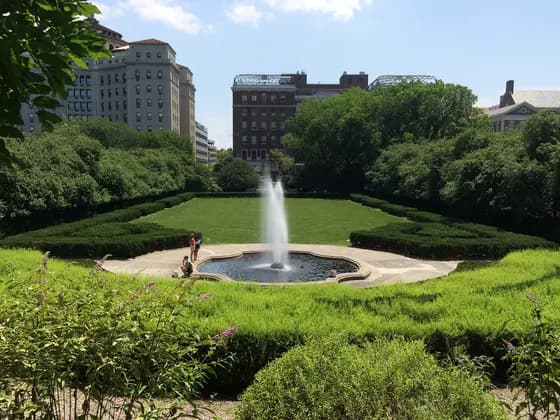

Photo: Homieg340 (cropped by Beyond My Ken) · CC BY-SA 3.0 · cropped
Photo: Eden, Janine and Jim from New York City · CC BY 2.0 · Photo: Bb337 · CC BY-SA 4.0 · Photo: PortableNYCTours · CC BY-SA 4.0
The Icahn School of Medicine at Mount Sinai MD program at a glance (2027 entry)
The Icahn School of Medicine at Mount Sinai is the medical school of the Mount Sinai Health System. Its four-year, full-time MD program is accredited by the Liaison Committee on Medical Education (LCME), which accredits MD programs in the United States. The school shares The Mount Sinai Hospital's campus on the border of the Upper East Side and East Harlem, Manhattan. It is based in the Annenberg Building at Madison Avenue and East 100th Street. In 2025, 118 MD and 10 MD-PhD students started.
A student starting in 2027 joins the Class of 2031 and follows ASCEND, the curriculum that began with the class entering in fall 2024. An older curriculum covers students who started in 2023 or earlier. ASCEND has three phases: the ASCEND page gives the Pre-Clerkship Phase 17 months, the Clerkship Phase 13 and the Integration and Transitions Phase 15. A July 2025 brochure gives the first phase 18, and a 2025 Mount Sinai report says ASCEND cut it from 24 months to 18.
The Pre-Clerkship Phase is the science stage many schools call preclinical. After a five-month Foundations block you study the body one organ system at a time, with Practice of Medicine, the clinical skills course, alongside. In your first semester you also shadow doctors. The phase ends with six weeks to prepare for and sit Step 1 of the United States Medical Licensing Examination (USMLE).
Clerkships are the core clinical rotations, in which you join a hospital team full time in one specialty after another. You rotate through The Mount Sinai Hospital and affiliates across New York City. The final phase adds a Chronic Care Clerkship, an acting internship, electives and a mentored scholarly project. In an acting internship, or sub-internship, you act as an intern, the point person for your own patients under supervision.
| Degree | MD, with full LCME accreditation; next survey in 2027-28 |
|---|---|
| Program length | 4 years; an optional scholarly year makes it 5 |
| Class size | 118 MD and 10 MD-PhD students entered in 2025 |
| Main campus | Border of the Upper East Side and East Harlem, Manhattan |
| Teaching style | Integrated organ-system modules, small groups and team-based learning |
| Grading | Pass/fail in Phase 1; Honors/Pass/Fail for clerkships and acting internships |
| Anatomy | Six-week first-semester module that includes hands-on dissection |
| First patient contact | Year 1: shadowing and an emergency department shift in semester 1 |
| Clinical sites | Mount Sinai hospitals, Elmhurst, Queens Hospital Center and the Bronx VA (Veterans Affairs) |
| Step 1 timing | Before clerkships: about January to mid-February 2029 for 2027 entrants, on current schedule |
What makes the Icahn School of Medicine at Mount Sinai MD program different
Required clerkships in palliative care and chronic care
Every student does a two-week Palliative Medicine clerkship in Phase 2, seeing seriously ill patients on hospital consult services. Phase 3 adds an eight-week Chronic Care Clerkship on long-term conditions, which a 2025 Mount Sinai report called the curriculum's longest rotation.
A clinical skills coach who never grades you
In Practice of Medicine you join a group of eight led by a Clinical Competency Mentor, who teaches your clinical skills sessions weekly for 16 months. In clerkships the same mentor watches you with patients and gives feedback but takes no part in grading. Short CAMP (Coaching, Advising, Mentoring and Preparation) weeks between rotations give time for reflection and self-care.
Clerkships start in your second year
On the current schedule, clerkships begin in late February of year 2. That frees a 15-month final phase for an acting internship, electives, interviews, study time and research.
Training across very different New York hospitals
Clerkships run at The Mount Sinai Hospital and at Mount Sinai Morningside, West and Queens. Affiliates include two city hospitals in Queens, Elmhurst and Queens Hospital Center, and the Bronx VA.
A mentored scholarly project, with time set aside
Every student completes a mentored scholarly project and presents it at Medical Student Research Day. Many use the summer after year 1 for research, and Phase 3 sets aside a four-week Area of Concentration block to finish.
Medical humanities built into the program
The Academy for Medicine and the Humanities, launched in 2012, runs Art of Listening I, which every student takes during orientation. It also offers non-credit Nexus courses for years 1 and 2, such as The Pulse of Art and the writing workshop Words to Live By. A humanities project can meet the scholarly requirement through the Medical Humanities Scholars Track.
How Icahn School of Medicine at Mount Sinai teaches medicine
Phase 1 opens with BaseCamp, a one-week orientation, then the five-month Foundations block. Ten organ-system modules follow, each with its anatomy, physiology, embryology and tissue pathology built in. In Cardiology, for example, you study the heart's structure, electrical system and blood flow alongside heart failure and arrhythmias.
Two threads run through the phase. Practice of Medicine teaches history taking, examination, communication and clinical reasoning through weekly workshops and simulated encounters. THINQ, the inquiry curriculum, adds three hours a month on research methods and evidence-based medicine. It is built around four areas of concentration: Scientific and Scholarly Discovery, Patient-Centered Advocacy, Health Care Delivery Science, and Leadership and Professional Identity Formation.
Teaching moves onto the wards in Phase 2. In Inpatient Medicine, for example, you meet an attending preceptor weekly and manage two deteriorating patients in a half-day simulation. In Phase 3 you give semi-independent care in an acting internship and choose much of your schedule.
Because ASCEND is new, some school pages lag behind or disagree; the smaller differences are listed below.
- Clerkship Phase: 13 months on the ASCEND page, which also describes 12 months of acute and emergency clerkships.
- Transition to Residency: two weeks on the ASCEND page and in the catalog text; four in the catalog heading and both phase graphics.
- Module lengths: Neuroscience 6.5 weeks and Behavioral Science 1.5 in the February 2026 handbook; 6 and 3, with Renal in semester 2, on the August 2026 calendar.
- Accreditation: first accredited in 1968, next survey 2027-28 (LCME directory, July 2026); full accreditation in 2019 and an October 2027 site visit (school page).
- MD-PhD order: three clerkship blocks before the PhD, then a Clinical Refresher Course (curriculum page); a summer lab rotation first and two final clinical years (home page).
- Dual degrees: besides the MD options, the dual-degree page lists a podiatry DPM/MPH (Doctor of Podiatric Medicine and Master of Public Health). Policies from 2024 and 2025 and a May 2025 story name an MD/MHA (Master of Health Administration), which that page and the July 2025 brochure omit.
- Electives: 20 weeks under the July 2026 policy (28 for the classes of 2026 and 2027). Two-week clinical electives are Honors, Pass or Fail under the July 2026 grading policy but pass/fail for the Class of 2029 in the handbook.
- Older wording still online: flex-time half-days in all four years and a Longitudinal Clinical Experience Program (undated clinical-training page). A July 2026 handbook page uses legacy clerkship names, and the 2024 graphic and April 2025 catalog use Advocacy, Social Justice and Anti-Oppression for Patient-Centered Advocacy.
The ways you will learn
| Lectures and labs | Lectures carry much of each module's core science, alongside workshops and labs. In the Pathology Practical, teams act as pathologists and diagnose unknown autopsy and surgical cases, open-book, sharing one grade. |
|---|---|
| Small groups and team-based learning | Faculty facilitators guide small groups. Before each correlate small group you complete CCSG Basics, a short graded multiple-choice check. Team-based learning starts with a readiness test taken alone, then again as a team, followed by group work with immediate feedback. |
| Standardized patients | At the Morchand Center for Clinical Competence, auditioned and trained professional actors play patients and give you feedback, in Practice of Medicine sessions and exams and in clerkship skills stations. |
| Clerkship teaching | You learn on the team through rounds, bedside teaching, case presentations and clinics, plus teaching days and simulation, such as Emergency Medicine's airway, suturing and ultrasound sessions and Palliative Medicine's serious-illness communication workshop. |
A typical week on the Icahn School of Medicine at Mount Sinai program
A sample week comes from the school's mock Phase 1 schedule, made in April 2024, shortly before ASCEND began. Its grid runs from 9am to 4pm with lunch at noon. On Mondays, Tuesdays, Wednesdays and Fridays, lectures fill most late-morning and early-afternoon slots, and some blocks hold a two-hour small group, a lab, a patient presentation or a THINQ session.
Thursday is different: Practice of Medicine in the morning, then an Independent Learning block for review, preparation, shadowing or research. Some weeks add an hour of student life sessions on careers, wellness and study skills. The fourth sample week ends on Friday morning with an in-person module exam built through the National Board of Medical Examiners (NBME). The schedule says lectures are livestreamed and recorded, so in-person attendance is encouraged but not required.
School policy caps scheduled teaching at 27 hours a week, averaged over the course, and assigned preparation at 40. You scan a QR code at mandatory sessions and get five personal days a semester, though not on assessment days.
How anatomy is taught at Icahn School of Medicine at Mount Sinai
Anatomy is one of the four Foundations modules in your first semester: six weeks and three credits. On the 2026-27 calendar it runs from September 14 to October 23 for the class that started in 2026, with a mid-module exam on October 2 and a final exam on October 23.
The handbook (updated February 2026) and the course catalog describe a module covering the body's regions, organ systems and development, combining hands-on dissection with microscopic study and clinical case studies. The school's Body Donation Program, run by its Center for Anatomy and Functional Morphology, says donated bodies give its medical students their fundamental knowledge of anatomy.
Anatomy then returns in every organ-system module. A 2009 school publication described cadaver dissection, a CT scan library of every cadaver and team-based anatomy assessment. It predates ASCEND by 15 years, so treat it as history rather than a description of today's module.
When you first meet patients at Icahn School of Medicine at Mount Sinai
Your first patient contact comes through APEX, the Clinical Apprenticeship Experience. In the first week you rank your preferred clinical fields and are assigned three preceptors to shadow during the first semester: one in a field you chose and two in related fields. A fourth assignment is a three-hour emergency department shift in the fall. You mostly observe, and you write a structured reflection after each visit.
Practice of Medicine adds standardized-patient encounters and early clinical exposures in outpatient clinics, inpatient wards and emergency rooms, with your Clinical Competency Mentor observing and giving feedback.
You can also volunteer. Students run the East Harlem Health Outreach Partnership (EHHOP), a free, physician-supervised primary care clinic for uninsured adults, founded in 2004 and serving more than 300 patients a year. The Mount Sinai Human Rights Program, student-run since 2015, provides forensic medical and psychological evaluations for asylum seekers.
Full-time clinical work starts with the Clerkship Phase, in late February 2029 for a 2027 entrant on the current schedule.
Year by year at Icahn School of Medicine at Mount Sinai
- Phase 1, year 1
Foundations, then the first organ systems
On the current schedule, year 1 starts with BaseCamp in late July, runs the Foundations block to mid-December and, after a two-week winter break, organ-system modules from January to June.
- BaseCamp (one week): orientation to the school, support services, learning strategies and assessment formats, plus Art of Listening I and an Art of Observation session.
- Foundations block: Molecular, Cellular and Genomic Foundations (6 weeks), Anatomy (6), Foundations of Immunology and Microbiology (5) and Pathology (3), each ending in an exam.
- Semester 2 organ systems: Neuroscience, Behavioral Science and Hematology, then Cardiology and Pulmonary Medicine, in the February 2026 handbook. Module order shifts between classes.
- Practice of Medicine I and II: history taking and examination, then early clinical reasoning, documentation, problem lists and first management plans.
- THINQ: sessions on your area of concentration, plus optional topic sessions you choose, as at a conference.
- Summer (eight weeks): the usual window for mentored research toward your scholarly project.
- Phase 1, year 2
Last organ systems, PEAKS 1 and Step 1
Semester 3 runs from mid-August to mid-December and completes the organ systems. Then come PEAKS (Periodic Assessment of Knowledge and Skills) 1, winter break and a six-week dedicated period for Step 1.
- Semester 3 for the class in year 2 in fall 2026: Genitourinary, Sexual and Reproductive Health; Endocrinology; Gastroenterology; Renal; Musculoskeletal.
- Practice of Medicine III: communication, special patient populations, procedures and oral case presentations.
- PEAKS 1 (one week; mid-December 2028 for a 2027 entrant, on the current schedule): basic science and clinical skills assessments, ending on the 2026-27 calendar with the NBME Comprehensive Basic Science Exam.
- Dedicated period (six weeks): Step 1 study; January 4 to February 12, 2027 on the 2026-27 calendar.
- Transition to Phase 2 (one week, mid-February; four days in 2027, after Presidents' Day): workshops and simulated encounters before your first rotation.
- To progress, you must pass every Phase 1 module, complete THINQ, APEX and PEAKS 1, and clear owed work a week before Phase 2.
- Phase 2
The Clerkship Phase
You take seven rotations of about six weeks, with CAMP weeks between them, a winter break and a week of FlexTime (protected free time), and finish with PEAKS 2.
- Eight required clerkships, 40 weeks: Emergency Medicine (4 weeks), Inpatient Medicine (6), Neurology (4), Obstetrics-Gynecology (6), Palliative Medicine (2), Pediatrics (6), Psychiatry (6) and Surgery-Anesthesiology (6).
- Emergency Medicine is eight 8-hour shifts, including two overnight and two weekend. General surgery days run from about 5 or 6am to 7 or 8pm, with no weekend or call shifts in Surgery-Anesthesiology.
- You carry your own patients: one to three on Pediatrics, three to five on Psychiatry. Inpatient Medicine has a long-call day, to about 8pm, roughly once a week.
- School policy caps clinical duty at 80 hours a week, averaged over a clerkship, with 8 hours off between shifts and one full day off in seven. In year 3 you also get a protected half-day every four weeks.
- Pediatrics covers wards, the pediatric emergency department, one to two weeks of clinics and about a week in the newborn nursery or neonatal intensive care unit (NICU).
- Palliative Medicine: an orientation day, four days at each of two clinical sites, then a knowledge exam and two observed encounters at the Morchand Center; no weekends or nights.
- CAMP weeks: mentoring and reflection with your Clinical Competency Mentor and advisors, plus orientation for the next clerkship.
- Required Clinical Experiences: 84 encounters and procedures to log (69 diagnoses, 15 procedures), reviewed midway and at the end of each rotation.
- PEAKS 2 (one week): oral and written case presentations, Morchand skills stations and the NBME Comprehensive Clinical Science Exam.
- Phase 3
Integration and Transitions
Phase 3 runs 15 months, from late February of year 3 (late February 2030 for a 2027 entrant, on the current schedule) to graduation. It opens with a one-week Transition to Phase 3; on the 2026-27 calendar, the class that started in 2024 starts its first block on March 1, 2027.
- Chronic Care Clerkship (eight weeks): long-term conditions such as diabetes and heart disease, managed through patient education, nutrition, lifestyle change and team care.
- One four-week acting internship. The ASCEND page and October 2025 catalog list Medicine, Pediatrics, Emergency Medicine, General Surgery or six surgical subspecialties, including neurosurgery.
- A July 2025 progression policy lists General Surgery, Medicine, Pediatrics or subspecialty surgery including cardiothoracic, without Emergency Medicine; the 2025 handbook timeline omits neurosurgery.
- On the Medicine acting internship you carry three or four patients on average.
- Area of Concentration block (four weeks): no teaching sessions, just independent work to finish and present your scholarly project.
- Flexible four-week blocks for electives, a dedicated study period or FlexTime, and an eight-week interview block before winter break in year 4.
- The finish: PEAKS 3, then Match Week, when residency match results arrive, a FlexTime week and Transition to Residency.
How you are assessed at Icahn School of Medicine at Mount Sinai
Phase 1 modules are strictly pass/fail, with a 65% passing mark for every assessment and module. Weekly quizzes count toward your grade; faculty write them in the first semester, and most later ones come from the AMBOSS question bank. Under a July 2026 policy for students entering from 2026, you can retake one assessment in up to two first-semester Foundations modules or in Practice of Medicine I. Later Phase 1 modules have no retake, so a failed module is remediated, and the original Fail stays on your transcript.
End-of-module exams are built by module faculty with NBME Customized Assessment Services. You sit them in person on Friday mornings, and three of the 14 modules add a mid-module exam. Each Practice of Medicine module has two exams with standardized patients and a written note, scored on a checklist, which the calendar calls OSCEs (objective structured clinical assessments).
From Phase 2, required clerkships and acting internships are graded Honors, Pass or Fail, as are some clinical electives. Narrative comments go into your Medical Student Performance Evaluation (MSPE), the school's letter for residency applications. A clerkship grade draws on workplace observations, Morchand stations, case presentations, clinical evaluations and an end-of-clerkship NBME exam, usually the subject or shelf exam: a national multiple-choice test in the specialty, taken online. Surgery-Anesthesiology grades an NBME customized exam instead, and Palliative Medicine uses the school's own knowledge exam.
The USMLE is the three-step exam series state medical boards use in licensure decisions in the United States. Icahn requires you to pass Step 1, on the sciences behind medicine, and Step 2 CK, on clinical knowledge, to graduate, with at most four attempts at each. Step 1 has been pass/fail only since January 26, 2022.
In August 2026 the USMLE program announced a move to designated testing dates from January 2029, with Step exams offered less often each year. Its June 2026 notice had first named 2028. On the current schedule, a 2027 entrant's six-week dedicated period would run from early January to mid-February 2029, so Step 1 would most likely fall under the new model. USMLE will publish each year's dates more than a year ahead and has urged schools to review testing rules, so Icahn's timing may change.
Step 2 CK has deadlines, not a set month. You must pass one Step by August 1 of year 4, sitting it by July 1, and the other by December 1 of your final year, sitting it by November 1. Sitting Step 2 CK before Phase 2 ends needs an exception form, and Phase 3 has blocks for a dedicated study period. On the current schedule, that points a 2027 entrant to Step 2 CK between about March and November 1, 2030; USMLE says it may not be offered in some months.
- If you have not sat Step 1 by the start of Phase 2, you meet a learning specialist; a support plan can defer your first clerkship or move Step 1 into Phase 3.
- Failing any Phase 1 module refers you automatically to the Promotions Committee, which can require extra support, a repeated module or academic probation (July 2026 policies).
- Missing a required observation can mean an incomplete or failed clerkship, whatever your other results.
- In Inpatient Medicine, Honors needs honors-level work in 6 of 11 graded objectives and no more than one behavioral mark.
- PEAKS 3 is the one-week graduation capstone, covering basic science, clinical knowledge and a practical demonstration of clinical skills.
Where you will actually train at Icahn School of Medicine at Mount Sinai
The school's transport guide says required clerkships and acting internships are spread across New York City's five boroughs. Its undated clinical-training page names ten sites: The Mount Sinai Hospital; Mount Sinai Queens, West and Morningside; and New York Eye and Ear Infirmary of Mount Sinai. The others are BronxCare Health System, The Brooklyn Hospital Center, Elmhurst Hospital Center, the James J. Peters VA Medical Center and The New Jewish Home.
The 2026 clerkship pages add Queens Hospital Center and the Mount Sinai Behavioral Health Center, and Pediatrics uses Valley Hospital in Paramus, New Jersey. The Facts page, updated each October, lists 14 teaching hospitals under residents and fellows, including Mount Sinai Brooklyn and the Institute for Family Health.
A handbook policy filed under both curricula, though written for classes graduating in 2025 to 2027 (all on the older curriculum), assigns clerkships and sites by lottery. That policy also allows a special schedule request for a major life event such as a wedding or a new child. After the lottery, changes are first come, first served up to four weeks before the start. Inpatient Medicine splits its six weeks between two sites, one of them The Mount Sinai Hospital.
Travel is your responsibility, though the cost-of-attendance budget includes it. Free shuttles run from the Icahn campus to the Bronx VA, to Elmhurst and Mount Sinai Queens, to Morningside and to Mount Sinai West. If you leave a required clerkship or acting internship between 11pm and 5am, the school's ride-share account covers a shared ride from the site within the five boroughs.
On the same campus as the school and used by every clerkship. Its emergency department sees high- and low-acuity patients, with a critical-care shift; pediatric ward, nursery and emergency work happens here, with clinics at Mount Sinai Doctors practices across the boroughs.
- The Mount Sinai Hospital
Morningside, with a level 2 trauma center, serves West Harlem and Morningside Heights; West serves Midtown and the West Side. Both host emergency medicine, medicine, neurology, psychiatry and palliative care, and West adds obstetrics-gynecology and surgery. The New Jewish Home is a 514-bed skilled nursing facility.
- Mount Sinai Morningside
- Mount Sinai West
- The New Jewish Home
Elmhurst, a 531-bed city hospital whose doctors have taught Icahn students since 1968, hosts emergency medicine, medicine, neurology, obstetrics-gynecology, pediatrics and surgery. Mount Sinai Queens in Astoria hosts emergency medicine, neurology and palliative care, and Queens Hospital Center, a 350-bed city hospital in Jamaica, palliative care.
- Elmhurst Hospital Center
- Mount Sinai Queens
- Queens Hospital Center
The Veterans Affairs medical center (311 hospital beds, 120 nursing home beds) hosts neurology and palliative care. BronxCare, affiliated since January 2016, is on the site list, though its affiliation page describes residency links.
- James J. Peters VA Medical Center
- BronxCare Health System
Affiliated since 2014; the school says its students take part in clerkships and electives here. A Brooklyn Heights faculty practice is among the pediatric clinic sites.
- The Brooklyn Hospital Center
A Pediatrics site: ward, nursery and emergency work, clinics at the Valley Medical Group office in Montvale, and a chance to attend deliveries.
- Valley Hospital
Electives, selectives and away rotations at Icahn School of Medicine at Mount Sinai
Electives are rotations you choose. ASCEND requires 20 weeks across Phases 2 and 3, under a policy approved July 10, 2026. At least 14 must be clinical, ideally four of them in a medicine subspecialty or critical care, and the rest can be clinical, research, non-clinical or up to four longitudinal weeks. A week of credit means at least 40 hours, and Phase 1 earns none.
Electives first appear in the rotation that pairs Emergency Medicine with two elective weeks, and Phase 3 adds four-week blocks. You choose from Empower, the school's mostly clinical elective catalog, or design a tailor-made clinical, research or non-clinical elective with a faculty mentor. Longitudinal options such as the EHHOP clinic electives run over a semester or year, and a Riker's Island health care elective reimburses travel.
Away electives, or away rotations, are taken at other institutions, usually through the Visiting Student Learning Opportunities (VSLO) service of the Association of American Medical Colleges (AAMC). Access opens in November of year 3, most catalogs open in March or April, and there is no formal limit; for competitive specialties the handbook suggests six or seven applications. Register each with Icahn two weeks ahead. International electives must be Global Health Electives listed in Empower, requested 60 days ahead.
Dual degrees and research years at Icahn School of Medicine at Mount Sinai
Every student must complete a mentored scholarly project and present it at Medical Student Research Day in Phase 2 or 3. Areas range from basic, clinical or translational research and artificial intelligence to quality improvement, community or global health, medical humanities, medical education and anti-racism work. Case reports, literature reviews and reflections do not count, and finishing an Icahn dual degree exempts you.
You meet the Medical Student Research Office in your first semester and draft a proposal in THINQ. Many students use the summer after year 1, with eight weeks in the Summer Research Scholars Program. Selected students instead spend six to eight weeks at a global health partner site in New York City or abroad, with a stipend.
The optional scholarly year is a full-time, mentored year from July 1 to June 30, taken by nearly a third of each class. A March 2025 policy places it after the Clerkship Phase and requires a mentor, a proposal, proof of at least $40,000 in living support and a request by May 15. You work 40 to 50 hours a week and take no MD coursework. The research page still says after year 2 or 3, and the scholarly-year page after year 3.
The MD-PhD, a Medical Scientist Training Program funded by a National Institutes of Health (NIH) training grant since 1977, takes about eight years. Its curriculum page describes a summer TREK Academy before medical school, then Phase 1 with graduate coursework, Step 1 and three clerkship blocks before PhD research in one of eight training areas. A Clinical Refresher Course leads back to the remaining clerkships.
The MD/MPH adds a 45-credit Master of Public Health, with 12 MD credits counting toward it, in four years with evening classes or five with a scholarly year. PORTAL, the five-year MD/MSCR (Master of Science in Clinical Research), takes applications in year 1, starts with light coursework in year 2 and puts its scholarly year between years 3 and 4.
Facilities and support at Icahn School of Medicine at Mount Sinai
Where you will learn
Proctored Phase 1 exams are held on the 12th and 13th floors of the Annenberg Building, which also houses the Levy Library and, on the 13th floor, the Morchand Center for Clinical Competence.
Simulation facilities across the Mount Sinai Health System recreate realistic clinical situations for practice. The school offers housing to every student, the campus is close to Central Park, and each clinical site provides study space and lockers.
Support while you study
Before you arrive you join one of 10 learning communities, which mix classmates with students from other years. Your Advisor Group has a physician Career Advisor, who has no role in grading and meets you at least twice a year. It also has a clinical social worker as Wellness Advisor, at least one senior-student Peer Advisor and 12 to 15 students per class year.
Academic counseling includes a learning specialist and trained peer educators. For Step 1, second-year students get two years of the AMBOSS question bank, the Osmosis high-yield video series and a free NBME self-assessment. Third-year students get 12 months of AMBOSS and another self-assessment for Step 2 CK. Career advising follows the AAMC's Careers in Medicine program, with a specialty advisor in every clinical department.
Well-being support includes unlimited visits to the Student and Trainee Mental Health Program, a 24/7 counseling and crisis line, CIRCLES group sessions in year 3, the PEERS curriculum and free 92nd Street Y membership.
Is the Icahn School of Medicine at Mount Sinai program right for you?
This program may suit you if
- You want full-time clerkships early, from February of your second year.
- You want steady coaching from a Clinical Competency Mentor across all three phases, with CAMP weeks between rotations.
- You want to train in very different hospitals, from The Mount Sinai Hospital to city hospitals in Queens and the Bronx VA.
- You want protected time for a scholarly project, or the option of a full research year.
- You are drawn to palliative and chronic care, which each have a required clerkship.
Things to think about
- On the current schedule, a 2027 entrant's Step 1 lands in early 2029, just as USMLE moves to designated testing dates, so timing may change.
- ASCEND is new, with its first class graduating in 2028, and pages still disagree on details such as acting-internship options and phase lengths.
- Sites are spread across the boroughs, and you handle your own travel, helped by shuttles and a late-night ride share.
- Phase 1 is pass/fail but full of assessed work: weekly quizzes, readiness tests and NBME-built exams, each with a 65% pass mark.
- Family medicine is not a required clerkship, and the Primary Care Scholars Program and InterACT appear in the handbook's legacy-curriculum pages, so ask whether either continues.
Icahn School of Medicine at Mount Sinai MD program — frequently asked questions
Applying to Icahn School of Medicine at Mount Sinai?
How to get into Icahn School of Medicine at Mount Sinai
Prerequisites, MCAT, AMCAS personal statement, secondaries and interview, step by step.
Open the guide →Icahn School of Medicine at Mount Sinai admissions profile
MCAT and GPA profile, acceptance rate, interview format and key dates.
See the profile →Compare Icahn School of Medicine at Mount Sinai with other schools
Put the teaching style, anatomy teaching and clinical sites next to another school.
Open the comparison →Prepare for the Icahn School of Medicine at Mount Sinai interview
Format breakdown, school-specific sample questions and prep tips from tutors who interviewed here.
Read the guide →Where this Icahn School of Medicine at Mount Sinai program guide came from
This guide was written from 109 official sources — Icahn School of Medicine at Mount Sinai's own program pages and curriculum documents, plus the accreditor and the hospitals and health systems the school trains students in where they publish detail — read on 2026-10-11, then checked claim by claim against those sources.
- Icahn School of Medicine: ASCEND MD Curriculum
- Icahn School of Medicine: Clinical Training
- Icahn School of Medicine: Research Opportunities for Medical Students
- Icahn School of Medicine: Scholarly Year
- Icahn School of Medicine: Medical Student Research Office
- Icahn School of Medicine: Academy for Medicine and the Humanities
- Icahn School of Medicine: Humanities Courses
- Icahn School of Medicine: Medical Humanities Scholars Track
- Icahn School of Medicine: Learning Community
- Icahn School of Medicine: Medical Student Affairs
- Icahn School of Medicine: Advising and Counseling for Medical Students
- Icahn School of Medicine: Medical Student Career Development
- Icahn School of Medicine: Medical Student Well-Being
- Icahn School of Medicine: Global Health Education Programs
- Icahn School of Medicine: Morchand Center
- Icahn School of Medicine: Programs at the Morchand Center
- Icahn School of Medicine: East Harlem Health Outreach Partnership
- Icahn School of Medicine: Dual Degree and Specialty Programs
- Icahn School of Medicine: MD/MPH Dual Degree Program
- Icahn School of Medicine: MD-MSCR (PORTAL) Dual-Degree Program
- Icahn School of Medicine: MD-PhD Program
- Icahn School of Medicine: MD-PhD Curriculum and Program Structure
- Icahn School of Medicine: Primary Care Scholars Program FAQs (undated)
- Icahn School of Medicine: LCME Accreditation
- Icahn School of Medicine: Academic Affiliates and Partnerships
- Icahn School of Medicine: Academic Affiliates, Clinical and Education
- Icahn School of Medicine: Body Donation Program
- Icahn School of Medicine: Facts and Figures
- Career and Professional Development guide: The ASCEND Learning Community
- Career and Professional Development guide: APEX Program and Self-Directed Shadowing
- Career and Professional Development guide: Medical Student Research Office
- Medical Student Handbook: Four Year Timeline, ASCEND (2025 graphic)
- Medical Student Handbook: Phase 1 Pre-Clerkship Modules
- Medical Student Handbook: Phase 2 Clerkships
- Medical Student Handbook: Clinical Apprenticeship Experience (APEX)
- Medical Student Handbook: Inquiry (THINQ) Curriculum
- Medical Student Handbook: Clinical Competency Mentor Program
- Medical Student Handbook: Taking an Assessment in ASCEND Phase 1
- Medical Student Handbook: Taking an Assessment in ASCEND Phase 2
- Medical Student Handbook: Year 3 page describing the InterACT clerkship
- Medical Student Handbook: Assessment and Grading policies
- Medical Student Handbook: Academic Progress and Remediation policies
- Medical Student Handbook: Year 3/4 and Phase 2/3 Policies and Procedures
- Medical Student Handbook: Attendance Standards
- Medical Student Handbook: Electives Overview
- Medical Student Handbook: Types of Electives
- Medical Student Handbook: Electives, Important Information
- Medical Student Handbook: Away Electives in More Detail
- Medical Student Handbook: Electives FAQs
- Medical Student Handbook: Nexus Learning
- Medical Student Handbook: Module and Clerkship Representatives
- MD Program Catalog: Phase 1, Pre-clerkship
- MD Program Catalog: Phase 2, Clerkship
- MD Program Catalog: Phase 3, Integrations and Transitions
- MedInfo App: Welcome
- MedInfo App: Transportation to clinical sites
- MedInfo App: Shuttle Bus Options
- MedInfo App: Required Clinical Experiences
- MedInfo App: Emergency Medicine, Methods of Instruction
- MedInfo App: Emergency Medicine, Work Schedule and Sites
- MedInfo App: Inpatient Medicine, Methods of Instruction
- MedInfo App: Inpatient Medicine, Work Schedule
- MedInfo App: Inpatient Medicine, Methods of Assessment
- MedInfo App: Neurology, Work Schedule and Sites
- MedInfo App: OB-GYN, Work Schedule
- MedInfo App: Palliative Care, Methods of Instruction
- MedInfo App: Palliative Care, Work Schedule
- MedInfo App: Pediatrics, Methods of Instruction
- MedInfo App: Pediatrics, Work Schedule and Sites
- MedInfo App: Psychiatry, Methods of Instruction
- MedInfo App: Psychiatry, Work Schedule and Sites
- MedInfo App: Surgery-Anesthesiology, Work Schedule
- MedInfo App: Surgery-Anesthesiology, Criterion-Referenced Assessment Map
- MedInfo App: Surgery-Anesthesiology, CAS Exam Percentile to Clerkship Score Conversion
- MedInfo App: Acting Internship in Medicine, Methods of Instruction
- MedInfo App: Site Resources, Bronx VA
- MedInfo App: Site Resources, Elmhurst Hospital
- MedInfo App: Site Resources, Mount Sinai West
- MedInfo App: Site Resources, Mount Sinai Hospital
- MedInfo App: Site Resources, Mount Sinai Morningside
- MedInfo App: Site Resources, Mount Sinai Queens
- MD Program Academic Calendar 2026-2027 (updated August 21, 2026)
- The Major Phases of ASCEND (PDF graphic, September 2024)
- ASCEND Mock Weekly Schedule for Phase 1 (PDF, April 2024)
- MD Program brochure (PDF, July 2025)
- ISMMS Grading Policy, approved July 10, 2026
- ISMMS Student Progression Policy, approved July 10, 2026
- ISMMS Electives Policy, approved July 10, 2026
- ISMMS Student Work and Credit Hours Policy, approved July 10, 2026
- ISMMS Phase I Exam Retake Policy, approved July 27, 2026
- ISMMS Academic Remediation Policy, approved July 10, 2026
- ISMMS Medical Student Promotions Committee Policy, approved July 27, 2026
- Accelerating Science, Advancing Medicine: Medical Education, vol. II (Mount Sinai School of Medicine, 2009)
- USMLE Designated Testing Dates Information Hub
- USMLE: Updated Timeline for Designated Testing Dates, Transition in January 2029 (August 6, 2026)
- USMLE: Transition to Limited Testing Dates Each Year Starting in 2028 (June 23, 2026)
- USMLE Designated Testing Dates FAQs
- USMLE Step 1 Transition to Pass/Fail Only Score Reporting
- LCME Directory of Accredited Programs
- Mount Sinai Health Network: member hospitals and affiliates
- The Mount Sinai Hospital
- The Mount Sinai Hospital: Locations, Directions, and Parking
- Mount Sinai Morningside
- Mount Sinai West
- Mount Sinai Queens
- VA Bronx Health Care: About Us
- Valley Health System: The Valley Hospital, Paramus, NJ
- Mount Sinai Today: an MD and MHA student story (May 2025)
- Mount Sinai Reports: Brookdale Department's role in the ASCEND redesign (2025)
Curricula are restructured between cycles. Anything here that decides your application — how anatomy is taught, a clinical campus assignment, a required research year — should be confirmed against the official page for your entry year.
Applying to Icahn School of Medicine at Mount Sinai?
We help US applicants with MCAT strategy, the AMCAS personal statement, secondary essays and interview prep — everything you need for a competitive Icahn School of Medicine at Mount Sinai application.