
The CNU College of Medicine MD program
What you actually study, and where you will be
CNU College of Medicine's MD is a 4-year program taught through case-based learning in an integrated curriculum, with patient contact from Year 1 and clinical rotations in Greater Sacramento, the Central Valley, Bay Area and Southern California (2027 entry). Years 1 and 2 are spent on the Elk Grove campus. Each week of the organ-system courses usually starts from one or two common patient complaints and works back to the science, alongside weekly clinical skills training. Clerkships, the core clinical rotations, begin at affiliated hospitals and clinics, mostly around Sacramento, in mid-May at the start of year 3. Year 4 is sub-internships and electives.
- Degree
- MD
- Length
- 4 years
- Teaching
- Integrated + Case-based learning
- Clinical contact
- Year 1
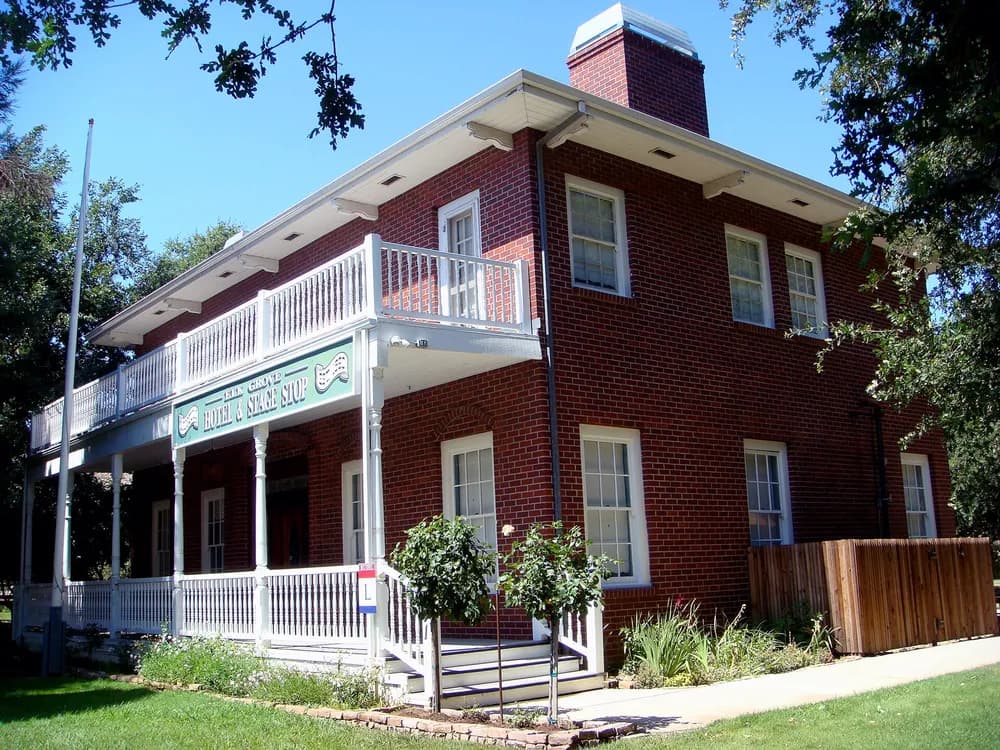


Photo: Amadscientist · CC BY-SA 3.0 · cropped
Photo: Andre m · CC BY-SA 3.0 · Photo: Ligocsicnarf89 · CC0 · Photo: Frank Schulenburg · CC BY-SA 4.0
The CNU College of Medicine MD program at a glance (2027 entry)
California Northstate University College of Medicine is the medical school of California Northstate University (CNU), a private university founded in 2007 in the Sacramento region. Local health care leaders designed the college to train more physicians for California's Central Valley, and its first class started in September 2015. The Classes of 2029 and 2030 have had 118 students each. Some students enter the MD through CNU's BS-MD Early Assurance Honors Tracks (a three- or four-year CNU bachelor's degree with a conditional MD seat) or its MPS-to-MD pathways.
The four-year MD has two phases. Phase A, the pre-clerkship or classroom phase, fills years 1 and 2 on the Elk Grove campus, which CNU shares with its College of Pharmacy and College of Graduate Studies. You study one organ system at a time. A weekly Medical Skills course, where you practice with standardized patients (people trained to portray patients), runs alongside. So does the Colloquium, a seminar series on professional development, ethics and health care systems.
Teaching is built on clinical presentations: the symptoms or conditions, such as headache or chest pain, that bring patients to a doctor. Each week usually starts from one or two of them and works back to the science you need. Many are matched to nationally recognized must-see cases, which you meet again as real patients on clerkships.
Phase B covers years 3 and 4. Year 3 is clerkships, the core clinical rotations where you care for patients on hospital and clinic teams under supervision. Year 4 adds sub-internships, where you take on work close to that of a first-year resident, and electives.
Clerkships start in mid-May, when year 3 begins straight after year 2, about 22 months after a July start. You must first pass Step 1 of the United States Medical Licensing Examination (USMLE), the three-step exam series required for a medical license.
The program is accredited by the Liaison Committee on Medical Education (LCME), which accredits MD programs in the United States; LCME accreditation is what makes an MD program's students eligible to sit the USMLE. The LCME directory, as of October 14, 2026, lists the program as fully accredited, with initial accreditation in 2015 and the next survey in 2029-30.
| Degree | MD (Doctor of Medicine) |
|---|---|
| Program length | 4 years: two pre-clerkship years, then two clinical years |
| Class size | 118 (Class of 2030, which entered in July 2026) |
| Where you study | Elk Grove campus in years 1-2; affiliated hospitals and clinics in years 3-4 |
| Teaching style | Integrated organ-system courses built around weekly clinical presentations |
| Anatomy | Dissection of human donors, plus prosected specimens and imaging |
| First patient contact | Year 1 (standardized patients); clerkships from mid-May at the start of year 3 |
| Step 1 timing | Spring of year 2; must be passed before clerkships start in mid-May |
| Grading | Honors, High Pass, Pass or Fail in organ-system courses and clerkships; no GPA |
| Accreditation | LCME, full (directory as of October 14, 2026); next survey 2029-30 |
What makes the CNU College of Medicine MD program different
Every week starts from a patient's complaint
Each organ-system week usually opens with one or two clinical presentations, such as jaundice or chest pain, each with a clinical algorithm: a branching diagram that narrows the possible diagnoses step by step.
A College of 20 to 25 classmates and a mentor
At the start of year 1 you join a College led by a College Mentor, who teaches your Colloquium sessions, follows your progress and advises on careers. You keep the same College for two years, and the mentor stays available afterward.
A required 18-month group research project
Every student completes the Self-Directed Student Scholarly Project, a group project under a faculty mentor that ends with a poster or talk at Research Day in the fall of year 2.
Clerkships across large California health systems
Clinical rotations in years 3 and 4 run through affiliates including Kaiser Permanente, Sutter Health and Dignity Health, other listed hospitals such as San Joaquin General, and private physicians' offices.
Imaging, resuscitation and simulation inside year 3
The Extended Clinical Experience reviews X-ray, CT and ultrasound and covers advanced cardiac life support with mock codes. You practice procedures such as lumbar puncture and central lines in the simulation lab and sit the required year 3 Objective Structured Clinical Examination (OSCE), an observed exam with standardized patients.
How CNU College of Medicine teaches medicine
In Phase A, clinical faculty lead each clinical presentation, walking you through its algorithm and the key decision points. Basic science faculty then teach the relevant anatomy, biochemistry, genetics, microbiology, pathology, pharmacology and physiology, in health and disease. The week's Clinical Case lets you apply that science.
You learn through a mix of lectures, small groups, Clinical Cases, case-based learning and self-directed study. The 2026-27 handbook names team learning and interprofessional experiences with CNU pharmacy and health sciences students as a theme in all four years. You bring a TurningPoint clicker, issued at orientation, to every class.
In Phase B, teaching moves to hospitals and clinics, where a preceptor (a supervising physician) guides your daily work and gives you formal feedback at mid-clerkship. You also log required patient encounters and procedures.
The ways you will learn
| Clinical Cases | Small-group sessions, usually at the end of the week, where you work through a case with faculty. In the Reproductive System course, groups get five vignettes a week that start with only the patient's age, complaint and a brief history, then present their reasoning. |
|---|---|
| Clinical case-based learning and team-based learning | In clinical case-based learning (CCBL), groups take an evolving case, research their own learning objectives and teach each other, with roles such as leader, researcher and scribe. The Cardiovascular and Pulmonary course also uses team-based learning and flipped classes. |
| Medical Skills | A weekly course over four semesters, one credit each, on interviewing, examination, note writing, presentations and procedures. The skill of the week matches the week's clinical presentations. |
| The Colloquium | Two-hour seminars through each semester of years 1 and 2, in a large classroom or your College, led by College Mentors and invited experts. Topics run from communication and ethics to public health and patient diversity, including human trafficking, health insurance and end-of-life care. |
| Clerkship didactics | Weekly sessions in each clerkship, with discussion, student case presentations and audience-response quizzes, on topics such as wellness, determinants of health and health promotion. Some meet in person at the College of Medicine; many are online, on Microsoft Teams or Zoom. |
A typical week on the CNU College of Medicine program
In Phase A you must attend Clinical Cases, case-based learning sessions, Medical Skills and the Colloquium; attendance at other classes is strongly encouraged. The 2026-27 student handbook caps scheduled contact time at an average of 25 hours a week over each course, including exam week; the school's 2021 scheduling policy gives 24. Lunch is noon to 1 p.m., with 10-minute breaks between classes. You are expected to stay in the area until each semester ends, in case you need a retest.
On clerkships the clinical team sets your hours, within limits. You work at most 80 hours a week averaged over four weeks and 24 hours in a row, with 10 hours off between shifts and one day in seven free. Internal medicine, neurology and psychiatry involve no overnight call. You can miss at most one day of a four-week clerkship and two of an eight-week one.
Each clerkship keeps a weekly teaching slot. Family medicine meets online on Friday mornings, obstetrics and gynecology on Thursday mornings, pediatrics on Monday evenings, psychiatry on Friday afternoons and surgery on Wednesday afternoons. Internal medicine keeps Monday afternoons for teaching and study. Each clerkship ends with a National Board of Medical Examiners (NBME) shelf exam, a national multiple-choice test in the specialty, usually on the last Friday.
How anatomy is taught at CNU College of Medicine
Anatomy is taught within the organ-system courses rather than as a separate course, so you meet each region's structure alongside its function and disease. In Integumentary and Musculoskeletal Systems, in the fall of year 1, you dissect human donors in the anatomy lab. You also review X-rays, CT scans and MRIs of normal and abnormal structures.
In Neuroscience, in the spring of year 1, you carry out cadaver dissection and review prosected specimens, already dissected to display structures, again with imaging. The Gastrointestinal System course in year 2 includes a cadaveric dissection lab, and Medical Skills adds surface anatomy taught with body painting.
The gross anatomy lab is run by a Director of Gross Anatomy, whose permission visitors need. Dress rules ban shorts and skirts and require clothing or protective equipment over any body part that could touch the cadaver or chemical fluids.
When you first meet patients at CNU College of Medicine
Your first patient skills come through Medical Skills. You practice on classmates, standardized patients, simulators and partial task trainers, with real patients when appropriate and available. Before clerkships you receive at least 130 hours of teaching in history taking and physical examination.
Sessions follow the classroom topics. During the cardiovascular and pulmonary course you learn to check blood pressure, record electrocardiograms, run spirometry and do Gram stains. In the reproductive course you practice Pap smears and pelvic, rectal and breast exams on standardized patients and models. Medical Skills also covers nutrition and runs a journal club.
Optional student-run clinics add real patients. At Clínica Tepati, where places are limited, you work with UC Davis medical students and University of the Pacific pharmacy students, caring for the underserved Latinx community. Shifa Clinic runs weekend clinics where you take histories and examine patients. Sacramento Street Medicine volunteers typically join one 3- to 5-hour outreach visit a month to people without housing. Through Anatomy Academy, student volunteers teach local elementary school children one organ system a week during the neuroscience course.
Full-time clinical work starts in mid-May at the start of year 3, after a week-long Clerkship Symposium (May 4 to 8 in 2026). Preceptors are encouraged to let you present one complete history and examination a day where feasible. In year 4, the surgery sub-internship gives you a patient load like a first-year resident's.
The CNU College of Medicine curriculum, year by year
- Year 1 (Phase A)
Foundations and the first organ systems
Year 1 runs in two semesters, from late July to late May, and carries 44 credits. An eight-week foundations course comes first; then you study one organ system at a time, ending with the heart. Medical Skills and the Colloquium run all year, and the scholarly project begins.
- Foundations of Clinical Medicine (8 credits, late July to mid-September): the core basic sciences, from biochemistry and cell biology to pharmacology and physiology, in mini-blocks that introduce clinical presentations and Clinical Cases.
- Hematology (4 credits, five weeks): anemia, bleeding and clotting disorders and other common blood problems, with required microscopy labs on normal and abnormal blood smears.
- Integumentary and Musculoskeletal Systems (7 credits, late October to mid-December): skin, bones, joints and muscles, with dissection of human donors.
- Neuroscience (10 credits, nine weeks from early January): the nervous system and special senses through fifteen clinical presentations, with cadaver dissection and prosected specimens.
- Renal System (5 credits) on fluids, electrolytes, acid-base balance and kidney disease, then the cardiovascular half of the Cardiovascular and Pulmonary course, which runs to late May.
- Year 2 (Phase A)
The remaining systems, then Step 1
Year 2 carries 30 credits. The organ-system courses finish in mid-February, and the rest of the spring leads up to Step 1.
- Fall: Pulmonary, completing the 10-credit Cardiovascular and Pulmonary course, then Behavioral Medicine (3 credits), the Gastrointestinal System (6 credits, with a cadaveric dissection lab) and the Endocrine System (5 credits).
- Reproductive System (6 credits, January to mid-February): twenty clinical presentations in six weeks, with Colloquium sessions on sexual assault and domestic violence, reproductive choice and ethical issues in reproduction.
- Medical Skills and the Colloquium end in mid-March, and a required block called Preparing for Residency runs from January to early May.
- Board preparation: up to four sittings of the NBME Comprehensive Basic Science Examination (CBSE), which qualifies you for Step 1, plus a mandatory Step 1 workshop. A Kaplan review course ran from March 2 to 6 in 2026.
- Year 3 (Phase B)
Core clerkships
Year 3 runs from May to early May. It opens with a week-long Clerkship Symposium, then eight required clerkships and the two-week Extended Clinical Experience in the order set by your clerkship track. Flex time in the schedule can be used for the internal medicine selective or for remediation study. Up to four sittings of the NBME Comprehensive Clinical Science Examination (CCSE) and a mandatory Step 2 virtual workshop come near the end.
- Internal medicine (8 weeks): six core weeks, mostly inpatient, plus a two-week selective in core internal medicine or a subspecialty such as cardiology or nephrology, which can wait until year 4.
- Surgery (8 weeks): six weeks of core general surgery plus a two-week selective in general surgery or a subspecialty such as orthopedics, ophthalmology, otolaryngology, vascular surgery or trauma, also possible in year 4.
- Family medicine (6 weeks) is outpatient, with family physicians in a county hospital, a health maintenance organization (HMO) clinic or a private practice.
- Pediatrics (6 weeks) is three weeks inpatient and three outpatient, or all outpatient.
- Obstetrics and gynecology (6 weeks) mixes inpatient, labor and delivery and clinic time, including nights and weekends.
- Psychiatry (4 weeks) includes a group activity on substance use and one open Alcoholics Anonymous or Narcotics Anonymous meeting, with a written reflection.
- Neurology and emergency medicine (4 weeks each), which may be deferred to year 4. Emergency medicine means 126 to 140 hours of emergency department shifts, including at least one night and one weekend shift.
- Extended Clinical Experience (2 weeks): imaging review, resuscitation training, simulated procedures and the year 3 OSCE.
- Year 4 (Phase B)
Sub-internships, electives and residency applications
Year 4 also runs from May to May and is built from sub-internships and electives, mostly 2 to 4 weeks each, that you plan with your Career Advisor. It ends with graduation in mid-May, on May 15 in 2027.
- At least one four-week core sub-internship, plus electives, at affiliated sites or as away rotations at other institutions.
- Residency applications: your Medical Student Performance Evaluation (MSPE), the school's summary letter for residency programs, is completed before October 1.
- Step 2 CK (Clinical Knowledge), the second USMLE exam. With advance approval you are excused one day to sit it, within a limit of four days off per four-week rotation.
How you are assessed at CNU College of Medicine
In Phase A every course ends with a summative exam that makes up a major part of your grade; earlier formative exams are practice and do not count. Questions are multiple-choice clinical vignettes in the style of Step 1. A course grade rests on at least two exams, and you need 70% or more on the final comprehensive exam to pass. Clinical skills are tested in OSCEs: Medical Skills has a practice mini-OSCE and a graded one, and year 3 has a required OSCE.
Organ-system courses and required clerkships are graded Honors, High Pass, Pass or Fail. For courses, the catalog's grading table puts Honors at 90% and above and High Pass at 80% to 89%, and below 70% is a fail. The Colloquium, the scholarly project and electives other than sub-internships are pass or fail, and no grade point average is calculated. Medical Skills, Colloquium and clerkship grades include a written narrative.
In each clerkship, your national percentile on the shelf exam sets a starting grade: Honors at the 75th percentile or above, High Pass at the 30th and Pass at the 5th. Your preceptor's ratings on a five-point scale and the clerkship director's grade for teaching sessions and assignments can then raise or lower it. Below the 5th percentile you may be allowed one retake; otherwise you receive a Y (remediation) grade, and the best result after remediation is Pass.
Two NBME comprehensive exams act as gates. You need a qualifying CBSE score, set by the Office of Medical Education, to sit Step 1, which has been reported only as pass or fail since January 2022. You must pass Step 1 before year 3 or be placed on a leave of absence. Near the end of year 3, a qualifying CCSE score lets you sit Step 2 CK, which is scored on a three-digit scale and must be passed before graduation.
In August 2026 the USMLE program announced a move to designated testing dates from January 2029, with Step exams offered less often each year. Its June 2026 announcement had named 2028. The USMLE has urged schools to review rules on when students must test, so CNU's Step deadlines could change.
On the current schedule, if you enter in July 2027, you would sit the CBSE in spring 2029 and need a passing Step 1 by about mid-May 2029. Designated testing dates are due to start before then. You could sit Step 2 CK once you have a qualifying CCSE score near the end of year 3, around spring 2030, and must pass it before graduation in about May 2031.
- In Phase A, Foundations of Clinical Medicine is the one course where you can retake a failed final exam before getting a Y grade. In other Phase A courses a failed final means a Y and one remediation attempt, which can fall in the winter or summer break.
- A failed remediation turns the Y into an F, and you repeat the course; a remediated course can earn no more than Pass.
- Failing the CBSE or the CCSE three times brings an academic warning, a non-disciplinary status that is not mentioned on your MSPE or transcript.
- Failing Step 1 or Step 2 CK more than once leads to disciplinary action, which can include dismissal, under the progression policy approved in December 2025.
- Time limits: Phase A, including Step 1, within four years; Phase B within three; the whole MD within seven years of starting.
CNU College of Medicine clinical rotations: where you will actually train
The catalog places clerkships at community-based hospitals in the Sacramento area and the surrounding Central Valley, with affiliations in the Bay Area and Southern California. The 2026-27 handbook says most are in the Greater Sacramento Valley. The dean's message names Kaiser Permanente, Sutter Health and Dignity Health, plus private physicians' offices and clinics in underserved areas.
Clerkship tracks differ in the order of the specialty rotations. You rank them, a computerized lottery assigns them in rounds, and you then have 10 business days to swap with a classmate who agrees. A 2020 policy described six tracks and a map of sites for location preferences. You can request a different site or sequence for reasons such as where your partner or children live, a health condition such as pregnancy, or hardship.
Some neurology and surgery students work in private offices and follow those physicians' schedules. The obstetrics and gynecology syllabus places students at one of several sites across California. Psychiatry students sit their shelf exam at the College of Medicine or an approved Southern California testing site. Emergency medicine students at distant sites can join weekly teaching remotely.
CNU has no student housing, so you arrange your own. Before year 3 you need a second background check and a drug screen, and some sites set extra immunization requirements. CNU plans a teaching hospital in Natomas, on the former Sleep Train Arena site, but its website lists the construction start as to be decided.
Kaiser Sacramento, Roseville and Oakland were internal medicine clerkship sites in 2024-25, and the 2026-27 pediatrics syllabus refers to Kaiser locations.
- Kaiser Permanente Sacramento
- Kaiser Permanente South Sacramento
- Kaiser Permanente Roseville
- Kaiser Permanente Central Valley
- Kaiser Permanente Diablo Service Area
- Kaiser Permanente Oakland
- Kaiser Permanente South San Francisco
A year 4 pediatric intensive care elective runs in the PICU at Sutter Medical Center's Women and Children's Center. Pediatrics students outside Kaiser and AHMC locations may join nursery rounds at Sutter Hospital.
- Sutter Medical Center, Sacramento
- Sutter Roseville Medical Center
- Sutter Auburn Faith Hospital
- Sutter Amador Hospital
Mercy San Juan, Mercy General and Mercy Folsom were internal medicine clerkship sites in 2024-25.
- Mercy General Hospital
- Mercy San Juan Medical Center
- Mercy Hospital of Folsom
- Methodist Hospital of Sacramento
- Woodland Memorial Hospital
Listed health system affiliations; the 2026-27 pediatrics syllabus refers to AHMC locations.
- Lodi Memorial (Adventist Health)
- Rideout (Adventist Health)
- Greater El Monte Community Hospital (AHMC)
- San Gabriel Valley Medical Center (AHMC)
The year 4 surgery sub-internship is mainly inpatient at San Joaquin General Hospital. Highland Hospital and St. Mary's in San Francisco were internal medicine sites in 2024-25.
- San Joaquin General Hospital
- Highland Hospital (Alameda Health System)
- St. Mary's Hospital (UCSF Health)
- Contra Costa Regional Medical Center
- Saint Agnes Medical Center
- Enloe Medical Center
- Marshall Medical Center
- NorthBay Health
- Oroville Hospital
- Orchard Hospital
- Good Samaritan Hospital (Bakersfield)
- Alhambra Hospital Medical Center
- Sacramento Behavioral Healthcare
- Sierra Vista Psychiatric Hospital
Electives, selectives and away rotations at CNU College of Medicine
Alongside the required curriculum, optional elective courses are open in every year. They include Global Health (COM 592), on tropical diseases and care in resource-poor settings. Another, Navigating the Doctor Patient Relationship (IND 850), uses Balint groups to discuss hard situations from the clinical years. A Phase A mindfulness course follows the Mindfulness-Based Stress Reduction model. Teaching assistant electives let you help teach Endocrinology, Cardiovascular and Pulmonary, Behavioral Medicine or Reproductive Systems.
Year 4 rules differ slightly between the university catalog and the 2026-27 handbook, with one week counting as one credit. The catalog requires at least 28 elective and sub-internship units, including one four-week core sub-internship in internal medicine, family medicine, surgery, psychiatry, pediatrics, obstetrics and gynecology or neurology. It also sets minimums of 8 units with inpatient work, 4 in your intended specialty and 12 outside it. At most 8 units can be virtual or non-clinical, and at most 4 credits each can come from research and teaching-assistant electives.
The 2026-27 handbook instead lists 30 elective and sub-internship credits, at most 12 in one discipline, at least 11 with CNU faculty and at most 20 away. Its list of core sub-internship specialties leaves out neurology. Both total 76 credits for years 3 and 4: the catalog counts the Extended Clinical Experience among 48 required year 3 units, while the handbook lists 46 required clerkship credits.
Under a policy approved in October 2021, you can take sub-internships only after completing the six core clerkships in family medicine, internal medicine, surgery, obstetrics and gynecology, pediatrics and psychiatry. The internal medicine sub-internship puts you on a ward team with an attending, a senior resident and two interns, managing three to five patients six days a week without overnight call. The catalog's year 4 elective list runs from allergy and anesthesia to urology, including palliative medicine, neurosurgery, sports medicine and wilderness medicine.
Away rotations at other schools go mainly through the Visiting Student Learning Opportunities (VSLO) service of the Association of American Medical Colleges (AAMC). Under the same 2021 policy you need good academic standing and your own travel funds, and you must submit your request at least 90 days ahead. The college does not award credit for international electives.
Dual degrees and research years at CNU College of Medicine
Research is required in years 1 and 2 through the Self-Directed Student Scholarly Project, which runs for 18 months from the fall of year 1 to the fall of year 2. It opens with teaching in biostatistics, research design and methods. In the spring of year 1 your group chooses a project and faculty mentor, sets a hypothesis and methods, and submits a proposal for approval.
Projects can be translational, clinical or basic research, or in global health, medical education, epidemiology, public and environmental health or the history of medicine, with safety or research ethics training where needed. In the fall of year 2 you analyze your data, write an abstract and present a poster or talk at Research Day, typically in December. The project is graded pass or fail. In February 2024 the showcase featured 10 podium talks and 40 posters by second-year students.
In years 3 and 4 you can add a research elective of 2 or 4 weeks with any principal investigator, with a CNU faculty advisor if the investigator is external. The Office of Research also funds faculty projects with students through seed grants.
Facilities and support at CNU College of Medicine
Where you will learn
All of Phase A is taught at 9700 West Taron Drive in Elk Grove. The first floor holds classrooms, quiet study rooms and college rooms with lockers for first- and second-year students. Medical students get booking priority there from 8 a.m. to 5 p.m.
Hands-on teaching uses the gross anatomy laboratory and the College of Medicine's Clinical Skills and Simulation Center. The center offers standardized patient encounters, computer-based and mannequin simulation and part-task trainers such as a lumbar puncture model. Since the LCME's 2021 survey visit, the school says it has invested in cell biology, virology, translational research, 3-D printing, animal facilities, simulation and anatomy.
The Learning Resource Center has a full-time health sciences librarian, space for individual, group and quiet study, more than 10,000 electronic journals and interlibrary loan through the DOCLINE network.
Support while you study
Your College Mentor is your first advisor. You must meet at least once a semester to review your academic performance and career plans, and you can ask to change mentors. Each first-year student is also paired with a second-year student through the Big/Little peer mentoring program.
Academic Counselors, who play no part in grading or promotion, help with study skills, test-taking and time management. If you score below 70% on a summative exam, you and your College Mentor are told and you meet an Academic Counselor. School-funded peer tutoring is available on request or referral; tutors need 80% or more on their latest summative exam and tutor up to eight hours a week.
Career advising starts at orientation with the AAMC's Careers in Medicine resources. At the start of year 3 you are assigned a Career Advisor, and specialty advisors from the faculty and community are available. A Residency Advisory Council of faculty, staff and two elected students helps fourth-year students with the Electronic Residency Application Service (ERAS), interviews, rank lists and, if needed, the Supplemental Offer and Acceptance Program (SOAP).
The Wellness Committee of faculty, staff and students meets monthly and runs student-led subcommittees and a Wellness Day each semester. Counseling options include TimelyCare, a free virtual service available 24/7, and a free clinic run by CNU's College of Psychology in Rancho Cordova. The clinic is staffed by psychology doctoral students and has no session limit. There are more than fifty student interest groups.
Is the CNU College of Medicine program right for you?
This program may suit you if
- You like reasoning from a patient's complaint to a diagnosis, with the science taught around weekly clinical presentations.
- You want a small home group and a faculty mentor for the first two years, through the College system.
- You want your clinical years in community hospitals and large health systems such as Kaiser Permanente, Sutter Health and Dignity Health.
- You want research built in, with a required 18-month group project and a Research Day presentation.
- You would value a second-year spring with no organ-system courses after mid-February, given over to CBSE sittings, a mandatory Step 1 workshop and board review alongside the required Preparing for Residency block.
Things to think about
- Clerkship tracks come by lottery, and affiliated sites reach the Bay Area and Southern California. With no student housing, budget for travel and possibly short moves.
- Step 1 must be passed before clerkships begin in mid-May at the start of year 3, or you go on leave. The USMLE plans to offer Step exams less often each year from January 2029.
- Clerkship grades start from national shelf exam percentiles, with Honors from the 75th, so exam scores shape your year 3 transcript alongside ward work.
- Before clerkships, Medical Skills uses standardized patients, classmates and simulators, with real patients only when available; other early patient contact comes through optional student-run clinics.
- Attendance rules are strict: many Phase A sessions are mandatory, and in year 3 you can miss at most one day of a four-week clerkship.
CNU College of Medicine MD program — frequently asked questions
Applying to CNU College of Medicine?
How to get into CNU College of Medicine
Prerequisites, MCAT, AMCAS personal statement, secondaries and interview, step by step.
Open the guide →CNU College of Medicine admissions profile
MCAT and GPA profile, acceptance rate, interview format and key dates.
See the profile →Compare CNU College of Medicine with other schools
Put the teaching style, anatomy teaching and clinical sites next to another school.
Open the comparison →Prepare for the CNU College of Medicine interview
Format breakdown, school-specific sample questions and prep tips from tutors who interviewed here.
Read the guide →Where this CNU College of Medicine program guide came from
This guide was written from 46 official sources — California Northstate University College of Medicine's own program pages and curriculum documents, plus the accreditor and the hospitals and health systems the school trains students in where they publish detail — read on 2026-10-14, then checked claim by claim against those sources.
- CNU College of Medicine: Curriculum and Health System Affiliations
- CNU College of Medicine: Phase A (systems courses, Medical Skills, Colloquium, scholarly project)
- CNU College of Medicine: Phase B clerkships, electives and sub-internships
- CNU College of Medicine: Assessment
- CNU College of Medicine: Elective Courses, Years 1-4
- CNU College of Medicine: Educational Philosophy
- CNUCOM Student Handbook 2026-2027
- Policy 4100: Academic Progression (approved December 2025)
- Policy 4401: Grading Policy (updated November 2025)
- Policy 4402: Scheduling Guidelines Policy (approved March 2021)
- M3 Clerkship General Handbook 2026-2027
- Emergency Medicine Clerkship Syllabus, AY 2026-27
- Family Medicine Clerkship Syllabus, AY 2026-27
- Internal Medicine Clerkship Syllabus, AY 2026-27
- Neurology Clerkship Syllabus, AY 2026-27
- Obstetrics and Gynecology Clerkship Syllabus, AY 2026-27
- Pediatrics Clerkship Syllabus, AY 2026-27
- Psychiatry Clerkship Syllabus, AY 2026-27
- Surgery Clerkship Syllabus, AY 2026-27
- Internal Medicine Clerkship Handbook 2024-2025 (rotation sites)
- Policy 4413: Oversight of Extramural Electives and Sub-Internships (approved October 2021)
- Policy 4407: Alternate Educational Site or Curriculum Assignment (approved December 2020)
- CNU College of Medicine Academic Calendar 2026-2027
- CNU College of Medicine Academic Calendar 2025-2026
- California Northstate University General Catalog (file labelled AY 2027-2028): College of Medicine
- California Northstate University General Catalog, AY 2026-2027: accreditation, graduation rules and credit table
- LCME directory of accredited MD programs (updated October 14, 2026)
- California Northstate University: Accreditation and Licensing
- CNU College of Medicine: LCME accreditation page
- CNU press release: full LCME accreditation for the College of Medicine (July 21, 2025)
- USMLE Designated Testing Dates Information Hub
- USMLE: Updated Timeline for Designated Testing Dates, Transition in January 2029 (August 6, 2026)
- USMLE Designated Testing Dates FAQs
- USMLE: Examination Results and Scoring
- CNU College of Medicine: Self-Directed Student Scholarly Research Projects
- CNU College of Medicine: Office of Research
- CNU College of Medicine: Message from the Dean
- CNU College of Medicine: Service-Learning Opportunities
- CNU College of Medicine: Peer Tutoring
- CNU College of Medicine: Wellness Committee and Wellness Elective Courses
- CNU College of Medicine: Programs and Pathways
- CNU Master of Pharmaceutical Sciences: MPS-to-MD Pathways
- California Northstate University: BS-MD Early Assurance Honors Tracks
- CNU Medical Center (planned teaching hospital)
- CNUCOM Class of 2030 Demographic Data
- CNU College of Medicine home page
Curricula are restructured between cycles. Anything here that decides your application — how anatomy is taught, a clinical campus assignment, a required research year — should be confirmed against the official page for your entry year.
Applying to CNU College of Medicine?
We help US applicants with MCAT strategy, the AMCAS personal statement, secondary essays and interview prep — everything you need for a competitive CNU College of Medicine application.