
The Loma Linda University School of Medicine MD program
What you actually study, and where you will be
Loma Linda University School of Medicine's MD is a 4-year program taught through problem-based learning in an integrated curriculum, with patient contact from Year 1 and clinical rotations in Southern California, plus regional campuses in Orlando and Dayton (2027 entry). For two years in Loma Linda, California, you study the body in eight blocks, with clinical skills training, required religion courses and Christian Physician Formation in mentored groups of 10. After dedicated study for USMLE Step 1, the first national licensing exam, clerkships begin in about May at Loma Linda University Medical Center and partner hospitals in Southern California. A select group spends Years 3 and 4 in Orlando or Ohio.
- Degree
- MD
- Length
- 4 years
- Teaching
- Integrated + Problem-based learning
- Clinical contact
- Year 1

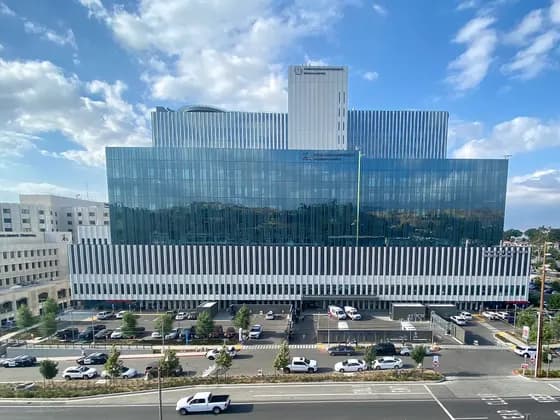
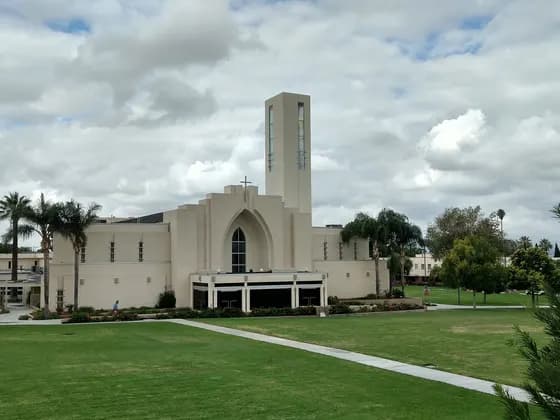
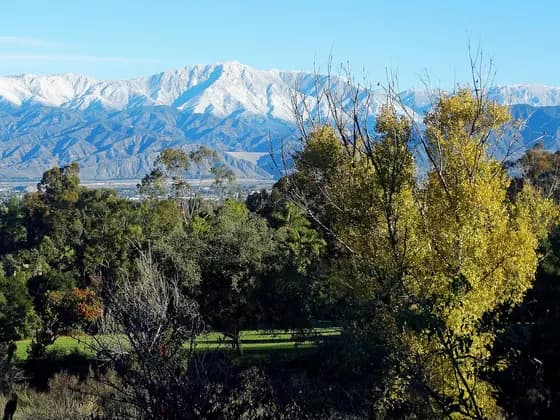
Photo: Pobonana · CC BY-SA 4.0 · cropped
Photo: Lroehlig · CC BY-SA 4.0 · Photo: Soberclass · CC BY-SA 4.0 · Photo: inkknife_2000 (7.5 million views +) · CC BY-SA 2.0
The Loma Linda University School of Medicine MD program at a glance (2027 entry)
Loma Linda University School of Medicine (LLUSM) runs a four-year, full-time MD program from its main campus in Loma Linda, California. The school opened in 1909 as the College of Medical Evangelists and is owned and operated by the Seventh-day Adventist Church. It is one of eight schools in Loma Linda University and part of Loma Linda University Health, an academic health system with six hospitals.
The current curriculum began in July 2020; a 2022 article by the then senior associate dean, still linked from the curriculum page, calls it the Discovery Curriculum. Years 1 and 2 are the pre-clerkship (pre-clinical) phase: eight blocks, each teaching the sciences of one part of the body together, beside two longitudinal courses, Clinical Skills Development and Christian Physician Formation.
Years 3 and 4 are the clerkship phase. Clerkships are the core clinical rotations, where you work on hospital and clinic teams under supervision. Most take place at Loma Linda University Medical Center, the VA medical center in Loma Linda and hospitals in Riverside County and Los Angeles. A small cohort spends both clinical years at AdventHealth Orlando in Florida or Kettering Health in Ohio instead.
Faith is part of the required program. Religion courses appear in each of the first three years, and Christian Physician Formation meets in LIFE Communities of 10 students led by a clinical faculty mentor. Year 4 includes a Whole Person Care clinical clerkship. Students attend chapel on Wednesdays, agree to avoid alcohol, tobacco, cannabis and illegal drugs, and have no formal classes on the Sabbath, from Friday sundown to Saturday sundown.
| Degree | MD |
|---|---|
| Program length | 4 years, full time; the MD/PhD usually takes about eight |
| Curriculum | Discovery Curriculum, launched July 2020: eight blocks, then clerkships |
| Main campus | Loma Linda, California, for Years 1 and 2 |
| Teaching style | Integrated blocks with team-based and Patient Inquiry problem-based cases |
| First patient contact | Year 1, including two-week Clinical Experience blocks |
| Clinical sites | Loma Linda medical center, VA, Riverside County Regional, White Memorial; Orlando or Ohio option |
| Step 1 timing | End of Year 2, after eight weeks of dedicated study (2025-26 calendar) |
| Grading | Satisfactory or Unsatisfactory; Honors and High Pass distinctions in clerkships |
| Accreditation | Liaison Committee on Medical Education (LCME): Full; next survey 2031-32 (October 14, 2026 directory) |
What makes the Loma Linda University School of Medicine MD program different
One mentor and nine classmates for four years
In Year 1 you join a LIFE Community of 10 students led by a clinical faculty member and stay in it for all four years. It is the home of Christian Physician Formation, from spiritual formation to resilience and healthy habits. Mentors meet each student one-on-one at least twice a year.
Whole person care taught as a clinical skill
Whole person care, in the school's terms, means caring for patients' physical, mental, social and spiritual well-being. From Year 1 you learn to take a spiritual history as part of the medical history. Year 2 has a Whole Person Care course and Year 4 a Whole Person Care clinical clerkship. In 2025-26 the required experiences included four whole person care encounters, one with a chaplain.
Clinical years in Florida or Ohio
After two years in Loma Linda, a select group spends Years 3 and 4 at AdventHealth Orlando, with a cohort of up to 48. Others go to Kettering Health, which Ohio recognized as a regional campus in January 2026. The curriculum matches the main campus, and regional students stay members of their LIFE Communities.
Lifestyle medicine in all four years
Lifestyle medicine covers nutrition, sleep, physical activity, relationships, stress and avoiding risky substances. A 2024 school news release says every student gets at least 100 hours of it. A 2024 alumni association article describes culinary medicine sessions, where groups cook a dish aimed at a chronic disease, and a competitive certificate track taking 12 to 16 students a year.
Advanced integration weeks in the clinical years
Third- and fourth-year students have advanced integration weeks: morning plenary talks and afternoon breakouts on spirituality, social determinants of health, cultural humility, resilience and lifestyle medicine, plus career mentoring. The 2022 article and the 2023-24 junior calendar show two such weeks in Year 3.
How Loma Linda University School of Medicine teaches medicine
In the first two years, each organ-system block brings the traditional science disciplines together in one course, so normal function, disease and treatment are learned side by side. The emphasis moves from basic science in the first half of the program to clinical science in the second.
The competency documents name three kinds of small group in Years 1 and 2: team-based learning, Patient Inquiry and LIFE Communities. The catalog adds computer-based instruction, lab work and simulation.
Two longitudinal courses run beside the blocks. Clinical Skills Development builds history taking, examination, communication and clinical reasoning, and the 2022 article adds ultrasound. Christian Physician Formation, co-taught by School of Religion and clinical faculty, covers spiritual formation, resilience, professionalism, social determinants of health and lifestyle medicine.
In Years 3 and 4, residents and faculty teach you on wards and in clinics, backed by self-directed study, standardized patients and simulation. Sessions on whole-person care, ethics, radiology, lifestyle and preventive medicine, social determinants of health and patient safety recur through the core clerkships.
The ways you will learn
| Lectures and team-based sessions | Each block mixes lectures with small-group work. In team-based sessions you prepare before class, then work through faculty-written cases and questions in teams, learning from classmates as well as faculty. Some team-based activities carry marks. |
|---|---|
| Patient Inquiry (PIQ) | The school's own form of problem-based learning. Teams of up to 10 students and one faculty facilitator take a realistic case, identify what they need to learn, research it, present findings and build a differential diagnosis and plan. PIQ work is required to pass pre-clerkship courses. |
| Standardized patients | People trained to portray a real patient's history, examination findings and emotions. You interview and examine them in the clinical skills center, practice hard conversations such as giving bad news, and get their feedback. |
| Simulation | Scenarios on high-fidelity manikins in the Medical Simulation Center, each followed by a debrief. The 2025-26 list of required experiences put the Critical Event exercise and intubation practice there. |
| Clerkship teaching | On rotations you take histories, examine patients, present cases and write notes under supervision. In 2025-26 each core clerkship's required experiences included an ethics workshop and a journal club. |
A typical week on the Loma Linda University School of Medicine program
In the Class of 2028 calendars for 2024-25 and 2025-26, most block weeks ended with a Friday quiz, the longer blocks had midterm exams, and every block closed with final exams. The 2022 article says faculty review each quiz, covering both content and how to approach questions.
Chapel meets in the University Church every Wednesday at 11 a.m. It is required if you have a class before 3 p.m. that day, though medical students are excused on midterm and final exam days. Three times a year, during a required Week of Renewal, the service meets every weekday morning at the chapel hour. No formal classes are held on the Sabbath, but clerkship students still care for patients then, with time off for worship when on weekend call.
How anatomy is taught at Loma Linda University School of Medicine
Anatomy is taught inside the blocks. Foundations I introduces anatomy and embryology alongside biochemistry, genetics, pathology and physiology. Later block descriptions cover structure too, such as the anatomy of the genitourinary tract in Renal and Urinary and neuroanatomy in Neuroscience and Psychiatric Science.
The Division of Human Anatomy runs Bodies for Science, the university's body donation program, and its pages state that medical students must have the opportunity to dissect the human body. The Year 1 and 2 competencies ask you to treat donor bodies with respect, and a memorial service honors donors and their families each year around April. A 2017 university news article described the Swatek Anatomy Center as having five labs and 104 dissection stations.
In Year 4 you can take ANAT 891, a self-designed dissection elective on a region such as the head and neck, thorax, abdomen, pelvis, back or limbs, linking its anatomy to clinical practice.
When you first meet patients at Loma Linda University School of Medicine
The handbook dates patient contact to Year 1, and the catalog says you take part in inpatient and outpatient care in every year. Before clerkships, a resident or attending physician is always present or close by when you see patients.
In the Class of 2028 calendars, the first week of Foundations I included ward or clinical experience. Two-week Clinical Experience blocks followed in March of Year 1 and October of Year 2. The 2022 article describes a mid-year integration week when LIFE Community mentors take first-years onto the wards to interview a patient, asking what matters most to them, including worries about food or housing.
Service learning is required. The handbook builds it into Year 1 Christian Physician Formation, while the catalog table attaches it to the Year 4 preventive medicine rotation. The school says its students also give more than 3,000 hours a year in local schools, shelters and clinics through community programs.
Once clerkships start in Year 3, you take histories and examinations, place orders and take part in minor procedures such as IVs and blood draws. A supervisor is present the first time you do a procedure.
The Loma Linda University School of Medicine curriculum, year by year
- Year 1
Foundations and the first organ systems
You work through five blocks in sequence, from Foundations I to Cardiovascular and Pulmonary, while Clinical Skills Development and Christian Physician Formation run alongside. Religion courses and a two-week selective complete the year, which ends with a National Board of Medical Examiners (NBME) exam you must pass to move on.
- MFDN 511 Foundations I (13.5 units): anatomy and embryology, biochemistry, molecular biology and genetics, cell structure and general pathology, evidence-based medicine, lifestyle and preventive medicine, microbiology, pharmacology and physiology.
- MGIL 512 Foundations II – Gastrointestinal and Liver (12.5 units), MHMI 514 Hematology and Immunology and MENR 510 Endocrine & Reproductive (8 units each), then MCPM 510 Cardiovascular and Pulmonary (13.5 units).
- MCSD 510 Clinical Skills Development (5.5 units) and MCPF 510 Christian Physician Formation (4 units), which the handbook says carries the service-learning requirement.
- Religion: RELR 704 Orientation to Christian Physician Formation, RELT 716 God and Human Suffering and one 2-unit choice, such as Adventist Beliefs and Life or World Religions and Human Health.
- MSEL 510 First-Year Selective (2 units): two weeks on a topic you choose.
- In the 2024-25 calendar, Foundations I and Cardiovascular/Pulmonary ran nine weeks each, with NBME exams in December and June.
- The class entering in 2026 had orientation July 27 to 31 and its White Coat Ceremony on July 30. At a February dedication, each student receives a Bible and the class takes the Physician's Oath.
- Year 2
The remaining systems and Step 1 preparation
Three blocks cover the nervous system and mind, the kidneys and urinary tract, and the musculoskeletal system and skin, ending with multisystem application. The year closes with the NBME Comprehensive Basic Science Examination (CBSE), dedicated study for Step 1 of the United States Medical Licensing Examination (USMLE) and a mandatory Transition to Clinical Medicine week.
- MNHB 610 Neuroscience and Psychiatric Science (16 units): neuroanatomy, neuropathology, neuroradiology and pharmacology linked to neurologic and psychiatric presentations.
- MREN 610 Renal and Urinary (7 units), on blood pressure, fluid, electrolyte and acid-base balance and common kidney and urinary conditions, then MSKM 610 Musculoskeletal and Skin – Multisystem (11 units).
- MCSD 610 Clinical Skills Development (3 units), MCPF 610 Christian Physician Formation (2 units, focused on personal wellness) and MSEL 610 Second-Year Selective (2 units).
- RELE 708 Medicine and Ethics and RELR 775 Whole Person Care, which integrates psychosocial and spiritual care in the clinical setting (2 units each).
- In the 2025-26 calendar, an NBME practice exam fell in December and the CBSE on March 2. Eight weeks of Step 1 study followed, then Transition to Clinical Medicine from April 27.
- Year 3
Core clerkships
The junior year starts in about May and has two components. The primary care block covers internal medicine, pediatrics and family medicine, with a continuity clinic. The second component covers surgery, obstetrics and gynecology, and neurology/psychiatry.
- MEDN 701 Medicine (8 weeks): one outpatient and two inpatient rotations covering acute and chronic adult illness.
- PEDS 701 Pediatrics (8 weeks) and FMDN 701 Family Medicine (6 weeks), where you assess patients within their family, community and spiritual life.
- SURG 701 Surgery (8 weeks), across general surgery, anesthesia and surgical specialties, and GYOB 701 Gynecology and Obstetrics (6 weeks), including deliveries and surgeries.
- NEPS 710 Neurology/Psychiatry (8 weeks), one combined clerkship; in 2023-24 it included a week on addictions.
- Elective time: the catalog table lists one two-week elective (MNES 791), while its narrative and the 2022 article describe two.
- MCPF 710 Christian Physician Formation (3 units), RELE 714 Advanced Medical Ethics (2 units) and advanced integration weeks.
- Each clerkship has a required list of patients and skills; in 2025-26 it ranged from vaginal deliveries and well-child checks to bladder catheterization and reading EKGs.
- In the 2023-24 calendar, six tracks took the clerkships in different orders, and the year ended with the NBME Comprehensive Clinical Science Examination (CCSE) and an ethics exam.
- Year 4
Acting internship, electives and graduation requirements
The senior year asks you to apply what you know more independently, through required rotations, a sub-internship and 20 weeks of electives. The catalog leaves flexible time to study for USMLE Step 2 and apply for residency, the specialty training that follows medical school.
- EMDN 821 Emergency Medicine (2 weeks) and MDCJ 821 Preventive Medicine and Population Health (4 weeks): quality improvement, patient safety, motivational interviewing and care of the underserved.
- A 4-week intensive care rotation in medicine, pediatrics or surgery.
- A 4-week sub-internship (acting internship) in family medicine, medicine, pediatrics or surgery. In medicine, the catalog says, you function essentially as the intern on your cases.
- MWPC 821 Whole Person Care Clinical Clerkship (3 units); the catalog narrative also mentions a two-week selective in medicine and surgery.
- One week of Intern Boot Camp and one week of Critical Event Training.
- To graduate you must pass Step 2, perform satisfactorily on the California Consortium for the Assessment of Clinical Competence (CCACC) exam and hand in your completed skills log, the Red Book.
How you are assessed at Loma Linda University School of Medicine
The pre-clerkship years use pass/fail grades. Your transcript records Satisfactory or Unsatisfactory, and for promotion decisions the school also uses Marginal Pass, for work that meets but does not exceed the minimum. Course directors set a minimum cumulative score across exams, quizzes and lab practicals.
Objective Structured Clinical Examinations (OSCEs), timed stations with standardized patients, run through the program. The 2022 article described Year 1 and 2 OSCEs ending in a group debrief to build and defend a differential diagnosis. Clerkships add OSCEs and simulations, and a 2020 clinical skills center page describes the senior CCACC exam as eight stations written by California medical school faculty.
At the end of Year 1 you sit an NBME exam on the year's courses and must reach a minimum score to move up. The CBSE at the end of Year 2 is formative. If you score below the Step 1 passing equivalent, you may be offered one retake, and after two such attempts you build a study plan with the dean's office or academic support.
The 2025-26 grading document for third-years, the Class of 2027, gave clinical performance 60% of a clerkship grade: clinical evaluations 25%, OSCE 20% and other clinical work 15%. Medical knowledge made up 40%: quizzes 15% and the NBME subject exam, or shelf exam, a national multiple-choice test per specialty, 25%. A Satisfactory needs a first-attempt shelf pass, which that document sets at the 7th percentile nationally, plus full passes on clinical evaluations, logs, OSCEs and simulations. Passing every part first time makes you eligible for Honors or High Pass.
Documents differ slightly on reporting. The 2026-27 handbook says a Marginal Pass appears as Satisfactory on the transcript and the Medical Student Performance Evaluation (MSPE), the dean's letter residency programs read. The 2025-26 grading document lists transcript grades as In Progress, Marginal Pass or Unsatisfactory and puts Honors, High Pass, the senior clinical exam and Step 2 results on the MSPE.
The USMLE is the licensing exam series for MD graduates. Step 1 covers the sciences behind medicine and has been pass/fail since January 26, 2022; Step 2 Clinical Knowledge (CK) covers clinical medicine. For MD students, attending a program accredited by the Liaison Committee on Medical Education (LCME), which accredits MD programs in the United States, is what makes you eligible for the USMLE. DO students and international graduates qualify through other routes.
- The LCME directory, updated October 14, 2026, lists the school as fully accredited, with its next survey in 2031-32. Its initial accreditation is marked on or before 1942, the year the LCME was founded.
- The Step 1 rule is worded three ways. The curriculum page says you must pass Step 1 to be promoted to the junior year. The 2026-27 handbook says you must complete it within three attempts and within one academic year of finishing Year 2. The regional-campus page makes a regional place conditional on being on target to pass it.
- Before Step 2 you take the CCSE, with one retake if you score below the Step 2 CK passing equivalent. You must pass Step 2 within three attempts to graduate.
- In August 2026 the USMLE program announced a move to designated testing dates from January 2029, with Step exams offered less often each year. Its June 2026 notice had named 2028.
- On the current schedule, a July 2027 entrant would finish the Year 2 blocks in late February 2029. Eight weeks of Step 1 study would follow in March and April, before clerkships begin around May. Step 2 CK would come in Year 4, from about May 2030, and both fall after the change to designated testing dates.
Loma Linda University School of Medicine clinical rotations: where you will actually train
Everyone spends Years 1 and 2 on the main campus in Loma Linda. The curriculum page says clinical teaching in Years 3 and 4 takes place mainly at Loma Linda University Medical Center, the Jerry L. Pettis Memorial VA Medical Center, Riverside County Regional Medical Center and White Memorial Medical Center in Los Angeles. It names Arrowhead Regional Medical Center, Kaiser Permanente and Glendale Adventist Medical Center as other affiliated hospitals.
The medical center and the 364-bed Loma Linda University Children's Hospital belong to Loma Linda University Health, and the VA hospital serves veterans in San Bernardino and Riverside counties. White Memorial has a long link to the school: from 1913 to the mid-1960s, students trained partly in Loma Linda and partly there.
The 2023-24 syllabi and the 2025 visiting-student packet also name Riverside University Health System (RUHS), whose own site places its 439-bed Medical Center in Moreno Valley. In 2023-24, internal medicine inpatient blocks ran at the Loma Linda VA, RUHS, the medical center, White Memorial, Kettering and AdventHealth Orlando. Pediatrics paired four weeks in clinics, including Loma Linda University clinics, RUHS, Kaiser Permanente and SAC Health, with four inpatient weeks at the Children's Hospital, RUHS or White Memorial.
A select group completes Years 3 and 4 at a regional campus. You indicate interest on the secondary application, and a place is binding if you are accepted, on condition of good standing and being on target to pass Step 1. The 2026-27 handbook says regional graduates receive a combined degree from the school and the regional campus.
You are responsible for having transportation to off-campus assignments. Work hours follow resident limits: at most 80 hours a week averaged over four weeks, one day off in seven, and shifts of up to 24 hours plus 4 for handoffs.
Main campus for Years 1 and 2 and the main clerkship base.
- Loma Linda University Medical Center
- Loma Linda University Children's Hospital
- Jerry L. Pettis Memorial VA Medical Center
The curriculum page names Riverside County Regional Medical Center; the 2023-24 syllabi and the 2025 visiting-student packet name Riverside University Health System.
- Riverside County Regional Medical Center (curriculum page)
- Riverside University Health System (2023-24 syllabi)
White Memorial is one of the four main clerkship hospitals; Glendale Adventist is affiliated.
- White Memorial Medical Center, Los Angeles
- Glendale Adventist Medical Center
Affiliated hospitals and clinics in the inland region around Loma Linda.
- Arrowhead Regional Medical Center
- Kaiser Permanente
- SAC Health clinics
- Loma Linda University clinics
Regional campus for Years 3 and 4, with up to 48 students.
- AdventHealth Orlando
Regional campus for Years 3 and 4; Kettering Health runs nine hospitals.
- Kettering Health
Electives, selectives and away rotations at Loma Linda University School of Medicine
Choice starts early. Years 1 and 2 each include a two-week selective, from the art of health and the business of medicine to leadership, simulation and ultrasound. The 2022 article listed past selectives such as palliative care, spiritual care and international missions.
Year 3 has elective time to explore a specialty and build skills for Year 4. In Year 4 you choose 30 units, or 20 weeks, from 25 listed electives, from anesthesiology and dermatology to radiation medicine and urology. One must be a two-week elective in a basic science.
Options include a Whole Person Care elective on film and medicine, law and medicine, tropical medicine and patient safety, and a reading course in religion and psychiatry. In a Christian Physician Formation senior elective, you coach and lead younger students' small groups.
Seniors must pass on-campus and off-campus electives. The 2022 article notes that alumni help with housing for away rotations, electives at other institutions. Students for International Mission Service (SIMS), part of the university's Global Health Institute, runs I-Serve and Student Mission Elective programs at international partner sites; its page still lists 2022 and 2023 forms. You observe or rotate with local physicians and join outreach, rather than practice skills you are not yet qualified to use in the United States.
Dual degrees and research years at Loma Linda University School of Medicine
Between Years 1 and 2 you can spend eight weeks, or 320 hours, on a project with an approved faculty investigator to earn a stipend. The Center for Health Disparities and Molecular Medicine also runs a paid summer Medical Training Program, June 15 to July 30 in 2026. More than 100 medical students have taken part since 2001.
The Walter E. Macpherson Society offers summer research scholarships and poster help, and Student Affairs can partly fund conference travel. A 2024 alumni association article says the Lifestyle Medicine Certificate Track adds a capstone research project, quarterly meetings, workshops and elective rotations. The 2022 article also named tracks in academic medicine; policy, advocacy, leadership and service; ultrasound; and spiritual care.
The Medical Scientist Program is the school's MD/PhD for future physician-scientists. You usually finish Years 1 and 2 and Step 1, then complete the PhD before registering for the final MD year; the sequence typically takes about eight years. PhD areas are anatomy; cancer, developmental and regenerative biology; infection, immunity and inflammation; and neuroscience, systems biology and bioengineering.
Separate MD/MS and MD/PhD combined degrees follow the same pattern, with three or more graduate years for a PhD or at least one for an MS. Four master's combinations put a year of coursework after Year 3: an MA in Bioethics, MPHs in Global Health and Population Medicine, and an MA in Religion and Society. The MPH and Religion and Society plans then place the standard MD fourth year in a fifth year.
Facilities and support at Loma Linda University School of Medicine
Where you will learn
At the Tom and Vi Zapara Clinical Skills Education Center you work with standardized patients and simulators, then review recordings of your encounters with faculty feedback. A 2020 page lists 18 examination rooms, 12 for standardized-patient encounters, and two cardiac teaching labs with Harvey manikins.
The Medical Simulation Center is an 8,000-square-foot mock hospital on the fourth floor of the Centennial Complex. Its rooms include a pre-hospital room, emergency room, two operating rooms, an intensive care unit, a neonatal intensive care unit and a hospital room. Up to five simulations can run at once, each watched through one-way glass.
The Centennial Complex also houses the Swatek Anatomy Center and the Alfred Q. Shryock Museum of Embryology, a teaching collection of specimens and wax models. Since October 2023 the LIFE Communities house, at University Avenue and Campus Street, has given students a place to study and meet in their groups.
Support while you study
Your LIFE Community mentor meets you one-on-one at least twice a year about academics, balance, career plans and spiritual direction, and Christian Physician Formation coaches give ongoing written feedback. A voluntary Physician-Student Christian Mentoring Program in Year 1 pairs you with a physician of the same gender, with an emphasis on prayer and Bible study.
A learning specialist builds individual plans for study strategies, test-taking and Step 1, Step 2 and shelf exam preparation. Peer academic coaches, second- to fourth-year students, are free and usually matched within 24 hours, and group coaching meets weekly.
The Student Assistance Program offers counseling with no preset limit on sessions, and the Office of Physician Vitality's licensed therapists see medical students free of charge. A psychiatrist designated for medical students has no role in their teaching or evaluation, and handbook rules keep anyone who treats you out of your grading. Confidential Advisors for Medical Students are faculty you can consult privately about the learning environment.
Is the Loma Linda University School of Medicine program right for you?
This program may suit you if
- You want faith woven into training, from religion courses and weekly chapel to spiritual histories and a Whole Person Care clerkship.
- You would value the same mentor and nine classmates for four years in a LIFE Community.
- You are drawn to lifestyle medicine: at least 100 hours for everyone, and a certificate track with a capstone project.
- You would like the option of spending your clinical years in Orlando or Ohio.
- You like steady checkpoints, such as weekly block quizzes, alongside team-based and problem-based cases.
Things to think about
- The lifestyle commitment is firm: students agree to avoid alcohol, tobacco, cannabis and illegal drugs while enrolled, and appearance rules bar visible tattoos and body piercings other than simple earrings.
- Religion is required coursework in each of the first three years, and Wednesday chapel is required too.
- Step 1 rules are strict: the curriculum page says you must pass it to enter Year 3, while the handbook sets three attempts within a year of finishing Year 2.
- A regional-campus place is binding once you are accepted, so it is a decision to make before you start.
- You are responsible for getting to clerkship sites, which range from Loma Linda and Riverside County to Los Angeles.
Loma Linda University School of Medicine MD program — frequently asked questions
Applying to Loma Linda University School of Medicine?
How to get into Loma Linda University School of Medicine
Prerequisites, MCAT, AMCAS personal statement, secondaries and interview, step by step.
Open the guide →Loma Linda University School of Medicine admissions profile
MCAT and GPA profile, acceptance rate, interview format and key dates.
See the profile →Compare Loma Linda University School of Medicine with other schools
Put the teaching style, anatomy teaching and clinical sites next to another school.
Open the comparison →Prepare for the Loma Linda University School of Medicine interview
Format breakdown, school-specific sample questions and prep tips from tutors who interviewed here.
Read the guide →Where this Loma Linda University School of Medicine program guide came from
This guide was written from 101 official sources — Loma Linda University School of Medicine's own program pages and curriculum documents, plus the accreditor and the hospitals and health systems the school trains students in where they publish detail — read on 2026-10-15, then checked claim by claim against those sources.
- LLUSM: Curriculum, Medical Student Education
- LLUSM: Medicine, MD Program
- LLUSM: Medical Student Education (LCME accreditation statement)
- LLU Catalog 2026-2027: Medicine, MD (curriculum and program requirements)
- LLU Student Handbook 2026-2027, Section IX: School of Medicine
- LLU Student Handbook 2026-2027 (university policies on chapel, Sabbath and lifestyle)
- LLUSM Year 1 Competencies (updated July 2024)
- LLUSM Year 2 Competencies (updated July 2024)
- LLUSM Year 3 Competencies (updated July 2024)
- LLUSM Year 4 Competencies (updated July 2024)
- Curriculum Transformation, by the Senior Associate Dean for Medical Student Education (August 2022, linked from the curriculum page)
- LLU Catalog 2026-2027: Foundations I Block (MFDN 511)
- LLU Catalog 2026-2027: Neuroscience and Psychiatric Science (MNHB 610)
- LLU Catalog 2026-2027: Renal and Urinary Block (MREN 610)
- LLU Catalog 2026-2027: Christian Physician Formation (MCPF) courses
- LLU Catalog 2026-2027: Selectives (MSEL) courses
- LLU Catalog 2026-2027: Medicine (MEDN) clerkship, ICU, sub-internship and elective courses
- LLU Catalog 2026-2027: Family Medicine (FMDN) courses
- LLU Catalog 2026-2027: Gynecology and Obstetrics (GYOB) courses
- LLU Catalog 2026-2027: Neurology/Psychiatry Clerkship (NEPS 710)
- LLU Catalog 2026-2027: Pediatrics (PEDS) courses
- LLU Catalog 2026-2027: Surgery (SURG) courses
- LLU Catalog 2026-2027: Third-year Elective (MNES 791)
- LLU Catalog 2026-2027: Emergency Medicine (EMDN) courses
- LLU Catalog 2026-2027: Preventive Medicine and Population Health and Whole Person Care (MDCJ)
- LLU Catalog 2026-2027: Anatomy (ANAT) courses, including the ANAT 891 dissection elective
- LLU Catalog 2026-2027: Psychiatry Elective (PSYT 891)
- LLU Catalog 2026-2027: Religion/Relational Studies (RELR) courses
- LLU Catalog 2026-2027: Religion/Theological Studies (RELT) courses
- LLU Catalog 2026-2027: Religion/Ethical Studies (RELE) courses
- LLU Catalog 2026-2027: Medical Scientist, MD/PhD
- LLUSM: MD/PhD Program (Medical Scientist Program)
- LLU Catalog 2026-2027: School of Medicine (history and combined degrees)
- LLU Catalog 2026-2027: Combined Degree Programs
- LLU Catalog 2026-2027: Medicine MD with Bioethics MA
- LLU Catalog 2026-2027: Medicine MD with Global Health MPH
- LLU Catalog 2026-2027: Medicine MD with Population Medicine MPH
- LLU Catalog 2026-2027: Medicine MD with Religion and Society MA
- LLUSM Class of 2028 Sophomore Academic Calendar 2025-2026
- LLUSM Class of 2028 Freshman Academic Calendar 2024-2025 (web archive copy, May 2025)
- LLUSM Junior Track Dates 2023-2024 (web archive copy, April 2024)
- LLUSM Junior and Senior Curricula 2022-2024 (web archive copy, April 2024)
- LLUSM Senior Track Dates 2023-2024 (web archive copy, April 2024)
- LLUSM Internal Medicine Clerkship Syllabus 2023-2024 (web archive copy, April 2024)
- LLUSM Pediatrics Clerkship Syllabus 2023-2024, Track 5 (web archive copy, April 2024)
- LLUSM Neurology-Psychiatry Junior Clerkship Syllabus 2023-2024 (web archive copy, April 2024)
- LLUSM Required Clinical Experiences for Medical Students 2025-2026
- LLUSM MS3 Grading Policies, Class of 2027: clerkship grading scale, remediation and distinctions 2025-2026
- LLUSM Operating Policy: Clinical Student Work Hours
- LLUSM Visiting Students Packet 2025 (work hours, supervision and site contacts)
- LLUSM: Student Handbook and Policies (supervision, narrative feedback, chapel, conference travel)
- LLUSM: Regional Campuses
- LLUSM: AdventHealth Orlando Campus
- LLUSM: Kettering Health Campus
- LLUSM: About the School of Medicine
- LLUSM: History of the School of Medicine
- LLUSM: Selection Criteria (Seventh-day Adventist Church ownership)
- LLUSM: Why Loma Linda University? (teaching methods)
- LLUSM: Values and Lifestyle
- LLUSM: LIFE Communities
- LLUSM News: New LIFE Communities house (October 2023)
- LLUSM: Student Affairs (summer research, mentoring, tutoring)
- LLUSM: Academic Support Services
- LLUSM: Student Counseling Resources
- LLUSM: Clinical Skills Education Center
- LLUSM Clinical Skills Education Center: Education and Assessments (page from 2020)
- LLUSM Clinical Skills Education Center: Standardized Patient Program
- LLUSM Clinical Skills Education Center: Examination Rooms
- LLUSM Clinical Skills Education Center: Cardiac Teaching Laboratories
- LLUSM: Medical Simulation Center
- LLUSM: About the Medical Simulation Center
- LLUSM Medical Simulation Center: Our Virtual Hospital
- LLUSM Medical Simulation Center: Clinical Environment
- LLUSM Division of Human Anatomy: Bodies for Science
- LLUSM Bodies for Science: Frequently Asked Questions
- LLUSM: Alfred Q. Shryock Museum of Embryology
- LLU News: Bodies for Science program and the Swatek Anatomy Center (April 2017)
- LLU News: Lifestyle medicine Platinum Plus certification (April 2024)
- LLUSM Alumni Association journal: Lifestyle Medicine Curriculum (Summer 2024)
- LLUSM: Community Programs and Mission Trips
- LLU Global Health Institute: Students for International Mission Service
- LLU Global Health Institute: I-Serve and Student Mission Elective programs
- LLUSM Center for Health Disparities and Molecular Medicine: Medical Training Program
- LLUSM Walter E. Macpherson Society: Research support
- LLUSM Walter E. Macpherson Society: Summer Research Scholarships
- LLUSM: White Coat Ceremony 2026
- LLUSM: Orientation for First Year Medical Students (Class of 2030)
- LLUSM: Family Day and First-Year Dedication
- LLU Catalog 2026-2027: Learning Environment (SAC Health, CAPS, library)
- LLU Catalog 2026-2027: A Unique University (Sabbath and lifestyle)
- LLU Catalog 2026-2027: Accreditation Status
- Loma Linda University Health: About Us
- Loma Linda University Children's Hospital
- Loma Linda University Medical Center
- VA Loma Linda Healthcare System: About Us
- Riverside University Health System: About RUHS Medical Center
- LCME: Accredited Programs directory (updated October 14, 2026)
- USMLE: Updated timeline, designated testing dates from January 2029 (August 6, 2026)
- USMLE: Designated Testing Dates Information Hub
- USMLE: Original announcement naming 2028 (June 23, 2026)
- USMLE: Common Questions (Step 1 pass/fail from January 26, 2022)
Curricula are restructured between cycles. Anything here that decides your application — how anatomy is taught, a clinical campus assignment, a required research year — should be confirmed against the official page for your entry year.
Applying to Loma Linda University School of Medicine?
We help US applicants with MCAT strategy, the AMCAS personal statement, secondary essays and interview prep — everything you need for a competitive Loma Linda University School of Medicine application.